
Departmental news
Congratulations to new WIHEA Fellows 2023
We are delighted to announce that three members of the Department of Economics have been successful in becoming Warwick International Higher Education Academy (WIHEA) Fellows 2023.
WIHEA is the UK’s first institutional academy of educators for staff and students engaged in the advancement of learning and teaching excellence and has become the collective institutional voice on learning and teaching and the academic student experience.
The WIHEA Fellowship 2023 has been awarded to Dr Atisha Ghosh (Assistant Professor), Dr Isleide Zissimos (Senior Teaching Fellow) and Dr Juliana Cunha Carneiro Pinto (Teaching Fellow). They join a community of 85 Fellows from across the University and 3 WIHEA Fellows from the Department of Economics: Professor Caroline Elliott, Dr Lory Barile and Dr Emil Kostadinov.
The WIHEA Fellows commit to the role and making an institutional contribution to learning and teaching at Warwick for 3 years.
Find out more about each new WIHEA Fellows and what they said about this new opportunity:
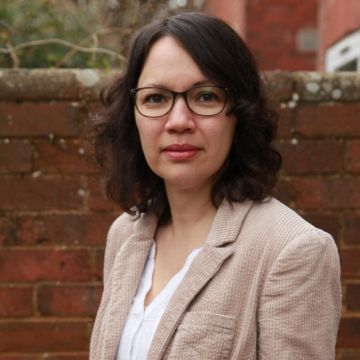
Dr Isleide Zissimos
“With a background in Economics, my expertise lies at the intersection of teaching and learning across disciplines, as well as in the administration of joint programmes. I also have a keen interest in researching the impact of Artificial Intelligence (AI) on student learning and performance.
As a WIHEA fellow I am interested in actively contributing to projects centred around interdisciplinarity and to explore opportunities to evaluate AI-based tools that can enhance student inclusivity and foster widening participation.”
Dr Isleide Zissimos is a Senior Teaching Fellow and Director of UG Studies (Joint Degrees), member of the Political Economy Research Group within the Department of Economics. View her staff profile.
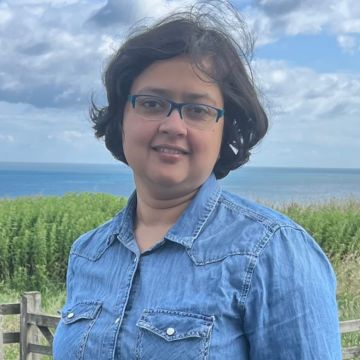
Dr Atisha Ghosh
“As the Academic Careers Coordinator for the Department of Economics, I am interested in linking and embedding employability skills in the structure of modules. I have experience in organising groupwork assessments as well as conducting research in understanding the efficacies and uptake of groupwork among students and lecturers.
As a fellow, I would like to actively continue my work on skills development. I am also keen to participate in projects related to designing and assessing groupwork, co-creation and pedagogic research.”
Dr Atisha Ghosh is Assistant Professor (Teaching Focussed) and Academic Careers Coordinator in the Department of Economics. View her staff profile.
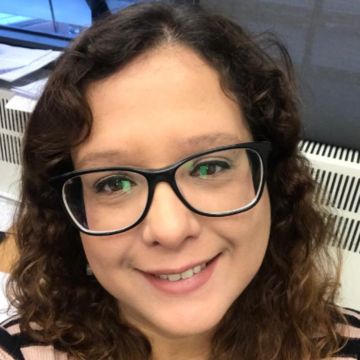
Dr Juliana Cunha Carneiro Pinto
“I am a Teaching Fellow in Economics. Prior to joining Warwick, I taught at the LSE and the University of Birmingham. Pastoral care is especially close to my heart as the new Advisor for Students with Disabilities at the Department of Economics, and I am looking forward to working on developing enhanced support and guidance to students with disabilities.
I also hope that I will be able to contribute to the discussions on how to enhance teaching and learning outcomes for students and staff, particularly for the disabled and from widening participation background.”
Dr Juliana Cunha Carneiro Pinto is Teaching Fellow and Advisor for Students with Disabilities in the Department of Economics at Warwick. View her staff profile.
ENABLE workshop: Are the university learning environments as inclusive as we think?
 On Friday 29 September 2023, the School of Life Sciences will be hosting a free workshop: "Are the university learning environments as inclusive as we think? An investigation from the awarding perspective".
Based on a thorough data analysis from recent years and first-hand practical experience, the workshop will identify existing reasons for lack of inclusivity and unbiased awarding in biological science and related degree streams.
The workshop participants, comprising academic leaders, teaching professionals and a diverse student community, will also provide on consensus recommendations on how to close existing awarding gaps for a more inclusive learning and teaching environment throughout the UK.
Consensus recommendations will be published in a peer-reviewed journal.
Cryopreserving spheroids
Spheroids (and organoids) can reproduce key aspects of human biological responses, and since the FDA simplification act it is possible (in some cases) to bypass animal testing in the development of new drugs where quality tissue models exist. However, these are not accessible ‘off the shelf’ so are not widely used, with monolayer culture then animal studies common. The GibsonGroup working with the WhaleGroup have recently shown how controlled nucleation (making ice form) can actually improve cryopreservation outcomes by reducing intracellular ice formation. In this latest work they combine nucleation with proline-pre conditioning which ‘prepares’ cells for cryopreservation. This shows how joined-up thinking of cryopreservation as a biochemical and biophysical problem can make a major impact on cell-storage platform technologies.
Read the paper here.
Alumna writes captivating article for Lacuna Magazine
Wajma Zazai, who studied on our Law 3 Year LLB, and graduated in 2022, has written our latest Lacuna article titled: 'The Screen: Watching Afghanistan suffer from afar.' Wajma was awarded the Duke and Duchess of Cambridge Scholarship from the Honourable Society of the Middle Temple to support her Bar Vocational Studies at City, University of London.
Warwick Law Students Address Social Housing Allocation Inequalities
Warwick Law School students recently presented the results of a legal research project into social housing allocation inequality conducted as part of Warwick Law in the Community’s Strategic Social Justice Clinic. The presentation outlined the complex issues surrounding change of circumstance applications to Coventry City Council’s social housing team. The outcomes of the student’s work have resulted in resources that will be used by a local law centre in helping some of the most vulnerable people in Coventry secure adequate and timely assistance in their housing need.
Exploring European regional trade
A new study from Warwick Economics has revealed that a region trades with itself much more than with other regions in the same country, or with regions in different countries.
Dr Marta Santamaria and co-authors Dr. Jaume Ventura (CREi/University Pompeu Fabra) and Dr. Ugur Yesilbayraktar (University of Duisburg-Essen) analysed a newly-built dataset* of European regional trade flows to explore trade patterns within and across country borders. Based on the European Road Freight Transport survey, the data cover trade in goods among 269 regions from 24 European countries between 2011 and 2017. This trade is disaggregated into 12 different industries covering all agriculture, mining and manufacturing.
Out of all shipments in the sample, 40% had a destination inside the same region as their origin (home trade), while 41% had a destination in a different region but within the same country (country trade). Surprisingly, only 19% of trade flows were between regions in different countries (foreign trade).
However, when correcting for economic size – accounting for the fact that regional markets are smaller than country markets, which are smaller than foreign markets - the researchers found enormous differences in the magnitudes of the different types of trade. Their findings revealed that, on average, trade levels within the same region are 42 times higher than the average trade between two regions in the same country. In turn, two regions in the same country trade almost ten times more than two regions in different countries.
The researchers examined whether geographic and national borders could explain these differences. They found that these two factors together accounted for two-thirds of the variation in trade flows. For example, a 1% increase in geographical distance between regions is associated with a reduction in trade of 1.2%.
However, distance could not explain why trade shipments within regions were so much larger than across regional borders. The researchers found this was instead at least partly due to the impact of subnational governments. Their analysis showed that political borders within countries (dividing regions with some form of self-government) significantly reduced trade, while purely administrative regional borders (dividing regions created for statistical purposes without any form of political power) had no effect on trade.
Commenting on the research, Dr Santamaria said: “While we know much about trade across countries thanks to the availability of detailed customs data, we know much less about trade within countries. This paper is the first to systematically explore trade patterns across and within European regions.”
“There are many exciting opportunities for future research in this area. For example, how does the behaviour or autonomy level of local governments account for the effect of political borders on reducing trade flows across regions? How is trade between regions impacted by factors such as migration flows or foreign direct investment?"
“Constructing similar models for other social and cultural interactions such as travel, tourism and collaborative working would also help us form a better picture of how European citizens interact with each other.”
* The construction of this new dataset is described in Santamaria et al., 2021.
Read the full article
Exploring European regional trade by Marta Santamaria, Jaume Ventura and Uğur Yeşilbayraktar is forthcoming in the Journal of International Economics. The corrected proof was published in April 2023.
Marta Santamaria is Assistant Professor in the Department of Economics at Warwick. View her staff profile.
University of Warwick Innovation Campus Growth Plan Takes a Step Forward
Plans to grow the University of Warwick Innovation Campus Stratford-upon-Avon at Wellesbourne have taken an important step forward. Stratford-on-Avon District Council has approved a plan to guide the long-term growth of the Campus.
Press release (4 July 2023)
Dr Alison Struthers wins Warwick Wows Award
The Warwick Wows celebrate amazing work, projects, and achievements at the University. The Law School’s Dr Alison Struthers won the award for her work on the School Tasking Project, an exciting outreach project enabling young people to learn about interesting aspects of the law and making it more accessible for them.