
Departmental news
Dr Snehalata Sahu featured in Astronomy Now magazine
Recent research by Snehalata Sahu Link opens in a new windowon the discovery of a hot white dwarf merger remnant has attracted the attention of Astronomy Now magazine editor Stuart Clark. Impressed by her unique blend of science and creativity, they reached out to feature her astronomy-inspired artwork in the magazine's October issue.
Warwick Museum Studies Network Newsletter
The autumn newsletter is out, on the Museum Studies web site.
- Introduction from network coordinator Robert O'Toole.
- The Museum Explorations podcast and YouTube channels.
- Exhibitions by Warwick People (Kate Astbury, Cathy Hampton).
- Publications by Warwick academics (Jamie Larkin).
- Special edition of the Exchanges journal, and how you can contribute.
- Plans for the next event, on gaming, arts, humanities, and museums.
- The Campus as Gallery and Museum.
- Progress update on the Bridges conference, bringing together art, maths, and science.
- Museum technologies (including funding opportunities).
- Is it possible to be over-museumed? 25 museums in one summer, what did we learn? – a personal reflection.
Culture Wars Lecture Series
Students and staff from across the university are invited to join us for a new lecture series exploring censorship and freedom of speech: "Culture Wars: Power, Censorship, Freedom".
Each week throughout the year, an academic from a different discipline will explore this important topic from their own angle. There will also be time for questions and discussion.
This term, all lectures are in MS.04 (Zeeman Building) on Mondays, 11am-12pm, beginning on Monday 13 October (Week 2).
The first lecture, by Professor Gary Watt from the School of Law, is titled "Moving Statues and Social Movements - Free Speech Acts and the Colston Case".
You can read a schedule for the series and descriptions of each talk in Term 1 here: https://warwick.ac.uk/fac/arts/english/culturewars/Link opens in a new window
Do please join us.
Dr Stephen Purcell
English and Comparative Literary Studies
Pioneering virtual reality technology used to tackle Coventry fuel poverty
University of Warwick leads immersive Virtual Reality workshop to help Coventry residents cut their energy bills and usage by retrofitting their homes.
On Thursday 2nd October, a pioneering new project led by the University of Warwick used virtual reality (VR) to help residents experience the benefits of energy-efficient homes—without leaving their neighbourhood in Ball Hill.
Key project features:
• Interactive VR Experiences: Residents explored what a sustainable, energy-efficient home looks and feels like.
• Community Workshop: Co-designed with local people, the workshop gathers feedback and address concerns specific to Coventry’s diverse communities.
• Personalised Advice: Participants received tailored information on available grants and practical steps for making their homes greener.
• Local Collaboration: The project is a partnership between the University of Warwick, Coventry City Council, Act On Energy, and community hub Destination Ball Hill.
With over 20% of Coventry households impacted by fuel poverty, and the city – like the country – facing important climate targets, the project breaks down barriers to home retrofitting (improved insulation, boiler upgrades, and solar panel installation) by making the process more relatable and accessible.
Through immersive VR workshops, residents were able to ‘walk through’ a 3D model of a retrofitted home, see the improvements, and understand the real-world benefits for greater comfort, better health, and lower energy bills.
Dr Lory Barile, Associate Professor, University of Warwick, said:
“When residents can step inside a warmer home, even virtually, the benefits stop being abstract. Virtual Reality makes retrofit feel real and achievable, helping Coventry families cut bills, improve comfort and health, and lower emissions.
“Pairing trusted advice with immersive experience we hope to turn awareness into action, so that no-one has to choose between heating and eating.”
The workshop built on the success of the Retrofit Rocks project and responds directly to the city’s need to boost uptake of energy-saving measures such as insulation, boiler upgrades, and solar panels.
Despite generous funding schemes, uptake remains low (in some instances as low as 2%)—often due to lack of awareness or confidence in the process.
Councillor Jim O’Boyle, Cabinet Member for Jobs, Regeneration and Climate Change, Coventry City Council, said:
“As we head into the colder months and face rising energy prices, it’s important that we find ways to show Coventry residents what retrofit looks and feels like. This innovative VR project brings that to life, making it more real for people and easier to see and understand the benefits.
“We want to help people access any financial support on offer so they can take action to lower their bills and live in warmer homes. This is good for health and the environment, so it really is a win, win.”
Retrofitting is a key action that people can take in the fight against climate change. For Coventry, like many other UK cities, the residential sector accounts for a significant proportion of carbon emissions (30% of total emissions). Lowering residential emissions is a vital step on the road to net zero by 2050.
Rachel Jones, Chief Executive Officer, Act On Energy, said:
“With energy costs remaining high and energy debt in the UK reaching 4billion it is critical that we can support residents and empower them on their energy journey. VR is one tool that can show the difference energy efficiency measures can have. A warm home and energy efficient home leads to improved health and lower energy bills.”
Dr Lory Barile is Associate Professor in the Department of Economics, University of Warwick - please visit her staff profile page for contact details.
Warwick Economics Professor appointed as Chief Economist to UK Foreign Office
Professor Dennis Novy has been appointed as Chief Economist and Director of Analysis at the Foreign, Commonwealth & Development Office (FCDO), one of the oldest and most prestigious Government departments.
Founded in 1782 as the Foreign Office, FCDO leads the UK’s diplomatic, development and consular work around the world.
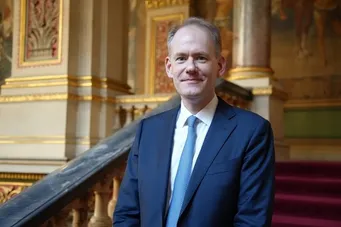 In his new role Professor Novy becomes the lead economic adviser to the Foreign Secretary on all of the UK’s foreign and international development policy. He will offer analysis, advice and thought leadership to the whole Ministerial team on the issues before them. He will also provide leadership for the FCDO’s analysts, helping to ensure that policies are based on robust data, evidence and evaluation, and represent the UK to counterparts on foreign government and global institutions such as the World Bank.
In addition to his internationally respected academic work on the economics of international trade and macroeconomics, Professor Novy had previously served as the Specialist Adviser to the House of Lords on the Transatlantic Trade and Investment Partnership (TTIP), as a member of the Council of Economic Advisers at HM Treasury appointed by the Chancellor of the Exchequer, and as a member of the Economic Advisory Council of the British Chambers of Commerce. In January 2024 he gave evidence to Parliament’s Joint Committee on the National Security Strategy, making recommendations on how to enhance the UK’s economic security.
Professor Novy has been a member of the Department since 2006 when he joined the faculty from the University of Cambridge, where he took his PhD. He is currently Impact Director of the ESRC Centre for Competitive Advantage in the Global Economy (CAGE), based in the Department, and a Research Fellow at the Centre for Economic Policy Research (CEPR).
Vice-Chancellor of the University of Warwick Professor Stuart Croft said:
“I was thrilled to hear the news that Professor Novy will be joining the Foreign Office to bring his expertise and insight to bear at the very highest levels of UK policy-making.
“It is a wonderful appointment for Dennis, who has an impressive track record in parliamentary and government engagement, and also fantastic news for Warwick.
“As a university we aim to contribute to society by applying our outstanding research to real-world problems. The appointment of Dennis as Chief Economist and Director of Analysis at the FCDO shows that we deliver on that ambition.”
Professor Novy said:
“I am delighted to join the FCDO in this exciting role. It is a huge privilege to serve the UK as part of this excellent institution.
“At this time of great change and uncertainty in the world, rigorous policy analysis and principled economic thinking are more vital than ever. The Economics Department at Warwick is at the forefront of that intellectual endeavour.
“On a personal note, I have been thrilled to discover a strong Warwick community among my new colleagues, many of whom studied at Warwick themselves, have children who are currently studying with us, or who are preparing their applications.”
Head of Department Jeremy Smith said:
“I am absolutely delighted to congratulate Professor Dennis Novy on his appointment as Chief Economist and Director of Analysis at the FCDO. This is a prestigious and impactful role, and Dennis’s selection is a testament to his outstanding scholarship and commitment to public service.
“Dennis joined the Department in 2006 and has contributed not only through his internationally recognised research in international trade and economic policy, but also through his leadership roles, including as Impact Director of the ESRC Centre for Competitive Advantage in the Global Economy (CAGE).
“The FCDO will benefit immensely from Dennis’s expertise. On behalf of the Department, I extend our warmest congratulations and wish him every success in this important new chapter.”
WLS colleagues secure BA Small Grants
Congratulations to Maximilien Zahnd and Signe Larsen on securing a British Academy small grant in support of their research.
Colleagues announced as John Grimwade Medal winners
We are delighted to announce that Dr Oksana Trushkevych and Professor Steve Dixon have been named recipients of the prestigious John Grimwade Medal for 2024, awarded by the British Institute of Non-Destructive Testing (BINDT).
Warwick to China: A journey of connections
It felt like stepping into summer again – though definitely hotter than an English one. Earlier this month, I spent ten intensive days in China, joining the Vice-Chancellor’s receptions, open days, and partner visits in Shanghai and Beijing. I had the privilege of representing the Department of Economics, alongside colleagues from across the University, and it was a precious opportunity to see Warwick through the eyes of students, parents, local agents, schools, and alumni.
The context matters. We’re celebrating Warwick’s 60th anniversary, but UK higher education also faces turbulence: international student numbers are softening, and geopolitics is reshaping global flows. Holding open days in China creates a rare moment of direct dialogue with students and families who are making important choices about their future.
For someone like me – usually teaching in the Oculus or writing papers – it was eye-opening to have these conversations face-to-face. I genuinely believe it makes a difference when parents see academics from the research and teaching frontier there, listening and talking to them. It is more than obtaining first-hand information. Importantly, it signals that we care.
The Open Days were full. In Shanghai alone, over 500 people registered and more than 400 attended. The audience was a mix: offer-holders, high-school students preparing A-levels or Advanced Placement courses (some considering switching from US to UK routes), undergraduates exploring postgraduate options, parents keen to ask questions about both academics and student life, local agents, teachers from international schools, and alumni reconnecting with Warwick.
Our academic panels drew standing-room-only crowds - I shared some of my own research on AI and economics and was impressed by the sharp and enthusiastic questions from the audience.
A few themes came up again and again when talking to families. Reputation and course quality are crucial – one parent, whose daughter is preparing A-levels in England, praised the rigorous quantitative training in our undergraduate economics programme, saying it matched the very top in the UK. QS Rankings also matter a lot. In cities like Shanghai, graduates from QS Top-50 and Top-100 universities qualify for faster "Hukou" (residency) access - which affects property rights, medical care, and school access.
This makes Warwick's standing especially relevant for those planning to return to China after postgraduate study. And finally, "word-of-mouth" is powerful: alumni experiences and peer recommendations strongly shape perceptions, both positively and negatively.
It was wonderful to connect with colleagues from across the University and the Warwick China Office, to exchange ideas and perspectives in a more informal setting. A highlight was sharing a beer with Warwick economics alumni - hearing first-hand how the Warwick brand has supported their careers, and reflecting together on how the department and alumni network might collaborate to promote Warwick more strongly in China.
For me, the trip was as much about reflection as public engagement. It was reassuring to see Warwick's strong reputation in China, but it also reminded me how much students and parents value authentic dialogue. Beyond facts and rankings, what seemed to matter most was the sense that Warwick is serious about teaching and research - and that we are willing to show up in person to listen.
History Graduate success
We are pleased to announce that two of our recently graduated students have won prizes from British American Nineteenth Century Historians (BrANCH) this year. They are:
Isa Seedat – Isa won the Kinder Fellowship at Missouri - https://www.branch.org.uk/kinderbranchfellowship . This is the third time in recent years our students have been awarded the scholarship.
Emmanuel-Jeremiah Abass – ‘Highly Commended’ for the Harriet Tubman Essay prize - https://www.branch.org.uk/tubmanessayprize
Congratulations to Isa and Emmanuel-Jeremiah.
Expert comment: Professor Thijs van Rens comments on new restrictions on promotion of less healthy food and drink
Rules banning multibuy dealsLink opens in a new window on foods and drinks high in fat, salt, or sugar – including buy one get one free (BOGOF) deals come into force today after long delays, with TV advertising restrictions to follow in the New YearLink opens in a new window.
Professor Thijs van Rens, an expert in the economics of food, health and environment, comments:
“It’s about time! Persuading the previous government to restrict the promotion of less-healthy foods (LHF) to consumers was one of the most significant achievements of public health experts and NGOs years ago.
“The law on multibuy promotions was changed in 2021 but industry managed to stall its implementation ever since – and even now TV advertising restrictions aren’t coming into force for another three months.
“The evidence is very clear on the effect of advertising on dietary choices and health outcomes, particularly for kids. We won't solve the obesity epidemic and the NHS crisis with marketing restrictions alone, but we won't be able to address the problem without them.
“To be effective, the rules must ban all or most forms of advertising for very unhealthy foods, including online and brand advertising.
“Restricting promotions for LHF is another potentially effective measure to reduce sales and consumption of these foods. However, it is less clear that a ban only on volume-based promotions (like BOGOF) is the right way to go about this.
“Unfortunately, there is little evidence on the difference in effect between different types of promotions, but my own research in progress shows that when retailers limit volume-based promotions, they simultaneously increase price-based promotions. This evidence is based on comparing Sainsbury's, which voluntarily committed to not use volume-based promotions in 2016, to other supermarkets over the same time period. We find that there is little effect on overall sales.
“In summary, this is a good and long-overdue step in the right direction, which we should celebrate. But we are still far from where we need to be.”
ENDS
· Multibuy restrictions: The Food (Promotion and Placement) (England) Regulations 2021, coming into force today: https://www.legislation.gov.uk/uksi/2021/1368/made
· TV advertising restrictions, coming into force on 5 January 2026: https://www.legislation.gov.uk/uksi/2024/1266/contents/made