
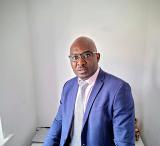
Dr Maurice Beseng
 |
Contact details |
| Email: maurice.beseng@warwick.ac.uk |
| Room: 3.30, Ramphal Building |
|
Term-time* office hours: Wednesdays (Virtual): 14:30-15:30; Thursdays (In-person): 10:30-11:30. Book slot hereLink opens in a new window Administrative enquiries: UGGSD@warwick.ac.uk |
Teaching Fellow
Background
Maurice Beseng joined Global Sustainable Development (GSD) in October 2025. Prior, he was Assistant Professor in the International Development Department at the University of Birmingham and also previously held two postdoctoral research positions. Firstly, as Postdoctoral Research Fellow at the University of Oxford’s Wildlife Conservation Research Unit (WildCRU), where he investigated the global trade in donkey skins and its links to wildlife trafficking in Africa. Secondly, as a Research Associate at the University of Sheffield’s Institute for Global Sustainable Development, contributing to the AfriCultuReS project on remote sensing, climate change and food security in 8 African countries.
Dr Beseng earned his PhD in Security, Environment and Development from Coventry University in 2019, where his doctoral research examined the fisheries-maritime security nexus in Cameroon and its implications for local livelihoods and sustainable development in the Gulf of Guinea. He also holds an MA in Conflict and Peace Studies, an Erasmus Mundus Joint European MSc in Water and Coastal Management, a Postgraduate Diploma in Gender and Development Studies, and a BSc in Botany and Environmental Sciences.
Teaching responsibilities
- GD206/208 | Inequalities and Sustainable Development: Inclusion and Dignity for All (co-convenor)
- GD107 | Global Sustainable Development Project (co-convenor)
- GD355 | Violence, Peace, and Sustainable Development (co-convenor)
- GD906 | Policy, Governance and Sustainable Development (convenor, postgraduate)
Research interests:
Maritime Governance, Human Security, Sustainability, Ocean Economy, Environmental Justice.
Dr Maurice Beseng is an interdisciplinary researcher whose work focuses on the ocean economy, environmental justice, maritime governance, human security, and sustainability. Particularly, I seek to understand how coastal communities respond to global maritime change, including issues such as plastic pollution, fisheries crime, and the politics of the blue economy. I am interested in the role of indigenous knowledge systems and grassroots activism in promoting sustainable and just environmental practices. My other research work has focussed on civil society, conflict resolution and peacebuilding in Cameroon. I have conducted fieldwork in Central and West Africa, examining the socio-political dynamics of illegal wildlife crime, maritime security governance, security and peacebuilding.
Research Project
Project title: Scaling Participatory Co‑management of Abandoned, Lost or Discarded Fishing Gear (ALDFG) for Sustainable Coastal Livelihoods in Cameroon
Duration: October 2026 - June 2027
Funder: Participatory Research Fund (PRF)
Abstract: Abandoned, Lost, or Discarded Fishing Gear (ALDFG), is a significant yet under-addressed driver of marine ecosystem degradation, biodiversity loss, and fisheries decline globally. In Cameroon, where artisanal fisheries play a critical role in food security, employment, and coastal livelihoods, ALDFG significantly contribute to plastic pollution, damage marine habitats and undermine the sustainability of fishing-dependent communities. Despite growing recognition of the problem, effective and locally legitimate governance mechanisms for managing ALDFG remain limited. Building on previous seed-corn fund exploratory research in Cameroon’s Southwest Maritime District, this project seeks to scale participatory approaches to ALDFG management across three coastal regions: Limbe (Southwest), Douala (Littoral), and Kribi (South). The study aims to strengthen participatory co-management of ALDFG through a nine-month Participatory Action Research (PAR) programme that brings together fishers, civil society organisations, community leaders, and government agencies to jointly identify challenges, co-design solutions, and test practical interventions. Guided by theories of commons governance, co-management, adaptive governance, and institutional legitimacy, the project will examine how collaborative governance arrangements can improve the prevention, recovery, and sustainable management of fishing gear waste. The research will involve five interconnected phases: governance assessment and stakeholder mapping; participatory co-design workshops; implementation of community-led pilot interventions; monitoring, evaluation, and learning; and policy engagement and dissemination.
The project is expected to generate improved stakeholder collaboration, enhanced local capacity for marine resource governance, and evidence-based policy recommendations for plastic waste management from fisheries. By establishing a multi-stakeholder governance platform and producing scalable models for participatory ALDFG management, the research will contribute to healthier marine ecosystems, more resilient coastal livelihoods, and broader efforts to address marine plastic pollution across Cameroon.
Publications
Journal Articles
Beseng, M., 2026. Managing abandoned, lost, or otherwise discarded fishing gear in Cameroon's marine small-scale fisheries: Perspective of local ecological knowledge. Marine Policy, 185, p.107000.
Su, S., Macdonald, E.A., Arcilla, N., Beseng, M., Thomaz, F. and Macdonald, D.W., 2023. Characterising the links between the trade in donkey skins for Traditional Chinese Medicine and timber of conservation concern. Global Ecology and Conservation, p.e02598.
Beseng, M., Crawford, G., & Annan, N. (2023). From ‘Anglophone Problem’ to ‘Anglophone Conflict’ in Cameroon: Assessing Prospects for Peace. Africa Spectrum, DOI: 10.1177/00020397231155244.
Su S, Macdonald, E. A, Beseng, M, Thomaz, F. & Macdonald, D. W. (2022) “The link between wildlife trade and the global donkey skin product network” Conservation Science and Practice DOI: 10.1111/csp2.12676
Annan, A., Beseng, M., Crawford, G., & Kiven, J. K. (2021) Civil society, peacebuilding from below and shrinking civic space: the case of Cameroon’s ‘Anglophone’ conflict, Conflict, Security & Development, https://doi.org/10.1080/14678802.2021.1997454
Beseng, M., & James Malcolm (2021): Maritime security and the securitisation of fisheries in the Gulf of Guinea: experiences from Cameroon, Conflict, Security & Development, DOI: 10.1080/14678802.2021.1985848
Beseng, M. (2021). “The Nature and Scope of Illegal, Unreported, and Unregulated Fishing and Fisheries Crime in Cameroon: Implications for Maritime Security”. African Security, 1-24. DOI: 10.1080/19392206.2021.1982241
Beseng, M., (2019). “Cameroon’s choppy waters: The anatomy of fisheries crime in the maritime fisheries sector”. Marine Policy, 108, 103669. DOI: https://doi.org/10.1016/j.marpol.2019.103669
Book chapters
Fonchingong C, and Beseng, M. (2015). ‘Space Partners or Mortal Enemies: Contentious Lands, Farmer–Grazier Conflicts and Women’s Militancy in Cameroon’, Lumumba-Kasongo, T (ed), Land Reforms and Natural Resource Conflicts in Africa: New Development Paradigms in the Era of Global Liberalization, Routledge, London. ISBN 10: 1138888826.
Reports
Kiven, J., Crawford, G., Beseng, M., & Nancy Annan (2021). “Shrinking Civic Space and the Role of Civil Society in Resolution of Conflict in Anglophone Cameroon”. Coventry University and African Leadership Centre, Coventry, UK
OP-ED
Gordon, C. and Beseng, M. (2023). Cameroon’s anglophone conflict has lasted for six years: what citizens say about how to end it. The Conversation, Africa.
Gordon, G., Beseng, M., Annan, A., (2023). "War and no peace in Southern Cameroons". Africa is a Country
Nancy, A, Beseng, M., Gordon, C., (2023). "Civil Society Contributions towards the Resolution of the Anglophone Conflict in Cameroon". The Peace News Network.
Beseng, M. (2021). “How illegal fishing off Cameroon’s coast worsens maritime security”, The Conversation, Africa.
Beseng, M. (2019) “Cameroon Can’t Afford to Continue Ignoring Crime in Fisheries Sector”. The Conversation, Africa.
Selected conferences/events
1) "Sea of Consequences: Social and Natural Science Narratives on Environmental Harm and Crime at Sea", April 15-17 2026, Universitat de les Illes Balears (Palma de Mallorca, Spain). Paper presentation: "Maps and Narratives in Oceanic Science and Policy" with Brockington, D. (ICTA – Universitat Autònoma de Barcelona), Nick Record (Bigelow Laboratory for Ocean Sciences), Ife Okafor (University of St. Andrews).