TIMELY Project Outcomes
Project outcomes
Read about the project findings, recommended action points and check out our role models' stories!
Main Findings
TIMELY brings together role model stories (see further down this page), creative workshops and a mobile exhibition to explore how people enter and navigate environmental science. TIMELY shows that environmental careers are diverse, relational and often non-linear. The role model stories challenge the idea that there is one standard route into environmental science. Instead, they show pathways shaped by disciplinary movement, career breaks, research-enabling roles, personal values, support networks, and moments of uncertainty and change.
The project also shows that representation is most powerful when it is connected to honest and relatable storytelling. Seeing diverse role models matters, but hearing how people navigated barriers, found support, changed direction and developed confidence can help others imagine their own place in environmental science.
Finally, TIMELY demonstrates the value of creative methods. Through artist-led workshops, visual storytelling and a mobile exhibition, the project created more accessible ways to share career journeys and invite reflection from wider audiences.
The main findings for the project are summarised below:
Action points for policymakers
Policymakers, funders and institutions should broaden how environmental science careers are represented. Outreach and career development initiatives should include non-linear pathways, interdisciplinary routes, career breaks, research-enabling roles and people from underrepresented backgrounds.
They should also treat career imagination as part of inclusion. Supporting people to enter environmental science is not only about providing opportunities; it is also about helping them see that they belong and that their experiences, identities and skills can contribute to the field.
Finally, future initiatives should invest properly in co-created and creative approaches. This means resourcing artists, co-creators, partners and people with lived experience, while building in evaluation methods that capture not only attendance, but changes in awareness, confidence, motivation and belonging.
The action points for the project are summarised below:
Role Models' stories
We have compiled the stories of the 10 role models involved in the project below, scroll through the tabs and immerse yourself in their journeys all over the world, from Madagascar, Cambodia and beyond to Warwick!
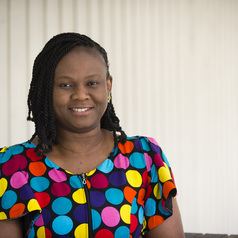
Modupe’s environmental journey began inside civil engineering. She started her undergraduate degree intending to become a structural engineer, but gradually found herself drawn to water and environmental engineering. The shift was sparked not only by intellectual interest, but by inspiring lecturers who made the subject feel alive, relevant, and connected to people’s everyday lives.
Her pathway into environmental engineering involved several moments of deliberate agency. At postgraduate level, she negotiated a move into water and environmental engineering despite having stronger prior training in structural engineering. It was a risk: she had to catch up, read more, and build knowledge quickly. Later, during her PhD, she even took an undergraduate-level course to strengthen her foundation. Rather than seeing this as a weakness, Modupe presents it as commitment: she was willing to do the work needed to move into the field she had chosen.
Her motivation is deeply values-led. “One of my value systems is to be able to help people,” she explains. Water matters because everyone interacts with it. Environmental engineering, for her, is a way to create solutions that meet real needs — from water supply to wastewater treatment, from infrastructure to health, from everyday life to humanitarian engineering.
There were barriers. Environmental engineering had lower visibility than structural or transport engineering, and she encountered assumptions that it was less prestigious or less technical. She also had to navigate career development alongside personal life and family. What sustained her was clarity of purpose: “being clear about the goal at every step.”
For the exhibition, Modupe imagined her journey as a spring and as a staircase with landings. The staircase is especially powerful: at each stage, she could continue, pause, or pivot. “At each of those landings, there was a decision to be made.”
Her message to others is expansive: environmental science is not reserved for a special group. “Everything that is being done has a link to the environment,” she says. Find that link, and it can become a pathway.
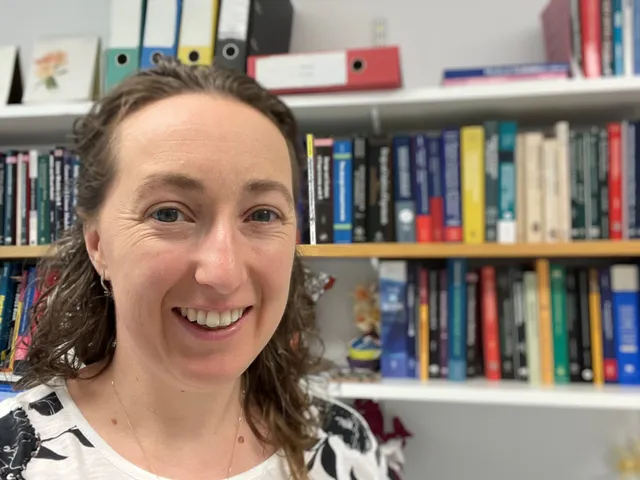
Modupe Jimoh