
PhytoPRISM: A Horizon Europe Project
€6M Horizon Europe project “PhytoPRISM” launches at Warwick Crop Centre
We welcomed researchers, plant health experts and policymakers from across Europe on 29-30 September 2026 for the kick-off meeting of PhytoPRISM, a new €6 million Horizon Europe project coordinated by the Warwick Crop Centre.
The two-day meeting marked the beginning of an ambitious four-year collaboration that aims to develop new ways of helping plant health authorities decide how best to prevent, contain and manage damaging plant pest and disease outbreaks.
A growing challenge for plant health
Plant pests and diseases pose a major and growing threat to agriculture, forestry and the wider environment. International trade creates opportunities for pests to move into new areas, while climate change can alter where they are able to establish and spread.
Once a new pest arrives, national plant health authorities face a series of difficult decisions. Should resources be concentrated on preventing entry in the first place? How intensive should surveillance be? If an outbreak is detected, is eradication still possible? When should the emphasis switch from eradication to containment or even deregulation and long-term management?
Crucially, these decisions are not independent of one another. Actions taken at one point in the system can affect what happens elsewhere, and measures that appear effective individually may perform differently when considered as part of a complete management strategy across the system (measures can be applied all the way from the exporting country, ports of entry, during the growing season through to post-harvest).
Together, the partners span epidemiological modelling, plant pathology, entomology, economics, behavioural science, risk analysis, software development, stakeholder engagement and plant health policy.
Rather than considering individual control measures in isolation, PhytoPRISM will develop an integrated, data-driven platform for exploring combinations of measures across the agri-food and forestry value chains.
Europe has invested heavily in new tools for pest detection, diagnosis and control.
How do we combine and deploy them for maximum impact?
The aim is to help decision-makers ask not simply ”Does this measure work?”, but “What combination of measures gives us the best outcome, and where should we invest our resources?”
Although work on PhytoPRISM officially began on 1 September 2026, the kick-off meeting at Warwick Crop Centre was the first opportunity for the consortium to come together in-person and start turning those ambitions into a coordinated programme of work.
Over two days, around 35 participants discussed the scientific programme, the individual work packages and, importantly, how the different elements of the project will fit together.
A particularly important part of the meeting was bringing the research consortium together with organisations involved directly in plant health policy and decision-making.
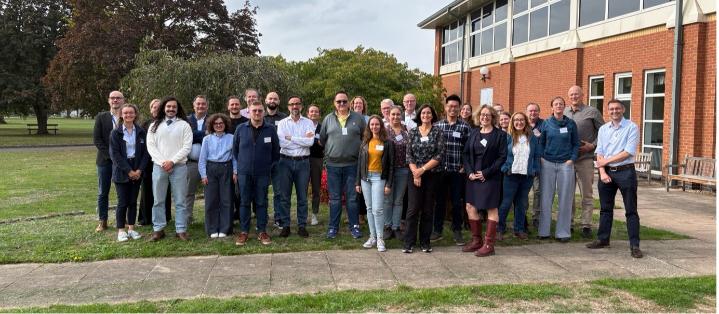
Led by the University of Warwick, the consortium brings together expertise from across Europe, including the University of Cambridge, Wageningen University, INRAE, Rothamsted Research, Forest Research, ADAS, IVIA, Università Cattolica del Sacro Cuore, the University of Parma, Prospex Institute, EPPO, AREFLH, the French Forest Health Department and Ceratium Scientific.
PEST INVASION
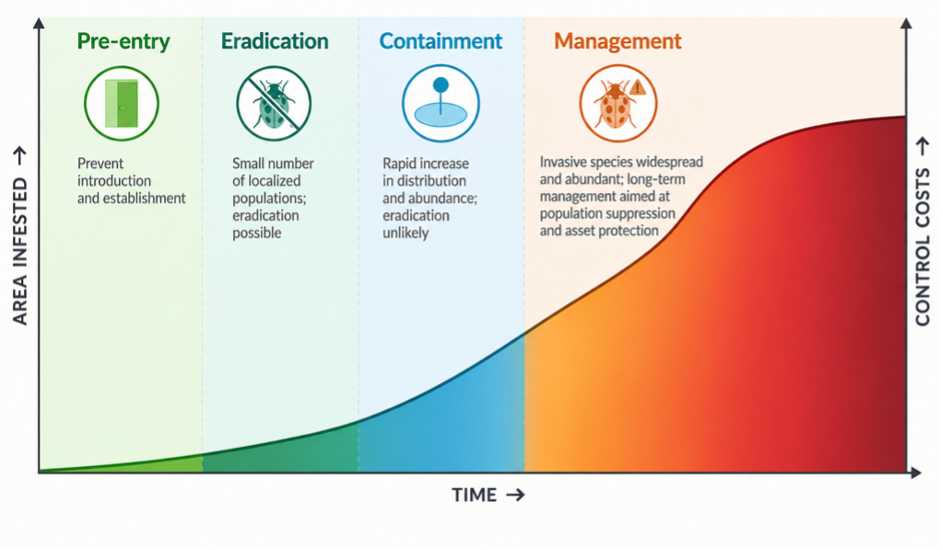
The Invasion curve shows how different intervention types (pre-entry, eradication, containment and management) depend on the phase of invasion of the plant pest.
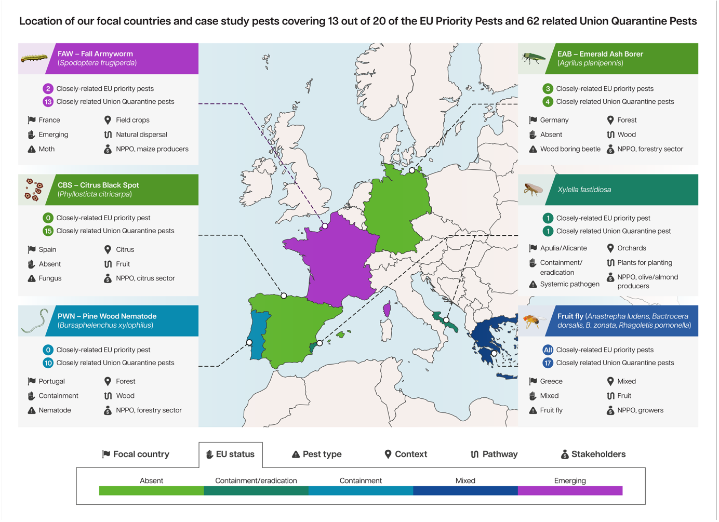
Location of focal areas and case study pests in Europe provide open access platform for pest management
Representatives from DEFRA, theDutch National Plant Protection Organisation (NVWA)and the European Food Safety Authority (EFSA)joined the meeting, while presentations from theEuropean Commission provided the wider European policy perspective and helped set the project in the context of current and future plant health challenges.
That interaction is central to the philosophy behind PhytoPRISM. The aim is not simply to build increasingly sophisticated models, but to ensure that the science addresses the decisions that plant health authorities actually have to make.
Across the two days we heard about work ranging from pest entry pathways, surveillance and epidemiological modelling to economics, optimisation and stakeholder engagement. Just as importantly, there was plenty of time for discussion between those different areas. The final session brought participants into smaller groups to identify some of the key questions, connections and next steps that will shape the first phase of the project.
Participants also had an opportunity to explore Warwick Crop Centre and hear more about the research taking place here and across the wider Stratford Innovation Campus at Wellesbourne.


From the Warwick Crop Centre to Europe
Warwick Crop Centre was a particularly appropriate place to begin the project.
The site has a long history of research supporting crop production and plant health, stretching back to the establishment of the National Vegetable Research Station at Wellesbourne after the Second World War. Today, the Crop Centre continues that tradition by bringing together fundamental science, applied research and engagement with industry and policymakers.
PhytoPRISM takes that approach to a challenge that increasingly crosses national boundaries.
The project will use six important European quarantine pests as case studies to develop and test its approaches. However, the ambition is much broader: the methods and tools developed through the project are intended to be applicable to many different plant health threats.
For me, some of the most encouraging things about the kick-off meeting was seeing the range of expertise assembled in one place and the amount of engagement among everyone there. Researchers who approach plant health problems from very different disciplines were sitting alongside the organisations responsible for turning evidence into real-world plant health decisions.
Ultimately, PhytoPRISM aims to provide an open-access platform through which plant health authorities can explore different management strategies; from measures designed to prevent pest entry, through surveillance and eradication, to containment and longer-term management.
That is really what PhytoPRISM is about. No single model, discipline or organisation can solve the challenge posed by invasive plant pests. We need to connect those different perspectives and use them to understand how interventions work together across the whole system.
After several years developing the ideas behind the project, and more than a year since we first submitted the proposal, it was hugely rewarding to welcome everyone to Warwick Crop Centre and see the consortium together for the first time.
Now the real work begins and we are really looking forward to the next four years!
Written by Stephen Parnell, PhytoPRISM project coordinator

