
Professor Rosemary Collier awarded the Sydney Andrew Medal at the SCI
Horticulture R&D: skint, scant, or scattered?
Professor Rosemary Collier was awarded the Sydney Andrew Medal at the SCI in London this week (30thSept 2026). This is a special award to recognise exceptional service in science important for agriculture. More specifically, the medal and associated talk are presented on the theme of a branch of agricultural science which generally receives scant attention. Prof Collier’s talk was on horticultural R&D, which by many is considered the poor relation of agriculture and food production in terms of research provision and conversion.
Prof Collier explained her passion for applied research and development. In many branches of STEM, applied research is overlooked compared to fundamental science and product development. In systems talk, it is a “missing middle”. Funding for applied R&D is hard-won, generally short-lived and yet requires deep subject knowledge and the skills to convert academic findings into everyday practice. These are skills she holds in abundance. However, applied research for horticulture appears to be at an all-time low. Prof Collier’s talk explained how we have arrived at this situation and suggested a way out.
The talk presented a picture of the pipeline that once existed for the translation of basic science discoveries into useful grower resources via strategic programmes managed and funded by Defra (and before that, MAFF). She then introduced a new study on the history of funding for R&D in UK horticulture, presenting a graph that showed a dramatic decline over 10 years from the turn of the century in the strategic funds Defra have provided to support the horticulture sector, although they still fund national resources such as the Genetic Improvement Networks.
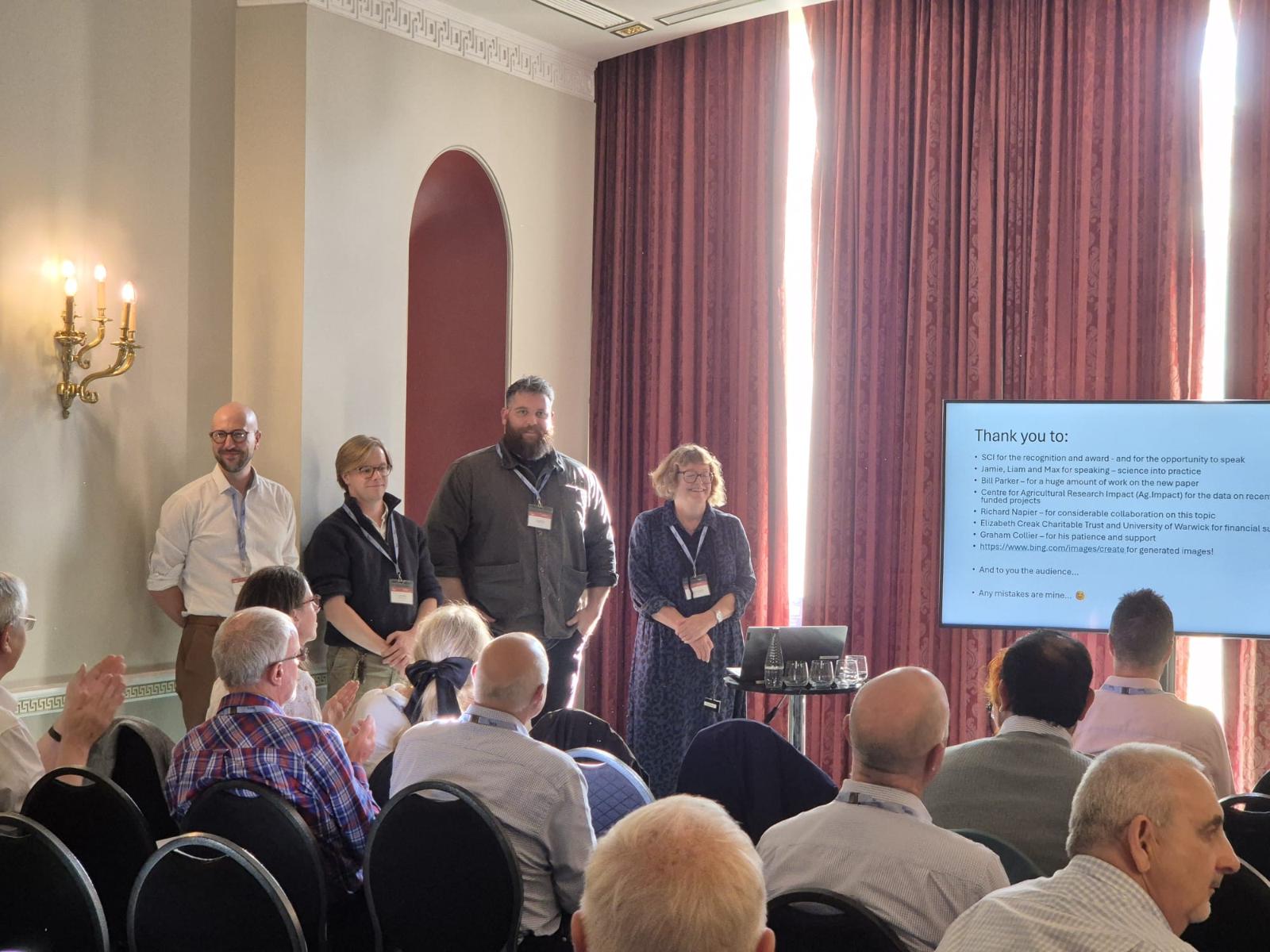
Professor Rosemary Collier was awarded the Sydney Andrew Medal at the SCI in London this week (30th Sept 2026).
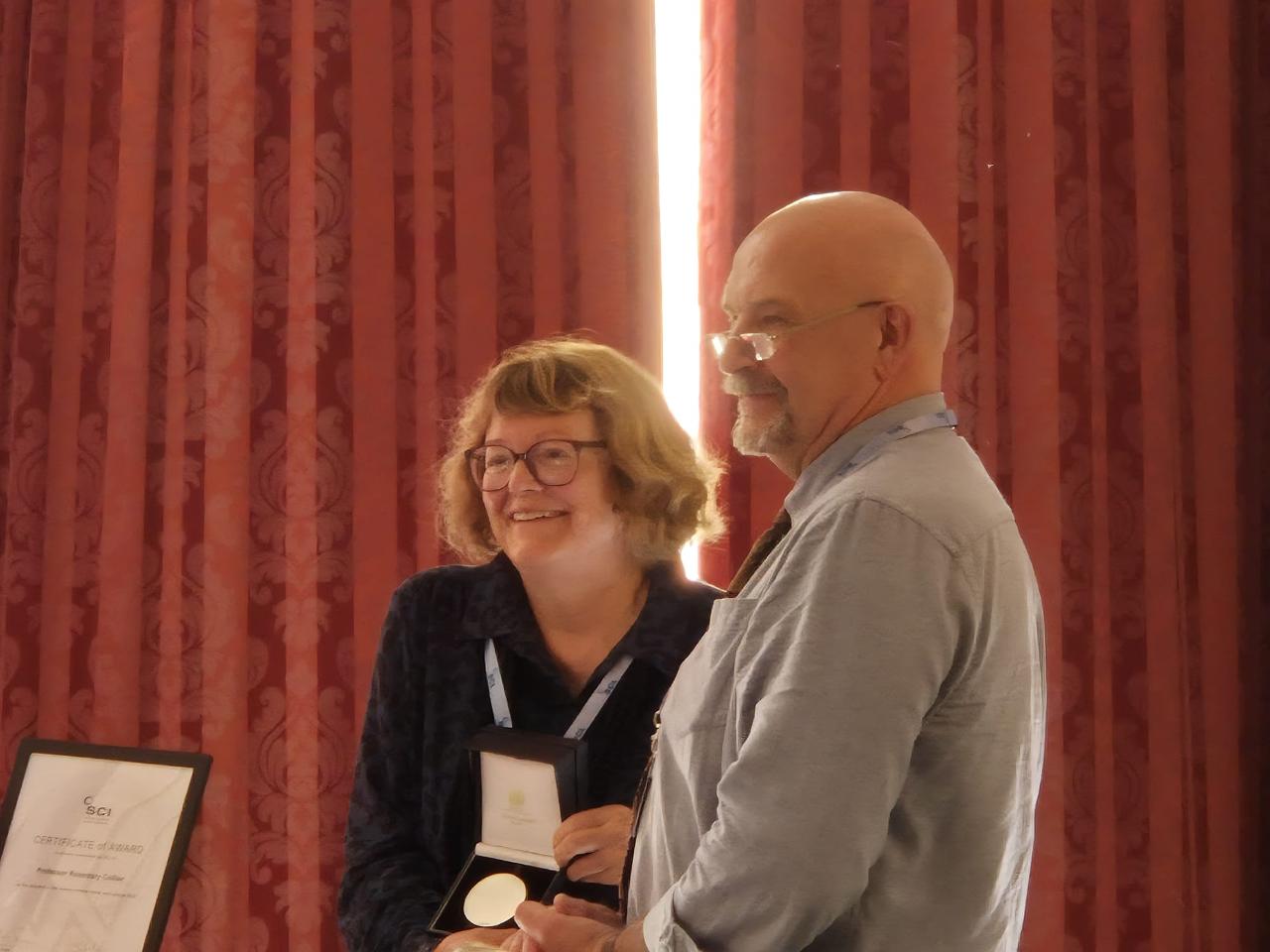
Prof Collier explained her passion for applied research and development. In many branches of STEM, applied research is overlooked compared to fundamental science and product development.
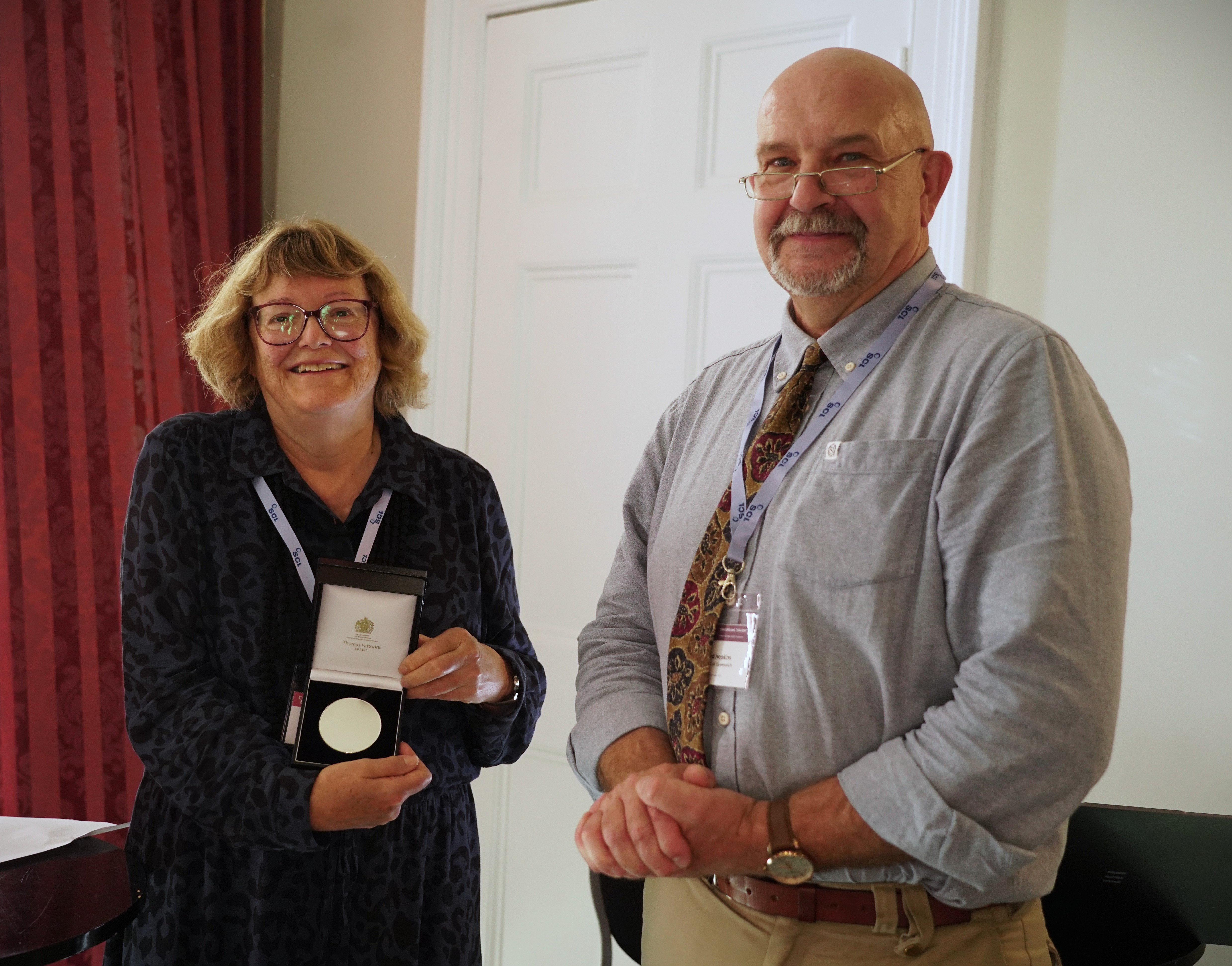
Prof Collier suggested a way forward, linking ideas to the government’s Horticulture Sector Growth Plan as a part of the Farming Roadmap.
More recently, horticulture also lost R&D support from the grower levy after the closure of AHDB Horticulture. In the years after the loss of strategic Defra funding, AHDB Horticulture had developed and managed R&D priorities in dialogue with growers. They also provided a dissemination service, a knowledge exchange platform and a focus for discussing strategic priorities.
It might be imagined that the result is a void in funding for applied research. However, Prof Collier then presented data collected and shared by Ag-Impact on all public funding addressed at horticulture. This includes funding from the UKRI Research Councils, Innovate UK, FIP and other sources, and the total is not insignificant, perhaps £30 M pa.
Why then does horticulture feel a poor relation? Why is there concern that R&D in horticulture is unloved and unfunded at a time when the sector has a chance to grow? The analysis showed that there are many small projects - few led by growers and many led by technology companies. Whilst there are many projects, duplication and a lack of dissemination leads to inefficiencies. The current picture is one of a highly fragmented sector with little community conversation. Not skint nor scant, but scattered support.
Fortunately, Prof Collier suggested a way forward, linking ideas to the government’s Horticulture Sector Growth Plan (which includes potatoes), a part of the Farming Roadmap. She has been a leading light in the development of a pan-horticulture and potatoes network (a temporary label). This network has met a few times this year and has secured support, input and approval from over 120 organisations and specialists from across horticulture and potatoes, and includes representation from the Horticulture Expert Group (edible horticulture and potatoes), Environmental Horticulture Group (ornamentals and landscape), and the UK Fruit and Vegetable Alliance (agroecology groups).
The network has the opportunity to develop a communication facility to ensure that the outputs of public funding are shared to avoid duplication and to maximise translation across commodities. The network can also give the sector a common voice, and a strong voice to continue to support the Growth Plan and advocate for the values of horticulture so that the Plan lives and adapts to reflect the dynamism of the sector and the changeable trading environment it works in. Hopefully the scattering of support strands can be gathered into a more cohesive and cooperative community, Growing British fresh produce.
Finally, Prof Collier’s presentation was one of four made during the afternoon event at the SCI. The other speakers addressed the topic ‘where science meets business’ and were Dr Jamie Pike (Dr Jamie Pike, Earlham Institute/Tozer), Dr Liam Harvey (Biobest) and Dr Max Newbert (Syngenta). By chance, all of them completed their PhD research at the University of Warwick.