
Warwick Law School News
Warwick Law School News
The latest updates from our department
Dr Serena Natile to deliver session on Wages for Housework at the Resonate Festival
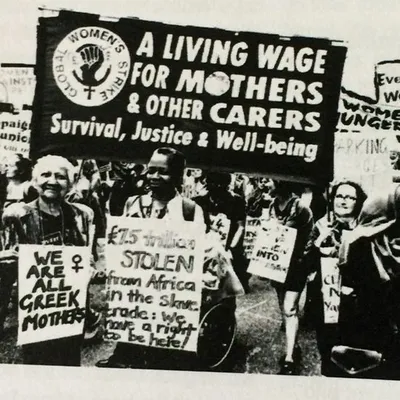 Dr Serena Natile will deliver a session on ‘Revisiting Wages for Housework’ at the Resonate Festival on Monday 3 November 2025. The session forms part of The Resonate ESRC Festival of Social Science: Our Working Lives, taking place at 1 Mill Street, Leamington Spa. The event will consider the potential of utopian/dystopian evolutions of work, and how we might shape the future for human wellbeing. Join University of Warwick researchers for an evening of short talks from diverse perspectives of ‘Our Working Lives’.
If you are interested in attending this event, book your tickets now on the Resonate Festival website.
Serena’s session pulls on her ISRF project ‘Transnational Social Security Law in the Digital Age: Towards a Grassroots Politics of Redistribution’and will rethink the contemporary legal relevance of the Wages for Housework campaign.
The Wages for Housework campaign started in the 1970s with the aim to disrupt the capitalist system by claiming recognition and valuation for housework labour. By demanding a wage for unpaid labour as well as universal social security, the campaign aimed to expose how capitalism enables the maldistribution of wealth, power, and responsibilities on grounds of gender, race, class, disability, migration status, and geopolitical location. While the campaign itself started and gained visibility in the West, its politics and motivation drew inspiration from the feminist anti-colonial struggles in the Global South aimed at reversing power and redistributing wealth globally.
The aims of the campaign could not be realised without an understanding of global asymmetries of power and through transnational solidarity between ‘housework’ labourers. While Wages for Housework as a transnational movement has informed feminist scholarship and struggles, its relevance in debates on legal reform has been limited. In the current time of raising inequality, precarity, and social insecurity the Wages for Housework campaign is more relevant than ever. It can offer some lessons on whether and how the law can be used for radical change. The presentation will provide an overview of the campaign, its relevance for current workers’ struggles, and will show its prefigurative potential: the claims and demands of the campaign allow us not just to reflect on possible reforms, but to visualise how a different global society based on socioeconomic justice might look like.
She told us:
“I learned about the Wages for Housework movement during my legal studies in Italy, and I have engaged with the extensive feminist research on this topic throughout my academic career. My interest in the movement has been motivated by my mum’s experience and struggles. She had to leave school very young to work in the informal sector and support her family - for this reason she was never entitled to social benefits or, more recently, to state pension despite she has made enormous contributions to society. I think the campaign aimed to give voice to people who, like her, have been relegated to the margins of the economy and to recognise their demands for justice. In my research I use Wages for Housework as ‘legal prefiguration’, in the attempt to translate the demands of the campaign into a legal framework for transnational social security and examine how socio-economic power relations might change if such legal instrument was in place. I think this year’s festival theme ‘Our Working Lives’ is a great occasion to share the insights of my research with a broader audience.”