
Past Projects
Professor Vanessa Munro is one of the researchers behind a major study by the Scottish Government into the unique nature of the Scottish jury system. Scottish Jury Research: Findings From a Large-Scale Mock Jury Study involved 64 mock juries and 969 individual participants. It is the first to consider the unique nature of the Scottish jury system with 15 jurors, three verdicts and a simple majority. The report sets out the researchers’ findings but does not make any recommendations. The study was commissioned by the Scottish Government in response to Lord Bonomy’s Post Corroboration Safeguards Review, which recommended that research should be carried out to ensure that any changes to Scotland’s jury system should be made only on a fully informed basis, including the impact having a three verdict system has on decision making.
Find out more about the Scottish Jusy Research project here.
Professor Vanessa Munro was a collaborator on a ERSC funded project which was entitled ‘Impacts of the Covid-19 pandemic on criminal justice journeys of adult and child survivors of sexual abuse, rape and sexual assault’. The total value was just under £215,000 and the project was hosted jointly out of Coventry and Lancaster. The project aimed to gather survivors’ and other criminal justice system stakeholders’ perspectives and experiences of (changes to) policies and practices in relation to sexual offences cases during the Covid-19 pandemic. We wanted to understand how these experiences vary across settings and groups.
The project made recommendations for criminal justice policy and practice in England and Wales in relation to sexual offences, in particular, any innovations that may be of value post-pandemic. Further information about this project can be found here.
This project was funded by a Leverhulme Research Fellowship (2016-2018 - £42,319). It considers, and critiques, a series of criminal prosecutions brought against trans and other gender non-conforming young people for so-called ‘gender identity fraud’ between 2012-2018. In particular, it rethinks the criminal law and philosophical concepts of consent, harm and deception, in light of these prosecutions. The project led to a series of peer-reviewed articles (see Publications tab), media interventions and blogs (see ‘Media’ tab), and culminated in Alex’s third monograph, Sexual Intimacy and Gender Identity ‘Fraud’: reframing the legal & ethical debate (Routledge, 2018)
Prof Rebecca Probert
Law Commission
Professor Rebecca Probert has worked as a specialist advisor with the Law Commission on a review of the law governing how and where people can marry in England and Wales. The scoping phase of the project concluded with the publication of Getting Married on 17 December 2015.
The aim of the review was to consider whether the current law provides a fair and coherent legal framework for enabling people to marry and to identify areas of the law that might benefit from reform. Since the relevant legislation is over 65 years old and is a consolidation of various statutes dating back to 1836 (and in a number of respects to 1753), this specifically drew on her knowledge of the historical context.
The scoping phase involved a preliminary study involving research into domestic and comparative law, and discussion with key stakeholders. The resulting paper explains why full-scale reform of this area of the law is needed and identifies the questions that would need to be examined to achieve such reform. Click hereLink opens in a new window for further information.



Dr Ania Zbyszewska
Lund Fellowship
£10,000
Ania Zbyszewska received £10,000 from the Lund Fellowship scheme in the Norma Elder Law Research Environment at Lund University to become a visiting research fellow, where Ania will spend three months (April -July 2015). Whilst there Ania has worked in parallel with other labour lawyers and members of the Law Faculty-based Norma and Elder Law Research Environments on a number of projects analysing European policies aimed at employment activation of older people, particularly women, and examining crosscutting social and policy tensions that are exposed when older workers re-enter labour markets or when they are unable to do so. This work tackles important questions about the adequacy of long-term development plans that hinge heavily on active aging, as they do in many countries facing demographic crises and at the EU level. The funding comes from the Ragnar Söderberg’s Foundation and the Marianne and Marcus Wallenberg Foundation.
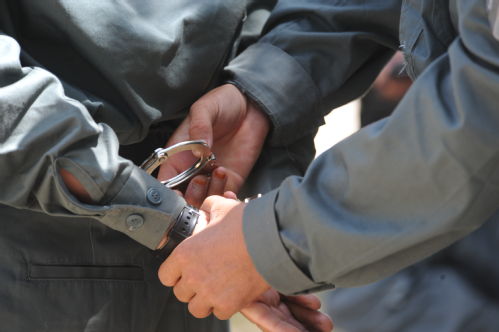
CJC members Jackie Hodgson and Kevin Hearty have secured funding for the Centre for Operational Police Research with colleagues from other departments.
Professors Jackie Hodgson, Neil Stewart (Psychology) and Carsten Maple (WMG) have secured £40,000 from Warwick Strategic Impact Fund for collaborative work with the Metropolitan Police Service. The funding is set to help develop a network of academics and active police staff and officers around three central research projects.
Professor Jackie Hodgson and Dr Kevin Hearty, along with Associate Professor Kim Wade and Professor Neil Stewart (Psychology), have also secured £20,000 from the ESRC Impact Acceleration Account to collaborate with West Mercia and Warwickshire Police. The funded project: “We don’t buy crime” will develop and evaluate the impact of Smartwater technology and other preventive interventions on public confidence in and satisfaction with the policing of burglary.
Dr Ana Aliverti
British Academy
£10,000
Proposed as a pilot project, it will involve the analysis of decision-making processes in two criminal courts in Birmingham. Specifically, this research will investigate whether and in which ways the immigration status of the defendant influences the decision to prosecute, the defence’s legal strategy, the decision on bail, and sentencing choices. In addition, it will examine the impact that a prospective deportation of the defendant has on sentencing decisions.The proposed research aims to investigate the impact of immigration status on the treatment of defendants before the criminal justice system. While citizenship and immigration status are in principle irrelevant for establishing criminal liability and punishment, this research seeks to examine whether and to what extent they influence everyday decisions by criminal justice actors.
The proposed project, which lays the foundation of a larger research project, is both topical and timely given the unprecedented levels of human mobility and the impact of mass migration on public services, including the criminal justice system.



Dr Illan rua Wall
Independent Social
Research Foundation
£45,000
The research looks at the relation between law and disorder. Legal concepts are usually framed as being a part of the everyday social order. However, in moments of disorder we find the legal system stripped of its conventional architecture: the monopoly of the use of force, the control of territory and populations, the authority of the legislature, the constitutional unity of the people, or law’s claim to neutral universal protection. In moments of disorder, law as an institution and a basis of the social order is questioned. The problem with extant ideas of the law of disorder is that they start from law’s ‘normalcy’. The ‘Law of Disorder’ reverses the priority wherein law is the horizon of meaning for understanding disorder. Instead it places the emphasis on thinking from within the ‘disordered’ event, attempting to see beyond the conventional legal understanding of constitutional ‘origins’, criminal prosecution and balancing of rights. During the ISRF fellowship, rather than beginning with war, the state of exception or transitional justice (all points of interest for ‘the Law of Disorder’), the project will focus on protest crowds. These reveal essential questions about law and social order. The project will analyse how the protest crowd generates an atmosphere in the space it occupies. From the square or park, sometimes this atmosphere begins to seep outwards, gradually settling upon the city or even the state (as a sense of crisis). Take for example the atmosphere of Madrid or Athens at the height of the Indignados occupations. In this new atmosphere, there is a revision of the type of political settlement that is realistic and possible, evidenced in Greece by the emergence and success of Syriza, the anti-austerity party.

Dr Ana Aliverti
British Academy/Leverhulme
£12,900
Dr Ana Aliverti has been awarded the British Academy Rising Star Engagement Award (BARSEA). The BARSEA aims at providing an opportunity for early career researchers who have established their academic credentials as leaders in their field to enhance their skills and career development through playing a leading role in engaging others through the organisation of engagement events. Ana is the co-host and leading organiser of a two-day international workshop entitled ‘Criminal Adjudication in the Age of Migration’ to take place in March 2016 at the University of Oxford.
This workshop will bring together leading international scholars and early career researchers from various countries, doctoral students, and British policy makers and practitioners to shed light on the relevance of citizenship and immigration status in criminal justice decision-making. The theme of the workshop is associated to Ana’s current research project, funded by the British Academy and the Leverhulme Trust, which investigates the impact of immigration status and citizenship on the treatment of defendants before the criminal justice system.


Dr Kevin Hearty
ESRC IAA
£20,000
Prof Jackie Hodgson
ESRC IAA
Professor Jackie Hodgson and Dr Kevin Hearty (Law School), along with Associate Professor Kim Wade and Professor Neil Stewart (Psychology), have secured £20,000 from the ESRC Impact Acceleration Account to collaborate with West Mercia and Warwickshire Police.
The funded project: “We don’t buy crime” will develop and evaluate the impact of Smartwater technology and other preventive interventions on public confidence in, and satisfaction with, the policing of burglary. The research is carried out through the Centre for Operational Police Research (COPR) and will survey residents across several towns, asking them about their views on crime and policing in their local area. Follow up surveys and focus group interviews will be carried out at three and six month intervals to try to gauge whether different police interventions have had an impact on the public’s confidence in policing and in particular, the level of satisfaction in policing shown by victims of burglary. The police will draw on the findings of the research to inform their future strategy on effective burglary intervention.
There is national interest in smart water technology and other forces, such as the Met, have claimed that Smartwater has helped to reduce rate of burglary. However, rather than relying only on local crime figures, West Mercia and Warwickshire police have approached COPR to provide an independent, academic evaluation of the impact of this and other initiatives on public confidence in, and victim satisfaction with, the policing of burglary.

Dr Giuliano Castellano
ESRC IAA
£10,000
Dr Giuliano G. Castellano has secured £10,000 from the ESRC Impact Acceleration Account to explore with a two-year project the strategies for reforming secured transactions law – in different legal contexts – as a way to foster access to credit and increase market liquidity.
Secured transactions are key components of market economies and international finance. Through non-possessory security interests business may gain access to credit by collateralising tangible or intangible assets that are integral to the operation of their respective businesses, while retaining control and continuing to profit from those same assets. From a broader perspective, non-possessory security interests are a form of liquidity provided through the financial system, without excessive reliance on the real-estate market.
Pursuing these benefits, national and international policymakers have embarked on various legal reform projects that aim to establish coherent and internationally harmonised sets of rules for secured credit. Of particular relevance are the works of the European Bank for Reconstruction and Development (EBRD) and the United Nations Commission on International Trade Law (UNCITRAL) that are driving legal reforms in different legal systems. Nonetheless, the implementation of international legal standards into national legal contexts – and in general the reform of this ambit of the law – has proven to be problematic. First, a problem of ‘legal transplant’ may emerge: norms generated outside a given legal systems are often rejected or misinterpreted by receiving countries. This in turn renders reforms ineffective and international harmonisation a chimera. Second, there is a critical, yet not fully explored, connection with banking regulation, in particular with liquidity requirements. While international financing laws are trying to foster secured credit, banking (prudential) regulation may limit the use of secured credit. Hence reforms aimed at reforming secured transactions ultimately clash with regulatory requirements.
Moving from the findings of a recent research, the project aims at devising specific reform strategies to address these issues in order to guide law reforms in different legal contexts. The research output is hence translated into policy language with particular reference to the implementation of UNCITRAL’s works.

Dr Maebh Harding
Nuffield Grant
£106,453
Maebh Harding was awarded a Nuffield grant of £106,453 to look at ‘How do County Courts share care of children between parents?’ In December 2013, a briefing document on the initial findings of Nuffield Project was submitted to the House of Lords in advance of the debate over Clause 11 of the Children and Families Bill.
The briefing paper was referred to in the debate and was influential to the vote which amended the section to make clear to parents that there is no legal presumption of equal time in the post dispute child care pattern. The final report was published in May 2015 and has received a good deal of media attention with coverage in the Independent, Times and Telegraph. The final report improves the evidence base for assessment of the efficiency of recent reforms to the family justice system.

Maebh was also successful in obtaining funding from the ESRC Impact Acceleration Account, so that hard copies of the report could be printed.
Maebh is currently working on distribution to maximise the impact of the report as part of a targeted dissemination strategy.

Dr Ming-Sung Kuo
Chiang-Ching Kuo
Foundation
£34,847
The objective of this research project is to shed light on the conditions for judicial review in steering the interdepartmental relationship between the political departments of constitutional power by examining the changing role of the Taiwan Constitutional Court (Justices of the Judicial Yuan, hereinafter the Court) in managing interdepartmental jurisdictional conflict since its inception in 1948.
Professor Ann Stewart
Leverhulme Trust
£50,000
This study assesses the contribution of community-based ‘woman to woman’ marriage practices in Kenya to the provision of care, particularly for the elderly, when there is little social welfare available. The everyday practices of caring for older people particularly women, traditionally woven into communal relations, are changing in the socioeconomic and political circumstances of contemporary Kenya. Are woman to woman marriages, historically understood as a means of tackling infertility, evolving into a way of recognising and ‘rewarding’ caring labour for those with assets? How are claims for recognition understood now in the ‘formal’ courts and within community dispute resolution practices?
Kimberley Brownlee
Philip Leverhulme Scheme
£70,000
Kimberley Brownlee was awarded a three-year Philip Leverhulme Prize. These prizes were designed to recognise and facilitate the work of outstanding young research scholars who are making original and significant contributions to knowledge in their field. Kimberley is using the funding to work on a substantial project on the ethics of sociability (including a book project under contract with Oxford University Press).

Professor Lee Bridges has been co-directing this four-year study funded by the Legal Services Commission to evaluate the pilot public defender service currently operating in six locations throughout the country. The report was published by the Stationery Office in 2007.

Prof Victor Tadros
AHRC
£135,721
This project is a four year legal and philosophical investigation into criminalization. The project will involve the four lead researchers, Antony Duff (Philosophy, Stirling), Lindsay Farmer (Law, Glasgow), Sandra Marshall (Philosophy, Stirling) and Victor Tadros(Law, Warwick), a Research Assistant, Massimo Renzo (based at Stirling) and two PhD Students, based at Warwick and Glasgow. The project has been generously funded by a large grant from the AHRC. The central questions to be addressed by the project concern what and how conduct should be criminalized.
Prof Jackie Hodgson
European Commission
€375,000
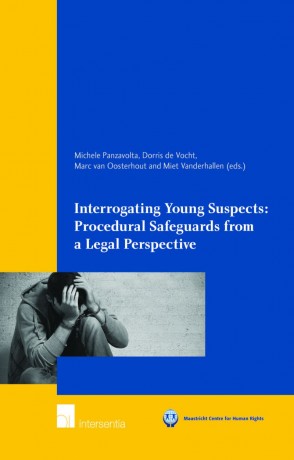
Together with colleagues in four other EU states, Professor Jackie Hodgson has been awarded a European Commission Action grant of 375,000 Euros for the project: Protecting Young Suspects in Interrogations: A Study on Safeguards and Best Practice. The objective of this two year project is to strengthen the protection of young suspects during interrogation by the police in the EU. The project consists of a comparative empirical study of the different legal procedural safeguards in place in Belgium, England and Wales, Italy, Poland and the Netherlands. Based on these findings, this will be followed by professional training and recommendations for minimum EU rules and best practice.
Prof Jackie Hodgson
European Commission
This research explores the rights of suspects in police custody in England and Wales, Scotland, France and the Netherlands. Researchers are carrying out fieldwork with police and lawyers in all four jurisdictions, investigating the existence, application and exercise of suspects’ rights.
As well as writing up these findings for an academic audience ("Inside Police Custody: An Empirical Account of Suspects' Rights in Four Jurisdictions" to be published by Intersentia), the project will also identify best practice and training needs through the production of a training manual for criminal justice personnel. The project team includes John Long from Avon & Somerset police, JUSTICE and the Open Society Justice Initiative.
Prof Jackie Hodgson
European Commission
Professor Jacqueline Hodgson is co-directing this EU funded study (2004-2007) of the provision of legal advice to criminal suspects across eight EU countries. The research involves academics and practitioners from each jurisdiction and the findings are set out in an edited collection published by Intersentia in 2007.
Prof Lee Bridges
Legal Services Commission
Professor Lee Bridges has been co-directing this four-year study funded by the Legal Services Commission to evaluate the pilot public defender service currently operating in six locations throughout the country. The report was published by the Stationery Office in 2007..
Prof Dora Kostakopoulou
Dora Kostopoulou was awarded £5,000 to host an interdisciplinary workshop on 'Constitutionalism(s) post 2008' as part of the ModernLaw Review seminar series. The event was organised by Professor Dora Kostakpoulou, Abdul Paliwala and Ralf Rogowski, and brought together a range of well-known international scholars working on political, societal, Europe and global constitutionalism.
Dr Illan Wall
Illan Wall and Mairead Enright (Kent) were awarded £14,000 from the ESRC to undertake a series of seminars on the Public Life of Private Law. The five seminars were held between Warwick and Kent, with the final drafting workshop concluding in December 2014.

Titilayo Adebola
Titilayo Adebola received a ‘special mention’ for her poster titled ‘Implementing Obligations under Article 27.3(b) of TRIPS in the Global South’ at the 2015 SLSA conference. This has been one of the highlights of my doctoral research experience. Although the poster preparation phase was challenging, I felt my hard work was worthwhile after my supervisor - Dwijen Rangnekar - commented on a draft saying ‘this is not only an aesthetically pleasing poster – but you have achieved the incredible of being able to succinctly capture the core contours and elements of your doctoral work (as it currently stands) in this. That is really commendable!!’ Encouraged by Dwijen’s glowing remarks, I thoroughly enjoyed presenting my poster, and received valuable feedback from colleagues as well as senior academics. Following on from this, I have been invited to present my research at various upcoming conferences, including a presentation at the University of Birmingham law postgraduate research conference.
Julio Faundez and Celine Tan were awarded £5,000 from Banco Santander to support the hosting of an interdisciplinary Workshop on the Rule of Law, Governance and Natural Resources at the University of Amsterdam from 22 - 23 January 2015. The workshop was a follow-up to the Workshop on International Law, Natural Resources and Sustainable Development, held at Warwick in 2013.