
Events
Departmental Seminar Series: Jason Sharman (Griffith University)
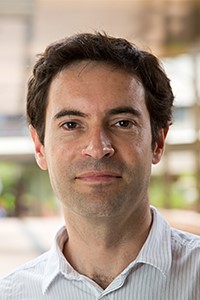 Jason Sharman, Griffith University, Brisbane
Chasing Kleptocrats' Loot: The International Campaign Against Grand Corruption
ABSTRACT
This presentation examines the rise of a global norm and associated rules prohibiting one country from hosting money stolen by senior officials from another country. State leaders, generally from poorer countries, have routinely looted millions or even billions of dollars from their national treasuries. Where does the money go? All too often, it is spent or stashed in rich countries. Until very recently, these rich countries have had no moral or legal obligation to do anything about these inward flows of dirty money. Now, states have a moral and legal duty to screen, seize and return such illicit wealth to the victim state. By comparing the responses of the United States, Britain, Switzerland and Australia, the aim is to answer several key questions. Why did this normative and policy change occur? How well is this campaign against hosting the proceeds of ‘grand corruption’ working? To what extent are shortcomings in effectiveness a product of a lack of will, because governments are not really trying to fix the problem, or a lack of capacity, given that the problem is intrinsically hard to solve? Finally, what could be done to make the system work better?
BIO
Jason Sharman is a professor at the Centre for Governance and Public Policy at Griffith University in Brisbane, Australia. His research focuses on corruption, money laundering and tax havens, as well as the historical sociology of hierarchy and sovereignty in the international system. His work has appeared in journals including American Journal of Political Science, International Organization, International Studies Quarterly, Comparative Politics, and the Journal of Economic Perspectives. His seventh and eight books were published by Cambridge in 2014 and 2015, they are based on a field experimental study of anonymous company formation, and a historical sociology of the early modern Indian Ocean international system. Sharman is currently a visiting professor at the LSE's Centre for International Studies.