
Other News
TedxWarwick: Watch Prof. Richard Aldrich talk on privacy
Privacy is Dead: The Future is Fabulous - watch the TedxWarwick video here
Prof. Aldrich looks at: the spies of tomorrow, data, and what life will be like living in the middle of the 21st Century.
Richard will also be speaking about surveillance at the 'Warwick Intelligent Futures' event on 3 June. View the programme here.
Post-'match' analysis: a successful outreach event with Liverpool FC
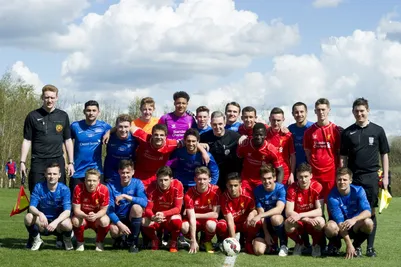
‘Pathways to Higher Education’ was a two day event which we hosted last week, designed specifically for the Liverpool Academy U18 players. Allowing the players to explore the opportunities available in higher education - whether this be studying during or after their football career - was central to this visit.
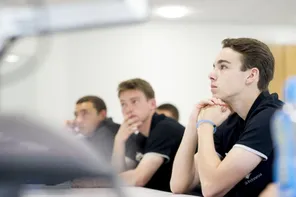
Our academics delivered a bespoke programme, to give the players a taste of lectures and seminars in our department. Players then had the chance to meet and socialise with current students and staff; deepening their understanding of the benefits of studying at university.
Tuesday evening: lecture
To kick the visit off, Dave Webber – PAIS Teaching Fellow and lifelong LFC fan – presented his research around football and politics, in a keynote lecture entitled: ‘Politics and Power in the People's Game’. The players were challenged to think about the consequences of the increasingly high levels of money, which dominate the football world.
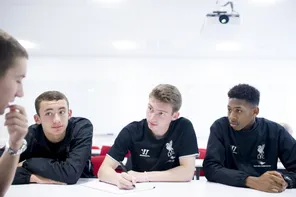
Wednesday morning: seminars
Trevor McCrisken delivered a mini-lecture on ‘What is politics?’, which set the players up for a choice of taster seminars. Nick Vaughan-Williams, Matthew Watson, Juanita Elias, and Steve Kettell led these sessions. Players and staff engaged with current students and discussed topics ranging from ‘What is the greatest security threat we face?’ to ‘The politics of food poverty’. Particularly provocative was the question posed by Steve: ‘Would the world be better off without religion?’, while Juanita had the players checking the labels of their kit to consider ‘The politics of the clothes we wear’.
Phil Roscoe, Head of Education and Welfare at LFC Academy, joined the players for this visit and said:
The seminars took the players outside their comfort zone and really made them consider how politics is all around them. The event has helped the players realise that university teaching is open and accessible. It has also allowed them to think about how university could be an option for them”
Following a campus tour led by PAIS student ambassadors, players and staff took part in a panel discussion, with PAIS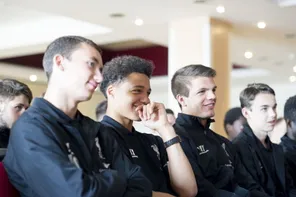 students and university footballers. The discussion was centred around the benefits of studying at university, with our students shining a light on their experiences at Warwick. PAIS finalist, Abi Awojobi, rounded the session off with a presentation about what studying at university has meant to her.
Wednesday afternoon: the match
Warwick University Men's Football team took on the Liverpool U18s side, at Cryfield Sports Pitches. The match gave the Liverpool players an excellent insight into the strengths and opportunities of sport at Warwick.
A good natured Warwick crowd watched in the glorious sunshine, as the university players raised their game. Warwick held off relentless attacks and took the lead just before half time, with a cool finish from captain Alex Roberts!
Despite Liverpool equalising in the second half, Warwick followed with another goal to take the lead again. However, the fitness and technical ability of the Academy players gave them the advantage, as they eventually went 3-2 ahead.
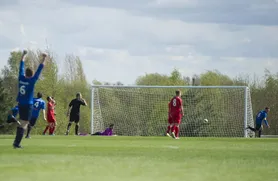
The referee, Billy Greening, a PAIS MA student in US Foreign Policy, kept firm control of the game and bravely gave a penalty to Liverpool, despite the protests of the Warwick players and fans.
4-2 to Liverpool was the final score, but the Warwick players did themselves proud. The match thoroughly entertained the strong Cryfield crowd and people watching the game live on the big screen in the Piazza.
A big thanks...
goes out to all those who supported this event and helped make it such a success! The event was very much a team effort, but a special thanks to PAIS PhD student, Shahnaz Akhter. Shahnaz works as part of our Outreach team and came up with the idea for this event. What's more, she did much of the planning and looking after the Academy players once they arrived. She was also ably supported on the day by our wonderful team of PAIS student ambassadors.
Both PAIS and LFC Academy see this as the beginning of a long term relationship. In the near future, we will be doing a follow up event at Rainhill High School, which is where the Academy players study.
URSS: Record number of successful PAIS applicants for 2015
The Undergraduate Research Support Scheme (URSS) is a competitive scheme that provides a bursary and skills development training to support Warwick undergraduate students, who wish to carry out a summer research project, as an addition to their degree course. All students are supervised by an academic member of staff for the scheme.
This year, seven PAIS students will undertake a summer research project of their choosing, either within PAIS or in a different academic department here at Warwick.
In addition, PAIS academics will support eleven research projects, four of these being with PAIS students.
Undertaking a summer research project via the URSS gives students a taste of research, which is invaluable for those who might be looking to pursue postgraduate study. The scheme allows students to develop a range of skills which will add further value to their degree study.
We are delighted that so many PAIS students are involved in the scheme – this high number of successful applicants positions PAIS as the sixth largest department, in terms of the number of successful URSS applicants to carry out research within the department.
Congratulations to all those taking part this year!
Festival of Social Sciences (6-16 May)
The ten day festival starts tomorrow! View the complete programme here.
The festival will shine the light on social sciences, by providing a variety of events for students, staff members and the wider public.
Here is a snapshot of just a few of the sessions which will take place:
- 6 May, 11.00-12.00: A book launch by Prof. Wyn Grant 'Politics at Warwick: 1965-1979' - A0.23, Social Sciences Building
- 6 May, 12.30-14.30: 'Social Sciences After the Election' - R1.13, Ramphal Building. Registration essential.
- 9 May, 10.00-18.00: Festival of Social Sciences at FarGo Village - FarGo Village, Far Gosford St, Coventry.
- 12 May, 14.00-15.30: 'Post General Election Roundtable' - S0.20, Social Sciences Building. A video of the event can be seen below.
- 12, 13, 14 May, 19.15: Performance: 'Coney's Early Days (of a Better Nation)' - Arts Centre. Booking required. Book for this event here
- 13 May, 16.00-18.30: New Directions in IPE Conference Opening Roundtable - R0.21, Ramphal Building
Register for this event here. - 16 May, 13.00-14.30: Film Screening of "Grandma's Tattoos" - Warwick Arts Centre Cinema
So, join us and explore social matters throughout the years, whilst celebrating Warwick's 50th anniversary.
New book co-authored by Tina Freyburg
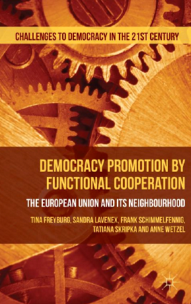 A new book on democracy promotion through functional promotion, titled "Democracy Promotion by Functional Cooperation, The European Union and its Neighbourhood," co-authored by PAIS' Tina Freyburg, with Frank Schimmelfennig, Sandra Lavenex, Tatiana Skripka and Anne Wetzel will be released next month.
Offering a cutting edge study of the European Union's (EU) promotion of democratic governance in neighbouring countries, this new book makes an original contribution to the study of democracy promotion and of EU external relations by presenting a new governance model of democracy promotion.
Through robust analysis of the shortcomings of traditional 'leverage' and 'linkage' models of external democracy promotion in the EU's Eastern and Southern neighbourhood, it presents a novel 'governance model' that fosters transparency, accountability, and participation standards through functional cooperation between policy officials from the EU and neighbouring states.
In particular, it examines the impact of democratic governance promotion in detailed case studies of EU sectoral cooperation with Moldova, Morocco, and Ukraine in the three policy fields of competition, environment, and migration.
You can pre-order the book here.
To get the book at the reduced price of £48, available only until 31st July 2015, quote discount code PM15THIRTY.