
Departmental news
PhD Studentship in the topic of Multiagent Systems and related areas
We are seeking PhD candidates in the topic of Multiagent Systems and related areas, with particular emphasis on one or more of: computational social choice, algorithmic game theory, multiagent learning, and social and economic networks. The multiagent systems researchers at University of Warwick include Markus BrillLink opens in a new windowLink opens in a new window, Ramanujan SridharanLink opens in a new windowLink opens in a new window, Long Tran-ThanhLink opens in a new windowLink opens in a new window, Debmalya Mandal and Paolo TurriniLink opens in a new window
WMG hosts Student Project Showcase
The Outreach Team at WMG, University of Warwick was pleased to welcome pupils from local schools to a special Student Project Showcase event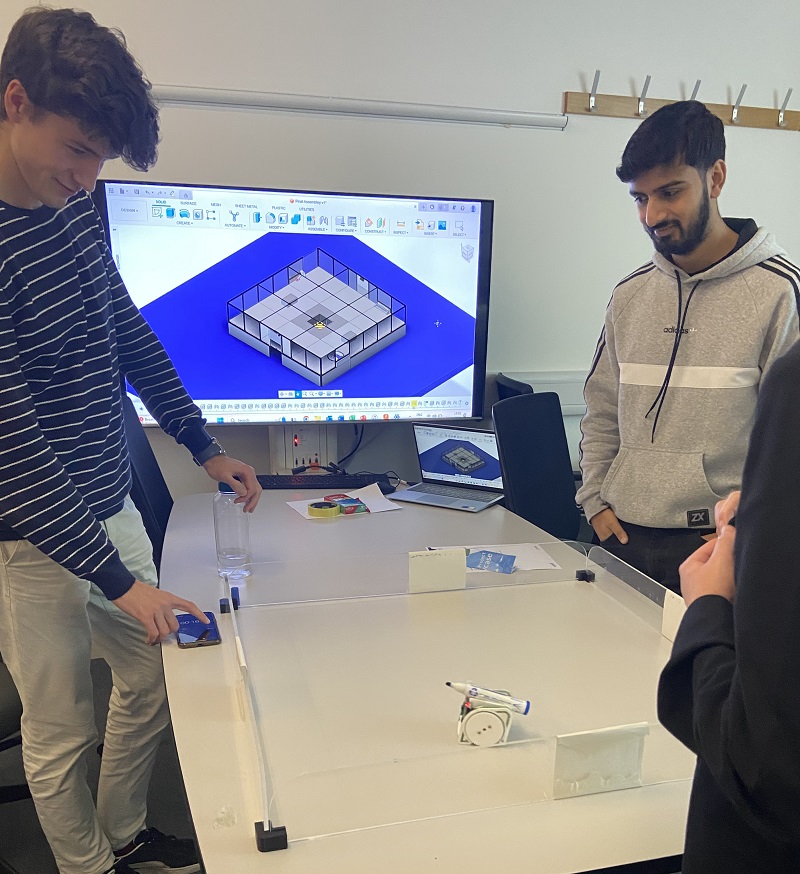 supported by the High Value Manufacturing Catapult.
Over 100, year 10, students from the WMG Academies for Young Engineers in Coventry and Solihull were invited to the event held at the University of Warwick campus.
The year 10 pupils had a chance to see for themselves the remarkable engineering projects from Warwick Racing; Warwick Rail; Warwick Submarine; Warwick Moto and Warwick Robotics.
CyberWomen@Warwick students also took part. The group of female students strive to empower future talent, with a specific focus on women, in cyber security.
Caroline Cannon, Outreach Project Officer at WMG, who organised the Showcase, explained: “ With these types of events, and across all of our outreach activities, we work with our partners to inspire and empower the next generation of scientists and engineers to pursue careers in STEM in an attempt to close the engineering skills gap.”
Claire Morris, Associate Principal at the WMG Academy for Young Engineers in Solihull, said: “ I have heard nothing but great feedback from Year 10 students, and the staff involved. Thank you Caroline, to you and your team for organising this event, and thanks to the WMG team for making it happen.”
Caroline Cannon added: “ The Showcase was also a good experience for our new cohort of University of Warwick engineering students to build confidence talking about the various projects.”
A University of Warwick student and Warwick Rail team member said: “What I liked most about the event was seeing the students (from the Academies) getting stuck into the activities and thinking critically about the projects.”
WMG support a variety of undergraduate student projects with connections to industry partners. The selection of student-led projects shows the breadth and depth of skills that the students apply both individually and collaboratively as part of a team.
Each project is supported and assisted by PhD students, academics, technicians, and industry sponsors. Dave Cooper, Engineering Technician at WMG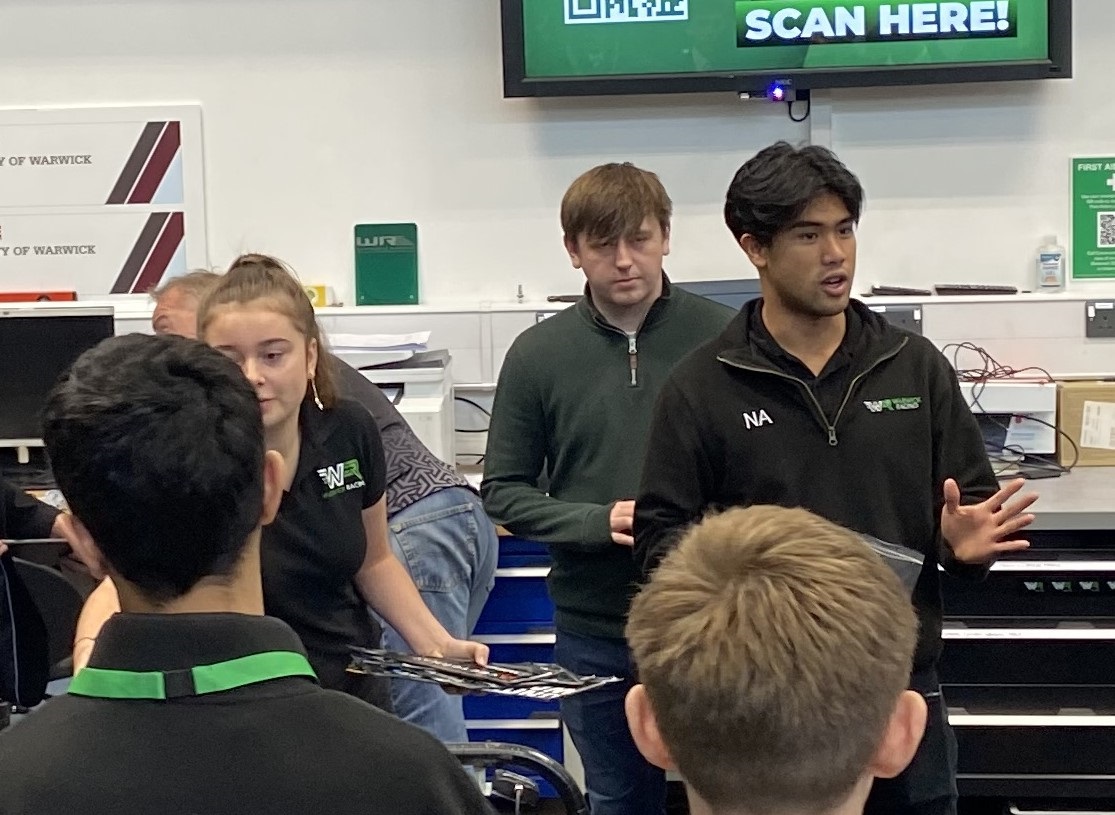 supporting Student Projects said: “Students that work on these projects have had the most amazing opportunities from placements, scholarships and jobs with companies such as McLaren, Mercedes, Red Bull, Norton and Triumph.”
Students gain valuable practical and project management skills with each team member being assigned a role and area of responsibility, from engineering and technical lead to marketing and sales support. The projects develop students; teach time management and risk management; group working; and give practical hands-on experience.
WMG and the High Value Manufacturing Catapult provide some seed funding, but the individual teams are responsible for securing sponsors and raising funds. Feedback from employers suggests that these projects produce some of the most employable graduates in the market.
Find out more about the student projects here: https://warwick.ac.uk/fac/sci/wmg/about/outreach/studentproject/
Professor Jane Bryan listed in Kindness and Leadership 50 Leading Lights UK 2023
We are delighted to announce that Professor Jane Bryan from Warwick Law School has been listed in the Kindness and Leadership 50 Leading Lights UK 2023.
First female winner of the 2024 IRMMW-THz Society Exceptional Service Award
Professor Emma MacPherson has been announced as the first female winner of the 2024 IRMMW-THz Society Exceptional Service Award.
The enigma of embryonic development: how certain animals trim their genomes
New research by Professor Andre Pires da Silva is underway to decipher a fascinating biological puzzle—how some animals can naturally discard more than half of their genetic information during embryonic development. The new study is part of the BBSRC Pioneer Awards, which could revolutionise our understanding of the rules of life. Sixty two researchers across the UK, including Professor Pires da Silva, are to receive a share of £12 million to pursue visionary bioscience research.
Press Release (9 November 2023)
Approaches to Teaching the #EarlyModernHispanicWorld to 21st-Century Students - Conference Report
Workshop Report: ‘Approaches to Teaching the #EarlyModernHispanicWorld to 21st-Century Students’
How do we continue to engage students with the early modern and pre-modern Hispanic world in innovative ways? How can we make these texts more accessible to today’s learners whilst also retaining the essential differences of another culture and another era? These are some of the questions that scholars, in collaboration with students, explored during the interdisciplinary workshop ‘Approaches to Teaching the #EarlyModernHispanicWorld to 21st-Century Students’, which took place at Warwick on Friday, 13th October 2023. The aim of the event was to rethink approaches and pedagogical methods to open up these texts and topics to higher education students and it included short presentations on all aspects of pedagogy and strategies for teaching, learning, and assessment that encourage learners to engage with key works using a variety of means, including visual and digital media. The hybrid format facilitated the attendance of scholars and PG students; overall, we had colleagues joining us in person and online from British, Irish and US institutions.
The first panel, entitled ‘Teaching Early Modern Literature’, included very engaging presentations by Prof. Isabel Torres (Queen’s University Belfast), Dr Anne Holloway (Queen’s University Belfast), and Dr Idoya Puig (Manchester Metropolitan University). They all offered some reflections on their experience facilitating effective engagement with literature from an era which is at a double remove from the twenty-first century student. Professor Torres focused on the rationale for learning and evaluation strategies which followed Egan’s ‘Imaginative Approach to Teaching’ (2005) and recent work on the concept of ‘Salience’ in Shakespearean Studies (Dadabhoy and Mehdizadeh, 2023). She concluded by showing her students’ ‘creative response’ project work for the poetry module and reflections on ‘embodiment activities’ that will be further developed on the theatre course. Similarly, Dr Holloway showed the audience the potential in foregrounding the continuing resonances of the Early Modern within the Modern, and in anchoring literature within more familiar or immediate contexts for students. This was then clearly illustrated in the innovative assessment options that allow students to become editors, curators, or producers of podcasts or documentaries. In the last presentation of this panel, Dr Puig showed how we can make use of new media literacies in the university context to rediscover and renew Spanish Golden Age literary texts. By focusing on Cervantes’s La española inglesa, Puig demonstrated how literature, particularly classic texts, can be embedded in the language classroom in innovative ways.
During our second panel, we learned about the teaching of history of science and medicine in colonial Latin America thanks to Dr Yarí Pérez Marín (Durham University) and Dr Fiona Clark (Queen’s University Belfast). Dr Pérez Marín shared some examples from her teaching practice on how to facilitate student engagement with early modern sources on natural history and medicine at different levels, from ideas best suited for introductory undergraduate modules to more specialised postgraduate contexts. For instance, the opportunities her students have to collaborate and put into practice their knowledge at the Spanish Gallery at Bishop Auckland. Similarly, Dr Clark discussed some approaches to engage students with 18th-century topics by centring assessment in career-related contexts (taking examples from the Gazeta de Literatura de México, treatments for syphilis, art and health, and polemics around uses of chocolate). In addition to developing an understanding of primary sources, the underpinning aim of these modules is to help students develop more advanced writing and communication skills with an awareness of a specific audience and using digital technologies e.g., podcasting, digital editing, and working with interactive images.
The keynote presentation was delivered by Tara Munroe, Creative Director of Opal22 Arts and Edutainment, a historical researcher and museum curator who has been working within a number of museums and community organisations across the Midlands area in England over a number of years. Her work with Arts, Heritage and Cultural projects for the local communities has been nationally acclaimed and is being used as templates across the country. She brings a modern innovative twist to the heritage area and makes it fun for those she targets. Her presentation ‘Casta Paintings through 21st-Century Eyes’ was highly engaging and refreshing, particularly her work with local communities through workshops and events. Tara Munroe talked about her new exhibition, Casta: The Origin of Caste - which we totally recommend!-, which showcases a series of rare, historically important 18th-century Mexican paintings she discovered in the basement of the Leicester Museum and Art Gallery. The paintings are explored by different experts who brought a range of approaches to reading the images, focusing primarily on issues of race. Her talk led us to consider the legacy, role, and questions around how to decode and decolonise art within the context of issues we confront in the 21st century.
The last panel brought together different colleagues from Warwick that teach the early modern Hispanic world in three different departments: School of Modern Languages and Cultures, History and Liberal Arts. Prof. Rebecca Earle, based in the department of History and also an expert on Casta painting, explained how the history of food is an effective vehicle for exploring the past, particularly in her own experience of teaching Latin American history through food, and how this experience has in turn shaped her own research trajectory. Dr Liz Chant, based in Liberal Arts, explored how historical maps offer unique insights into the early modern Hispanic world, particularly to engage with issues of environmental history, historical geography and the history of science in the Spanish Empire. And finally, Dr Rich Rabone and Dr Leticia Villamediana González (SMLC) shared some pedagogical reflections on their collaborative teaching of ‘Knowing Women: Gender, Education, and Power’, in which students analyse strategies for engagement with or subversion of prevailing gender norms in the cultural production of two different periods: the Baroque, and the Enlightenment.
The workshop concluded with a roundtable that brought together in conversation scholars from different disciplines as well as some UG and PGR students. Some of the questions discussed were: What first attracted you to the study of early modern culture and literature? Out of the workshop sessions, have you found any new approaches to texts that you can see fitting well with their own work? For those ECRs / PGRs whose work sits between subjects like History and Languages, do they see any particular challenges? What do you see as being the greatest barriers to drawing new students into these subject areas? How important the canon should be when you design a curriculum?
Our main purpose when we first started thinking about this workshop was to initiate interdisciplinary conversations that might help participants to develop their own teaching practice. We think we achieved our goal; we were extremely pleased and impressed by the quality of the presentations, as well as the lively conversations and networking that took place during the coffee and lunch breaks. But just in case we are a bit biased, these are some of the comments of those who attended the event:
‘I was really interested to hear about the use of creative writing in assessment, especially approaches to assessing commentary on the creative piece rather than the piece itself. it was a really useful and fruitful exchange that has given me lots of new ideas for my teaching.’
‘It was wonderful to have an opportunity to be among like-minded colleagues reflecting on teaching. We need to acknowledge that the context in which these texts are received is always shifting and our approaches need to shift accordingly.’
‘Opportunity to share practice underlines the importance of creating a space for reflection on why we do what we do, and how, in our teaching and how we might develop our own practices; very positive and uplifting!’
‘After the presentations I thought on how to guide mi classes towards a more democratised learning, and importantly by establishing an affective connection that would help the co-creation of the curriculum and the educational materials.’
‘I was very interested in the transdisciplinary approach, and the experiences shared certainly gave me clear ideas on how to plan creative assessments in my art historical teaching. I am really happy for having attended to the workshop which generated such rich discussions and collegiality.’
‘It was very helpful to see specific examples of how to engage students with different media to read some texts and produce videos, commentaries, artefacts, etc. with their own interpretations. The concept of salience was very helpful to approach works from early periods of history.’
Finally, we are extremely thankful to those who generously funded the event and made it possible: the Humanities Research Centre at Warwick, School of Modern Languages and Cultures, Connecting Cultures Group at Warwick and the University Council for Languages.
Dr Leticia Villamediana González
Associate Professor in Hispanic Studies
School of Modern Languages and Cultures
Afterlives of an Essay: 100 Years of Walter Benjamin's Task of the Translator - Conference Report
HRC event report for 29th and 30th September 2023: ‘Afterlives of an Essay’ conference
Conference organised by: Dr Caroline Summers (University of Warwick), Dr Ian Ellison (University of Kent, Goethe-Universität Frankfurt am Main), and Dr Arianna Autieri (Goldsmiths, University of London).
HRC money was secured to help cover keynote travel costs. Other funding was received from the ILCS, MHRA, Goldsmiths University of London and Warwick SMLC.
Conference report
The conference took place on 29th and 30th September 2023 and was hosted at the University of Warwick .
The main objective of the conference was to invite critical engagement with Benjamin’s seminal essay on ‘The Task of the Translator’ [‘Die Aufgabe des Übersetzers]. Our intention was to invite papers from across a range of disciplinary perspectives, and to engage both younger and more experienced scholars in the discussion of a key text in the discipline of Translation Studies.
Due to UCU industrial action, the original conference programme of papers and panels across 2 days was adjusted to fit all academic papers into the second day of the schedule. The first day therefore presented an opportunity for delegates to engage with the conference theme off-campus through planned activities, as follows:
· A visit to the Migrating Dreams and Nightmares exhibit at Common Ground (Fargo Village, Coventry), including a discussion with curators Nirmal Puwar and Kate Rosslin on the experience of putting together this narrative of the linguistic and physical translation of migrants between spaces;
· A visit and tour of Coventry Cathedral as a space that embodies concepts of afterlife and rebirth, with Nirmal Puwar (BA Fellow at Coventry Cathedral);
· Screening and discussion of Nirmal Puwar’s film Unravelling (2008) in the Chapter House (Coventry Cathedral);
· The opportunity to visit the Herbert Gallery with its various holdings, including more information on the history of Coventry Cathedral and the city itself;
· Conference dinner at Bistrot Pierre in Coventry, attended by almost all delegates.
The academic focus of the conference was on Saturday 30th September, which is also celebrated as International Translation Day since it is the feast day of St Jerome. The conference programme consisted of 4 standard panels, 2 keynote papers and a dialogue between two established scholars and translators. Delegates commented favourably on the range of papers and the quality of the keynotes. Since panels ran consecutively, the audience for the various papers was not divided: while this made for a long day, it ensured that discussions from the panel sessions could flow naturally into conversations in the scheduled breaks and helped to establish a feeling of continuity throughout the day.
There were 35 official delegates, including PhD researchers, Early Career Academics, established scholars and retired members of the academic community. Participants came from across the UK and Ireland, as well as from mainland Europe, Turkey, the USA and Hong Kong. This diversity was also reflected in the range of presenters.
Traditional keynotes were delivered by Dr Julia Ng (Goldsmiths) and Professor Duncan Large (BCLT, UEA). Their different perspectives on Benjamin, from Philosophy and from Comparative Literature/Translation Studies respectively, initiated some very interesting questions in the subsequent discussion, looking across disciplinary boundaries to explore the impact of the essay. Participants were very engaged by both papers.
The ‘In Conversation’ session with Dr Chantal Wright (ZHAW) and Professor Douglas Robinson (CUHK, Shenzhen) was chaired by Dr Arianna Autieri and ranged from discussion of the text itself to a broader dialogue about the experience of translating Benjamin, or translating in the spirit of Benjamin. This was a very valuable opportunity for delegates to hear two international scholars in Translation Studies sharing their extensive expertise on the conference topic. We are grateful to all four keynote speakers for their willingness to adapt to challenging circumstances, and for their generosity and supportive reflections on papers throughout the conference.
The standard of papers and presentations was very high throughout the conference. Panel sessions centred on the following topics:
· Theoretical readings of Benjamin;
· Contemporary perspectives;
· ‘The task’ as a literary lens;
· Reading ‘the task’ through Benjamin and his translators.
Particular strands that emerged from the panel discussions included the materiality of language and text, translation as a performance, critical engagement with binaries such as un/translatability and the im/possible, and the importance of reading texts and theories in context.
The broad and engaged conversations that continued throughout the day meant that the conference objectives were easily met. Benjamin’s essay was read and reframed from a number of different angles, and the discussions that followed panels and keynotes provided ample opportunity to develop these ideas. There was a relaxed, engaged and supportive atmosphere throughout the day, for all papers. We were delighted to be able to welcome ten students from the Warwick MA in Translation and Cultures to the keynote sessions: these students have had a unique opportunity to be part of a landmark event at the start of their postgraduate careers in Translation Studies, and we were pleased that so many of them chose to attend.
Following prior contact with Routledge, we were able to secure a discount for conference delegates on Douglas Robinson and Chantal Wright’s publications on the Benjamin essay, valid for a month after the conference. We are grateful to Routledge for their generosity in this, and for sending us the sample copies.
Keynotes, presenters and attendees commented positively on their experience, describing it as stimulating, entertaining and enriching. One delegate commented: Congratulations … for putting on such a wonderful event under challenging circumstances and with several contingencies! It was of course a long day but the I felt the format really did encourage conversations, and all the talks were excellent. It was wonderful to have so many great scholars together and to have a chance to discuss. Thank you once again for all your efforts in organising.’
Our intention is to publish proceedings from the conference as a ‘Talking Points’ volume with the Forum for Modern Language Studies. This is a format that invites a dialogic, open format and a narrow focus and would work well as a publication of the ideas and conversations featured at the conference. We are in touch with delegates about this and are in the process of putting together a Call for Papers. In the longer term, the co-organisers also hope to apply for funding to support a future research project exploring literary afterlives and modernism.
Locations of (Dis)embodied Labour - Conference registration now open
The organising committee of the interdisciplinary conference ‘Locations of (Dis)embodied Labour in Theatre and Performance’ are happy to announce that registration is now open.
The conference will be held in the Wolfson Research Exchange on 30 November 2023. Registration is open until Thursday 16 November.
For registration and a preliminary conference programme, please visit https://warwick.ac.uk/fac/arts/scapvc/theatre/staff/yangzizhou/locationsoflabour2023/.
If you have any queries, please contact the conference organisers directly at disembodiedlabour@gmail.com.
We look forward to seeing you at the conference!
SLS researchers contribute to UK Parliament report on horticulture
On 6 November, the House of Lords published a report entitled ‘Sowing the seeds: A blooming English horticultural sector’. The report looks at the development of the horticultural sector in England and includes citations from Professor Richard Napier and contributions from Professor Rosemary Collier and Alex Kelly.
WMG research helps develop new generation of graphene composites
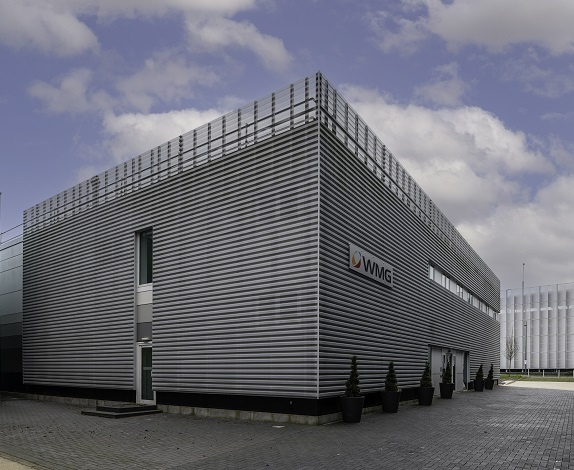 Researchers at WMG, University of Warwick’s, International Institute for Nanocomposites Manufacturing (IINM) have been working with the team at Versarien plc on a new comprehensive portfolio of graphene and related nanomaterial based thermoplastic polymer compounds and masterbatches.
The new PolygreneTM compounds are expected to have potential commercial applications in areas as diverse as sports equipment, construction products, aerospace and automotive components.
Since 2018, Versarien subsidiary 2-DTech Ltd (2DT), Composites UK member, has funded PhD and postdoctoral researchers to understand the use of its Nanene™ graphene powders and other nanomaterials in thermoplastic systems. Dr David Reinoso-Arenas, the first 2DT funded PhD student, with support from the EPSRC Doctoral Training Programme, worked with Versarien’s Nanene™ materials in thermoplastic elastomer (TPE) systems and joined Versarien full-time last year as part of the team at Versarien’s subsidiary Cambridge Graphene Ltd.
Dr David Reinoso-Arenas, explained: “The new PolygreneTM thermoplastics portfolio is a culmination of my PhD research, some of which is due to be published in peer-reviewed journals. Since then we’ve been able to further develop and test these materials using different nanomaterial fillers and process conditions to fully optimise the resulting product performance. My PhD experience at the IINM and WMG was really enjoyable and enabled me to work closely with industry to ensure that the outputs of my research could be validated and have commercial viability.”
David’s PhD was performed under the supervision of Professor Tony McNally, whose team has an established capability in incorporating a wide range of nanomaterials into bulk polymer systems.
Professor Tony McNally, who leads the Nanocomposites Research Group at WMG, University of Warwick, said: “Working with Versarien over the last few years has given the IINM and WMG access to alternative graphene materials that have shown interesting phenomena when blended in these TPE systems. By tuning the nanofiller loading and optimising process conditions, David’s research showed that exceptional gains can be achieved in mechanical properties across the board (tensile strength, modulus, elongation at break, toughness and abrasion resistance) without compromising any properties. The addition of graphene also highlights improvements in polymer processing which may offer lower energy usage and, therefore, improving sustainability.”
Professor McNally continues to work with Versarien by providing a funded PhD position in 2D material based rubber systems, making use of the IINM’s new state of the art rubber processing and testing capabilities With support from the High Value Manufacturing Catapult (HVMC), WMG has established a world class facility for the study of elastomers.
Dr Stephen Hodge, Versarien’s CEO, added: “We look forward to continuing our collaboration with the IINM and WMG in rubber processing and understanding the interactions of our graphene and other 2D materials in these more complex systems, and hope to be able to demonstrate significant benefits that can impact upon real-world applications.”
Find out more and download technical datasheets here: https://versarienproducts.co.uk/thermoplastics
Find out more about WMG’s Nanocomposites research here:https://warwick.ac.uk/fac/sci/wmg/research/materials/nanocomposites/