
Departmental news
New Head of Condensed Matter Physics Group
As of 1 October, 2024 Professor Ana Sanchez will undertake the role of Head of Condensed Matter Physics group in the Department of Physics.
Corporate governance for sustainability: Law paper hits top 10 list
The paper on Corporate Governance for Sustainability, coauthored by Professor Andrew Johnston of Warwick Law School and the Cambridge Centre for Business Research, was originally published in 2020, but has recently entered the SSRN all-time top 10 lists for Climate Change Law and Policy, and Sustainability Law and Policy. The Statement has had a major impact on the debate over the future of corporate governance.
WMG and Dyson Institute celebrate fourth and final graduation ceremony
On Saturday (28th September), WMG at The University of Warwick and The Dyson Institute celebrated their fourth and final cohort of 35 graduates at a ceremony held across Dyson’s UK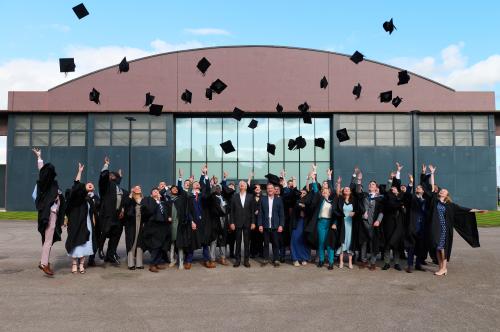 R&D campus.
A total of 160 students have now successfully completed the BEng Engineering Degree Apprenticeship, through the WMG and Dyson partnership, which first began in 2017.
This is the final cohort to graduate with a degree from The University of Warwick, as the Dyson Institute now moves to independent delivery and degree awarding powers.
The ceremony included speeches from Sir James Dyson, Founder of Dyson; Stuart Croft, Vice Chancellor of the University of Warwick, Mary Curnock Cook, Chair of Council; and Babajide Popoola, Class of 2024 Graduate.
Professor Robin Clark, Dean of WMG, said: “It has been a privilege to work with colleagues and learners at Dyson in realising the vision of the Engineering Degree Apprenticeship. The collaboration and mutual respect have resulted in, what I believe to be, an exemplar of how academia and industry can work together to achieve amazing results. My congratulations to everyone involved and I look forward to us building on this firm foundation together in the future.”
Sir James Dyson reflected on the success of the seven-year partnership with WMG in his commencement address: “This graduation marks another change for us as we step out from the partnership with WMG and the University of Warwick. I would like to thank Professor Robin Clark, Dean of WMG; and Professor Stuart Croft, Vice Chancellor of Warwick University. Thank you for saying ‘yes’ to joining us on this pioneering adventure back in 2017. You took on our pioneering adventure, it was an unselfish undertaking by you, a brave decision. I am sure you are as proud as I am at the achievements of the undergraduates, and the institution they’ve created. I sincerely hope our close association will continue.”
Find out more about WMG’s training and skills programmes for businesses: https://warwick.ac.uk/fac/sci/wmg/study/why-study-in-wmg/for-business/
Celebrating success at the Engineering Talent Awards
Congratulations to Degree Apprentice Alumna, Kayleigh Poulter and WMG Associate Professor and Assistant Dean of Student Experience, Nicola Knowles who both take home Engineering Talent Awards.
The Engineering Talent Awards showcases role models and inspiring people to celebrate the diversity of organisations and engineers. The awards help to raise the profile of the engineering and technology professions across the UK.
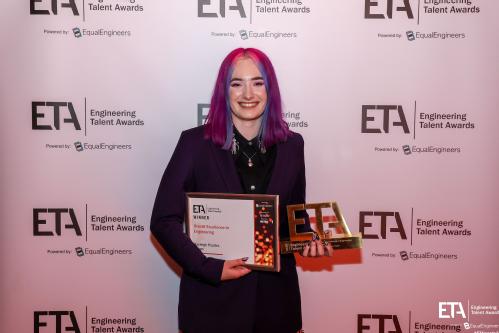 Kayleigh Poulter received both the Engineering Graduate of the Year and Overall Excellence in Engineering awards for her amazing work in building more neuroinclusion into Dyson products.
Kayleigh earned a BEng Engineering as part of her Degree Apprenticeship from the University of Warwick, which WMG delivered in partnership with The Dyson Institute of Engineering and Technology.
An advocate for equality, diversity and inclusion, Kayleigh's studies focused on accessibility, designing technologies for those with sensory sensitivities and neurodivergences. After conducting user trials, she developed recommendations to make Dyson products more accessible, a contribution that has influenced Dyson’s design processes.
During her studies Kayleigh led initiatives like LGBTQIA+ afternoon teas and played a vital role in improving support for neurodivergent and mental health needs.
Kayleigh Poulter said, “I thoroughly enjoyed working on my final year project, investigating designing for sensory sensitivity differences, and considering inclusive design more generally. I am extremely grateful to have been recognised for this, and my other work in the ED&I space, and I’m committed to continuing this work wherever I can.”
Associate Professor, Nicola Jane Knowles also brought home an award for University Engineering Staff Member of the Year.
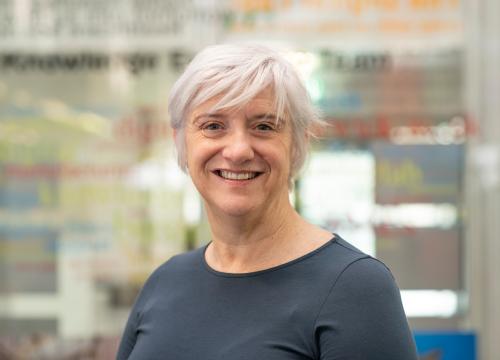
Nicola is the Assistant Dean for Student Experience at WMG at the University of Warwick and teaches Digital Healthcare Science. Her focus is to understand
the student voice and recognise their wants and needs. Nicola quotes ‘nothing about us without us’ meaning that the students are engaged with every decision made for them at every step of the way. The student voice is at the centre of everything.
She recognises that students need a sense of belonging, by understanding their wants and needs, she has helped to create four new student spaces such as a cooking area at lunch times for students who prefer their own cultural foods; quiet places for those with neurodiversity's; a space for group working and the student hub where they can learn and relax together.
Nicola oversaw the launch of WMG peer writing mentoring. This allows students, who need extra help with writing, to go to peer mentors ensuring that everyone is able to get the support they require.
She also launched an innovative initiative, module huddle, that inspires colleagues to meet collectively to focus on student-related topics which provides a rapid system of quality enhancement in real time by quickly identifying the achievable goals. She also led many more initiatives which also focus on ED&I.
Associate Professor, Nicola Knowles said, “I am honoured and privileged to win the award; it really is a career highlight. The award represents the team and the hard work we do to support the student voice and make our education provision inclusive.”
Pro-Dean of Education at WMG, Professor Gill Cooke, said, “Congratulations to both Nicky and Kayleigh on winning their awards. It is fabulous to see our staff and students recognised for their achievements. Awards such as this really do help to showcase the amazing work our people do for industry, for student experience, and for equality, diversity and inclusion.”
See the full list of 2024 winners here: https://engineeringtalentawards.com/
World’s first open online platform gives public a voice in safety of automated vehicles
WMG, at The University of Warwick, has launched the world’s first online platform that enables the public to influence the development of Automated Vehicle (AV) safety.
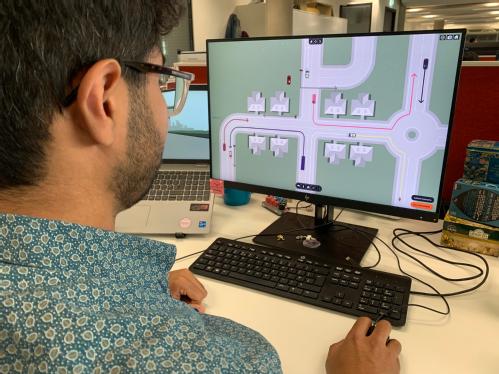 Safety Pool Studio is a driving scenario creation platform for the public to design road scenarios based on their real-life experiences or expectations during the introduction of AVs. The platform aims to empower the public to become part of the safety discussions, making the process more inclusive and accessible.
The Automated Vehicles Act is now law in the United Kingdom, and AVs could be on the roads as soon as 2026. However, nearly half of UK motorists still do not trust this technology because of safety concerns[1]. This online platform opens a conversation for future users to define and reimagine the safety of AV deployment.
Innovation is key to improving our roads, and it’s great to see WMG, at The University of Warwick backing our vision for safer motoring,” said Lilian Greenwood MP, Minister for the Future of Roads, Department for Transport. “I’m delighted that this pioneering platform will address the questions and concerns people have about Automated Vehicles and enable them to challenge developers to address the real issues they face on our roads. Public engagement will improve understanding of these new technologies and give people the confidence to use AVs when they hit our roads after 2026.”
The platform accounts for different driving styles, types of road layouts, and the movements of vehicles and pedestrians are available on Safety Pool™ Studio. Users from anywhere in the world can tailor-make road-driving scenarios for AVs based on their geographical locations, cultures, and daily practices (in their own languages). Users can also check and trial their scenarios through instant play on the platform.
‘‘The public and the future technology users are paramount to Automated Vehicles’ development and deployment in the UK. By launching Safety Pool™ Studio, our ambition is to democratise safety by prioritising the public’s voices in this new technology, where users can share their expectations and understanding of the safety of AV,” explained Professor Siddartha Khastgir, Head of Safe Autonomy at WMG, the University of Warwick.
“Safety Pool™ Studio also addresses the needs of other stakeholders in the AV ecosystem like developers, incident investigators and insurers, by enabling them to better capture road scenarios during the post-deployment phase of AVs. We strongly believe by doing so, AV deployment will be more inclusive and relevant to our real-world experiences and everybody’s lives.’’
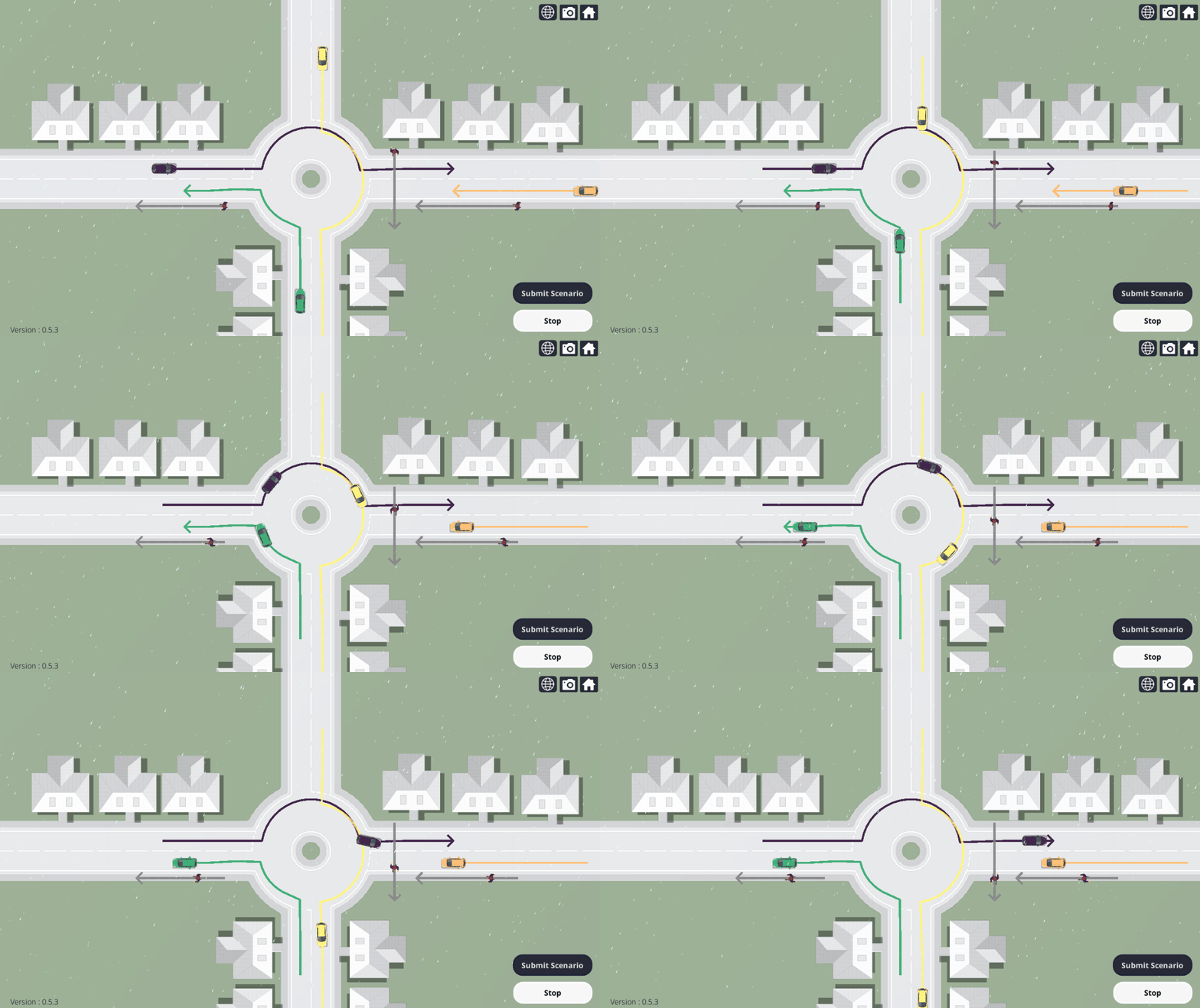 All these captured scenarios can then be used for virtual testing by the AV ecosystem to test the safety of their systems. Capturing the public’s expectations and real-world incidents enables engineers to replicate potential road situations and assess their products’ safe and timely response to road incidents as part of post-deployment monitoring of the AVs. “We welcome this initiative,” said Steve Gooding, Director, RAC Foundation. “The more we understand about the expectations, uncertainties and concerns that people have about AVs the better the chances of those issues being picked up and addressed in the design process for AV development and adoption, that’s why engaging the public is so important and that’s why making it easier for them to do so really matters.
“It is appropriate that an approach aimed at engaging the public in the development and deployment of new technology should itself be using technology as the basis for that engagement, and we encourage everyone to give it a try.”
Organisations wishing to work with the research and Safety Pool™ Studio can contact SafeAutonomy@warwick.ac.uk or visit https://safetypoolstudio.ai
JM sponsored Master's Student wins prestigious 1851 Industrial Fellowship
Gareth Hart has been awarded an Industrial Fellowship by the Royal Commission for the Exhibition of 1851 for his PhD project 'Designing a new catalyst to enable the hydrogen economy'.
Eight papers accepted to NeurIPS 2024
Eight papers authored by Computer Science researchers from Warwick have been accepted for publication at the 38th Conference on Neural Information Processing Systems, the leading international venue for machine learning research, which will be held on 10-15 December 2024 in Vancouver, British Columbia, Canada:
- Generating Origin-Destination Matrices in Neural Spatial Interaction Models, by Ioannis Zachos, Mark Girolami, and Theodoros Damoulas
- Interventionally Consistent Surrogates for Complex Simulation Models, by Joel Dyer, Nicholas Bishop, Yorgos Felekis, Fabio Massimo Zennaro, Ani Calinescu, Theodoros Damoulas, and Michael Wooldridge
- Learning the Expected Core of Strictly Convex Stochastic Cooperative Games, by Phuong Nam Tran, The Anh Ta, Shuqing Shi, Debmalya Mandal, Yali Du, and Long Tran-Thanh
- Physics-Informed Variational State-Space Gaussian Processes, by Oliver Hamelijnck, Arno Solin, and Theodoros Damoulas
- SARAD: Spatial Association-Aware Anomaly Detection and Diagnosis for Multivariate Time Series, by Zhihao Dai, Ligang He, Shuanghua Yang, and Matthew Leeke
- Symmetric Linear Bandits with Hidden Symmetry, by Phuong Nam Tran, The Anh Ta, Debmalya Mandal, and Long Tran-Thanh
- The Effectiveness of Surprisingly Popular Voting with Partial Preferences, by Hadi Hosseini, Debmalya Mandal, and Amrit Puhan
- What makes unlearning hard and what to do about it, by Kairan Zhao, Meghdad Kurmanji, George-Octavian Bărbulescu, Eleni Triantafillou, and Peter Triantafillou
Successful ‘Conversations and Coffee’ project returns for its second year
Following its success last year, the Conversation and Coffee project returns for a second year and is looking for new volunteers. The collaborative venture seeks to create an informal space where student volunteers and local community members can come together over free coffee and cake, to practise and improve English speaking, build connections, and foster intercultural awareness.
Elizabeth Creak Distinguished Guest Lecture 2024
Join the School of Life Sciences and our distinguished guest speaker Professor Tim Benton to explore the global challenge of navigating food security in an increasingly volatile world.
Thursday 24 October 2024, IBRB, Gibbet Hill.
Register for our autumn Open Days
Interested in studying with us? The last few spaces for our October 5th and 19th Open Days are available. You can visit the department to meet our staff and students, attend talks and have the opportunity to go on tours around our department. You can also take a look around the University campus, see accommodation and what sports and societies are on offer.