X-ray diffraction (XRD) is a powerful technique for the study of powder and polycsprystalline materials. At its simplest, Powder XRD can be used for phase identification against a database of known patterns. At its most advanced, high-resolution powder XRD can be used to perform Rietveld refinement yielding the crystal symmetry and atomic positions.
The powder diffraction facility at Warwick is extremely well equipped for the study of a wide variety of powders, polycrystalline samples and ceramics. We have six diffractometers covering high-throughput, high-resolution, high-temperature, low-temperature and in-situ reactions. This allows for both simple Phase-ID and more complicated and detailed studies to be undertaken. For enquiries, please contact our powder specialist, Dr Jie Liu or the facility manager, Dr David Walker.
The XRDynamic 500 is the latest addition to our equipment. It is capable of a wide range of applications including phase identification, Rietveld refinement and non-ambient diffraction. The instrument is setup with Co radiation by default (to avoid Fe fluorescence) but we also have a Cu tube that can be easily exchanged if the experiment demands it. A Kα1,2 monochromator and focusing optics (usable for Cu and Co) increases the possible applications to include reflection and transmission measurements using capillaries or transmission powder sample holders.
For non-ambient experiments, the system can be equipped with the Anton Paar’s TTK 600Link opens in a new window stage, enabling temperature-dependent studies using liquid nitrogen cooling. For air-sensitive samples, the antechamber allows controlled sample handling and facilitates experiments under defined environmental conditions. Together, these features make the instrument particularly well suited for in-situ studies of phase transitions and temperature-dependent structural changes from -190 °C up to 600 °C.
The automation and integration of the system makes sure that everyone can use the instrument and collect high-quality XRD data.
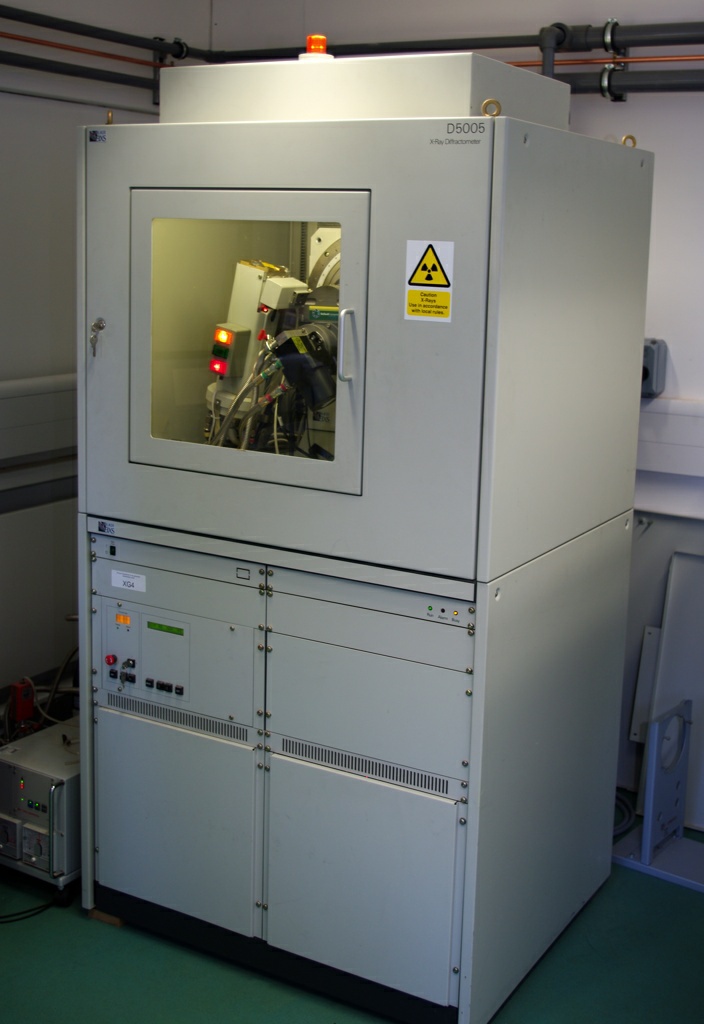
This general purpose Cu Kα X-ray powder diffractometer is equipped with standard Bragg-Brentano geometry and a diffracted beam graphite monochromator. It is used primarily for standard phase identification. Although our oldest diffractometer, it is very easy to use and still gives good, reliable data.
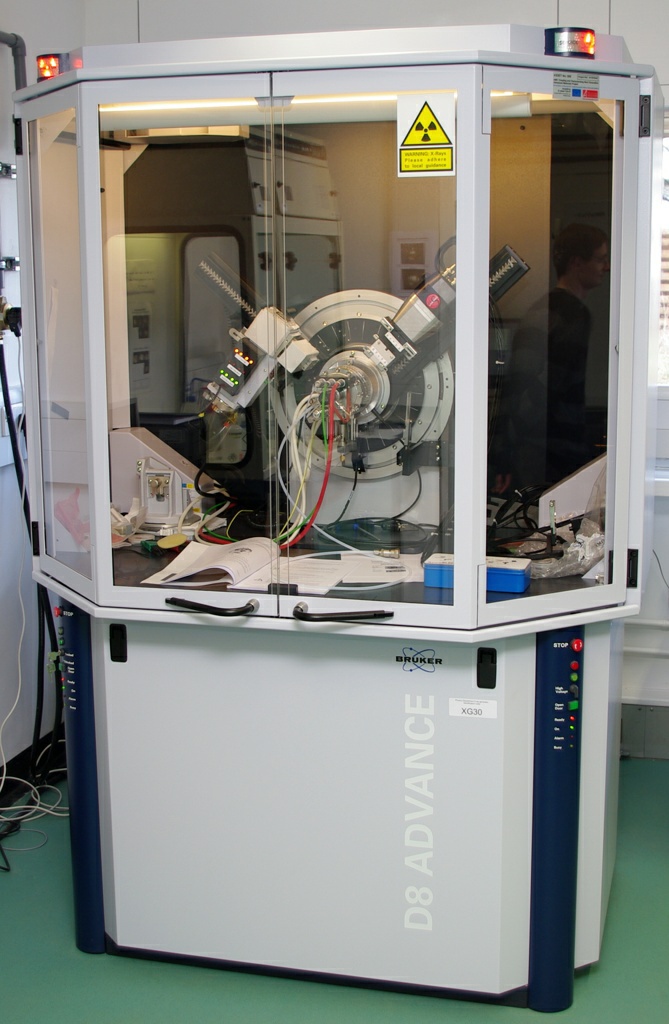
The Bruker D8 Advance is optimised for high-throughput in-situ gas reaction measurements. For maximum intensity and throughput, it is equipped with unmonochromated Cu radiation and a Ni filtered VÅNTEC-1 detector with an active length of 12° 2θ. The sample is held in an Anton Paar XRK 900Link opens in a new window reaction chamber, a chemical reaction cell for studies in the presence of reactive gases (oxidising and reducing) at up to 10 bar.
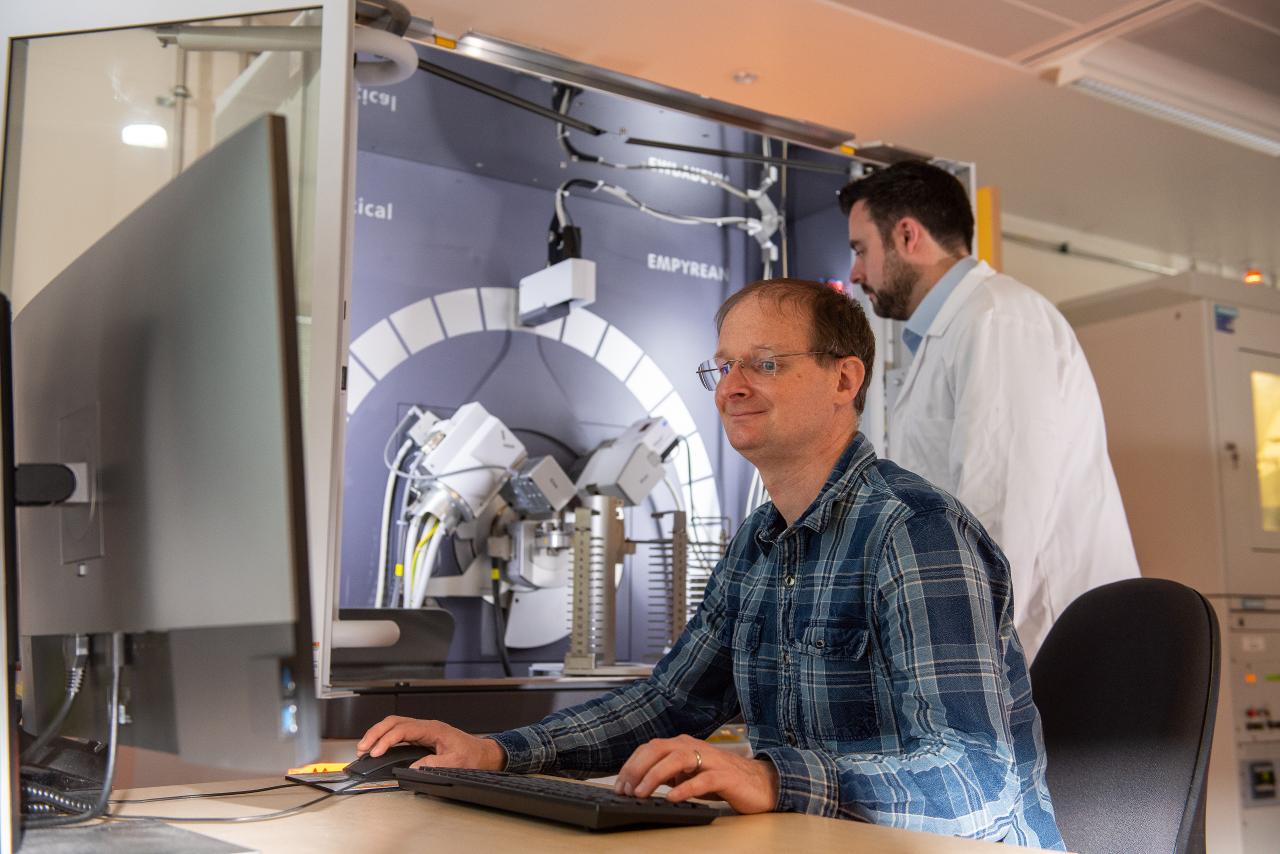
Our Malvern Panalytical Empyrean 2.0 is configured for high-throughput. It is equipped with multicore (iCore, dCore) optics for optimum resolution with Cu Kα radiation. On the diffracted beam side, it has a Pixcel 3DLink opens in a new window detector for fast data collection. To optimise usage of the instrument, we have a 48 position sample changer along with plenty of standard holders, as well as zero background Si holders for when you only have small quantities of powder. There are sample stages for room temperature applications, a reflection / transmission spinner stage for room temperature diffraction scans, a Z-translation stage for the study of thin-films or solid ceramics, an X-Y stage and a capillary spinner stage. For non-ambient measurements, we have a DHS1100 domed stage that can work with inert atmosphere or
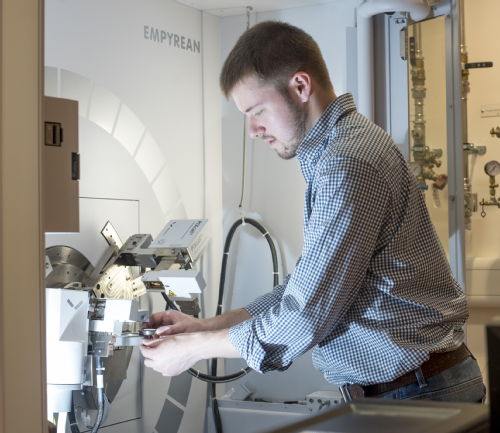
This Malvern Panalytical Empyrean is equipped with a Mo target which, with higher energy radiation is idealy to transmission measurements and in-operando studies. It is equipped with a solid-state GaliPix detector which has an active length of ~ 7° 2θ. There are sample stages for room temperature applications, a reflection / transmission spinner stage for room temperature diffraction scans, a Z-translation stage for the study of thin-films or solid ceramics, an X-Y stage and a capillary spinner stage.
The instrument is also equipped with an Oxford Cryosystems PheniXLink opens in a new window low temperature stage allowing studies on powders to be carried out at down to 12K.
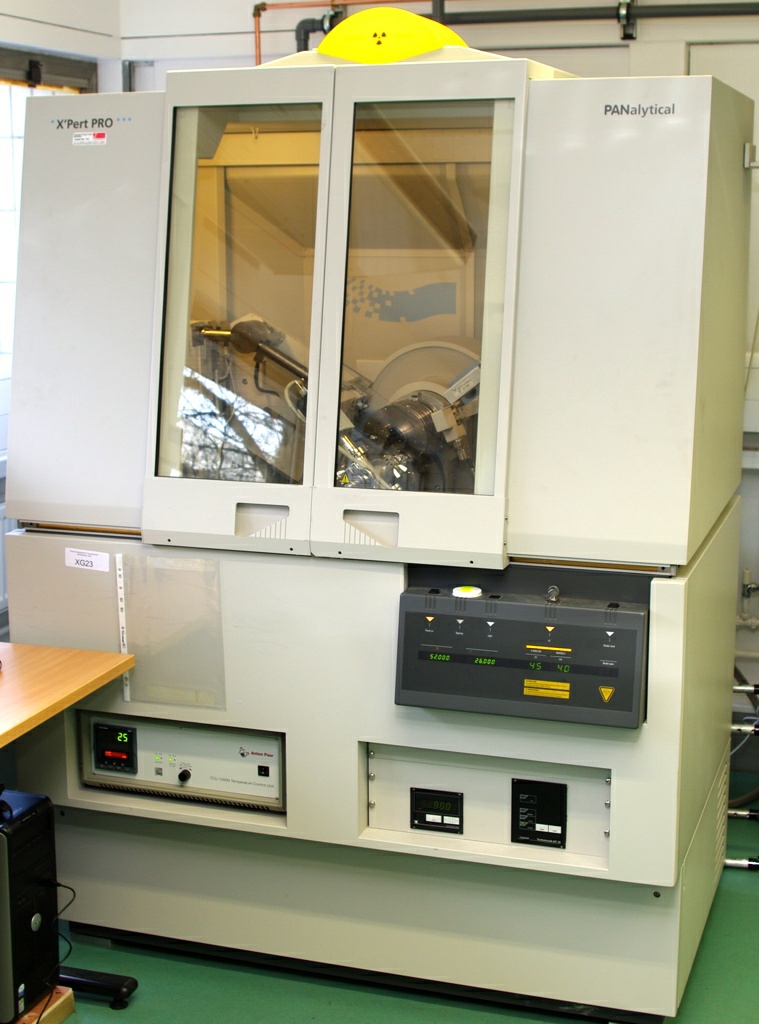
In its standard configuration, the X'pert Pro MPD is equipped with a focussing Johanson monochromator on the incident beam optics. This gives very high-resolution pure Cu Kα1 radiation. The solid-state PiXcel detector has an active length of ~3.2° 2θ.
There are 2 sample stages for room temperature applications, a reflection / transmission spinner stage for room temperature diffraction scans, a Z-translation stage for the study of thin-films or solid ceramics. For non-ambient experiments the Anton Paar HTK1200NLink opens in a new window spinner chamber is capable of achieving temperatures between 25°C and 1200°C in either air or a vacuum and is also equipped with a capillary spinner. Coupled with the high-resolution and fast detector, this allows detailed non-ambient experiments to be undertaken looking at phase-transitions and the formation of materials at high temperature.