
Hear From Our Students
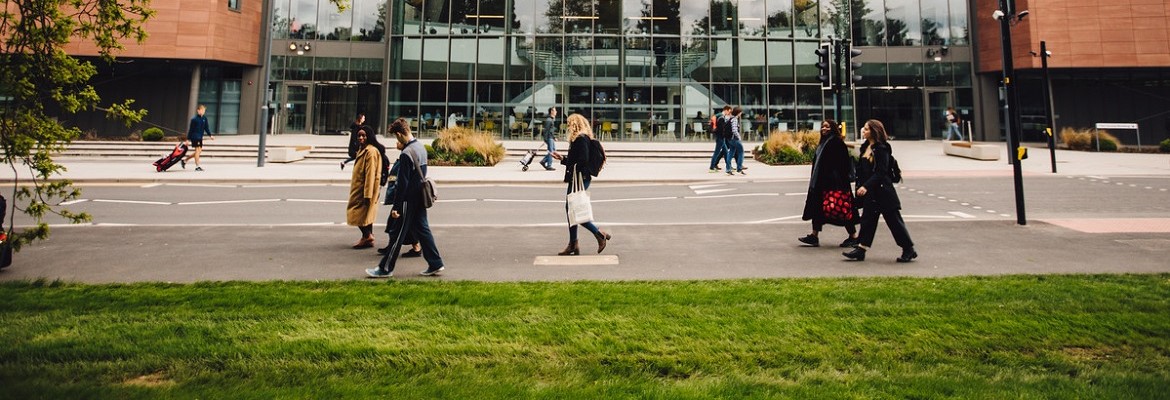
Postgraduate study in the Global Sustainable Development Department at Warwick is a time to explore new knowledge and develop your expertise.
Our students have diverse interests and come from a wide range of backgrounds. We spoke to some of our MASc cohort when they received their offers to find out more about their interests and experiences, and their hopes for the course.

Ilaria Ravazzolo
- Undergraduate degree: Economics and Global Sustainable Development, University of Warwick
- Main interests: intersection of gender, food, and identity amongst Italians in Switzerland
- Current course: MASc in Global Sustainable Development
Hear from Ilaria
Tell us about your interest in the sense of belonging among Italians in Switzerland
"My research focuses on Sustainable Development Goal 5 and its Target 5.4 (UN's Agenda 2030), which calls for the recognition and valuation of unpaid care and domestic labour. While Target 5.4 emphasises measurement and redistribution, it largely frames care as an economic variable; overlooking its lived, embodied and relational dimensions. However, I wish to challenge such technocratic approaches by foregrounding everyday food labour as a crucial yet persistently undervalued form of unpaid care labour.
My research examines the structural invisibilisation of domestic food labour through a case study of Italian mothers and grandmothers in Switzerland. Cooking, feeding and sustaining families are practices essential to social reproduction, yet they are frequently naturalised as expressions of love, tradition or femininity, rather than being recognised as highly skilled work that is essential to the sustainability of labour. By conceptualising culinary practices as care labour, my work contributes to feminist debates on the economic and epistemic marginalisation of domestic labour, repositioning everyday food labour as politically significant.
Mothers and grandmothers are often positioned as custodians of cultural continuity, with food serving as a primary medium through which national identity is performed and authenticated. These expectations are reinforced by persistent cultural stereotypes of the Italian mamma and nonna, as well as by the global recognition of Italian cuisine, for instance through its inscription on UNESCO's Intangible Cultural Heritage lists. However, my study interrogates how such narratives shape and constrain women's everyday lives by examining how culinary practices are adapted, negotiated and transformed."
How did you make your decision about studying the MASc degree at Warwick?
"For my undergraduate degree I studied GSD with Economics at Warwick University. I had initially decided to pursue a joint honours as, although I was eager to study economics for its career prospects, I didn’t want to solely focus on a single subject for three years, so I picked GSD on a whim. However, I quickly realised during my undergraduate studies that I enjoyed the GSD course content much more than economics, which is why I decided to pursue it further at postgraduate level!"
What are you looking forward to about the MASc degree?
"The GSD MASc course presents a lot of opportunities to engage in group work, which I really enjoy as the diversity of the student cohort means we are exposed to a wide variety of perspectives and academic knowledge. I have also always had overwhelmingly positive experiences with the GSD team. Whether it be the teaching faculty or administrative staff, everyone is very approachable, knowledgeable and willing to help if you are struggling with something, so I am looking forward to continue studying alongside them!"
What does global sustainable development mean to you?
"Since studying GSD at undergraduate level, I have come to realise that GSD is not just about advocating for sustainability, but understanding the limits in solving sustainable issues. The GSD course at Warwick is good at making you look at proposed “sustainable solutions” - whether it be for transport, housing or corporate practice - and critically evaluating them so that you understand the social, economic and environmental implications for each model. GSD is about realising that there are no simple quick fixes for solving these problems. However, there is value in having an interdisciplinary mindset when problems are addressed, as the proposed solutions from this are more likely to have an effective impact."

Karolina Kuczbajkah
- Undergraduate degree: Management with Marketing, University of Warwick
- Main interests: Corporate green bonds and greenwashing
- Current course: MASc in Global Sustainable Development
Hear from Karolina
Tell us about your interest in corporate green bonds
"For my planned Capstone Project, I will be undertaking a research dissertation on ‘green bonds’, which are a type of fixed-income instrument for businesses that are specifically designed to raise money for climate and environmental projects. I will be exploring whether these green bonds actually achieve what they are supposed to do or if they are simply another corporate greenwashing tool."
How did you make your decision about studying the MASc degree at Warwick?
"I have always been interested in issues of sustainability, especially after completing an internship in Poland at a small environmental start-up who were developing a carbon footprint measurement tool.
I was immediately drawn to how the GSD MASc course was structured, the broad range of topics it covered and how it didn’t push you towards a specific career or research path. Moreover, I decided that combining my business background with a sustainability-related degree would set a good foundation for my future career goals of working in sustainability consulting or logistics."
What are you looking forward to about the MASc degree?
"I am looking forward to the modules that the course offers, particularly Global Challenges and Transdisciplinary Response as it provides a strong introduction to sustainability issues and their technological and social limitations, which is useful to someone from a non-GSD background! The modules on the postgraduate course also feature different speakers for each topic, which will be interesting as the industry professionals and academics will likely offer their unique knowledge and differing perspectives."
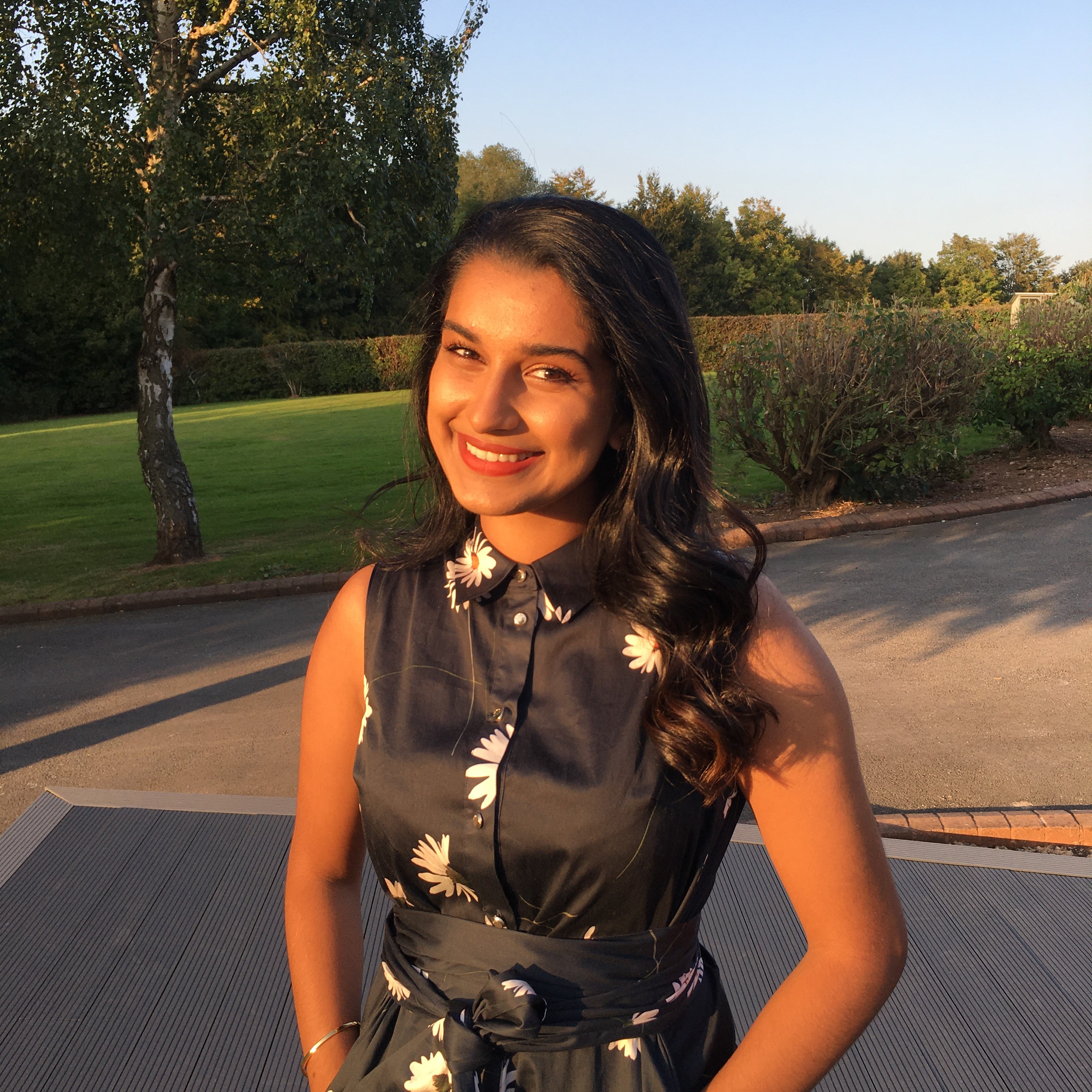
Daveena Saranna
- Undergraduate degree: BASc Global Sustainable Development, Warwick
- Main interests: Minority communities, 'race', gender, social sustainability
- Current course: MASc in Global Sustainable Development
Hear from Daveena
Tell us about your interest in minority communities, 'race', and gender
"As a BASc Global Sustainable Development (GSD) graduate, I realised I was interested in minority communities, 'race', and gender because of the opportunities to explore these themes in class. The GSD Department is supportive and encouraging when it comes to exploring your own interests.
In my undergraduate dissertation, I looked at the Punjabi immigrant community in Leamington and created a free and accessible website to preserve and share their memories. As a minority population, Leamington's Punjabi community doesn't have the resources to tell their stories, and they deserve to be heard in the narrative of being British. The website is dedicated to chronicling the past, the present, and the future of local Punjabis.
I would like to focus on minority communities in the future and looking at the MASc modules, I think there are lots of opportunities to do that."
What were you looking for when choosing your Master's degree at Warwick?

Above: Daveena and other students during an undergraduate GSD module
"I have a learning disability and the GSD Department have been so good with incorporating that into their teaching, and especially their marking. I wasn’t sure that other universities have the same capacity to engage with students in this way.
Alongside this, the assessment outputs are so creative in the GSD Department. You have the choice of doing a presentation, videos, policy briefs, posters, and so much more - I really had so many options during my undergraduate degree. You’re not just writing essay after essay, so I feel that I'm well prepared for working in the real world."
What are you looking forward to about the MASc degree?
"I’m most excited to learn about things that I don’t know about yet because there are so many things that I’ve learned about during my undergraduate degree that I’ve discovered to be great passions of mine. Uncovering these passions can lead to different career opportunities, so I’m most excited about the unknown. I think that’s the best bit about GSD: you never know what’s coming and you’re always quite surprised.
I think the MASc degree is a great thing to do because it's currently one of two courses in the UK that’s an MASc qualification. It’s great to be able to say to an employer 'I have the creativity and the flare from an MA, but I’ve also got the analytical skills and logistical thinking skills from an MSc’. It's so unique and helps you to stand out, showing that you can do it all."
What does global sustainable development mean to you?
"Global sustainable development is all around us. From food to fashion, economy to the environment, every action you have taken today will directly be linked to global sustainable development.
It is a way to acknowledge the past, accept the present, and advance the future. It is for you, me, and the rest of the world.
How you shape it is up to you. Even if it's just recycling one bottle a day, or speaking at COP26, whatever it is, it all adds up."
Hala Alhaffir
- Undergraduate degree: Environmental Science, Damascus University
- Main interests: Environmental sustainability, education, Syria
- Current course: MASc in Global Sustainable Development
Hear from Hala
Tell us about your interest in environmental sustainability in Syria
"Environmental initiatives in Syria are very rare and I wanted to do something that meets people’s needs and raises awareness about environmental issues. As a solution, I established a start-up called Green Treasure, aiming to sort waste and recycling.
Environmental studies in Syria and in the Arab region is a relatively new field of study. In Syria, there are a limited number of specialists and active environmental NGOs and associations. Therefore, I would like to play a role in considering the environment and dedicate myself to working in this field.
I want to be an environmental and sustainable development consultant and to provide consultancy services. My first step will be to build the capacity of people, especially environmental science graduates so they can work in this field, by providing them with workshops, and in partnerships with different organisations."


Above: Hala working for her start-up, Green Treasure. In the left image Hala is teaching children about sorting waste, as part of a schools campaign. In the right image, Hala is giving a lecture on plastic pollution and the importance of recycling.
How did you make your decision about studying the MASc degree at Warwick?
"I attended webinars and workshops provided by Warwick which were really useful for learning more about the course and the University. I met with Professor Mandy Sadan and Heather Robson and I had the chance to discuss my career plan. They were very helpful and I felt that the atmosphere at Warwick was friendly. This all affected my decision about where and what to study."
What are you looking forward to about the MASc degree?
"It’s very important to consider the environment and sustainable development in my country [Syria], especially now that we are going into a reconstruction phase after the war. It’s essential to ensure that any project that aims to improve the economy or any other sector considers the environment and sustainable development. This Masters [in Global Sustainable Development], which is an interdisciplinary course with people from different backgrounds and countries, is an opportunity to know more about these issues and develop my skills for my future career."
What does global sustainable development mean to you?
"In general, it is how to live well and benefit whilst leaving other generations the chance to live well too. To achieve global sustainable development, it is very important to act locally and think globally at the same time and to link ideas and share experiences between developed and developing countries. This will allow us to understand different points of views and to learn more from each other’s experiences in order to find suitable and creative solutions, and that everybody knows their role in this process."