
PEP Fellows 25-26
Dr. Eva-Maria Windberger
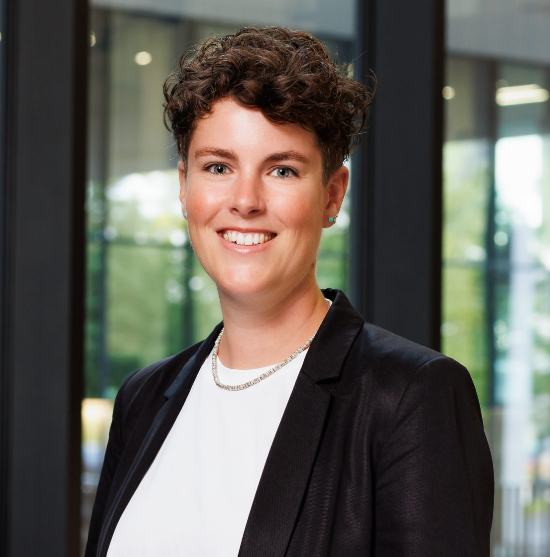
Eva-Maria Windberger will be visiting us during 2027, following a successful application to the 25-26 PEP. Read on to learn more about Eva's research and objectives as part of the IAS PEP Fellowship at the University of Warwick.
What are your primary objectives for your IAS PEP Fellowship, and how will the specific resources at your host institution (Warwick or Luxembourg) support your research goals and milestones?
What outcomes do you expect from your research stay?
I am excited to be able to conduct my research project QUEER/BELONG as an IAS PEP Fellow at the University of Warwick from May to November 2027. Aiming to explore how queer British East and South East Asians (BESEA) negotiate experiences of un/belonging, alterity, discrimination, and inclusion in contemporary theatre and media, my primary objective is to establish connections with the vibrant research community at Warwick and collaborate with film, performing arts, and theatre practitioners and communities. As a Luxembourg-based Postdoc, spending six months at Warwick will enable me to study queer BESEA theatre, film, and media “as it happens” and watch and analyse performances and screenings of newly commissioned work across the UK.
I have come to know my host at Warwick, Dr Ross G. Forman, in the context of several joint research endeavours in the past years and am happy about the opportunity to collaborate more closely with him. An expert in British-Chinese literature and culture as well as queer studies, Ross’s research agenda perfectly aligns with QUEER/ BELONG and I am certain our work will build significant inroads into an understudied field. The interdisciplinarity of my project, situated at the intersection of transculturality, theatre and performance studies, film and media studies, and queer studies, also makes it fit especially well with the University of Warwick’s Interdisciplinary Research Spotlight on Society & Culture and the focus on World Literature within English and Comparative Literary Studies. I am very much looking forward to connecting with researchers from two branches of the University of Warwick’s School of Creative Arts, Performance and Visual Cultures, Theatre and Performance Studies and Film and Television Studies.
By the end of the research stay, I aim to have built lasting collaborative relationships with both the colleagues at the University of Warwick and the practitioners and communities my research concentrates on. These connections could lead to a joint academic publication, a shared funding application, and reciprocal visits between Warwick and Luxembourg. Beyond the immediate outcomes of the Fellowship, I hope to help lay the foundation for a sustained and mutually beneficial partnership between the two universities.
How do you plan to engage with the local IAS community, research groups, and students during your stay?
Are there any specific collaborative activities or initiatives you hope to launch upon your arrival?
Throughout the Fellowship, I intend to engage actively with the IAS community, research groups, and students at Warwick by participating in academic events, workshops, and research-related activities. These interactions will provide valuable opportunities to gain insight into the diverse research being undertaken across the institution, understand current research foci, and identify possible synergies with my work. An early event to introduce myself and my project to the colleagues and students at the University of Warwick will be a guest lecture, potentially in the context of a seminar or lecture series, to stimulate conversation and build first connections with researchers interested in similar questions and discourses. I hope to continue and deepen these relationships in the process of organising a workshop – a key milestone of my research stay – in which I aim to bring together colleagues from Warwick with researchers and practitioners from across the UK to discuss queer BESEA cultural production. The workshop will be a space for deepening academic exchange, sharing research results, and laying the foundation for cooperation which outlasts my research stay. I wish the workshop to be an event open to anyone interested within the university community and will put special emphasis on inviting and involving students and PhD researchers.
A key aspect of the Fellowship for me is the opportunity to gain new perspectives from colleagues and students at Warwick. Their approaches to research collaboration, innovation, and knowledge exchange will provide valuable insights that can inform my own work. I therefore envisage the Fellowship as a process of reciprocal learning, fostered through dialogue, academic engagement, and shared exploration of interests. Through these interactions, I hope to contribute to the IAS community while building professional relationships that endure beyond the duration of the Fellowship.
How do you anticipate this six-month fellowship will influence your long-term professional development and research network?
What lasting impact do you hope to leave at your host institution?
The Fellowship is invaluable to strengthening and broadening my international research profile and network. Different from shorter engagements abroad, such as in the context of conferences or teaching stays, being able to spend six months in the UK will enable me to build meaningful, lasting ties with colleagues at the University of Warwick as well as researchers and practitioners in theatre and film at various other institutions. Through these professional relationships, I expect to gain new insights and impetus for my research and will benefit more widely from the interdisciplinary and trans sectoral perspectives shared, for instance, during my workshop and at other academic events at Warwick. I am confident that the exchanges and ties made over the time of six months will prove beneficial to my immediate academic advancement and the follow-up plans once the Fellowship is concluded, which include the publication of research results.
By the time I return to Luxembourg, I aim to have developed strong professional ties with colleagues at Warwick, enabling fresh research synergies and direct communication channels for sustained collaboration. A durable network of connections between researchers at Warwick and Luxembourg who share complementary interests and expertise would be the most significant impact I wish to contribute at the University of Warwick. While my Fellowship will involve specific research objectives, I would regard its greatest success as the continuation of these partnerships beyond the placement itself. This could take the form of joint publications, collaborative grant applications, staff and student mobility initiatives, or research visits. In this way, the benefits of the Fellowship would extend well beyond the six-month period, fostering engagement and long-term collaboration between Warwick and Luxembourg.
Next to my own professional advancement and the impact I hope to leave at Warwick, I wish to stress that my research in the context of the IAS PEP Fellowship has significant societal impacts and contributes to the pursuit of Sustainable Development Goal No 10: Reduce Inequality Within and Among Countries. It promotes and practices the principles and politics of diversity, equity, and inclusion by making BESEA as well as queer voices heard and works visible to academics and the general public both within the UK and beyond.
Profiles
Eva-Maria WINDBERGER - FHSE - University of Luxembourg I Uni.lu
Dr Ross G Forman - University of Warwick
Dr. Wai Hin Lee's exchange to Luxembourg
Dr. Wai Hin Lee (WMG, Warwick) will be visiting Professor Jan Lagerwall (Physics, Luxembourg) and you can learn all about the Fellowship plans via this link - Postdoctoral Exchange Programme (PEP) - University of Luxembourg I Uni.lu