
News: ABSPIE recent initiatives
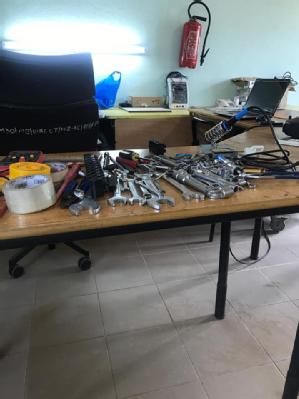
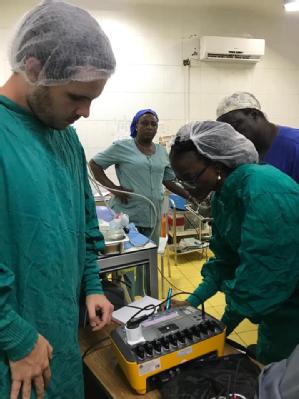
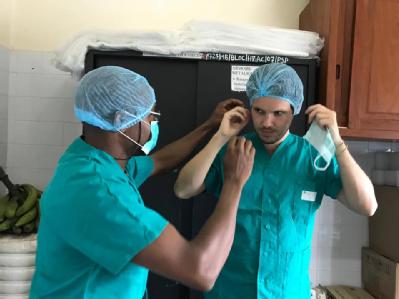
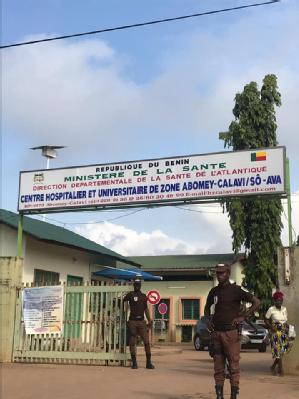
ABSPIE in Benin: field study on medical device working conditions and the application of international directives
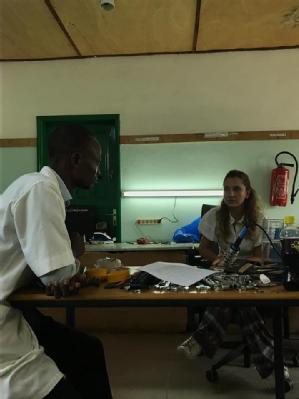
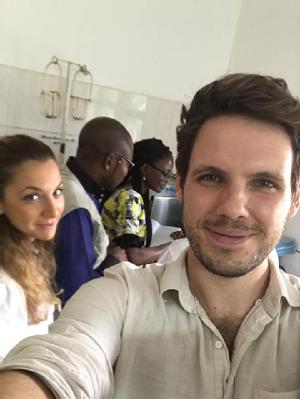
Three members of the lab, are in Benin, Africa, to perform two field studies.
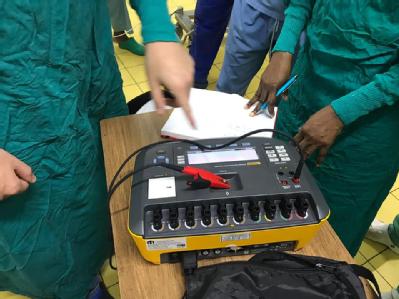
Davide Piaggio and Busola Oronti are two PhD student with a background in biomedical engineering and medical devices. Both are IFMBE Clinical Engineering Division collaborators. In this field study Davide and Busola are testing medical devices considering international standards and regulations for electric safety.
In fact, it is know that medical devices in Africa struggle to work as in Europe, but there is no evidence of the real reasons why this is. The aim of this study is to produce evidence on reasons why medical devices fail to work safely and effectively. This will inform the design of more resilient medical devices.
Meanwhile Alessia Maccaro, Philosopher with a PhD in bioethics, is investigates the implications of adopting EU regulations in Africa. Our hypothesis is that the uncritical adoption of international regulations can result in risky and unethical working conditions.
Perceptions of medical devices in sub-Saharian Africa
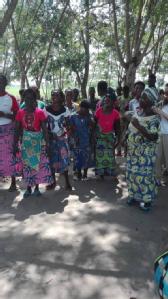
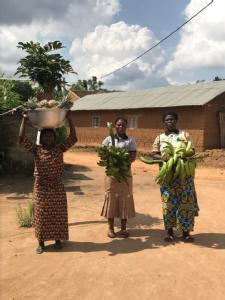
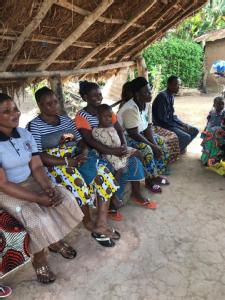
Alessia Maccaro, WIRL COFUND of the Institute of Advanced Study of the University of Warwick, member of the Applied Biomedical and Signal Processing Intelligent E-Lab directed by professor Leandro Pecchia is just arrived in Bénin (Sub-saharan Africa) were she'll do her field study. Some surveys about ethical perceptions of medical devices according to local culture have already done with the poorest women of the villages of the southern part of Benin. Help others is not only give, but also try to understand their real needs and look for new possibilities that could be compatibles and acceptable by their own culture.
Commonwealth Scholarship for the MSc in Biomedical Engineering
We are pleased to announce that the University of Warwick, in partnership with the Commonwealth Scholarships Commission (CSC), is offering a full-founded scholarship for the MSc in Biomedical Engineering (https://warwick.ac.uk/fac/sci/eng/postgraduate/bioe/).
The scholarship covers, travel, fees and leaving costs for a candidate from one of the following Commonwealth countries: Bangladesh, Cameroon, Eswatini, The Gambia, Ghana, India, Kenya, Kiribati, Lesotho, Malawi, Mozambique, Nigeria, Pakistan, Papua New Guinea, Rwanda, Samoa, Sierra Leone, Solomon Islands, Sri Lanka, Tanzania, Tuvalu, Uganda, Vanuatu, Zambia,
Interested applicants are requested to submit two applications:
1) One to the CSC’s, at http://cscuk.dfid.gov.uk/apply/shared-scholarships/
2) One at the University of Warwick, via https://warwick.ac.uk/study/postgraduate
The University of Warwick application system requires the payment of a fee, which can be waived if requested, via this form: https://warwick.ac.uk/study/postgraduate/apply/pgadmissions/applicants/unabletopay
The Candidate will be required to meet both University of Warwick and CSC admission criteria, which are detailed in the above links. You can download the terms and condition here.
The deadline for your application is 18 December 2019 (16:00 UK). No late applications will be considered."
Warwick co-organised the ABEC Medical Device Design School in Uganda
As part of the GCRF project titled “Harmonization of medical devices regulation among Sub-Saharan African Regions and Europe”, Dr Leandro Pecchia supported the organization of the 8th ABEC (African Biomedical Engineering Consortium) Design School, which was held at Uganda Industrial Research Institute (UIRI), Kampala, Uganda from 7th to 11th October 2019. The School was co-organized in collaboration with the UNECA (United Nations Economic Commission for Africa), the University of Pisa, University of Columbia, UIRI, Makerere University, Kenyatta University and the University of Warwick.
Davide Piaggio and Mahir Taher, respectively a PhD and a BSc student from the ABSPIE (Applied Biomedical Signal Processing Intelligent eHealth) Lab represented the University of Warwick.
The aim of the school was to build on multidisciplinary knowledge, combining engineering and medicine paradigms, to design prototypes of medical devices, tackling global challenges associated with surgical practice, obstetrics and anesthesia with an emphasis on low- and middle-income countries (LMICs).
The project, presented by Mahir Taher under the supervision of Davide Piaggio and Leandro Pecchia, regards a phototherapy vest for the treatment of jaundice in newborns in LMICs. The project was shortlisted along with other 39 to take part to the design school. Davide Piaggio was also accepted as one of the mentors working and was require to support the students with his expertise. Leveraging on this opportunity, he has also run a field study in 3 Uganda hospitals in collaboration with Licia Di Pietro, a PhD student from the University of Pisa, performing electric safety measures on medical devices.
Warwick School of Engineer at the World Congress of Clinical Engineering
The third edition of the III International Clinical Engineering and Health Technology Management Conference (#ICEHTMC2019, http://www.icehtmc2019.com/ ) was held last week in Rome, from the 20th to the 22nd of October 2019. This a relatively young event (i.e., third edition), but certainly a great success with more than 750 delegates from all the Continents focusing on UN Global Sustainable Goals related to health and healthcare technologies.
We had the opportunity to demonstrate the great work we are doing on the design, regulation, assessment and management of Medical Devices for EU and Global Health.
This was a great opportunity to meet a significant number of colleagues and former students, who again confirmed their appreciation, respect, esteem and friendship for the work we do.
Our School contributed to the success of the ICEHTMC2019 in many ways. Dr Leandro Pecchia was one of the co-chairs of the conference, with Adriana Velazquez Berumen (WHO) and the Officers of the Italian Society of Clinical Engineering.
Our PhD students were awarded the student best paper award (Davide Piaggio) and two Health Technology Challenges (Martina Andellini and Davide Piaggio). Kallirroi Stavrianou, our PDRA, was awarded the IFMBE CED appreciation award for her outstanding international contribution. Then Alessia Maccaro (Marie Curie Fellow in the Applied Biomedical Signal Processing and Intelligence eHealth Lab) presented her project and the work done so far on ethical issues arising from poor EU medical device norms' universality, Busola Oronti (PhD stud) her project on the application of Internet of Medical Things (IoMT) in Africa, Mihaela Porumb (PhD Studs) her work on deep learning and hypoglycemia detection via ECG, Rossana Castaldo (PDRA) the work done with Leandro on circadian-cycles tracking via ECG and deep learning (EPSRC founded Cyclops project).
In addition, Dr Leandro Pecchia was invited to give a keynote on HTA and Medical Device, to present his work on Clinical Engineering in low-income countries and to participate in a round table (i.e., education of Clinical Engineering in Europe). Moreover, in collaboration with the IUPESM Woman Engineers and Physicists for health, Dr Pecchia organised and Chaired a special session focusing on the need for more collation among Biomedical Engineers, Clinical Engineers and medical physicists, which was particularly well attended also because of the participation of the Ministry of Research of Montenegro (Dr Sanja Damjanovic, Medical Physicist), WHO Senior Advisor for Medical Devices (Adriana Velasquez, Clinical Engineer) and Magdalena Stoeva (IUPESM Treasurer, Biomedical Engineer).
Probably this was not strictly needed, but certainly this event helped in further promoting the great work that Warwick is doing in the field of Global Health and Clinical Engineering!
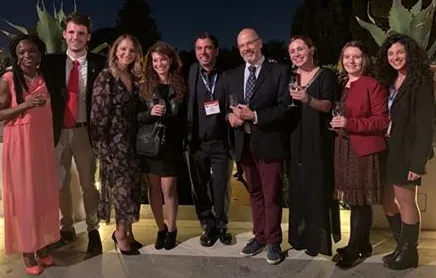
Warwick Attendees at the ICEHTMC2019 in the photo (from left): Busola Oronti, PhD stud, Davide Piaggio, PhD stud, Alessia Maccaro, Marie Skłodowska-Curie Fellow, Rossana Castaldo (PDRA), Leandro Pecchia (Associate Prof), Silvio Pagliara (PDRA), Kallirroi Stavrianou (PDRA), Mihaela Porumb (PhD stud), Andellini Martina (PhD stud).