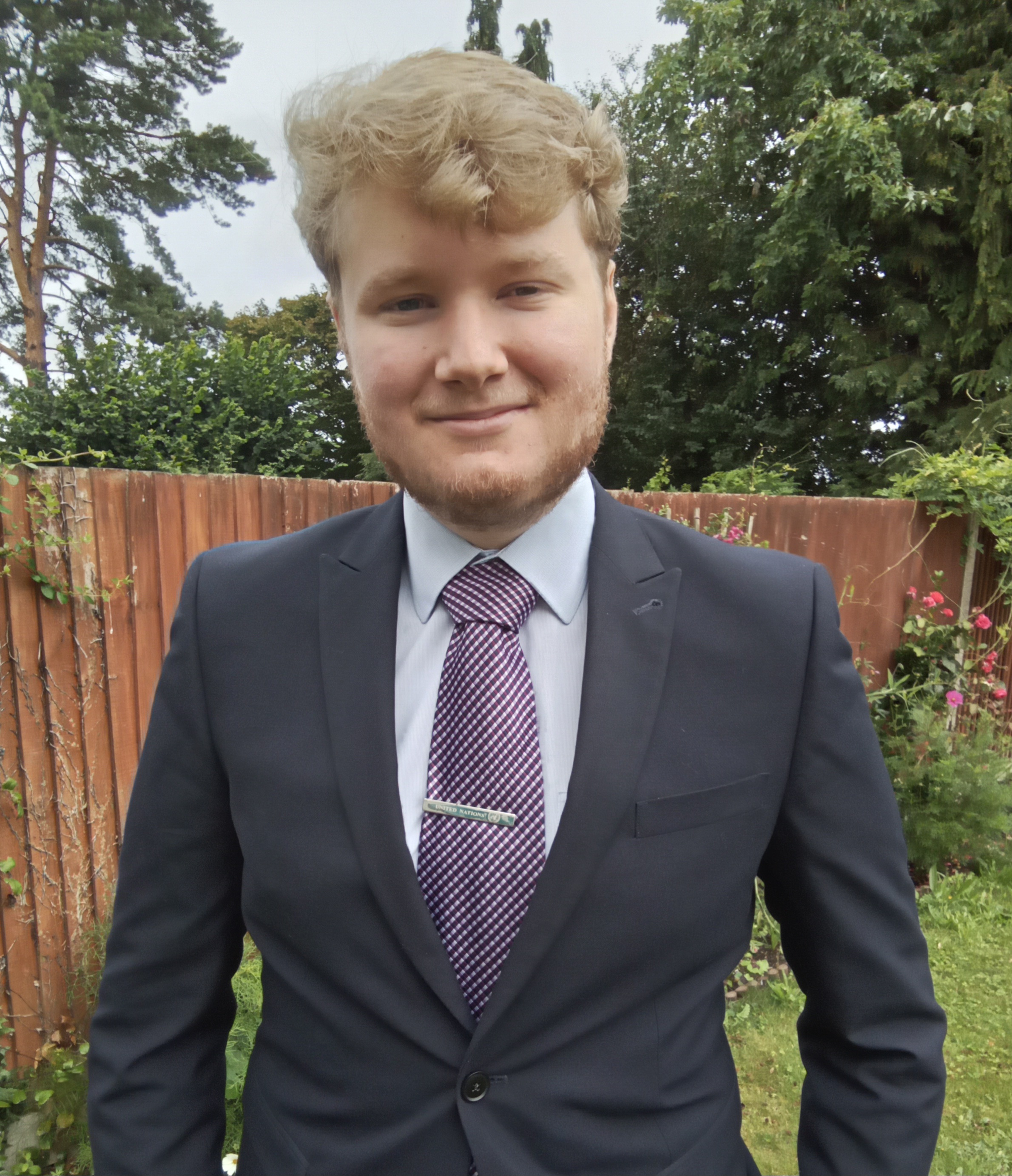
Rob Sunnucks
I am a second year PhD student in the Mathematics for Real-World Systems CDT at the University of Warwick. I work in the field of epidemiology, with my main focus being the application of active adaptive management to neglected tropical diseases.
Publications
Can non-routine data collection help decision-making for gambiense sleeping sickness? Using active adaptive management to assess the potential of vector control (preprint) - Sunnucks, Tirados, Miaka, Davis and Rock
Gambiense human African trypanosomiasis (gHAT) is a disease in West and Central Africa spread by tsetse. A key method to combat the spread of the disease is the deployment of tiny targets which kill tsetse. Monitoring of the tsetse population can allow us to ascertain the effectiveness of tiny targets in a given area and use this information to inform whether deployments should continue. However, the usefulness of this monitoring has been called into question. Here, we determine the monetary benefit of this monitoring in reducing the burden of gHAT and lowering costs.
We calculated the benefit of conducting twice-yearly monitoring over a two-year period of vector control, and how this changed for different locations and different monitoring strategies. We found these efforts were cost-effective at a willingness to pay threshold of $153 for the health zone of Mulumba, where we were able to determine the optimal monitoring strategy, but it was not cost-effective in the health zone of Vanga.
This work will provide a framework to ascertain the benefit of further monitoring efforts in more complex decision-making concerning gHAT, and could also be applied to other infectious diseases.
Methods for Reproducible Comparison of Strategies in Stochastic ModellingLink opens in a new window - Sunnucks, Davis and Rock
Stochastic simulations are often used to model real-world phenomena such as infectious disease dynamics. In this modelling, differing strategies are often compared to one another by comparing the model outputs each strategy results in. Hash-based matching, pseudo-random number generation is an approach for stochastic simulations that was originally developed by Pearson and Abbott in the hashprng package to overcome challenges with comparing model simulations in a way that considers the dependency between model outputs. We demonstrate how methods based on this approach grant considerable benefit when comparing different strategies, and show when each of our three proposed methods ought to be used. We illustrate our methods with two epidemiological models: one simple model of a vaccine-preventable infection and one complex model of African sleeping sickness, which can be controlled through multiple interventions. We show how our Bernoulli hashing method works very well for simple models, and a variation of it can be used for more complex models in certain cases. Additionally, we discuss the properties of our methods for considering counterfactual scenarios and note that, compared to other attempts to obtain perfect counterfactuals, they demonstrate advantages in computational complexity and their application to a wider variety of models.
Introducing a framework for within-host dynamics and mutations modelling of H5N1 influenza infection in humansLink opens in a new window - Higgins, Looker, Sunnucks, Carruthers, Finnie, Keeling and Hill
Avian influenza A(H5N1) poses a public health risk due to its pandemic potential should the virus mutate to become human-to-human transmissible. To date, reported influenza A(H5N1) human cases have typically occurred in the lower respiratory tract with a high case fatality rate. There is prior evidence of some influenza A(H5N1) strains being a small number of amino acid mutations away from achieving droplet transmissibility, possibly allowing them to be spread between humans. We present a mechanistic within-host influenza A(H5N1) infection model, novel for its explicit consideration of the biological differences between the upper and lower respiratory tracts. We then estimate a distribution of viral lifespans and effective replication rates in human H5N1 influenza cases. By combining our within-host model with a viral mutation model, we determine the probability of an infected individual generating a droplet transmissible strain of influenza A(H5N1) through mutation. For three mutations, we found a peak probability of approximately 10-3 that a human case of H5N1 influenza produces at least one virion during the infectious period. Our findings provide insights into the risk of differing infectious pathways of influenza A(H5N1) (namely avian–human versus avian–mammal–human routes), demonstrating the three-mutation pathway being a cause of concern in human cases.
Projects
- What is the value of entomological monitoring in tsetse control? Modelling the use of tsetse data for adaptive management of vector control in new regions.
- PhD work on how monitoring the tsetse population can prove valuable in assisting elimination efforts of gambiense Human African Trypanosomiasis (gHAT), otherwise known as sleeping sickness.
- Supervisors: Prof Kat Rock and Dr Emma Davis. External partners: National Sleeping Sickness Control Programme in DR Congo (PNLTHA-DRC) and Dr Inaki Tirados at LSTM.
- Working as a part of the HAT Modelling and Economic Predictions for Policy (HAT MEPP) team.
- How can survey data on the never-treated population contribute to reaching elimination of lymphatic filariasis as a public health problem?
- PhD work on how monitoring the never-treated population can prove valuable in assisting elimination efforts of lymphatic filariasis.
- Supervisors: Prof Kat Rock and Dr Emma Davis.
- Adaptive Management for Strategies against NTDs
-
MSc Individual Project - Supervisors: Prof Kat Rock and Dr Emma Davis
- Continuing into PhD work
-
- Determining the phase transition for human-to-human transmissible and non-human to-human transmissible influenza strains
- MSc Group Project - Supervisors: Prof Matt Keeling and Dr Ed Hill
- The dynamics of fast-start motions observed in fish
- MMath research project - Supervisor: Dr Shreyas Mandre
Talks
- IDDConf 2026 - Can non-routine data collection help decision-making for gambiense sleeping sickness? Using active adaptive management to assess the potential of vector control - Poster presentation - University of Cumbria, Ambleside - July 2026
- AMP 2026 - Reproducible Comparison of Strategies in Stochastic Modelling - Contributed Talk - University of Warwick - July 2026
- SPAAM Seminar - Different approaches to the modelling of tsetse populations - Invited Talk - University of Warwick - February 2026
- The 37th Conference of the International Scientific Council for Trypanosomiasis Research and Control (ISCTRC) - What is the value of entomological monitoring in tsetse control? Modelling the use of tsetse data for adaptive management of vector control in new regions - Contributed Talk - Nairobi, Kenya - September 2025
- IDDConf 2025 - Methods for Reproducible Comparison of Strategies in Stochastic Modelling - Poster presentation - University of Cumbria, Ambleside - September 2025
Teaching Responsibilities
2025/26
- Graduate Teaching Assistant for MA265 - Methods of Mathematical Modelling 3
- Graduate Teaching Assistant for MA4M1 - Epidemiology by Example
- Supervisor for a group of first-year Mathematics students
2024/25
- Supervisor for two groups of first-year Mathematics students
- Graduate Teaching Assistant for MA265 - Methods of Mathematical Modelling 3
Education
- PhD (ongoing) in Mathematics of Systems
- MathSys CDT, University of Warwick, 2024-present
- MSc in Mathematics of Systems
- MathSys CDT, University of Warwick, 2023-2024
- MMath in Mathematics
- University of Warwick, 2019-2023