Calendar of events

Tue 5 Oct, '21 - Fri 10 Dec, '21All-day |
PhD Research Development Autumn ProgrammeRuns from Tuesday, October 05 to Friday, December 10. |
||||||||
Fri 26 Nov, '21- |
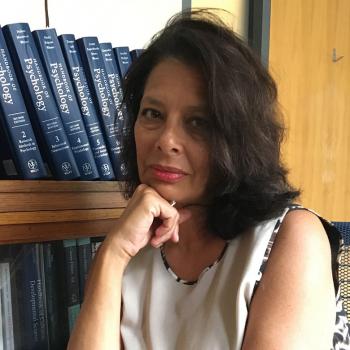
Guest Speaker: "The role of culture and expertise on language and perception" Professor Asifa Majid, University of YorkOn-line Email c.j.johnstone@warwick.ac.uk for linkSpeaker: Professor Asifa Majid, Inspirational Research Leader, Department of Psychology, University of York Title: The role of culture and expertise on language and perception. Host: Professor Sotaro Kita See archive of Previous speakers here
|
||||||||
Tue 30 Nov, '21- |
PhD talk on Early Year Career Fellowships, Opportunities for Early Career Researchers with Leverhulme and Wellcome: Dr John Burden, IASTEAMS - complete form for linkSpeaker: Dr John Burden Institution: Institute of Advanced Study, University of Warwick Role: Research Strategy & Programme Manager Title: Opportunities for Early Career Researchers with Leverhulme and Wellcome Abstract: Externally funded research fellowships can help early career researchers take a significant step towards a permanent academic position. Here we will look at the two largest charitable funders of early career fellowships in the UK and discuss what helps to make a strong application. We very much welcome all postgraduates and postdocs to attend this event. It is never too early to start thinking about fellowship applications! Please sign up to receive a calendar invitation with Teams link for the event via the form. |
||||||||
Wed 1 Dec, '21- |
Language and Learning Seminar: "The development of syntactic representations in beginning L2 learners of Dutch ", Rianne van Lieburg, University of AntwerpLanguage and Learning Seminar: Speaker: Rianne van Lieburg, University of Antwerp Title: "The development of syntactic representations in beginning L2 learners of Dutch " Abstract: How do late L2 learners acquire the grammatical structures of their new language? Previous research suggests that learners start from item-specific representations, which become abstract, that is, generalized over verbs, over time. How and when does the transition from item-specific representations to abstract representations take place? For instance, do abstract representations form earlier for more frequent structures than for less frequent structures? We tested beginning L2 learners of Dutch in a longitudinal study (5 sessions) and in a cross-sectional study (higher vs. lower proficient learners). Exploiting the structural priming paradigm, we tested whether abstract structural representations are formed earlier for the more frequent active structure than for the less frequent passive structure. In my talk, I will present the results and discuss some implications for models of L2 development of syntactic structures and some challenges coming with the testing of the hypotheses following from these models in beginning L2 learners. Language and Learning Seminar convenor: Dr Marta Wesierska Marta will email TEAMS links to Department, but you can email Marta for link too. |
||||||||
Mon 6 Dec, '21- |
HOW to PhD: Dr Aran Ulanhannan and Dr Julia GaulyIn this session, the hosts of “How to PhD” podcast, Dr. Arun Ulanhannan and Dr. Julia Gauly, will present on what to expect from a PhD. After which, we will have a 30min Q&A. Arun and Julia passed their PhDs in 2020. Currently, they are Research Fellows at Coventry University and the University of Warwick, respectively. They support PhD students via the podcast they host “How to PhD” where they share essential tips they wish they knew while doing their PhD.
|
||||||||
Mon 6 Dec, '21- |
Panel discussion on Hidden Disability as part of UK Disability History MonthKevin Gately room in SU HQ“Did you know that it's UK Disability History Month from 18th November - 18th December? To tie in with the 2021 theme of 'hidden disability, the Disabled Students' Association are organising a panel event, giving staff and students the chance to hear from Warwick students with a range of hidden disabilities. Is there something you've always wanted to know, but been too scared to ask? Or do you just want to find out how to better support your friends, students or family? Panellists will discuss their thoughts and experiences in a discussion chaired by the Disabled Students' Officer, but there will also be plenty of time for questions from the audience. All Warwick staff and students are welcome to attend. The panel will be taking place on Monday 6th December, 3-4pm. This will be a hybrid event, with panellists and audience members able to attend both online via Microsoft Teams or in person in the Kevin Gately room in SU HQ. In-person attendees will be encouraged to wear masks unless exempt, and social distance where possible. Click here to join the event on Microsoft Teams, or attend in person. If you have any questions about the event, or any accessibility requirements to be able to attend, please email disabledstudents@warwicksu.com.” Many thanks, Sophie Sophie Kitching (she/they) Disabled Students’ Officer 21/22
|
||||||||
Thu 9 Dec, '21- |
WIHEA Project Showcase and Networking EventSign up for TEAMS linkThursday, 9 December 2021, 2-4pm (via Microsoft Teams)
WIHEA are pleased to announce the details of our upcoming Project Showcase & Networking event which is open to staff and students from the learning and teaching community at Warwick and other HEI’s. The event will include presentations and videos from the project teams, all aimed at sharing the innovative and exciting outputs and the student/staff co-creation experiences these projects have achieved to date. There will be an opportunity to express your interest in finding out more about the projects and you can ask questions during the short Q&A sessions. You can also find out information on our next funding call. |
||||||||
Wed 12 Jan, '22- |
Internal Seminar: “Sense-making in thought and deed” Dr Sam JohnsonTEAMSHear about the latest research in Psychology. This week: Dr Sam Johnson Title: “Sense-making in thought and deed”
Abstract: The experience of sense-making – judging which potential explanation best accounts for what we observe – dominates much of mental life. In this talk, I argue that grasping these sense-making processes is not only crucial for understanding much of cognition, but also for important decisions we make at the individual, social, and societal level. In particular, I show how a theory of sense-making helps us to account for how people make decisions under uncertainty and evaluate others’ actions in the moral domain, with payoffs for real-world problems in financial decision-making and (in)effective altruism. Calendar invitation circulated by Internal Seminar Coordinator: Suzanne Aussems with TEAMS link |
||||||||
Fri 14 Jan, '22- |
Guest Speaker: "How does attention play a role in learning? Trajectories, mechanisms and risk factors" Professor Gaia Scerif, Oxford UniversityOn-line Email c.j.johnstone@warwick.ac.uk for linkSpeaker: Professor Gaia Scerif, Professor of Developmental Cognitive Neuroscience, Oxford University Title: How does attention play a role in learning? Trajectories, mechanisms and risk factors Host: Professor Sotaro Kita Abstract: Attentional control plays a crucial role in biasing incoming information in favour of what is relevant to influence further processing into learning and memory. Today I will focus on three complementary lines of evidence. The first line of work was inspired by children at high genetic risk for attentional difficulties: how do attentional differences and emerging skills in the classroom develop for these children? This work highlights variable attentional skills in children at high genetic risk. The second line of work draws from work on atypical attention to study how individual differences in neurotypical preschoolers’ attentional control predict foundational early learning skills and their change over time. These findings highlight bidirectional relationships between attentional control skills, learning and memory. The final line of work will centre on children at high environmental risk for attentional difficulties, reporting on work with colleagues who study attentional control and early educational outcomes in low-income communities in North America and South Africa. These data suggest that individual differences in attentional control predict early learning, but that there may be unexpected buffering factors associated with better than expected outcomes, even under conditions of very high environmental risk. As a whole, these findings point to the suggestion that attentional control processes are best understood not as developing in isolation, but rather as both influencing and influenced by development in other cognitive and social domains.
See archive of Previous speakers here Email: Catherine Johnstone for a link |
||||||||
Mon 17 Jan, '22 - Fri 28 Jan, '22All-day |
PhD training: “Research Software Engineering with Python” courseRuns from Monday, January 17 to Friday, January 28. The Alan Turing Institute is offering postgraduate students the opportunity to attend an online “Research Software Engineering with Python” course between 17 – 28 January 2022. The course is open to students who are interested in learning how to construct reliable, readable, efficient research software in a collaborative environment. There is no cost for the course if you are selected to take part, so if you would like to apply for a place and/or find out more information about the course, please see the following link: https://www.eventsforce.net/turingevents/frontend/reg/thome.csp?pageID=50389&ef_sel_menu=733&eventID=152 |
||||||||
Wed 19 Jan, '22 - Fri 28 Jan, '22All-day |
Warwick i2i Impact programme for Early Researchers, PhD and masters studentsOnline - events running on 19, 21, 26, 28 January 2022Runs from Wednesday, January 19 to Friday, January 28. The next programme will take place online on the 19th, 21st, 26th and 28th January 2022 and is aimed towards masters, PhD, post-doctoral and early career researchers working in any area of science, technology, engineering and mathematics, including life sciences and healthcare. Each workshop focuses on a different topic which include:
Contact: Tim Francis |
||||||||
Wed 19 Jan, '22- |
Language and Learning Group Seminar: "Gepo with a G or Jepo with a J? Generating orthographic representations in the absence of orthography" Mina JevtovićOnline - email for TEAMS linkMina Jevtović from The Basque Center on Cognition, Brain and Language will be giving a talk titled Gepo with a G or Jepo with a J? Generating orthographic representations in the absence of orthography (abstract below). Abstract: Research conducted on English-speaking children and adults shows that preliminary orthographic representations (i.e., orthographic skeletons) are generated solely from aural exposure to novel words (Wegener et al., 2018). In this talk I will present two studies that further investigated this account by testing whether skilled readers generate orthographic skeletons for all spoken words they acquire, or do so only when they are certain that these will match the novel words’ actual spellings. To that end, Spanish (transparent orthography) and French (opaque orthography) skilled readers first learned novel words through aural training and were then presented with their spellings in a short self-paced reading task. Importantly, novel words were presented in their unique (i.e., consistent words) or one of the two possible spellings (i.e., preferred and unpreferred inconsistent words). Both Spanish and French participants read consistent and inconsistent words presented in their preferred spellings faster than inconsistent words presented in their unpreferred spellings. These findings thus expand the orthographic skeleton account by showing that initial orthographic representations are generated even when there is uncertainty regarding novel words’ spellings. Moreover, they show that orthographic skeletons are generated across languages that vary in the degree of sound-to-spelling inconsistency. Future research will explore the nature of the orthographic skeleton effect by testing whether preliminary orthographic representations are generated as an automatic response to novel phonological input, or whether generating them represents a strategy employed by participants that facilitates the acquisition of novel spoken words. Organised by: Marta Wesierska Email for teams link: marta.wesierska@warwick.ac.uk |
||||||||
Fri 21 Jan, '22- |
Guest Speaker: Ensembled Preferences, Dr Antonia Krefeld-SchwalbOn-line Email c.j.johnstone@warwick.ac.uk for linkSpeaker: Dr Antonia Krefeld-Schwalb, Rotterdam School of Management, Erasmus University Follow on Twitter @antoniakrefeld Title: Ensembled Preferences Host: Dr Emmanouil Konstantinidis Abstract: Preference elicitation tasks are generally considered the gold standard of preference measurement. For example, intertemporal preferences elicited in the laboratory have been associated with various aspects of maintaining a healthy lifestyle (BMI, Amlung et al., 2016; MacKillop & Kahler, 2009; Chapman & Coups, 1999) and consumer financial decisions (Li et al., 2015; Meier & Sprenger, 2012; Atlas et al., 2017). Recently, evidence has accumulated that the use of preference elicitation tasks is associated with several problems related to the models used for measurement (Krefeld-Schwalb et al., 2021), respondent behavior in the task (Li et al., 2021), and the effects of the context and settings of the task (Hardisty et al., 2012; Read et al., 2017), which affect the predictive validity of the measures. As a way to overcome these problems, we propose combining multiple preference elicitation tasks in what we call an ensembled-preference approach. This approach also allows for multiple sources of unexplained variance to be accounted for in the preference elicitation tasks.
See archive of Previous speakers here Email: Catherine Johnstone for a link . |
||||||||
Tue 25 Jan, '22- |
Research Jobs in Industry for Psychology PhDs: A talk, discussion, and Q+A with Dr Cai GuoWe welcome Dr Cai Guo to our PGR Careers seminar series! Dr Guo obtained his PhD at Stanford University and currently works for Goldman Sachs in the USA. Abstract A research-based psychology PhD degree is not limited to academia but is in high demand in industry. This talk will feature a 10-15 min presentation on different types of jobs in industry that are particularly relevant for psych PhDs, followed by a discussion and Q&A section that provide a deep dive into various topics such as what it’s like to have a research career in industry, how to prepare for a research job in industry, and the pros and cons of working in academia vs. industry. If you would like to attend this event, then please submit the form here and we will send you the Teams link in due course. Hope to see you all there! |
||||||||
Wed 26 Jan, '22- |
POSTPONED Internal Seminar: "Vaccine-Related Beliefs and Confirmation Bias in the Time of COVID-19" Eugene Malthouse (PGR)TEAMSThe internal seminar on Tuesday 26 January has been postponed. Please keep an eye out for the rearranged talk. SA 25-2-22 Hear about the latest research in Psychology. Speaker: Eugene Malthouse Title: Vaccine-Related Beliefs and Confirmation Bias in the Time of COVID-19 Abstract: In recent history mass vaccination has consistently proven our most effective method of dealing with infectious diseases. This is true for the present COVID-19 pandemic, and is also likely to be true for future pandemics. But the effectiveness of any vaccine depends on the number of people who choose to receive it. During the present pandemic, much information concerning the safety and effectiveness of SARS-CoV-2 vaccines has been published. However, confirmation bias research tells us that people often consider such information through the lens of their existing beliefs. The present study investigated the extent to which members of the UK and US public (n = 3,899) exhibited this tendency when presented with vaccine-related data. Please do come along to ask questions and show your support. Calendar invitation circulated by Internal Seminar Coordinator: Suzanne Aussems with TEAMS link |
||||||||
Wed 26 Jan, '22- |
GSD event: Exploring Public Acceptance of Nature Protected Areas in EuropeOC0.01 |
||||||||
Thu 27 Jan, '22- |
Guest Speaker: “The impacts of the COVID-19 pandemic on children with special educational needs, and their parents”, Dr Umar Toseeb and Professor Kathryn Asbury, University of YorkOn-line Email c.j.johnstone@warwick.ac.uk for linkSpeakers: Dr Umar Toseeb and Professor Kathryn Asbury, Department of Education, University of York Title: “The impacts of the COVID-19 pandemic on children with special educational needs, and their parents” Host: Professor Dieter Wolke Abstract: Children and adolescents with special educational needs and their parents are likely to have been disproportionally affected during the COVID-19 pandemic. There has been little focus on how the mental health of these vulnerable families developed during the pandemic. We asked parents/carers to complete online questionnaires about their own and their child’s mental health at one or more time points between 23rd March 2020 (at the onset of the first lockdown) and 10th October 2020 (when schools fully reopened for face-to-face teaching). During the talk we will discuss stability and change in mental health using both quantitative and qualitative data. We will also discuss how these findings differed for those with autism compared to those with other special educational needs. Findings will be discussed with reference to implications for support as we emerge from the pandemic. See archive of Previous speakers here Email: Catherine Johnstone for a link.
|
||||||||
Wed 2 Feb, '22- |
Language and Learning Group Seminar: "Vocabulary and grammar: their relationship and their role in predicting comprehension in bilingual children", Alessandra Valentini, University of SurreyOnline - TEAMS link hereAlessandra Valentini from the University of Surrey will be giving a talk titled Vocabulary and grammar: their relationship and their role in predicting comprehension in bilingual children (abstract below). ----------------- Link to the meeting:
----------------- Abstract: Strong correlations between vocabulary and grammar are well attested in language development in monolingual and bilingual children. Research on monolingual children has also shown that listening and reading comprehension are predicted by a range of language and cognitive skills, including vocabulary and language abilities; but less is known about predictors of listening and reading comprehension in bilingual children and about the role of language input. In this talk I will present longitudinal data collected from a sample of 100 bilingual children between the ages of 5;8 and 6;8, tested on a range of language and cognitive skills. These data allow us to explore the directionality of the relationship between vocabulary and grammar in bilingual children. With this data we also explore the predictors of comprehension in bilingual children, showing the particular importance of vocabulary depth and morphological knowledge in predicting bilinguals' language comprehension. ----------------- Schedule of talks for this term:
------------------------------------ Bilingolab: How Bilingual Children Learn Language |
||||||||
Thu 3 Feb, '22- |
Guest Speaker: "Training can improve decision making" Professor Carey Morewedge, Boston UniversityOn-line Email c.j.johnstone@warwick.ac.uk for linkSpeaker: Professor Carey Morewedge Title: Training can improve decision making Host: Dr Jesse Preston Abstract: Biases in judgment and decision making affect experts and novices alike, yet there is considerable variation in individual decision-making ability. To the extent that this variance reflects malleable differences, training interventions could be an effective and scalable way to debias and improve human reasoning. I report laboratory, longitudinal, and field experiments that find one-shot debiasing training interventions can substantively improve decision making by reducing trainees’ commission of cognitive biases. Participants in laboratory experiments (N = 1,076) received a single 30 to 90 minute training intervention that addressed three of six biases critical to intelligence analysis (i.e., anchoring, bias blind spot, confirmation bias, correspondence bias, representativeness, and social projection). Interventions ranged from instructional videos to serious games. Longitudinal experiments found medium to large immediate debiasing effects (games d ≥ 1.68; videos d ≥ .69) that persisted at least 2 months later (games d ≥ 1.11; videos d ≥ .66). In a field study where participants didn’t know their biases were measured (N = 290), training reduced confirmatory hypothesis testing by 29% in a complex business decision. Debiasing effects of training transferred across problems in different contexts and formats. The results provide exciting new evidence that training can improve decision making.
For TEAMS link to the event email: c.j.johnstone@warwick.ac.uk See archive of Previous speakers here |
||||||||
Wed 9 Feb, '22- |
Internal Seminar: "Developmental origins of objectivity" Dr Richard Moore and Dr Katharina HelmingTEAMSHear about the latest research in Psychology. Calendar invitation circulated by Internal Seminar Coordinator: Suzanne Aussems with TEAMS link This week’s internal seminar speakers will be Dr Katharina Helming (Department of Psychology) and Dr Richard Moore (Department of Philosophy). Developmental origins of objectivity
A concept that we lean on as scientists is that of objectivity: the idea that the facts are independent of anyone´s beliefs. This is what motivates us to look for evidence that might confirm or disconfirm a hypothesis. What is the developmental origin of this understanding? The classic way of measuring an understanding of subjective points of view in contrast to the objective facts is the false belief test. In this talk, I will present several studies using novel ways of measuring an understanding of objectivity by looking at children’s (and great ape’s) reactions to peer disagreement.
For more information, see also: https://warwick.ac.uk/fac/soc/philosophy/research/researchcentres/wma/current/communicativemind/ |
||||||||
Thu 10 Feb, '22 |
Guest Speaker: Environmental, Social, and Behavioral Cascades: Real-Time Learning Processes, Professor Catherine S. Tamis-LeMonda, NYU SteinhardtOn-line Email c.j.johnstone@warwick.ac.uk for linkSpeaker: Professor Catherine Tamis-LeMonda, Professor of Applied Psychology, NYU Steinhardt Title: Environmental, Social, and Behavioral Cascades: Real-Time Learning Processes Abstract: Environmental & Behavioral Cascades in Infant Learning Catherine S. Tamis-LeMonda, New York University
Learning is an embodied process. Infants actively navigate a world filled with cultural artifacts and social partners. And as they do, they create rich opportunities for learning. In this talk, I sample from multiple studies (infants 1 to 2 years) to show how infants’ moment-to moment interactions with the objects, places, and spaces of the home environment feed into language learning. Specifically, environmental materials, spaces, and routine activities provide a backdrop for infants to discover and play; in turn, infant actions elicit multimodal input from caregivers; and social input in the context of infant play reduces referential ambiguity to facilitate word learning. Findings across studies collectively illustrate key principles of cascading developmental processes that guide our work: (1) Environments are rich with opportunities for infants to discover and explore, (2) Children exploit environmental opportunities by actively engaging with whatever objects, spaces, and people are available to them; (3) Language learning is socially embedded, with infant behaviors eliciting contingently responsive inputs from caregivers that supports language learning; and (4) Learning and development unfold in real time as behaviors in one domain cascade to behaviors in another. Host: Dr Suzanne Aussems
See archive of Previous speakers here |
||||||||
Tue 15 Feb, '22- |
UNICA – EUTOPIA TRAIN webinar & workshop: “How to engage citizens in your research?”Via ZoonDuring the webinar (12:30-13:45), several international experts will share their experiences with citizen science projects. They will inspire the audience with insights on how to build and keep sustainable relationships and fruitful collaborations with citizens, both at the start of and during a citizen science research project. The webinar is open to anyone interested in citizen science: participation is not bound to specific experience in the field.
The workshop (14:00-16:00) will focus on communication with citizens, introducing you to tools that can be used to start up a citizen science project and motivate citizen scientists to get involved. Participants will be able to introduce and discuss their own (ideas for a) citizen science project in interactive working groups. Therefore, this workshop will only allow for a maximum of 25 participants. We advise to register quickly below! Participants of the workshop preferably have some experience and/or strong interest and concrete plans in citizen science projects. You can find the full programme via this link
|
||||||||
Wed 16 Feb, '22- |
Language and Learning Group Seminar: "Processing syntax and information structure: Eye-tracking during reading evidence from a flexible word order language" Dr Marju KapsOnline - email for TEAMS linkMarju Kaps will be giving a talk titled Processing syntax and information structure: Eye-tracking during reading evidence from a flexible word order language (abstract below). Organised by: Marta Wesierska Email for teams link: marta.wesierska@warwick.ac.uk ----------------- Abstract: Sentence comprehension is rapid and seemingly effortless, which has been ascribed to the processor’s use of structural heuristics (Frazier, 1987), argued to be language-universal (e.g. Aguilar & Grillo, 2021). There is accruing evidence that the processor uses semantic, pragmatic, and contextual information in addition to syntactic heuristics during incremental processing, although it often falls back on structural defaults (Hoeks et al., 2006; Carlson et al., 2009; Harris & Carlson, 2018). In this work, I explore classic phenomena from sentence processing research (the processing of ellipsis and structural ambiguity) in Estonian, a flexible word order language that optionally encodes information-structural notions syntactically. I present evidence from eye-tracking during reading that Contrastive Topic marking can rapidly override the processor’s preference for syntactically simpler structure in favour of resolving information-structural dependencies. I also discuss broader challenges (and questions of interest) in teasing apart syntactic, prosodic, and contextual effects in studying the processing of flexible word order languages. ----------------- |
||||||||
Wed 16 Feb, '22- |
Psychology Offer Holder Day |
||||||||
Wed 16 Feb, '22- |
Incorporating Impact into Funding Applications workshop for researchers |
||||||||
Thu 17 Feb, '22- |
University Researcher InductionFind out about key structures, committees, areas and services at Warwick for Researchers. This short induction has been designed to enhance understanding of what is available, as well as give new research staff a warm welcome to the Warwick research community. Designed and recommended for new research active staff, but any member of staff is welcome. To secure a place email researcherenquiries@warwick.ac.uk |
||||||||
Wed 23 Feb, '22- |
Internal Seminar: "Conformity on moral, social conventional, and decency issues in the United Kingdom and Kuwait", Hessah Alshaalan (PGR) and "Simulation to the political polarization process on social media", Weize Zhao (PGR)TEAMSHear about the latest research in Psychology. Calendar invitation circulated by Internal Seminar Coordinator: Suzanne Aussems with TEAMS link Speaker 1: Hessah Alshaalan Title: Conformity on moral, social conventional, and decency issues in the United Kingdom and Kuwait Abstract: When pondering a decision, people often rely on others. This is the case for everyday decisions (e.g., which restaurant to choose for dinner), but even more so for perceived difficult decisions, such as ethical or moral decisions. Classic studies in social psychology (e.g., Asch, 1952) have shown how social influences change the way a person thinks, behaves, and talks to fit in with group responses, even in such a way as the person giving a response that they know is wrong. The current research investigated whether adults change their judgements relating to morality, social conventions, and decency under group pressure in the UK (Study 1) and Kuwait (Study 2). Speaker 2: Weize Zhao Title: Simulation to the political polarization process on social media Abstract: There is a growing concern that online community can make users become polarized, especially in the field of political discussion. Our research uses an agent-based model to simulate the process of political opinions in a highly-connected social network, and we assume that agents’ decision making (choice of political attitude) is guided by psychological motivations. Finally, we examine the simulative outcomes under different parameter sets. |
||||||||
Wed 23 Feb, '22- |
Psychology Offer Holder Day |
||||||||
Wed 23 Feb, '22- |
What is is like doing a PhD |
||||||||
Sat 26 Feb, '22 |
Psych Soc Annual Conference
Amy Burgoyne email: amy.burgoyne@warwick.ac.uk |
||||||||