
BAAL /Cambridge University Press Seminar 2026. Beyond the Default: Rethinking pseudonymisation in Applied Linguistics research
Details
Location:
University of Warwick
Online via MS Teams (Plenary discussion and two short talks)
Date: 13th July 2026
Time: 09:30-18:00
We are providing up to a maximum of 10 scholarships to attend this conference. Find out more and apply for a scholarship here.
Registration deadline
22nd June 2026
About the seminar
In qualitative research, and particularly within Applied Linguistics (AL), pseudonymisation is often treated as a procedural formality rather than what it truly is: an ethical and representational act with significant implications for how participants are positioned and understood (Guenther, 2009; Moore, 2012; Wang et al., 2024). This seminar aims to encourage discussion that challenges this. Naming is far more than a procedural step. It shapes whose voice is authorised and how knowledge is constructed. Decisions about naming participants can significantly influence researcher–participant relationships and are deeply entangled with power (Deakin-Smith et al., 2025; Guenther, 2009). With this in mind, this seminar creates a reflective space to explore the ethical complexities of naming, to examine how pseudonymisation shapes participants' voices and researcher-participant relationships, and to support researchers in moving from procedural compliance to genuinely reflexive ethical practice.
Funded by the British Association for Applied Linguistics & Cambridge University Press.
Supported by the BAAL Language and Education for Social JusticeSIGLink opens in a new window



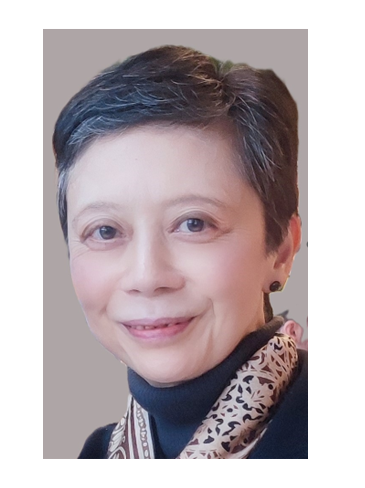
Ema Ushioda
Ema Ushioda is a professor in Applied Linguistics at the University of Warwick, where she served as head of department from 2018-23. She has been working in language education for 40 years and has long-standing research interests in motivation and autonomy in language learning. Her more recent work has focused on social and ethical values and practices in motivation research. She is now applying this interest in ethical issues to researching human-AI academic writing practices and motivations and is currently leading a project on this topic funded by a Leverhulme Trust Research Project Grant (https://warwick.ac.uk/fac/soc/al/research/aiwriting).
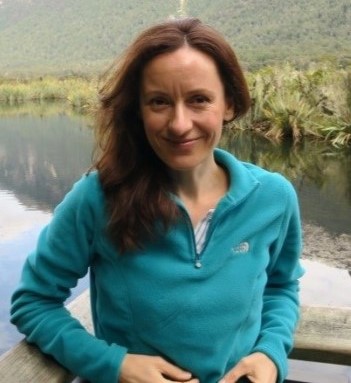
Maggie Kubanyiova
Maggie Kubanyiova is Professor of Language Education at the University of Leeds where she is Director of the Centre for Language Education Research. Her research interests cut across educational sociolinguistics, philosophy and arts to investigate educational encounters in multilingual settings. She led an AHRC project, Ethics and Aesthetics of Encountering the Other (ETHER) and continues to work with researchers, educators, students, creatives and third-sector organisations to pursue the practical consequences of this research for individuals and communities. Recent outcomes of this collaborative work are a bilingual (English/Romani) book of poetry and paintings Under the Big Tree: Šuňiben kamibnaha (2023, Next Generation Publications; with Sophie Herxheimer and Anna Koptová) and an empirically-informed guide (Slovak/English) for language educators working in settings of linguistic marginalisation, Encounter: Language Education for Third Spaces (2025, Cesta von; with Mária Takáčová). Her recent book, Listening Without Borders: Creating Spaces for Encountering Difference (2024; Multilingual Matters; with Parinita Shetty) was awarded a runner up for the BAAL Book Prize 2025.
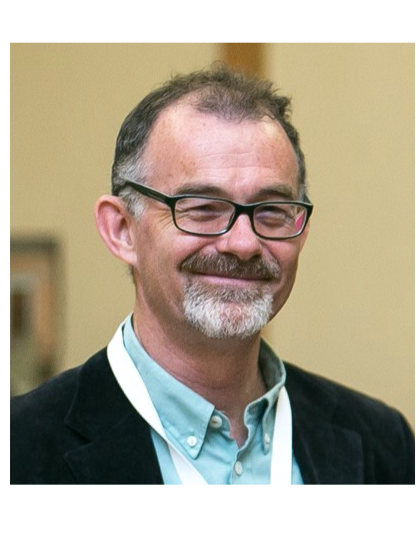
Steve Mann
Steve Mann (Professor of Applied Linguistics) currently works at the Department of Applied Linguistics at the University of Warwick. He has experience in Hong Kong, Japan and Europe in both English language teaching and teacher development. He has published various books including ‘Innovations in Pre-service Teacher Education’ (British Council) and ‘Reflective Practice in English Language Teaching: Research-Based Principles and Practices’ (Routledge). He is interested in qualitative methodology and has published a book with Palgrave on research interviews. He leads a group of PhD students who are researching aspects of teacher education and development. He is particularly interested in reflexivity in the research process.
Programme
Full programme and abstracts are available here.
Please note that three sessions will be available to online attendees. These are marked in the programme. Before the conference, we will be sharing links to attend the online sessions with registered participants.
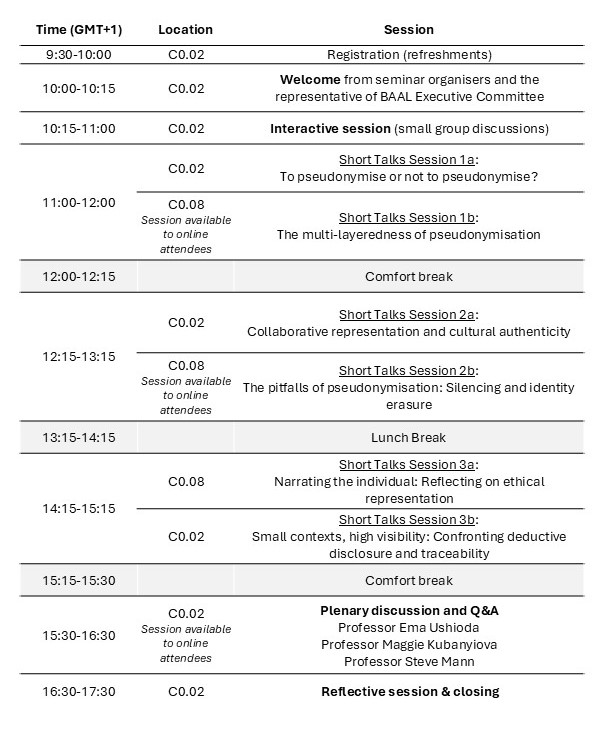
Seminar format
The seminar will feature:
- A panel discussion with three plenary speakers.
- Two interactive sessions for collaborative reflection and discussion.
- Short talks from submitted abstracts (10-minute presentation + 10-minute Q&A).
Plenary discussion Q&A
We will collect your questions throughout the day to ask the plenary speakers. Please use our PadletLink opens in a new window to add your questions.
Get in touch with us
Dr Katie Webb, University of Warwick: k.webb@warwick.ac.uk
Programme committee
Dr Katie Webb (Early Career Fellow at the University of Warwick) - Participant-Led Naming: Agency in Practice.
Katie conducted a longitudinal study of 12 international teacher-students on an MA TESOL programme in the UK, exploring their learning and living experiences. Her participants remained named in the study, with ten choosing real names and two selecting nicknames. This methodological decision emerged from her commitment to participant agency and recognition. Her experience implementing participant choice in naming enables her to contribute insights on the practical and ethical complexities of this approach, including navigating institutional ethics processes and managing evolving participant decisions and how to approach member-checking. As such, she can offer concrete examples of implementing agency-centred naming practices, alongside critical reflection on both the successes and challenges of moving beyond automatic pseudonymisation.
Dr Kathryn Sidaway (Research Fellow at the University of Bedfordshire) - Naming as Power: Working with Migrant Communities.
With almost 20 years of experience in the field of English language teaching, Kathryn’s research has primarily focused on the language learning experiences of forced and voluntary migrants in England. Reflecting on her position as a white, British citizen who speaks English as a first language, her use of pseudonyms has evolved from naming participants herself to facilitating conversations where the participants provide and explain their own pseudonyms. In this roundtable, she will reflect on how these conversations can contribute to the rebalancing of power within the researcher-participant relationship, where participants are often vulnerable both in research and their daily lives in an English-speaking country.
Dr Marianna Patrick (Research Fellow at the University of Warwick)- When Place Names Become the Data: The Challenge of Geographical Pseudonymisation.
Marianna’s doctoral research focused on serial migration, specifically exploring how talk about places plays into identity construction. In her initial research design, she treated pseudonymisation as standard practice. However, given that much of her analysis focused on how the names of geographical locations were used in discourse, this presented a unique set of challenges. She went through a long process of thinking about whether to alter all or some place names, how to select appropriate alternatives, and how these decisions would ultimately influence the research outcomes. In this roundtable, Marianna will reflect on this process and the intricacies of place-naming in qualitative research.
Dr Yanyan Li (University of Warwick)
Nusrat Gulzar (PhD student at the University of Warwick) - Digital Personas and Pseudonyms: Preserving Selfhood Online.
Nusrat's research explored Bangladeshi MA TESOL student-teachers' (STs’) digital reflections via e-portfolios. STs’ e-portfolio reflections were inseparable from their digital personas. Using purely technical labels would have risked stripping their accounts of relational, emotional, and contextual depth, overshadowing their person-centric representations. Moreover, it was perceived as impractical to co-construct pseudonyms with STs, yet deciding on decontextualised names felt equally problematic, as it would have obscured the socio-cultural textures within which their reflections were situated. This tension led her to adopt gendered and contextually plausible pseudonyms that preserved STs’ sense of selfhood while maintaining ethical distance. Nusrat will discuss such complexities around digital (pseudo) naming, selfhood, digital presence, and her ethical-reflexive stance.