
Warwick Law School News
Warwick Law School News
The latest updates from our department
Congratulations to Ming-Sung Kuo who has secured an award from the Chaing Ching-kuo Foundation
Ming-Sung Kuo has secured EUR40,000 from the Chaing Ching-kuo Foundation towards research on
'Unmoored from International Legality: Rights Internationalism and Taiwan's Embrace of International Human Rights Law'
Congratulations to Alison Struthers on her ESRC Award
Alison Struthers has secured £500 from the ESRC Festival of Social Science 2016 to hold a event
'Addressing challenging social science issues with young people'
New Scholarship Available
The University has announced it will be offering funding via the Warwick Taught Masters Scholarship Scheme.
There will be 100 awards of £5,000 per student available to eligible Home/EU students from under-represented groups who wish to start a postgraduate taught masters course in 2016/17.
The Warwick Taught Masters Scholarship Scheme presents an opportunity for 2016/17 entrants to obtain funding alongside a postgraduate loan.
Please read the eligibility criteria carefully to see if you can apply.
Deadline: 21st July 2016
Food Waste in Global Production: An Initial Brainstorm to map and Evaluate Existing Mechanisms of Governance
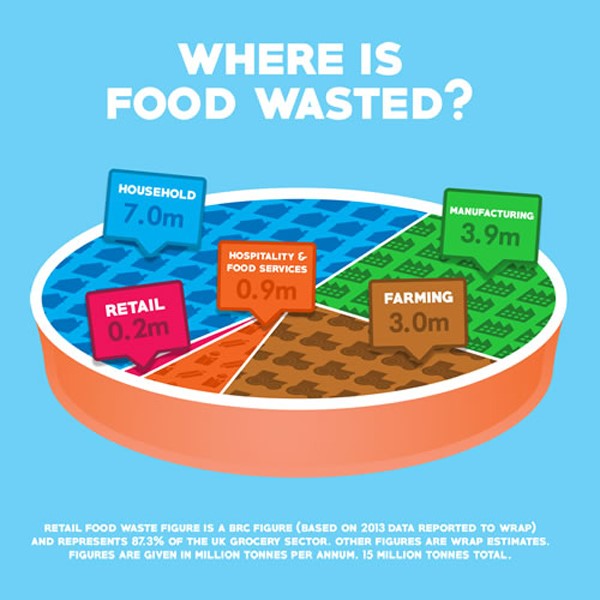
On Monday 20th June 2016, a number of experts, academics, and master students came together to discuss the global issue of food waste, and the way in which multi-levelled governance can engage with this worldwide problem. The brainstorm, organized by Tomaso Ferrando and Manuela Galetto in the framework of the University of Warwick’s Global Research Priorities - Global Governance (GRP-GG), represented a first-of-its-kind opportunity to gather individuals, organizations and representatives of public authorities who are directly studying the systemic causes of food waste and in thinking of long-lasting alternative solutions to the otherwise short-termed treatments of the symptoms.
Stephen Connelly’s work is discussed in Global Restructuring Review
Connelly discussed some of the impracticalities faced during the period when different resolution mechanisms were in the process of being created – notably, the UK pre-empted the EU and introduced its own resolution powers, via the 2009 Banking Act. When the BRRD was introduced, the UK government had to alter its own regulation to ensure it fitted with EU law, or as Connelly put it, “taking bits out of the European system and sprinkling them like confetti all over the English law.”
When legislation implementing the BRRD passed through Britain’s legislature, Connelly explained how members of the UK Parliament complained, “The problem with this legislation is that it’s impossible to retain in one’s mind” – and received responses from the government’s representative that more general help with understanding would “no doubt be available by Googling ‘resolution’”. This was the sum total of scrutiny to which the legislation was subjected, Connelly noted, and the result was very unsatisfactory.
He went into greater detail regarding the drafters’ desire to “protect” netting arrangements, under which a number of claims or obligations can be converted into a net claim or obligation. This drafting seemed, however, to have been carried out without any reference the “perfectly adequate” UK and EU legislation around it, the EU legislation in fact deriving from English law.
The confusion that has ensued has rendered it difficult for market participants to price risk related to bail-in derivatives. Connelly’s detailed concerns were taken up by the UK Treasury in a recent consultation designed to re-draft and repair the botched implementation of the BRRD.
Dr Ania Zbyszewska is a guest speaker at the Gender Rules! Research Methods in Law seminar at the Cardiff Law School.
Monday, 20 June 2016, Dr Ania Zbyszewska was featured as a speaker at the Gender Rules! Research Methods in Law seminar at the Cardiff Law School. Dr Zbyszewska spoke about discourse analysis and regulatory design, drawing on her forthcoming book Gendering European Working Time Regimes (CUP, 2016). The seminar is sponsored by the Cardiff Centre of Law and Society and Cardiff Law School's Law and Gender research group. For more information, click here.
Dr Lorenzo, Cotula, Visiting Research Fellow at GLOBE publishes a report on Land Investments, Accountability and the Law: Lessons from West Africa
The recent wave of land deals for agribusiness investments has highlighted the widespread demand for greater accountability in the governance of land and investment. Legal frameworks influence opportunities for accountability, and recourse to law has featured prominently in grassroots responses to the land deals. Drawing on comparative socio-legal research in Cameroon, Ghana and Senegal, the report explores how the law enables, or constrains, accountability in investment processes. The report develops a conceptual framework for understanding accountability; assesses how national law in the three countries influences opportunities for accountability; and provides pointers for research and action.
The report is available (free) from the International Institute for Environment and Development, click here.
Dr Alison Struthers to present at the Canada International Conference on Education
CHRP fellow Alison Struthers is travelling to Canada to attend and present at the Canada International Conference on Education, being held at the University of Toronto Mississauga between the 27th and 30th of June 2016.
She is co-presenting a paper with Chrystal Lynch of the University of Manitoba entitled ‘A Comparative Exploration of Human Rights Education in Primary Schools and Higher Education Institutes’. This comparative paper draws upon the authors’ respective research fields in England and Canada and they plan to write a journal article together following the conference.
Alison is also chairing a panel on ‘Global Issues in Education and Research’.
For more information, please go to http://www.ciceducation.org
Dr. Ming-Sung Kuo will present a paper entitled ‘Beyond Constitutionalism: Thinking Hard about Multilevel Constitutional Ordering in the Shadow of the State of Emergency’
Dr. Ming-Sung Kuo will present a paper entitled ‘Beyond Constitutionalism: Thinking Hard about Multilevel Constitutional Ordering in the Shadow of the State of Emergency’ at the ‘Legal Theory and Legitimacy beyond the State: What’s Law Got to Do with It?’ panel on the 2016 ICON-S (International Society of Public Law) conference in Humboldt University (Berlin), Germany on 17-18 June, 2016. To find out more click here.
Dr. Ming-Sung Kuo to present a paper entitled ‘Between Trailblazer and Trend-Follower: Political Rights and the Taiwan Constitutional Court’s Role in Democratic Transition’
Dr. Ming-Sung Kuo will present a paper entitled ‘Between Trailblazer and Trend-Follower: Political Rights and the Taiwan Constitutional Court’s Role in Democratic Transition’ at the ‘Bills of Rights and Regional Institutions: Comparative and Transnational Perspectives on European and East Asian Cases’ International Workshop in University of Tuebingen, Germany on 16-17 June, 2016. To find out more click here.
Shakespeare’s Acts of Will: Law, Testament and Properties of Performance
Focusing on the testamentary motif in Shakespeare’s plays, Gary Watt demonstrates how the shared rhetorical arts of law and theatre employ movement, materials and the affective properties of words to perform will on the social and playhouse stage.
Shakespeare was born into a new age of will, in which individual intent had the potential to overcome dynastic expectation. The 1540 Statute of Wills had liberated testamentary disposition of land and thus marked a turning point from hierarchical feudal tradition to horizontal free trade. Focusing on Shakespeare’s late Elizabethan plays, Gary Watt demonstrates Shakespeare’s appreciation of testamentary tensions and his ability to exploit the inherent drama of performing will.
Drawing on years of experience delivering rhetoric workshops for the Royal Shakespeare Company and as a prize-winning teacher of law, Gary Watt shows that Shakespeare is playful with legal technicality rather than obedient to it. The author demonstrates how Shakespeare transformed lawyers’ manual book rhetoric into powerful drama through a stirring combination of word, metre, movement and physical stage material, producing a mode of performance that was truly testamentary in its power to engage the witnessing public.
Published on the 400th anniversary of Shakespeare’s last will and testament, this is a major contribution to the growing interdisciplinary field of law and humanities.
Table of Contents
1. ‘Performance is a kind of will or testament’; 2. Handling Tradition: Testament as Trade in Richard II and King John; 3. Worlds of Will in As You Like It and The Merchant of Venice; 4. ‘Shall I descend?’: Rhetorical Stasis and Moving Will in Julius Caesar; 5. ‘His will is not his own’: Hamlet Downcast and the Problem of Performance’; 6. Dust to Dust and Sealing Wax: The Materials of Testamentary Performance
Lacuna magazine: What has the EU ever done for us? – Peace
With 'Super Thursday' behind us, the countdown to the referendum of 23rd June is gaining pace.
In the first of a series of short articles on Europe, Lacuna considers some of the history and record of peace in the EU in What has the EU ever done for us? – Peace. Supporters of the ‘remain’ campaign point to the attainment of peace in Europe as one if its highest ranking achievements. Indeed, war between member states seems unthinkable today. [republished in New Statesman http://www.newstatesman.com/world/2016/05/how-valid-claim-eu-has-delivered-peace-europe]
Turning away from Europe, in Inequality is skin-deep: The Buruli ulcer in Benin photojournalist Ana Palacios gives us a glimpse of the human cost of neglecting this tropical skin disease.
Follow Lacuna magazine on Facebook and Twitter to stay updated