
Shimaa Hatab
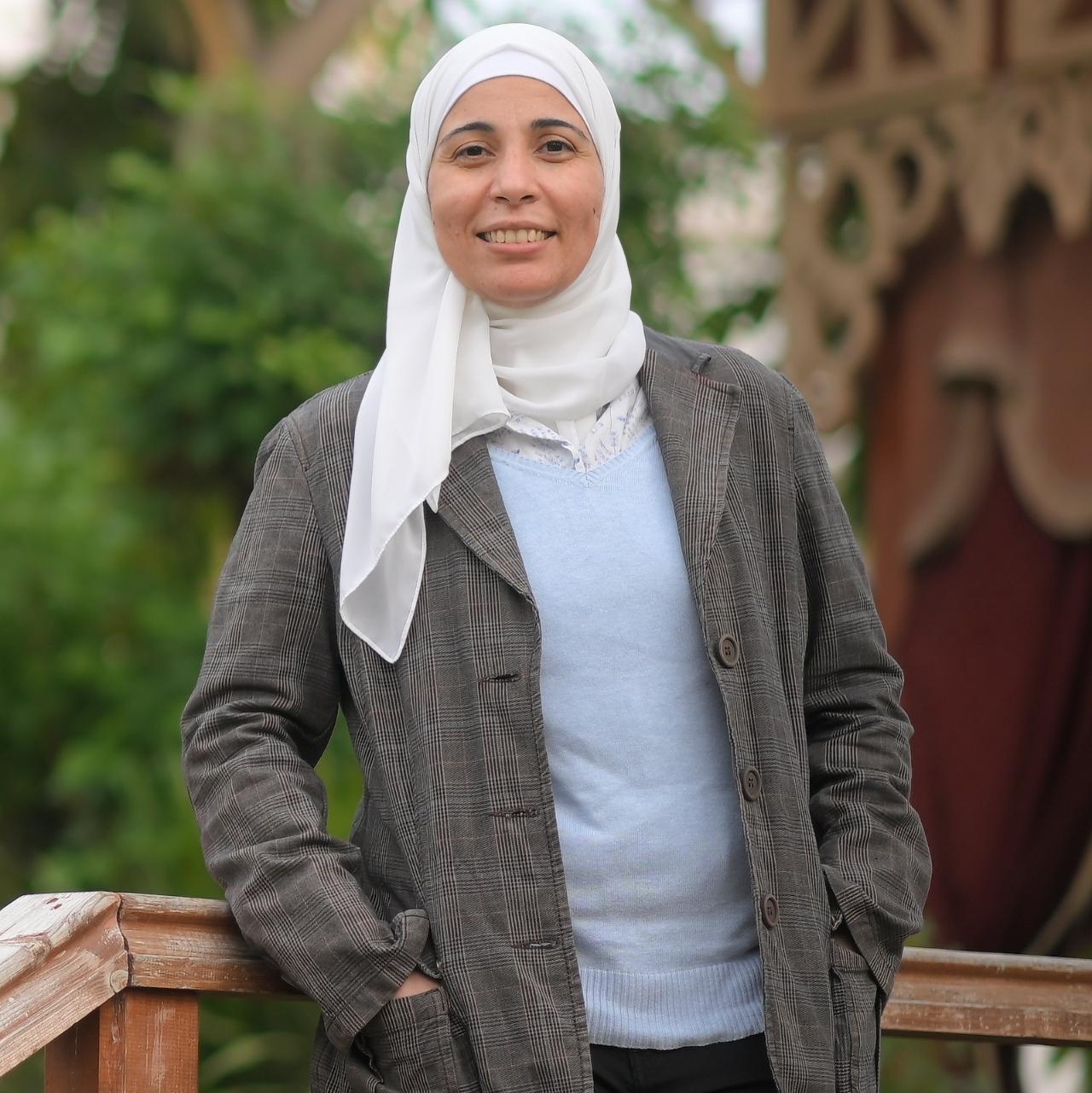
Honorary Research Fellow
Email:-
Email:-
Profile
I joined PAIS as a visiting research fellow in October 2026. At Warwick I am completing a book, Opposition Bargains and the Politics of Uncertainty: Regime Transitions across the Middle East and Latin America. It asks why similar crises of authoritarian rule end so differently: in a successful transition to democracy, a military reversal, revolution or civil war. I argue that the outcome turns on bargaining within the opposition itself: whether rival factions can strike credible pacts while unsure of their relative strength, of which side the military will take, and of whether new institutions will last. The book pairs the Arab uprisings with transitions in Latin America, comparing Egypt with Argentina, Tunisia with Mexico, and Syria with Guatemala.
Before joining PAIS, I was a visiting research fellow in the School of Law, Politics and Sociology at the University of Sussex (2026). From 2021 to 2023 I was a lecturer in Middle East and global affairs at King's College London. From 2015 to 2021 I was assistant professor of political science in the Faculty of Economics and Political Science at Cairo University, where I also served as deputy director of the Center for Political Studies and Inter-Cultural Dialogue (2015–2016). I was an adjunct faculty member at the American University in Cairo from 2016 to 2020.
I have been a Fulbright visiting scholar at Stanford University (2018–2019), a Carnegie visiting scholar at the University of North Carolina at Chapel Hill (2017) and a guest scholar at the Kellogg Institute for International Studies, University of Notre Dame (2009). I served as a country expert for the Varieties of Democracy (V-Dem) project from 2014 to 2021 and was a core research team member of the Arab Human Development Report 2009. I am a Fellow of the Higher Education Academy.
Research Interests
My research interests are in comparative politics and political economy, with a focus on the Middle East and Latin America. I study how states and regimes are built, challenged and remade: why some authoritarian regimes break down while others endure, how opposition alliances and protest movements form, and how state-building and social coalitions shape development.
My co-authored book, Lumbering State, Restless Society: Egypt in the Modern Era (Columbia University Press, 2021), traces how a slow-moving state and a restless society have reshaped each other in modern Egypt. My articles examine why Egypt's transition failed after 2011, how perceived threats weakened support for democracy there, how the state and social coalitions shaped development in the Arab republics, and what drives protest and the rise of political outsiders in Chile, Paraguay and across Latin America.
More recently, my interests have extended to civil war, in particular how insurgents build governing institutions and how long wars end, and to the design of comparative case studies.
Education
- PhD, Department of Government, University of Essex (2)
- MSc, Political Economy of Party System Transformation in Mexico, Cairo University (3)
- BSc (Hons), First Class, Political Science (major) and Economics (minor), Cairo University
Selected Publications
- Hatab, S. (2024). The Rise and Fall of Political Outsiders: Political Opportunity Structure and (De-)mobilization in Paraguay (2008–2012). International Journal of Comparative Sociology 65(5): 579–613.
- Hatab, S. (2023). Institutional Incentives and Protest Mobilization in the Neoliberal Era in Latin America (1985–2010). Party Politics, published online June 2023.
- Hatab, S. (2020). Threat Perception and Democratic Support in Post-Arab Spring Egypt. Comparative Politics 53(1): 69–98. Hatab, S. (2023). Political Economy of Development in the Arab Republics: The State and Socio-Economic Coalitions. Economic History of Developing Regions 38(3): 281–304.
- Hatab, S. (2018). Abortive Regime Transition in Egypt: Pro-democracy Alliance and Demand-Making Framework. Democratization 25(4).