
Farhana Afrin Rahman
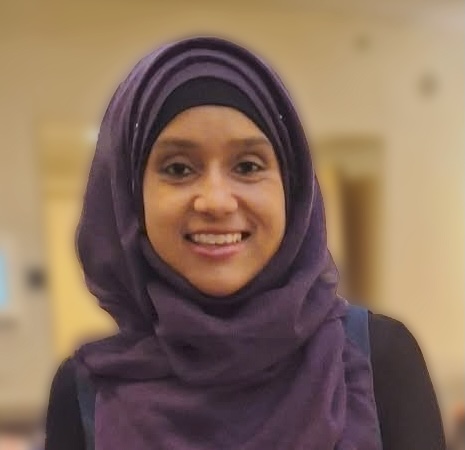
Assistant Professor in Politics and International Studies (South Asia)
Email:-
Profile
Dr. Farhana Afrin Rahman is an interdisciplinary scholar of international politics. Her research examines how marginalised women across the Global South generate protection, political agency, and knowledge in contexts where international institutions systematically render them invisible, developing a feminist retheorisation of humanitarian governance and international order. Her research draws on feminist and postcolonial approaches to examine lived experiences, and the dynamics of power, care, and knowledge production across the Global South. With over 15 years of experience spanning academia, international development organisations, and the policy sector, she has conducted extended periods of research/fieldwork and worked in several countries, including Afghanistan, Bangladesh, Malaysia, Kenya, Jordan, Indonesia, Kashmir, Uganda, Pakistan, and Japan.
She is currently Assistant Professor in Politics and International Studies at the University of Warwick. Previously, she was a Leverhulme Early Career Fellow/Isaac Newton Trust Fellow and an Affiliated Lecturer at the Department of Politics and International Studies, University of Cambridge. Before that, she was a Junior Research Fellow at Wolfson College Cambridge, a Japan Society for the Promotion of Science (JSPS) Postdoctoral Fellow at the University of Tokyo, a Non-Residential Fellow at the Centre for Asia Pacific Refugee Studies at the University of Auckland, and a Fellow at the Harvard University Asia Center.
Farhana received her PhD in 2021 from the University of Cambridge’s Centre for Gender Studies. Her PhD thesis was shortlisted for the 2023 International Convention of Asia Scholars (ICAS) Best Dissertation Prize, and received the accolade “Most Accessible and Captivating Work for the Non-Specialist Reader”. She also holds an MPhil in Multi-Disciplinary Gender Studies from the University of Cambridge (2014), and an Honours Bachelor of Arts in Peace and Conflict Studies, International Relations, and Arabic from the University of Toronto (2011).
Farhana’s first book, After the Exodus: Gender and Belonging in Bangladesh’s Rohingya Refugee CampsLink opens in a new window (Cambridge University Press, 2024), won the 2025 L.H.M. Ling Outstanding First Book PrizeLink opens in a new window from the British International Studies Association, the 2026 Global Division Outstanding Book AwardLink opens in a new window from the Society for the Study of Social Problems, and was shortlisted for the 2026 British Association for South Asian Studies Book Prize. Her peer-reviewed articles and chapters have been published in various journals and edited volumes, including Journal of Refugee Studies, Feminist Review, and Journal of International Women’s Studies. She has received competitive scholarships/grants for her research from several international funding bodies, including the Cambridge International Trust, the Social Sciences and Humanities Research Council of Canada, and the UNESCO Silk Roads Programme, amongst others.
Farhana co-founded Silkpath Relief Organization – a non-profit providing humanitarian assistance to vulnerable communities in Afghanistan, and to refugee populations in Bangladesh and Malaysia. In 2015, she helped establish the first academic program in gender studies in Afghanistan, based at the American University of Afghanistan in Kabul, where she was Adjunct Professor of Gender Studies. Since 2012, Farhana has worked as a consultant for organizations such as UNDP and UN Women, providing technical expertise and trainings on gender equality, social policy, and human rights for various projects across the Global South. In recognition of her contributions to the field of gender and development, she received the 2021 Paula Kantor AwardLink opens in a new window from the International Center for Research on Women (ICRW).
Publications
Book
2024 After the Exodus: Gender and Belonging in Bangladesh’s Rohingya Refugee Camps, Cambridge University Press. [Series: South Asia in the Social Sciences]
- Winner of the 2026 Global Division Outstanding Book Award from the Society for the Study of Social Problems (SSSP)
- Winner of the 2025 L.H.M. Ling Outstanding First Book Prize from the British International Studies Association (BISA)
- Shortlisted for the 2026 British Association for South Asian Studies (BASAS) Book Prize
Peer-Reviewed Journal Articles
2026 “‘Trapped in Safety’: Carceral Domesticity and the Gendered Geographies of Rohingya Refugee Women in Urban Malaysia.” Women’s Studies International Forum. 118. [online first: June 2026]
2021 “‘I Find Comfort Here’: Rohingya Women and Taleems in Bangladesh’s Refugee Camps.” Journal of Refugee Studies. 34 (1): 874-889.
2018 “Narratives of Agency: Women, Islam, and the Politics of Economic Participation in Afghanistan.” Journal of International Women’s Studies. 19 (3): 60-70.
2018 “The Merits and Limits of a Gendered Epistemology: Muslim Women and the Politics of Knowledge Production.” Journal of International Women’s Studies. 19 (1): 20-33.
- Finalist of the 2017 Student Essay Competition by the Feminist and Women’s Studies Association, UK & Ireland
2017 “Farkhunda’s Legacy: Gender, Identity, and Shifting Societal Narratives in Afghanistan.” Feminist Review. 117 (1): 178-185.
2017 “Rights, Roles, and Rural Realities: A Case Study on the Effects of Fatwa Decrees Against Women in Rural Bangladesh.” Muslim World Journal of Human Rights. 14 (1): 1-27.
Chapters in Edited Volumes
2024 “Women’s Worlds: Vignettes and Memories of Afghanistan.” In: Choudhury, N. and Schmeding, A. (eds.), Frontier Ethnographies: Deconstructing Research Experiences in Afghanistan and Pakistan. New York: Berghahn.
2021 ““I Am Not Alone”: Rohingya Women Negotiating Home and Belonging in Bangladesh’s Refugee Camps.” In: Mayer, T. and Tran, T. (eds.), Power and Agency in Migration: Voiced from Displacement and Belonging. New York: Routledge. [co-authored with Nafay Choudhury]
2020 “Survival as Resistance: Rohingya Refugee Women’s Narratives of Life, Loss, and Hope.” In: Bonnerjee, S. (ed.), Subaltern Women’s Narratives: Strident Voices, Dissenting Bodies.London: Routledge.
Commissioned Peer-Reviewed Research Papers and Policy Reports
2026 The Empowerment Paradox: How Humanitarian Governance Produces the Gender Inequality it Seeks to Fix. XCEPT, UK International Development.
2025 “Gendered Fields of Red Gold: Women and Saffron Along the Silk Roads.” In: Silk Roads Papers, 3rd Edition. UNESCO Silk Roads Programme.
2022 Assessing Gender, Power, and NGO Programming in Bangladesh’s Rohingya Refugee Camps. Centre for Asia Pacific Refugee Studies, University of Auckland.
2020 “Trajectories of Gender Inequality, Identity, and Violent Extremism in Rural Bangladesh.”In: Conflicting Identities: The Nexus Between Masculinities, Femininities and Violent Extremism in Asia. UNDP and UN Women.