
Departmental news
Warwick Women in Economics Society on a mission to increase equality and diversity in economics
By Hargun Kaur (President) and Milena Ermolenko (Vice-President)
Our mission: equality, diversity and inclusion in economics
This academic year has been an immense success for Warwick Women in Economics (WWIE) society. We hosted well-attended events ranging from the Welcome Week picnic and Christmas dinner to numerous themed circles and our career events. We recently hosted our annual Ball in collaboration with other societies, such as the LEAD Network and TEDx Warwick. WWIE strives to promote inclusivity and diversity within the economics discipline, simultaneously showing that economics is and should be for everyone!
Speaking to our members and gathering their feedback after our events has been invaluable. We've heard words of encouragement, specifically first-year female students telling us how crucial they believe our society's work is. Most importantly, everyone who has attended a WWIE event or has been part of WWIE's executive team knows - we strive to create a safe space for Economics students, so that they feel comfortable to ask questions, share advice, and make new friends! WWIE has been a platform for many to raise their voice and uplift each other during challenging times. Overall, we are very pleased with the progress we've made this year - we've grown in numbers, but most importantly we've grown the amount of love and recognition for our society.
Gender Equality Award
We have strengthened our partnership with the Department of Economics, and continue to receive support from staff and students alike. A huge achievement this year for WWIE has been the recognition we received for our efforts, specifically, the IWD Conference we held last year. We were Highly Commended by the Athena Swan Self-Assessment Team and the Gender Taskforce as part of the Gender Equality Award. Being recognised by an external body for our contribution towards the enhancement of equality, diversity and inclusion is a privilege and we hope next year's executive committee continues our efforts.
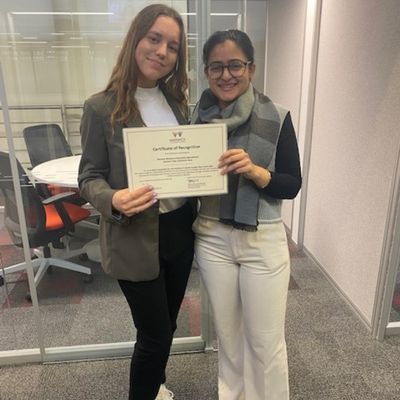
"Being recognised by an external body for our contribution towards the enhancement of equality, diversity and inclusion is a privilege and we hope that next year's executive committee continues our efforts"
Hargun Kaur, WWIE Society President and Milena Ermolenko, WWIE Vice-President
International Women’s Day Conference – March 2023
For the first time, we had the privilege to host our flagship International Women’s Day Conference entirely in-person. Our focus this year was on academia, specifically we aimed to spread awareness about the different career paths following an undergraduate degree in economics. We hosted academic and researchers from Imperial College London, University of Cambridge, University of York and LSE. Our esteemed speakers were Dame Carol Propper, Dr Laure de Preux Gallone, Dr Noriko Amano-Patino and Dr Ines Lee to name a few. The conference incorporated keynote speeches, a panel with elements of a debate, and a workshop on entrepreneurship led by Ju Vern See. We received overwhelming support for the event, with over 90 registrations. Our IWD Conference is always free of charge and attendees were able to enjoy free lunch, a drinks reception and a networking session with some of the speakers. Overall, this year’s IWD Conference was a success and has shown us the importance of continuously promoting economics as a subject for all.
Future plans
If you are interested in what our society does and would like to reach out with regards to speaker events (we host Warwick alumni in our career events every year), or perhaps you would like to participate in the IWD Conference next year as an attendee or speaker – please get in touch via our webpage:
Warwick Women in Economics SocietyLink opens in a new window
We look forward to what’s to come next academic year!
Hargun and Milena
Honorary Fellow
 Professor Murray Grant has been re-elected as an Honorary Fellow of the Academy of the Royal Society of New Zealand. Fellows have made contributions to knowledge at the highest levels in their different fields and across disciplinary boundaries. Find out more
Can AI be developed in a safe way? Meet the Warwick alumna contributing to the challenge
Artificial intelligence is rarely out of the headlines. This week Microsoft founder Bill Gates declared the development of AI “as fundamental as the creation of the microprocessor, the personal computer, the Internet, and the mobile phone.”
You may not be using ChatGPT to help with exam answers, or creating art with Midjourney – but you are very likely to be already interacting with aspects of AI in your everyday life – maybe through the algorithms that select which show to recommend you view next on your streaming media; or which of your friends’ posts you will see on social media; or through applying to a firm which uses AI to assist in hiring decisions. Or perhaps you have had a medical diagnosis backed by AI-assisted computer screening.
Like Bill Gates, many researchers think we are on the horizon of an AI revolution. As well as benefits, there are challenges – are there unethical uses of AI? A machine intelligence could predict whether a person is likely to commit a crime before they do so, tempting authorities to imprison them in advance. Among others, the systems can unintentionally learn to replicate unhelpful stereotypes and bias.
One of the researchers working on ways to ensure the next stage of AI development is helpful, not harmful, is Warwick Economics alumna Charlotte Siegmann (PPE 2021).
Taking recent concerns over inappropriate responses by ChatGPT to users as a starting point, Charlotte explains the challenges:
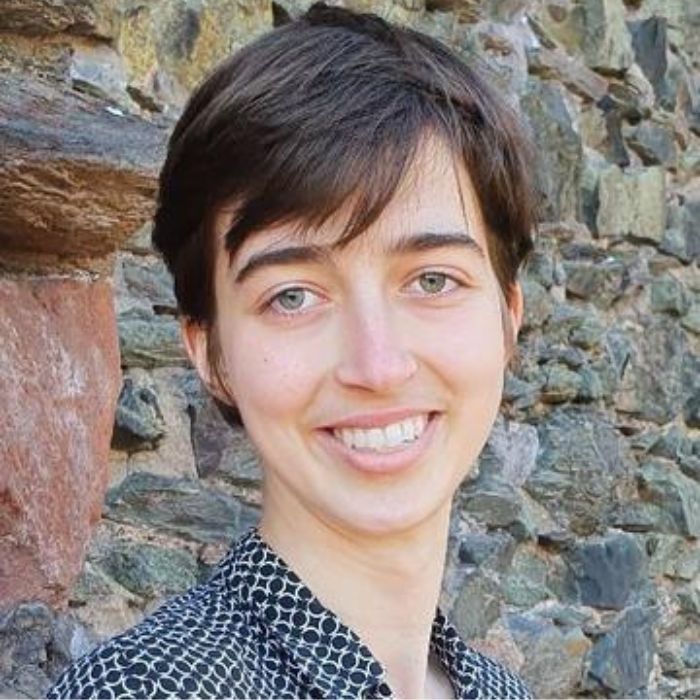
“ChatGPT was not unexpected - similar base models have existed for a few years now.
“‘Sydney’ was likely a poorly fine-tuned model that never posed a real danger to anyone. However, something very important can be gleaned from observing Sydney and other models: over the next 1, 3, or 10 years, models will become increasingly capable but remain likely unsafe.
“This is because we still do not fully understand current models, and we have not solved the bigger problem of how to ensure that AIs do not do things we do not want them to do. This problem is challenging for several reasons:
- The complexity and difficulty of interpretability.
- AIs can learn incorrect goals unnoticed by humans during the training process - this is called Goal Misgeneralization.
- Humans can’t fully specify what they find desirable - this is known as Reward Misspecification,
“There are many open questions in AI safety and AI governance that researchers and policymakers need to address. What is happening within big models? How can we guide them to elicit latent knowledge that they don’t necessarily reveal through simply prompting? How can we avoid deceptive models?
“Similarly, in AI governance, we need to understand how this technology will develop, how to evaluate its safety, how to incentivize labs to invest in safety and how to mitigate disrupting effects on the epistemic environment, job market or national security.”
Charlotte is about to take up a PhD position at MIT focusing on the safety of transformative AI systems, as well as governance, working together with scholars in both fields. But she has already contributed to the public debate, as co-author (with Markus Anderljung) of The Brussels Effect and Artificial Intelligence: How EU regulation will impact the global AI market.
The report takes a deep dive into the EU’s ambition to set the global standard on AI regulation, following its success in setting the global benchmark for data protection with the GDPR, and explores whether such a “Brussels Effect” is likely.
Charlotte and Markus argue that the EU’s proposed regulations are especially significant in offering the first and most influential operationalisation of what it means to develop and deploy trustworthy or human-centred AI.
“If the EU’s plans are likely to see significant global diffusion, ensuring the regulations are well-designed becomes a matter of global importance,” Charlotte explains.
Reflecting on her time as an undergraduate and how her interest in AI research was sparked, Charlotte says:
“I started thinking about transformative AI in my first year of University and enjoyed discussing the issues with fellow Warwick students. I also attended a summer school on the topic. The economics perspective came later - I first became interested in microtheory in the Game theory course with Costas Cavounidis in my second year.
“During the first wave of the Covid pandemic, I interned with the Future of Life Institute. Together with a policy expert at the institute, I worked on a consultation response to the EU AI Whitepaper, a roadmap laying out the EU’s response to AI technology. Back then, the work on transformative AI or even human-level AI was more speculative - ChatGPT or GPT-4 did not yet exist.
“Since graduating I have been working as an economics predoc at the Global Priorities Institute at the University of Oxford. The Institute combines a philosophy and economic research group and we focus on research that can inform prioritisation efforts of actors wanting to do the most good.
“I did research on the longtermism paradigm, ways of influencing the far future from existential risk reduction to population growth. As a predoc, I organised research workshops, collaborated with others on research projects and shared my research with colleagues both within and outside the institute, among others in Canada and Japan.
“It’s very exciting to work at a young research institute at which we support each other’s work and a lot of collaboration is happening.”
We wish Charlotte every success as she begins her PhD research later this year.
Ground-Breaking Report launched by Minister for Safeguarding at the House of Commons
On Monday 13 March 2023, Vanessa Munro and Lotte Young Andrade launched a report that they co-authored with Sarah Dangar (Advocacy After Fatal Domestic Abuse) entitled ‘Learning Legacies: An Analysis of Domestic Homicide Reviews in Cases of Domestic Abuse Suicide’. The aim was to learn more about the profiles and experiences of victims, the adequacy of service responses during their lives and after their deaths, and the ways in which DHRs are commissioned and conducted in suicide cases.
WMG and Conigital receive UK government funding for ambitious self-driving research project
WMG, at the University of Warwick, and Conigital, have been awarded a share of £81 million in joint UK government and industry support to develop self-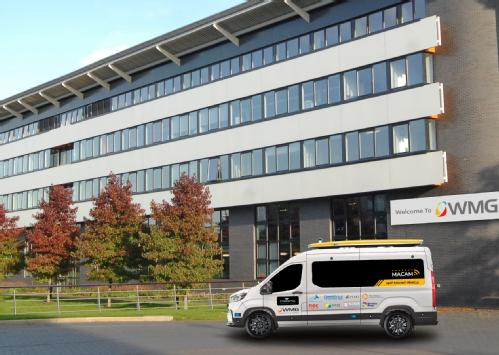 driving transport technology.
WMG is part of a consortium, led by Conigital, including the NEC Birmingham, Direct Line Group, Coventry City Council, Solihull Metropolitan Borough Council, Coventry University, dRisk, IPG Automotive and West Midlands Combined Authority.
The project entitled Multi-Area Connected Automated Mobility (MACAM) has been awarded a total of £16.6 million by the Centre for Connected and Autonomous Vehicles (CCAV), to establish a remote driving control hub, to oversee self-driving vehicles operating in Solihull and Coventry.
To make self-driving vehicle operations commercially viable, and offset current technology and driver costs, they must operate as efficiently as possible. This project therefore proposes a multi-area, multi-application self-driving operation, underpinned by Conigital’s 5G-based, central, Remote Monitoring Teleoperation (RMTO) system.
A mixed fleet of 13 self-driving vehicles will be moving passengers and light freight (such as mail and parcels for delivery) between Birmingham International Rail Station and Birmingham Business Park, and between Coventry railway station and Coventry University campus. These routes have a known, current, need for alternative transport and offer an ideal platform from which to develop commercial self-driving solutions.
New mobility technology and services will lead to safer, greener and more efficient transportation for both people and goods. MACAM will build on the foundations set by other projects including the WMG-led Midlands Future Mobility consortium.
Midlands Future Mobility is installing infrastructure on 200+ miles of West Midland’s roads to enable trials of Connected and Automated Mobility (CAM) solutions. This includes CCTV, weather stations, communications units, and highly accurate GPS coverage. The technology developed on the route will make UK roads safer and allow for more predictable goods delivery and journey times.
Transport Secretary Mark Harper said: “Self-driving vehicles including buses will positively transform people’s everyday lives – making it easier to get around, access vital services and improve regional connectivity.
“We’re supporting and investing in the safe rollout of this incredible technology to help maximise its full potential, while also creating skilled jobs and boosting growth in this important sector.”
WMG’s expertise on MACAM focuses specifically on the safety of the self-driving vehicles, as David Evans, Lead Engineer at WMG, University of Warwick explains: “Researchers and engineers at WMG will be providing trial support and undertaking related research in line with industry standards and best practice, required for the operator(s) to conduct the automated vehicle deployments safely and securely.”
Director of Intelligent Vehicles Research at WMG, University of Warwick, Professor Mehrdad Dianati, adds: “We have seen remarkable progress in Connected and Automated/Autonomous Mobility Technologies in recent years. It is paramount to pave the way for commercialising these technologies, particularly in the promising near future application areas such as the ones the MACAM consortium aims for. We are excited to be a part of this journey to transfer the knowledge we have developed through our fundamental research to help this unique consortium of UK companies, universities and local authorities to create new economic development opportunities for the region and the country.”
Don Dhaliwal, CEO of Conigital commented: “We are delighted to strengthen our links with WMG and other partners to accelerate a joint vision of Autonomous, Connected, Electric & Shared (ACES) fleets to address cities and businesses needs to Go Zero, Zero Accidents, Zero Emissions and Zero Congestion whilst creating new jobs via delivery of sustainable, accessible commercial CAM (Connected Autonomous Mobility) services.”
The methodologies and outcomes generated by the MACAM project will directly benefit teaching, research, and further collaboration with industry at WMG, developing future UK expertise and capability.
Read more about WMG’s Intelligent Vehicles research here and Conigital here
Read more about WMG’s MSc Smart, Connected and Autonomous Vehicles (SCAV) here.
Read more about the latest Centre for Connected and Autonomous Vehicles (CCAV) funded self-driving projects here.
ENDS
Notes to Editors
The government is awarding almost £42 million to seven projects through the Centre for Connected and Autonomous Vehicles (CCAV) Commercialising Connected and Automated Mobility (CAM) competition. Industry consortia will match the public grant to around £81 million and will be expected to demonstrate a sustainable commercial service by 2025.
The Multi-Area Connected Automated Mobility project is part of CCAV’s Commercialising CAM Deployments Competition (CCAMD).
The Commercialising CAM programme is funded by the Centre for Connected and Automated Vehicles, a joint unit between the Department for Transport and the Department for Business and Trade and delivered in partnership with Innovate UK and Zenzic.
The £40m CCAMD competition was launched in May 2022 to support the delivery of early commercialisable Connected and Automated Mobility Services and is part of the Government’s vision for self-driving vehicles. Connected and automated mobility 2025: realising the benefits of self-driving vehicles.
Multi-Area Connected Automated Mobility– Conigital
£8.3 million awarded by government, matched by industry to a total £15.2 million. This project looks to establish a self-driving vehicle operation around various parts of the West Midlands, underpinned by a centralised, Remote Monitoring Teleoperation (RMTO) centre. The RMTO centre will be where the project’s self-driving vehicles are monitored and (when required) controlled from, using 5G connectivity. The project aims to make self-driving vehicle operations commercially viable, and offset current technology and driver costs.
Can super-speedy plant cells feed a growing population?
 Dr Joe Mckenna has been awarded a BBSRC Discovery Fellowship of £535,000 to investigate actin – a natural molecule contained in plant cells – to see whether it can be engineered to move faster and so grow bigger plants with more biomass.
Press release (21 March 2023)
Warwick Economics ranked 22nd in the QS World University Rankings 2023
We are delighted to announce that Warwick’s Department of Economics has risen three places in the QS World University Ranking for Economics and Econometrics, from 25th in the world to 22nd.
The QS World University Rankings are compiled annually, using research citations and the results of major global surveys of employers and academics to classify the universities in 54 different disciplines.
The 2023 rankings were published on 22 March with the welcome news that after consistently ranking at 25th in the word for several years, the Department has improved its standing by three places.
The Department ranks in 5th place in the UK, behind only LSE, Oxford, Cambridge and UCL; and scored more highly than Oxford and Cambridge on the “citations per paper” metric, a testament to the Department’s excellent research output.
Commenting on the news, Professor Ben Lockwood, Head of Department of Economics, said:
“It is very good news to hear that the Warwick Economics Department has improved its position in the independent QS World University Rankings.
“In this ranking, departments are scored on the issues which we know matter to prospective students – academic reputation, judged by our peers; employer reputation, based on responses from more than 75,000 graduate employers worldwide; and the quality and impact of our research.
“I would like to thank all our staff and students for their work in creating a Department whose reputation in the eyes of our academic peers and in the eyes of the employers who recruit our students is among the world’s best.
“We will continue to recruit talented and ambitious research and teaching staff at all stages of their academic careers, and highly capable students, as part of our ongoing commitment to being a world-class economics department.”
Useful links:
- Economics ranked 25th in the QS World University Rankings 2021 (warwick.ac.uk)
- QS World University Rankings for Economics and Econometrics 2023 | Top Universities, published 2023.
- About the Department of Economics, University of Warwick
- Find out more about Our Reputation
- Learn about Our Community Values
- Study with us
- Work with us
Professor Roberta Bivins interview
Listen to expert Professor Roberta Bivins discussing the NHS in an interview for National Public radio in the US.
Historic devolution agreement signed at WMG
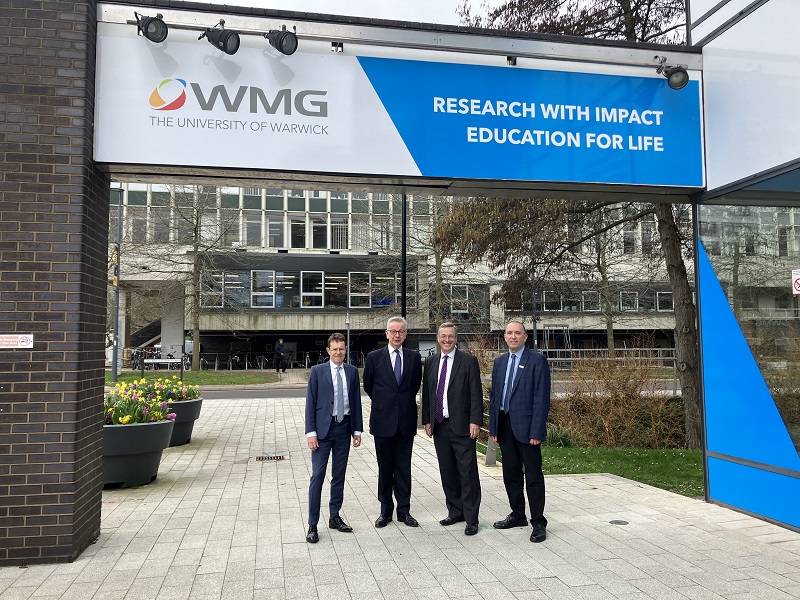 Professor Robin Clark, Dean of WMG at the University of Warwick, was pleased to welcome Levelling Up Secretary, Michael Gove and West Midlands Mayor, Andy Street on Monday (20 March).
The Levelling Up Secretary and West Midlands Mayor signed a landmark deeper devolution deal for the region, marking a seismic shift in power, funding and responsibility from Whitehall to the region, at a ceremonial event that took place at WMG at the University of Warwick.
The deal announced in the Spring Budget puts more cash and power in the hands of local leaders to invest in the priorities that local communities truly care about, such as better bus and train services, skills and housing.
A new long-term funding settlement will enable the Mayor and local councils to plan for the long term, with certainty, and unlock tangible benefits for almost three million people living in the area.
Levelling Up Secretary Michael Gove said: “Visionary local leaders like Andy Street understand the needs of their areas better than decision-makers in Whitehall - that is why it is vital that we put more power and control in their hands.
“This deal goes further than we’ve ever gone before. It will give the Mayor unprecedented power to spend on local priorities and more control over transport, skills and housing – the things people truly care about.
“Today marks a bold new frontier in devolution in this country, and it’s fantastic to see the West Midlands right at the forefront.”
Stuart Croft, Vice Chancellor of the University of Warwick, which hosted the Levelling Up Secretary's visit, said: “It is good to be able to support the hard work across our region that has led to this agreement. We’re proud to play an active role in driving business growth and innovation in the West Midlands, whether that’s through our apprenticeship programmes, support for start-ups, or our close partnerships with industry across the region.
"Our world leading research into new green energy and technology is an example of where we’re not only developing new businesses, skills, and jobs, but also helping the UK to reach its net zero goals.”
Professor Robin Clark, Dean of WMG at the University of Warwick, added: “It was a pleasure to welcome the Levelling Up Secretary and the West Midlands Mayor, and we were proud to provide the location for the signing of this landmark devolution agreement.
“Before the official signing, I had the opportunity to show Mr Gove our 3xD driving simulator for autonomous vehicle research, and to explain more about WMG’s commitment to developing new engineering and manufacturing skills to help bridge the gap between academia and industry.”
Read more about the Deeper Devolution Deal.
Evonik invests in Warwick Chemistry spinout, IPL
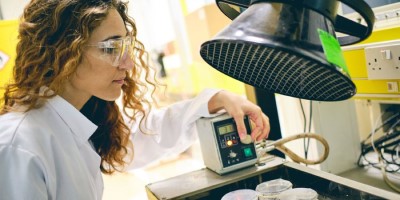
Evonik has invested in Warwick Chemistry spinout company, Interface Polymers Ltd. Its technology simplifies the processing of mixed plastics and also their recycling. Read moreLink opens in a new window.