
Our History
Stories of Film and Television Studies at the University of Warwick – The Early Years
Following Warwick’s 60th anniversary last year, current students and staff in Film and Television Studies have been helping to research the history of our subjects at the University. Here’s a taster of what they have found out so far, which tells the very early part of this history.
If you have a story or memory of being a student or member of staff in the department that you would like to share, we would love to hear from you. Please follow the link at the bottom of this post to get in touch with us.
(This page is best viewed in landscape mode on mobile devices)
A Modern Subject for a Modern University
The history of Film Studies at Warwick goes back nearly to the beginnings of the University. In 1966, less than a year after Warwick opened its doors to undergraduate students, founding faculty members suggested launching a new master’s degree in film.
Film Studies was already being taught in a number of art schools and colleges in the UK, but it was not yet established as a university subject. In fact, many people were dismissive of the idea that film, as a medium associated with popular entertainment, could be taken seriously in an academic context.
Although plans for the MA degree were eventually postponed, the idea created an important link between Warwick and the British Film Institute, which was keen to support film education. In 1973, Warwick became the first university to receive one of the BFI’s new higher education grants, which funded the creation of a dedicated Film Studies lectureship for three years.
The First Film Studies Courses
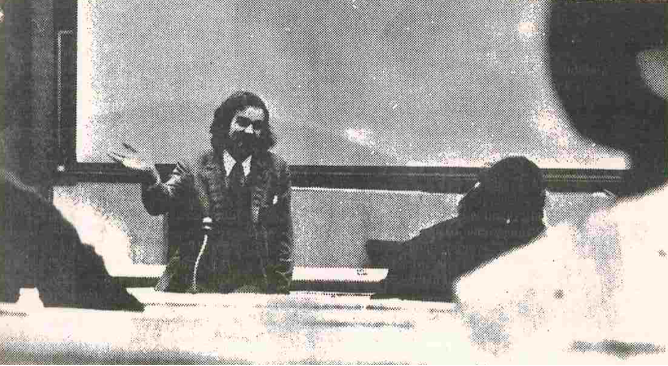
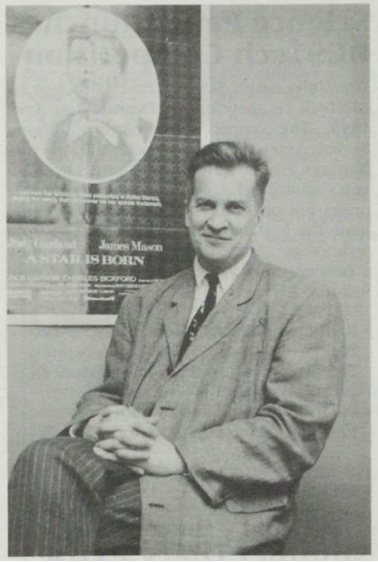
The first Film Studies lecturer appointed at Warwick was the film critic Robin Wood, who had previously been teaching in Canada.
Between 1973 and 1977, Wood developed new short courses in ‘World Cinema’, ‘Hollywood Cinema’ and ‘The Western’, which were open to undergraduate students from across the University. In Wood’s first year, more than 40 students signed up to his classes, although several students quickly dropped out, apparently surprised that Film Studies wasn’t a ‘soft option’.
As a student himself, Wood had studied English Literature at Cambridge, where he was strongly influenced by the literary critic F.R. Leavis. At Warwick, Wood applied Leavis’s belief in the personally enriching power of great art to cinema, arguing that films directed by John Ford or Jean-Luc Godard were just as culturally valuable and worthy of study as the plays of Shakespeare.
At the same time, Wood was becoming aware of more recent developments in film theory, which drew on ideas from semiotics, Marxism and psychoanalysis, and which often took a very different approach to analysing films. Although Wood remained sceptical of the value of newer film theories, he did start to incorporate debates about film’s relationship with politics and ideology into his teaching.
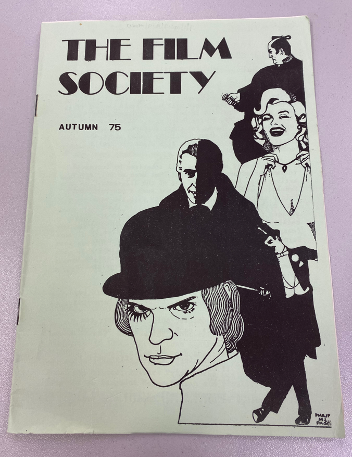
The establishment of Film Studies at Warwick coincided with other film and media activity in the University. The student-run Film Society was one of the largest and most popular societies on campus by the mid-1970s. When the Warwick Arts Centre opened in 1974, it also started to show a wide variety of films.
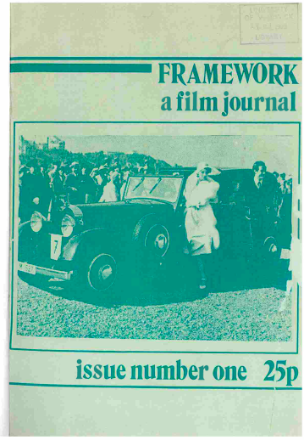
In 1975, Jenny Norman and Elizabeth Aherne – two students who took Wood's introductory course during its first year – launched the film journal Framework. Published until 1979 by the Warwick Arts Federation (a group of student arts societies), it quickly reached an international readership.
Launching a Film Studies Degree
From 1973 onwards, there were moves within Warwick to establish a BA degree with a significant Film Studies component. After considering a joint-honours degree with Theatre Studies and a standalone Film Studies degree, the University made plans to launch a new BA in Film and Literature.
Meanwhile, Robin Wood left Warwick in 1977 to take up another post in Canada. His courses were taught temporarily by Andrew Britton, who had been one of Wood’s graduate students. In 1978, a permanent replacement who could take the plans for the new degree forward was found in Victor Perkins.
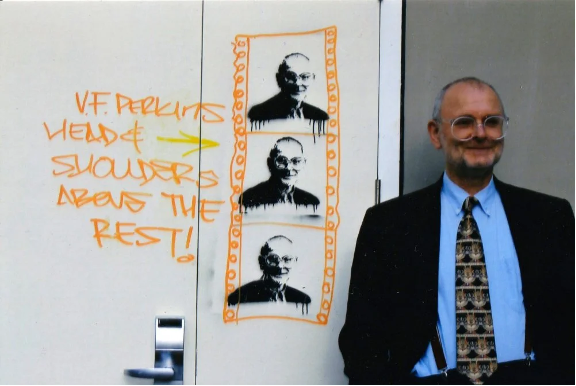
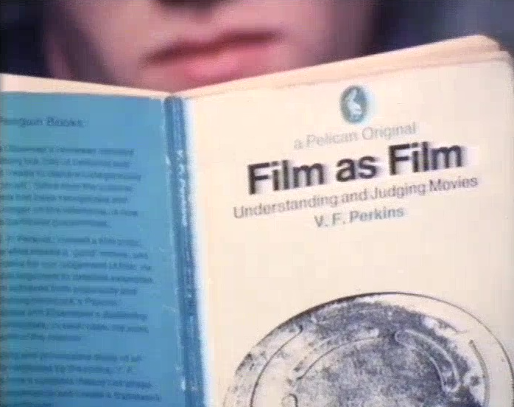
Perkins brought with him extensive experience as a film writer and educator. He had been a founding editor of the magazine Movie, a member of the BFI’s Education Department and the author of the influential book Film as Film (1972). At Warwick, he became the first director of the Joint School in Film and Literature, and he remained a guiding influence at Warwick until his retirement in 2004.
Perkins was joined in 1979 by a second Film Studies lecturer, Richard Dyer, in another post funded by a grant from the BFI. Dyer had completed his PhD at the Centre for Contemporary Cultural Studies in Birmingham, and he brought with him different approaches to the subject, including an interest in Hollywood musicals and theories of film stardom.
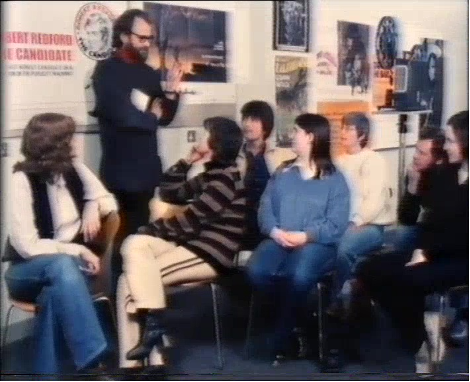
The same year, Warwick welcomed the first cohort of undergraduate students onto the Film and Literature degree.
We hope to add the next chapter of this history soon...
In the meantime, if you are a former student or member of staff in Film and Television Studies at Warwick and you have a story or memory about your time at Warwick that you would like to share, we would love to hear from you. Please follow the link below to get in touch:
Stories of Film and Television Studies at the University of Warwick – Get in touch with us
Thanks to Chris O’Rourke, Rick Wallace, Sean Batton, Heston Gardner, James O’Connell Nash, Elizabeth Dykes and other Film and Television Studies staff and students for researching and writing the history so far, and to the staff at the Modern Records Centre for making archive material available. Thanks also to the editors of Framework: The Journal of Cinema and Media for permission to include images from their first issue.