
In Memoriam: Vania Protti Traxler (1936-2026)
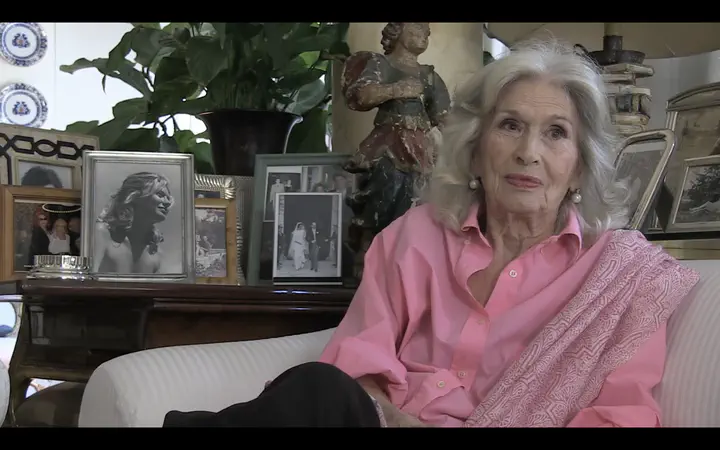
In Memoriam: Vania Protti Traxler (1936-2026)
Vania Protti Traxler, who died in Rome in June 2026 at the age of eighty-nine, was one of the defining figures in the history of Italian film distribution — and, for this project, an irreplaceable witness to the industrial and gendered labour that shaped postwar Italian cinema.
Born in Milan on 6 November 1936, she came from a family whose involvement in the moving image reached back to its earliest years: her forebears were among the itinerant exhibitors who first projected films in Italian piazzas in the wake of the Lumière brothers. Yet Vania built her own career on her own terms. In 1976, with her husband Manfredi Traxler, she founded Academy Pictures, the company with which her name would remain inseparably linked.
The decisive turn came in 1978, when Academy released Rainer Werner Fassbinder’sThe Marriage of Maria Braun. From that moment the company became the principal channel through which the great international auteurs entered Italian cinemas — Wim Wenders, Peter Greenaway, Pedro Almodóvar, Éric Rohmer, Krzysztof Kieślowski, Jim Jarmusch, Atom Egoyan, István Szabó, Emir Kusturica, and Spike Lee among them. Vania did this not as a passive importer of prestige titles but as an active cultural broker. Her method rested on patiently cultivated trust: with exhibitors, who came to give her riskier films a place on their screens, and with audiences she built and kept loyal. In her hands, art-house cinema moved out of the cineclubs and into the commercial theatres, reaching a wider public and reshaping the Italian market.
Recognition followed — a David di Donatello in 1984 for the distribution of Bergman’sFanny and Alexander, a special David in 1997 honouring two decades of cultural commitment, and the Vittorio De Sica Prize in 2006. After Manfredi’s death in 2000 she did not step back, but carried the work forward alone, founding first Lady Film and then Archibald Enterprise Film. It is a telling detail: the labour of distribution, so often unseen and uncredited, was here sustained for nearly five decades by a woman directing her own enterprise in a sector long dominated by men.
It was this dimension of her life that made her contribution toWomen in Italian Film Production: Industrial Histories and Gendered Labour, 1945–85so valuable. In the interview she generously gave to the project, Vania reflected on a working life spent at the heart of the Italian film industry — on the practical realities of building, financing, and running a distribution business, and on the place of women within it. Her testimony stands as a primary record of a history that has too rarely been documented, and it will continue to inform the questions this project asks.
We remember her as she was described by those who knew her work: rigorous, curious, and independent. Our thoughts are with her family and with the many colleagues across the world of cinema who counted her as a model and an inspiration.