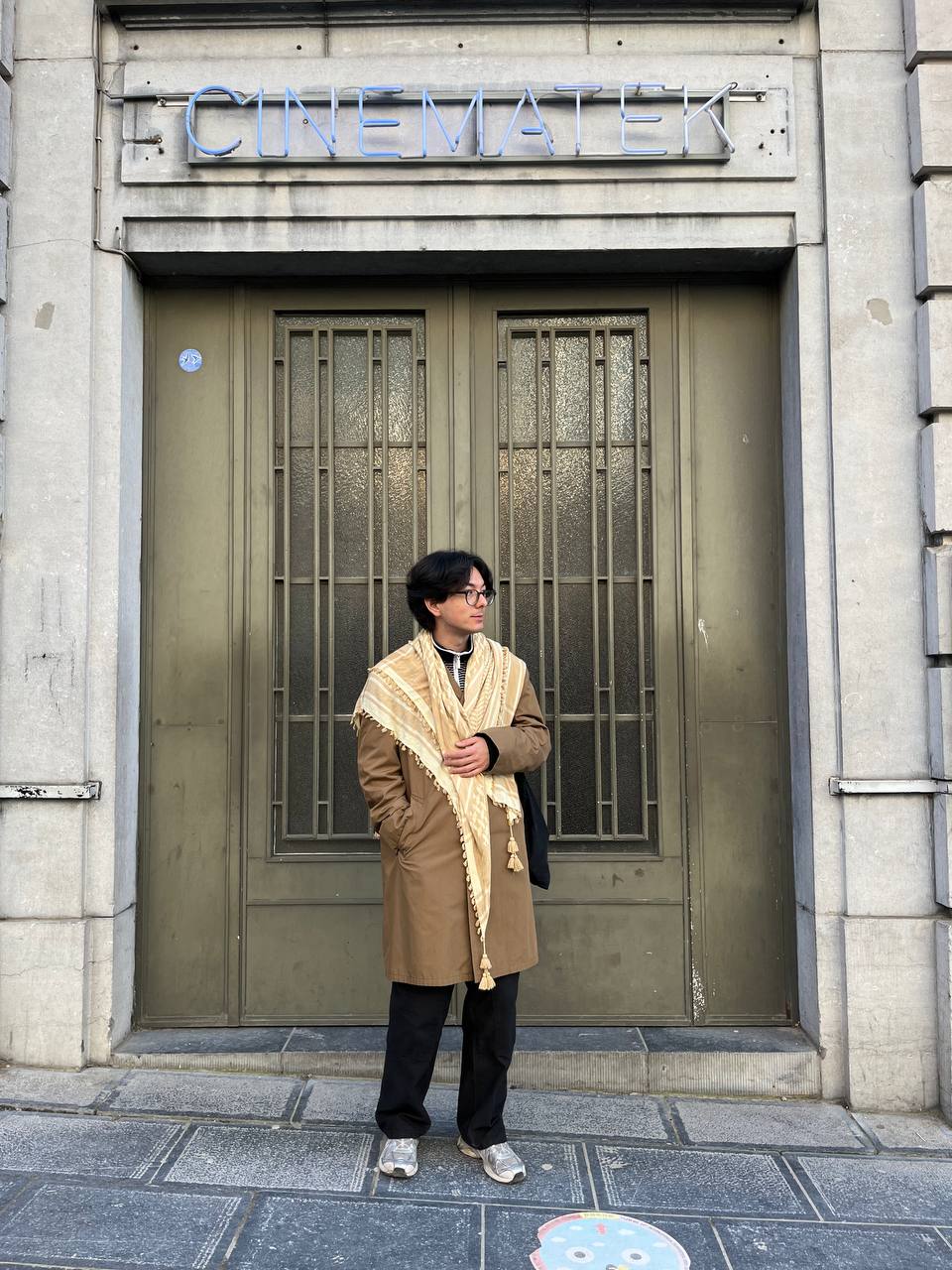
Misha Zakharov
Current research
Screening Rights and Worlding Screens: Solidarity Film Events and World-Making From Below
As part of this practice-based project, I examined how carefully curated heterotopic film events that hyphenate and juxtapose different parts of the Global South (particularly regions formerly described as the ‘Second’ and ‘Third’ Worlds) can help us address both Western and Eastern colonial histories, make the world differently from below (as opposed to map-making from above), and foster solidarity among diverse communities in the UK, especially those with migratory, diasporic, and refugee experiences. Building on the site-specific, situated, and self-critical experience gained through curating two editions of Screening Rights (2023–24), a social justice film festival held in the uniquely diverse region of the West Midlands, shaped by postcolonial, labour, and study migration, I developed a framework for thinking about and eventising these South–South encounters. This framework draws on film festival studies, film festival (auto)ethnography and accounts of film programming, decolonial theory, and situated learning, as well as refugee and performance studies.
In this thesis, I consider processes of (un)learning and solidarity in the seams among multiple actors — both human and non-human — that converge within the space of the South–South film event: filmmakers, guest curators, audiences, the festival team, special activities (such as introductions, discussions, walking tours, and communal meals), venues, and festival ephemera (including the festival website, visuals, commissioned responses, and documentation of post-screening discussions). I also explore South–South film aesthetics and modes of production, drawing on the notions of embodied navigation, collaborative filmmaking and allyship, reparative fabulation, and opacity as vital strategies for representing, rehearsing, and worlding solidarity within the space of the film event. From this, I develop a theoretical model in which films function as boundary objects, guest curators and filmmakers act as cultural mediators, special events operate as contact surfaces or sutures, and festival ephemera constitute an archive of solidarity that remains available for future reactivation.
Supervisor: Professor Michele Aaron
Background
I am a russian-born person of Korean descent (he/they), as well as a pro-Ukrainian political and queer refugee in the UK. I am a London-based author, film worker, and community organiser, with a particular interest in queer and decolonial perspectives on Central and Eastern Europe, the Caucasus, and Central Asia. My academic and film-curatorial work explores refugee world-making from below, cross-diasporic hyphenation, and South-South solidarity.
I hold a Specialist (BA+MA) degree in Film Studies (2019) from the Gerasimov Institute of Cinematography aka VGIK, the oldest film school in the world and the premier film school in russia. My dissertation titled Privatisation of Utopia: Deconstruction of the Socialist Realist Canon in Post-Soviet Historical Cinema examined four films of the 1990s-2010s — namely, Hammer and Sickle by Sergey Livnev (1994), Volga Volga by Vladislav Mamyshev-Monroe (2006), Angels of Revolution by Aleksey Fedorchenko (2014) and My Good Hans by Aleksandr Mindadze (2015) — that applied various disruptive tactics to rethink, critique and destabilise the socialist realist canon. Upon leaving russia in the wake of the full-scale invasion of Ukraine due to the risk of political persecution because of my pro-Ukrainian stance, I have ceased to be affiliated with VGIK, as it has openly supported the invasion.
Programming/curation
Having served as a mediator for two renowned contemporary art institutions in russia, Garage Museum of Contemporary Art (2015) and V-A-C Foundation (2018), I've coordinated cultural mediation for the inaugural national pavilion of Uzbekistan at the Venice Biennale (2022). I've been an invited film programmer at Garage (a programme on queer, female and immigrant filmmakers of the New German Cinema, 2022, featuring work by Sohrab Shahid Saless, Werner Schroeter, Helke Sander and Helma Sanders-Brahms) and Moscow International Experimental Film Festival (a programme on collective filmmaking, 2020, featuring work by Yugantar Film Collective, the Berwick St Collective, the Karrabing Film Collective, and the Rojava Film Commune).
As a guest curator, public speaker, and facilitator, I have collaborated with a range of film festivals and institutions in the UK, including the British Film Institute, the Independent Cinema Office, ICA London, Queer East, Flatpack, and London Migration Film Festival. I have presented lecture performances and desktop essays at UCL East (London), Pan-Pan Gallery (Birmingham), The Film Gallery (Paris), and Ghent University (Belgium). I am currently a programmer for the London Short Film Festival, the UK's leading festival of its kind, and Qyzqaras Women's Film Festival, one of the most innovative platforms for cinema in Central Asia (Almaty, Kazakhstan).
Select screenings and discursive events:
• Ulrike Ottinger's Johanna d'Arc of Mongolia, a lesbian epic set in the Mongolian steppe, with an introductory discussion with artist Margo Galandina and an interview with Mongolian queer advocates Dorjjantsan ‘Jack’ Ganbaatar and Erdeneburen ‘Gonto’ Dorjpurev (Queer East, ICA, May 2026);
• Wonders and Disasters: Nature, Architecture, and Colonialism in Central Asia, a discursive programme of four shorts featuring work by Pejvak, Artcom, Jane and Louise Wilson, and Daniel Asadi Faezi and Mila Zhluktneko; with an extended introduction by myself, a discussion with researchers Madina Gazieva (Dublin City University), Makar Tereshin (UCL), and Tiago de Luca (Warwick), and commissioned essay by Kseniia Bespalova (University of Groningen) for Klassiki Journal (London Short Film Festival, ICA & Zoroastrian Centre, January 2026);
• Parallel Voices: Queering (Post)soviet Central Asia, featuring An Ass-Shaped Butterfly, a lecture performance on the legacy of Kazakh opera singer Erik Kurmangaliev and Uzbek filmmaker Rustam Khamdamov by Misha Zakharov, and the UK premiere of Rustam Khamdamov’s Vocal Parallels, with a libretto designed by Uzbekistan-based micro design bureau undash crew (Queer East, UCL East, London, April 2025);
• We Are Above the Law: Queer Imaginings in Central Asia, featuring krёlex zentre and Katipa Apai’s Pearlshower Ceremonial Event and Madina Mustafina’s Come On, Scumbags, with a discussion with Jei and Nat, queer refugee creatives from Turkmenistan and Kyrgyzstan (Atlas Cinema, London, June 2025);
• Epistemic violence across regions of the Global South: UK premiere of Shubigi Rao’s Talking Leaves (previously presented at the Singapore Pavilion at the Venice Biennale 2022), followed by a discussion with Ihar Ivanou, director of Belarusian diasporic Skaryna Press, and a bookstand curated by Skaryna Press (King’s College London, April 2025);
• Koryo-saram: The Descendants of Soviet Koreans, featuring Kim Soyoung’s Heart of Snow: Afterlife and Alisa Berger’s Three Borders, with a discussion with Professor Kim Soyoung, filmmaker Alisa Berger, and Koryo-saram creatives Vova Son, Kira Yan, and Yulia Khvan (London Migration Film Festival, in collaboration with Goethe-Institut, The Ritzy, November 2024).
Carceral Cinema, guest-curatorial project with Flatpack Festival (2025–26):
• Carceral Cinema, Act I: Women in Prison, a discursive event on incarcerated women in North American prisons, featuring Janis Cole and Holly Dale’s P4W: Prison for Women and Christine Choy and Cynthia Maurizio’s Inside Women Inside, with a discussion with Linzi Stauvers (Artistic Director of Education at Ikon Gallery) and artist Jessica Ostrowicz, alongside a curated stand of abolitionist literature (Flatpack Festival, Mockingbird Cinema, Birmingham, May 2025);
• Carceral Cinema, Intermission: Gay Propaganda, a discursive event on state-legislated homophobia and incarceration in the Soviet Union and post-Soviet Russia, featuring Gay Propaganda, a live desktop essay by Misha Zakharov, and John Greyson’s Moscow Does Not Believe in Queers, with a discussion with PhD candidate Gina Matuska (Flatpack Festival, Pan-Pan Gallery, April 2026);
• Carceral Cinema, Act II: Everything and Nothing, a tribute to Lebanese resistance fighter Soha Bechara, featuring Jayce Salloum’s untitled part 1: everything and nothing and Randa Chahal Sabbag’s Souha, Surviving Hell, with a discussion with community organiser Rida Suleri-Johnson and PhD candidate Sarra Ghersallah (Flatpack Festival, Mockingbird Cinema, May 2026).
Other events, introductions, and discussions:
• Mahdi Fleifel's To a Land Unknown: an extended intro on Palestinian-ESEA solidarity, as part of a screening hosted by ESEA collective MilkTea Films (Charlotte Street Hotel, London, September 2025);
• Agniia Galdanova’s Queendom: a discussion with Anna-Maria Tesfaye, Russian-Ethiopian Black queer rights advocate, after the screening hosted by Girls in Film as part of Queendom’s UK-wide tour (The Castle Cinema, December 2023)
Writing
My work as an English-to-Russian translator includes Maggie Nelson’s The Argonauts (2020) and On Freedom (2021) and Sarah Schulman’s The Gentrification of the Mind (2023, never published due to the introduction of a more restrictive version of russia's anti-LGBTQ+ law). My autofictional novel, Doramaroman, which explores coming of age as a queer, Korean and precarious cultural worker in contemporary russia, was published by the now-defunct No Kidding Press in 2022. The English translation of the first chapter of Doramaroman by Nathan Jeffers has appeared in Tupelo Quarterly.
My writing on film and contemporary art has appeared in various publications such as Seance, Afisha, Iskusstvo Kino, and Spectate. As a film critic I have written on the representation of labour (particularly its precarious forms in the cinema of Olivier Assayas); the representation of sex work in the filmography of Pier Paolo Pasolini; Asian American and Latin American experience in film and TV; LGBTQ+ cinema (with a particular focus on cinema by trans and gender-diverse filmmakers); and experimental cinema. Filmmakers whom I interviewed include Ryusuke Hamaguchi, Kiyoshi Kurosawa, Amalia Ulman, and Josephine Decker. Filmmakers I profiled include Barbara Hammer, Sohrab Shahid Saless, Abbas Kiarostami, and Wong Kar-Wai.
I have also reported from the Busan International Film Festival (2018) and the International Film Festival Rotterdam (2020), and attended the Berlin International Film Festival (2023), Sheffield DocFest (2024), Berwick Film and Media Arts Festival (2025) and Cinema Rediscovered (2025) as a programmer and researcher.
Recent and forthcoming publications include:
• the first overview of Central Asian queer cinema, published in the pilot issue of Second Thoughts, a publication by Queer East Festival;
• an interview with Canadian New Queer Cinema classic John Greyson about his trip to the Youth Festival in Moscow in 1985, for Klassiki Journal;
• an interview with Mongolian queer researchers and advocates Dorjjantsan 'Jack' Ganbaatar and Erdeneburen 'Gonto' Dorjpurev, for Queer East Journal;
• an essay about the screen persona of Yekaterina Golubeva, an unconventional muse for the filmmakers of the New French Extremity, for Klassiki Journal;
• an interview with director Vladlena Sandu and cinematographer Liza Popova about the collaborative process that shaped their Chechen War-themed experimental documentary Memory, for Klassiki Journal;
• and Open Bodies, Cold Lands, a screenplay for my desktop essay of the same name on queer migration into and out of the Maghreb region, forthcoming in the second issue of Belgium-based Bebe Magazine.
Select presentations
Workshops
Shaping Solidarity: Building Cross-Community Connections with Film, a workshop commissioned by Independent Cinema Office for EDI Screening Days and delivered in collaboration with Radical Exhibition Collective and Falasteen on Film (MAC Birmingham, September 2025); reproduced for BFI staff at the invitation of the BFI Inclusion Team (BFI Stephen Street, April 2026);
How Do We Hyphenate the Two Souths?, a presentation delivered at the invitation of In Between Zones Collective (The Advocacy Academy, London, February 2026).
Live desktop essays
Open Bodies, Cold Lands, on queer migration into and out of the Maghreb region (presented as part of the Queer Migrations exhibition at the Firepit Gallery; commissioned and curated by Bold Mellon, a global majority queer collective, with funding from the Royal Borough of Greenwich, London, July 2025);
Gay Propaganda, on state-legislated homophobia and incarceration in the Soviet Union and post-Soviet Russia (presented at Pan-Pan Gallery, Birmingham, April 2026, and The Film Gallery, Paris, June 2026).
Lectures and lecture performances:
A Portrait of an Artist as a Young Film Critic, an autobiographical lecture performance, delivered at the invitation of PhD candidate Merel De Keyzer (Ghent University, February 2026);
An Ass-Shaped Butterfly, a lecture performance on the legacy of Kazakh countertenor Erik Kurmangaliev and Uzbek filmmaker Rustam Khamdamov (Queer East, UCL East, May 2025);
Queer Cinema from SWANA and Central Asia, a lecture delivered as part of my PhD supervisor Professor Michele Aaron’s module on postcolonial film (University of Warwick, March 2024).
Conference Papers:
3rd Film Festivals Symposium: Film Festivals, Funds and Film Industry (Kadir Has University, Istanbul, Turkey; April 2023)
Behind the Scenes, Beneath the Screen: Subtitle Translation as the Means of Pedagogy, a Form of Precarious Labour, and a Kind of Artistry (or, Two Summers of a Subtitle Translator at the Moscow International Experimental Film Festival)
Visible Evidence XXIX: Documentary Ecologies (University of Udine, Italy; September 2023)
From Invisibility to Hypervisibility: Autofiction, Diffuse Authorship, and Digitality in Russian LGBTQ+ Documentaries of the 2010s
Radical Film Network Conference: Building Fronts (Sorbonne Nouvelle University, Paris, France; June 2026)
Remapping the Atlas of Solidarity: South–South Encounters in Film Festival Spaces
Forthcoming presentations:
Cinematic (Hi)stories in/of Central Asia: New Perspectives (Paris, October 2026) + Queer Alternative Fictions in Eastern Europe and Central Asia (Bristol, October 2026)
Building a (Counter-)Archive of Central Asian Queer Cinema
A workshop at Hildesheim University (Germany, January 2027)
Teaching
In the Spring Term 2025, I served as a Teaching Assistant for the module Business of Film at Warwick, taught by Hannah Hitchin. The module explores the three main stages of a film’s lifecycle — production, distribution, and exhibition — within the European and North American contexts.
In the Spring Term 2026, I served as an invited tutor on Uzbek filmmaker Kamila Rustambekova’s MA graduation project, Girlhood Studies, at the Netherlands Film Academy.
Forthcoming: Emerging Critics’ Lab, part of the Qyzqaras Film Festival (Almaty, Kazakhstan), co-led with Kazakh film critic Botagoz Koilybayeva (20-30 August 2026).
Select courses
2024, Independent Cinema Office (London, UK)
REACH, a course on audience development, diversification and outreach led by ICO and taught by specialists from different branches of the British film industry, such as exhibition, distribution, marketing, audience research and development, programming, and accessibility. As part of REACH, I developed an audience diversification plan for Screening Rights 2024: Double Bill, while being mentored by Isra Al Kassi of TAPE Collective and David Sin, Head of Programming at ICO.
August 2023, Salzburg Summer Fine Arts Academy (Salzburg, Austria)
An Expanded Vocabulary of Filmic Drawing, a course on engaging with marginalised and suppressed stories, languages and systems of knowledge by the artist Shubigi Rao.
July 2013, International Writing Program (University of Iowa, US)
Training in creative writing by the Ossetian writer Alan Cherchesov, the American poet Kiki Petrosino and the head of the world-renowned International Writing Program (IWP) Christopher Merrill as part of Between the Lines, a branch of the IWP at the University of Iowa.
Research interests
Film events; refugee world-making from below; South-South solidarity; cross-community hyphenation; participatory, collective and activist filmmaking and programming; the ethics of film programming; film festival studies; expanded and experimental cinema and artists’ moving image; cinema and contemporary art; cinema and autofiction; de-, anti- and postcolonial cinema; queer and female-led cinema; cinema and inclusion; cultural mediation; critical, radical, engaged and affective pedagogy; the regions of Central and Eastern Europe, the Caucasus, and Central Asia.
email: misha.zakharov@warwick.ac.uk
instagram: @m_m_zakharov