
HVMC Industry Day
Industry Day
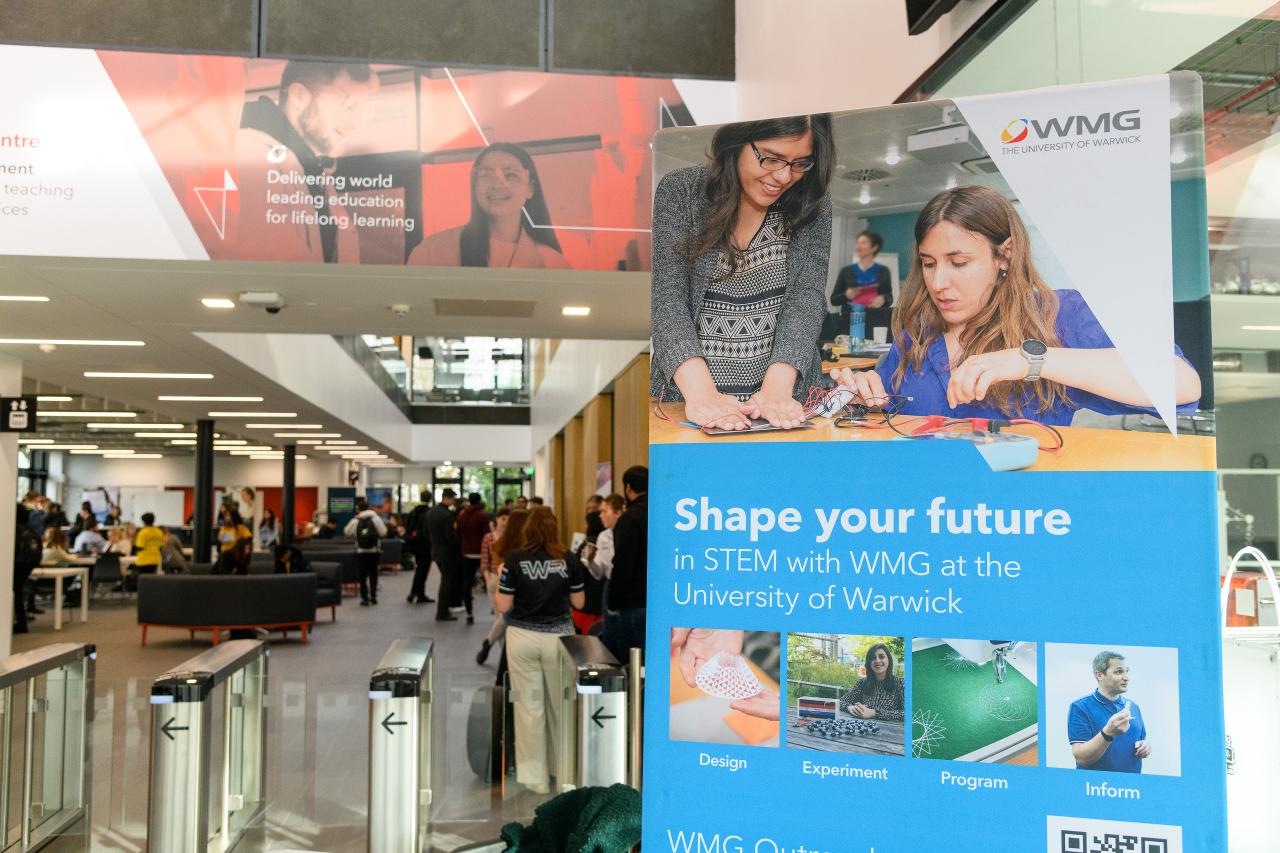
The Industry Day is an annual outreach event organised by WMG at the University of Warwick with the support of the High Value Manufacturing CatapultLink opens in a new window where engineering and technology companies meet Year 9–10 students to spark interest in engineering and support widening participation.
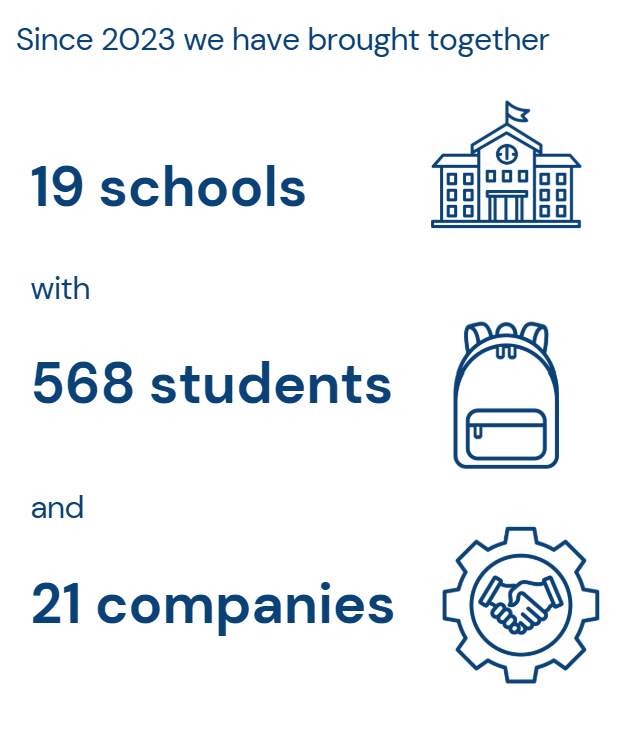
Our impact so far
"It was a really good event that had just the right amount of activities versus talks. There was a great mix of companies and stand over the breaktime. Much better than a normal career fair, certainly the way forward. Our students really enjoyed it."
Paula CarmichaelBusiness Engagement and Students Destinations Manager
WMG Academy for Young Engineers
For more information about the Industry Day or if you are interested in taking part contact Marie Diebolt WMGoutreach@warwick.ac.uk
Our vision
We share our passion about engineering, science, and technology, working collaboratively to support young people, building a more inclusive future and become the next generation of global innovators and leaders.
Innovate
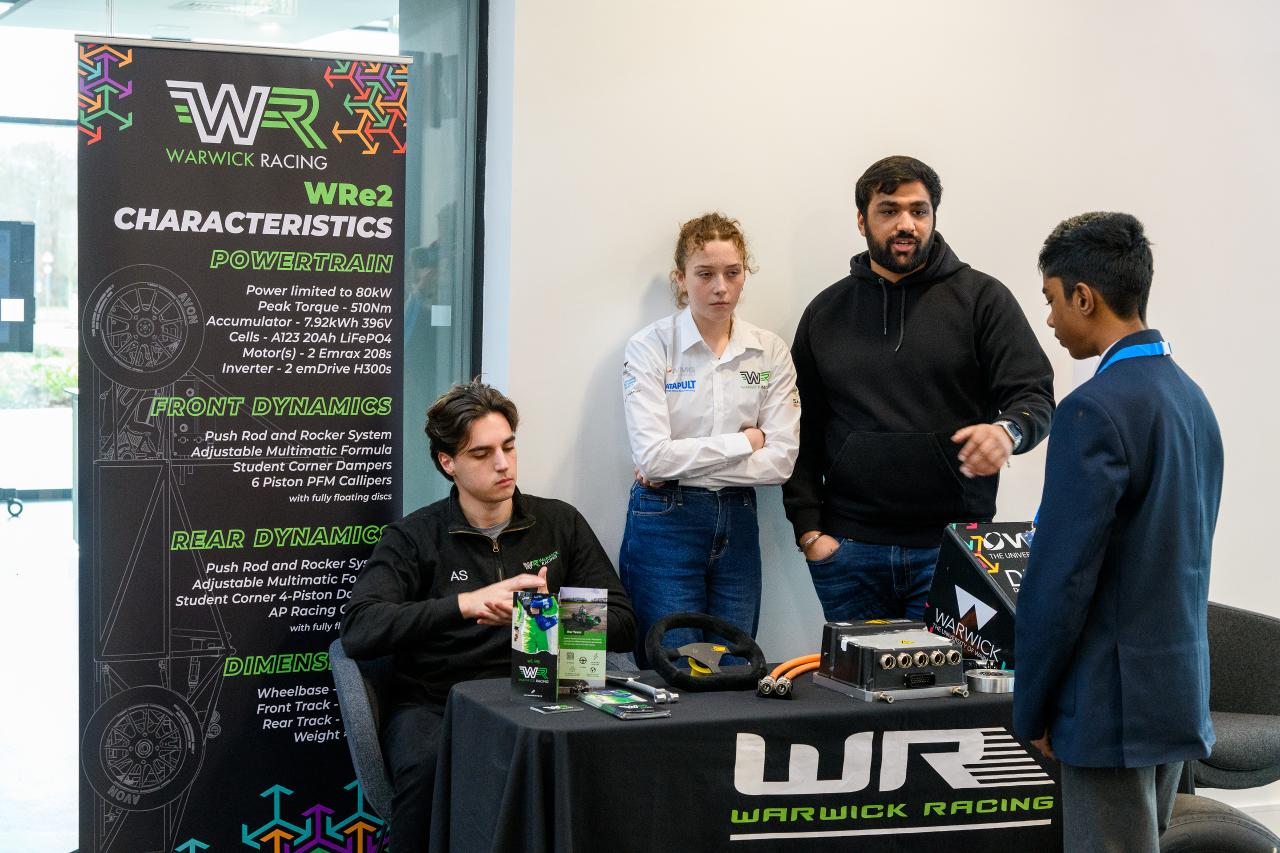
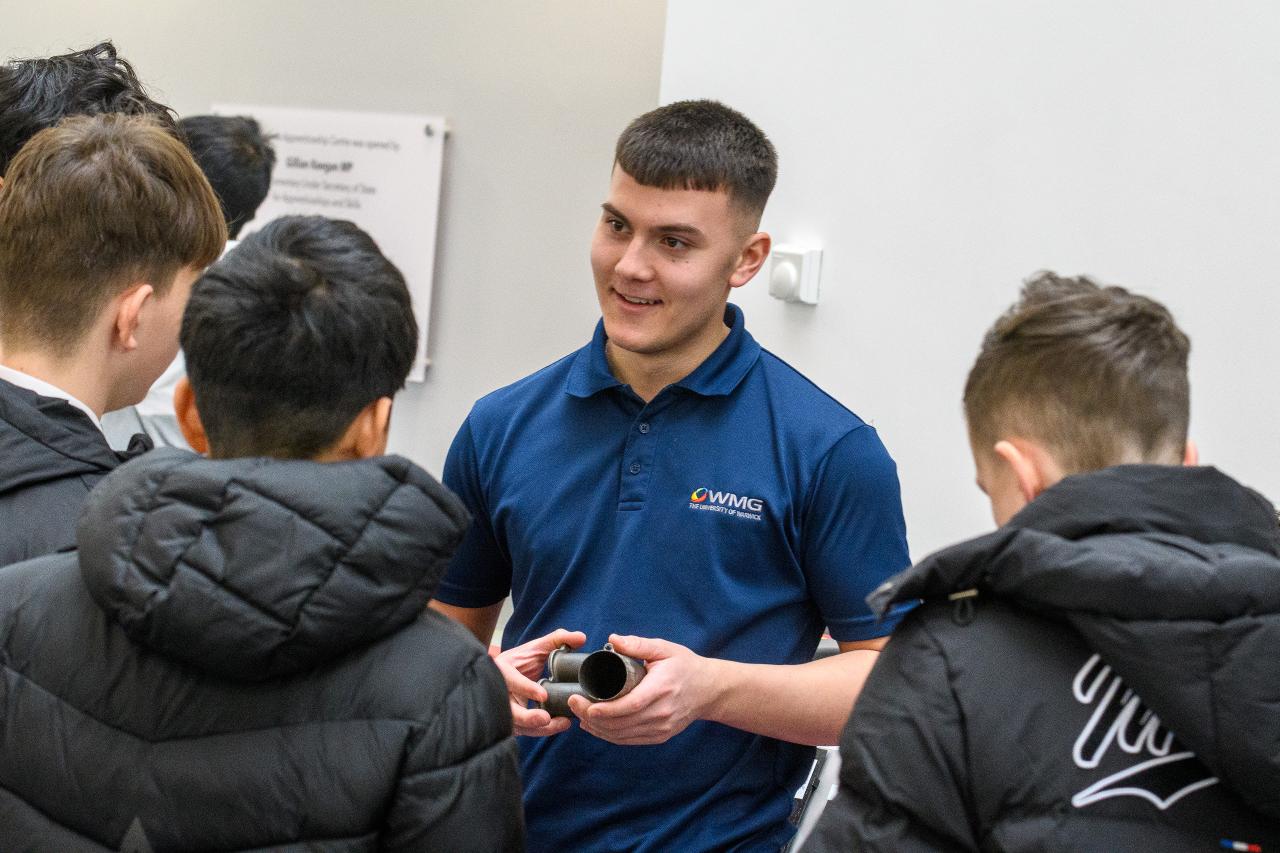
The Industry Day is an innovative type of career fair where targeted students about to choose or to take their GCSEs are invited on our campus to meet with carefully selected companies who have worked with us to develop engaging and thought provoking workshops tailored to a school audience.
Pre-event activity
This activity is designed to prepare your students to interact in a meaningful way with the content of the Industry Day and to give our presenters an insight into your students, especially on their:
- Expectations of engineering
- Interest in STEM
- Prior exposure to careers
- Confidence levels
- Hopes for the event
This will help us and our industry partners create relevant, tailored and appropriately pitched workshops.
On the day
Students will be split into small groups and assigned three workshops to attend. We cannot guarantee that all the workshops will be matching their area of interests but we will be using the pre-event activity to tailor the experience to each student as much as possible.
Students will be given a passport to encourage them to complete short career activities during the event and record which employers they met and what they learnt.
Mentoring
After the event, students who attended, will be contacted via their schools to take part in a mentoring session which will be held in school with some of our partners. The aim of this session will be to explore further the career paths available to those students and what they can do to prepare themselves to the future world of work in the engineering sector.
This list is a list of all the companies who have supported past Industry Day events and not a list of the partners who will be supporting the upcoming 2026 Industry Day. For a list of the partners supporting the Industry Day in 2026, head to the Schools Tab
The project
This project focused on strengthening the Industry Day by understanding why partners take part, what support they need, and how WMG can make the event more engaging for students. Insights from partner discussions and research informed new tools and guidance to improve confidence, communication, and student interaction.
.

Morenike Allinson
WMG Widening Participation Intern
Final-year Psychology student
This internship particularly appealed to me as it allowed me to apply psychological theory in a real-world setting that supports and uplifts the local community. It also provided an opportunity to explore why companies engage in outreach and participation, not simply as buzzwords, but as meaningful, actionable commitments that can make a lasting impact when time and effort are invested. Through this work, I also contributed to developing a framework to help local industry partners deliver impactful outreach and take on mentoring roles for students at future events. If you would like to see any of my previous experience or projects I have worked on I would love to connect here.
.
Why this matters?
Coventry and Warwickshire have some of the lowest rates of young people progressing into higher education. Strengthening communication between industry and schools can help address this gap by giving students relatable, hands-on exposure to engineering careers.
Research also shows that interactive, student-centred activities improve recall, build confidence, and make workshops more meaningful, especially for widening participation learners. This evidence shaped the training and tools developed during the project.
Project Aims
- Strengthen relationships between WMG and industry partners to help them prepare effectively for Industry Day.
- Identify partners’ motivations, expectations, and concerns around widening participation.
-
Develop new, creative methods for understanding students’ expectations before the event.
-
Improve partner confidence in communicating engineering to young people.
-
Support student engagement through clear structure and interactive tools.
Method
1. Partner Insight Questionnaire
A short Qualtrics survey was developed to understand partner motivations. Although response rates were low, the initial insights helped guide later conversations.
2. Industry Partner Training Session
The training session became the main source of qualitative insight, as partners openly shared concerns about student disengagement, uncertainty around filling a 45-minute session, challenges in pitching content at the right level, and the difficulty of creating interactive activities. These insights directly shaped ideas proposed for development of resources and Industry Day.
3.Educational and Outreach Research
The work drew on widening participation data, and research on interactive learning and psychological safety to guide recommendations.
Key deliverables
The project produced several deliverables that will support both WMG and industry partners in preparing for future Industry Days. The first was an employer engagement insight summary, which analysed partners’ motivations and concerns to help strengthen relationships and improve preparation for the event. This work provided WMG with a clearer understanding of what partners hope to achieve and what support they require.
Another deliverable was the development and delivery of partner training. This training offered practical, research-backed guidance on how to communicate engineering concepts to widening participation students and how to make workshop activities more interactive and engaging. These materials helped increase partner confidence ahead of the event.
The project also introduced two new student-facing tools designed to improve understanding and engagement. The Industry Day Vision Board is a proposed pre-event activity that allows students to express their existing knowledge, interests, confidence levels, and expectations about engineering. This tool gives WMG and partners valuable insight into what students want from the day.
Alongside this, the Industry Day Passport was created as a proposed engagement tool for use during the event. The Passport encourages students to visit companies, ask questions, and collect stamps as they move through activities, helping to motivate curiosity and participation in a low-pressure way.
Finally, internal resources were developed, including webpage copy and research summaries, to clearly communicate the purpose, structure, and future development of Industry Day. These materials provide WMG with a more consistent and sustainable framework to build on.
Key insights
-
Partners are enthusiastic about supporting young people but often need more guidance on structuring sessions and encouraging engagement.
-
Interactivity reduces student anxiety, improves confidence, and makes learning more memorable.
-
Traditional surveys may not fully capture students’ expectations.
Impact
-
Strengthened relationships with industry partners through targeted insight gathering.
-
Increased partner confidence after receiving practical, research-backed training.
-
Introduced two new methods for understanding and supporting students (Vision Board and Passport).
-
Expanded WMG’s approach to student insight collection beyond surveys.
-
Provided internal materials that will help shape future years of Industry Day.
Future direction
The Vision Board and Passport are new proposals created during this project.
Future Industry Days can:
-
Pilot both tools with schools and gather feedback.
-
Refine partner training based on what works best in practice.
-
Enhance consistency by building a library of ready-made interactive activity ideas.
-
Strengthen evaluation to improve Industry Day year on year.
These proposals give WMG a foundation for a more structured, engaging, and research-informed outreach model.
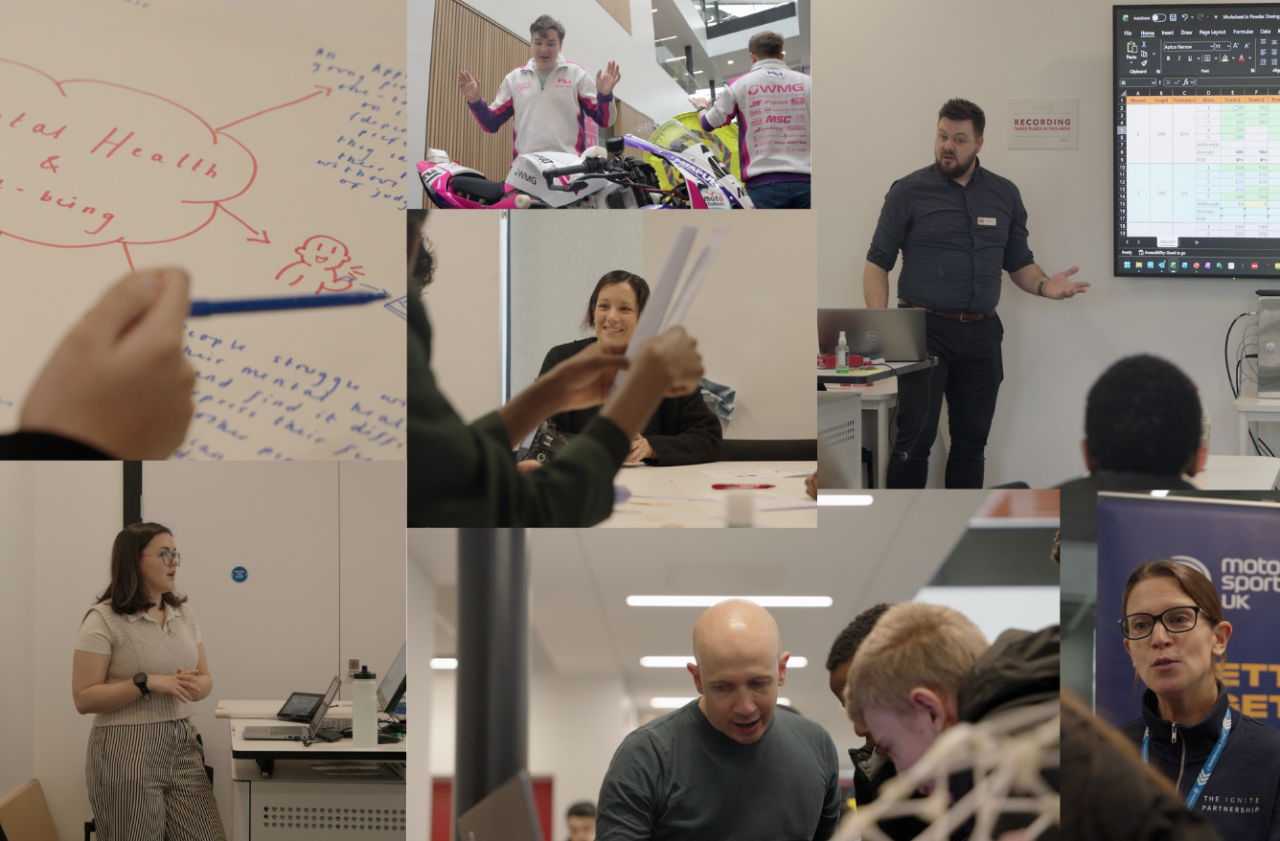
2026
2025
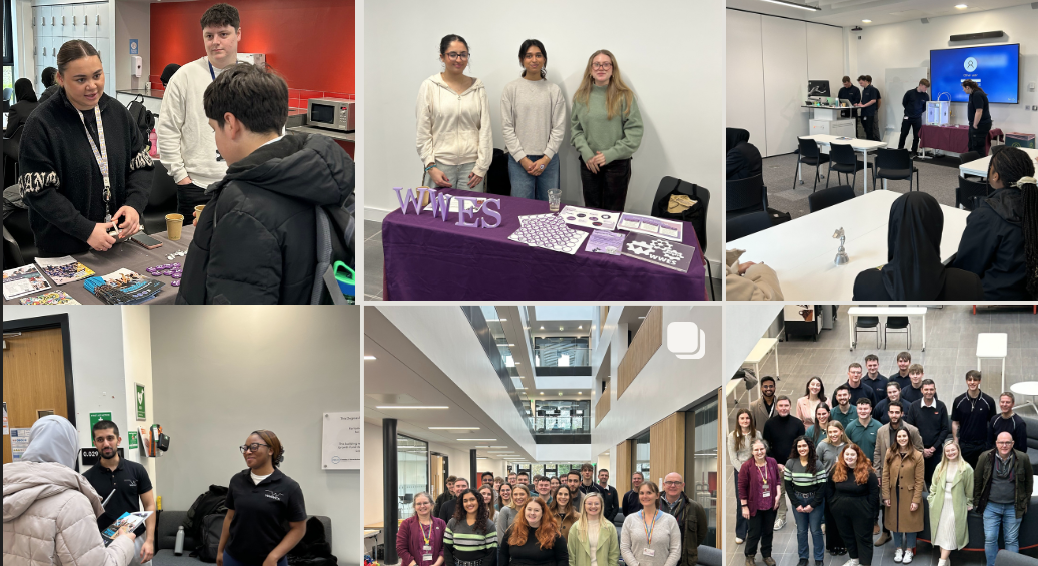
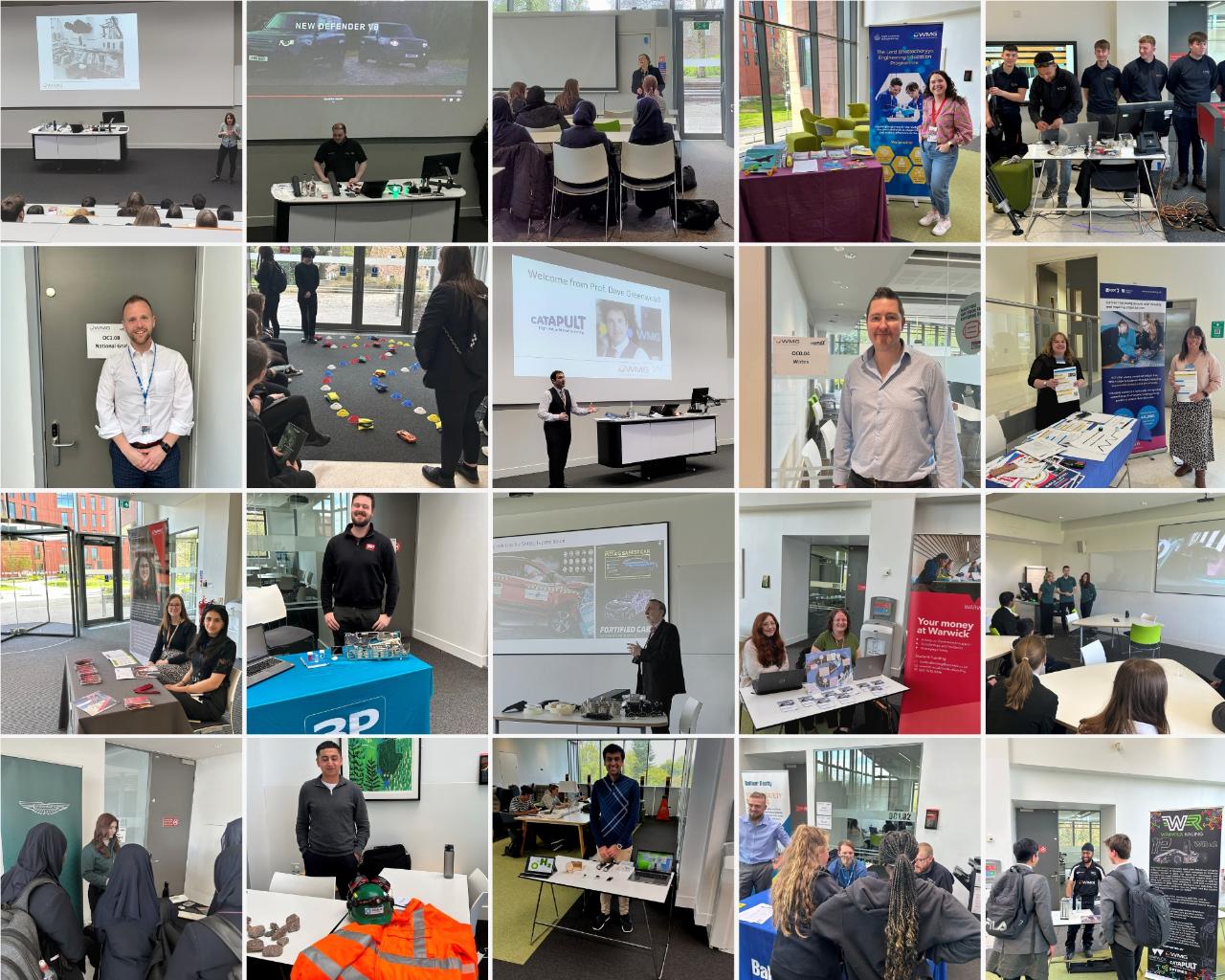
WMG Industry Day in 2025 was a huge success with 182 Year 9 and 10 students about to choose their GCSEs who were registered to attend from 9 schools. The students met with 8 companies who delivered engaging and thought provoking workshops.
We introduced some career based self-guided activities students could complete during the event to help them reflect on their career paths.
2024
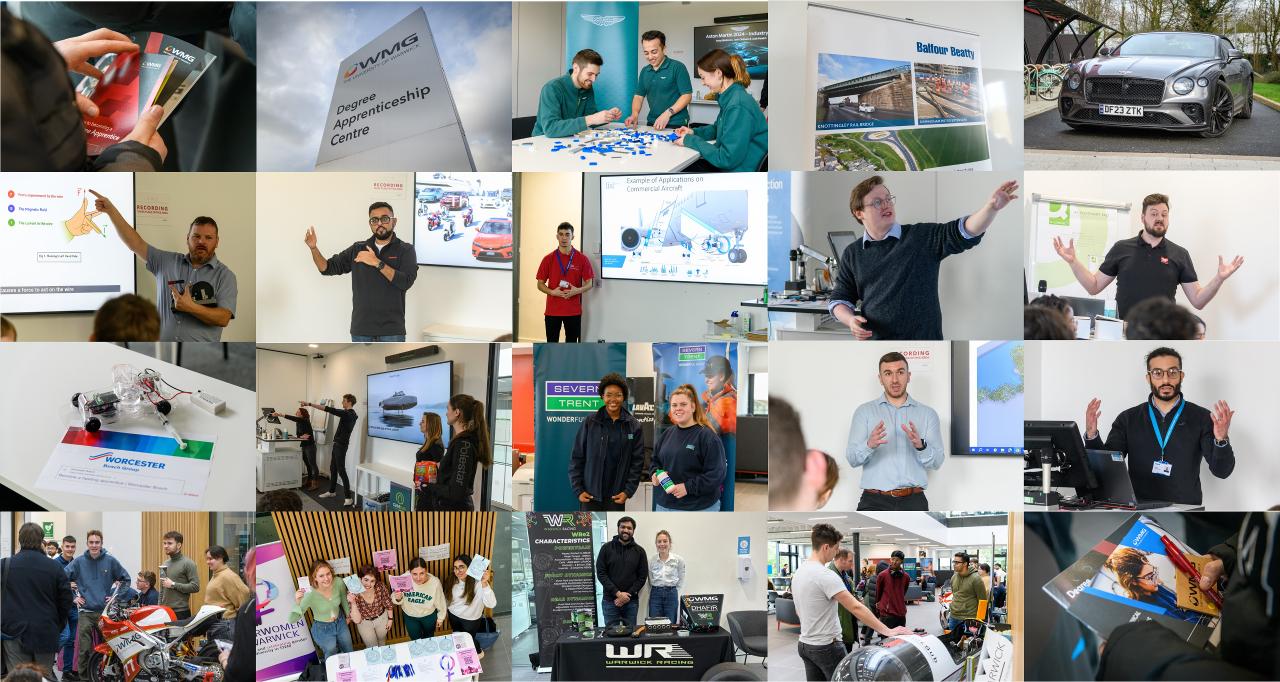
For our second WMG Industry Day, we invited 8 schools with 116 Year 9 and 10 students to meet 13 companies. We relocated to the Degree Apprenticeship Building to create an event where students could visit stands with career and study advice between sessions.
2023
Our first WMG Industry Day welcomed 10 companies, 9 schools and 137 attendees in the Oculus. Year 10 students discovered cutting-edge research with our academics, explored career paths at local companies and spoke to our students about life on campus.
.