
Advancing Battery Safety: WMG's Role in the SafeBatt Project
Advancing Battery Safety: WMG's Role in the SafeBatt Project
Background
The Faraday Institution’s SafeBatt project is an award-winning collaboration, led by the University of Oxford, involving seven universities alongside industrial partners, each bringing unique capabilities to the investigation of the science of battery safety.
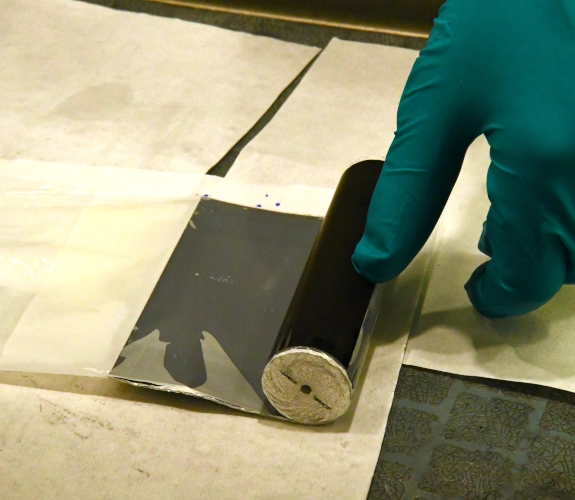
With the increasing adoption of electric vehicles and the growing demand for energy storage solutions, ensuring further improvements to the safety and efficiency of batteries is an urgent priority. The SafeBatt project seeks to address the critical issue of battery safety by improving the performance of cells and minimising the risk of failure, such as by thermal runaway (a process where abnormal cell operation triggers a cascade of exothermic reactions, leading to catastrophic cell failure, fires, and explosions). WMG was a founding partner in the SafeBatt consortium, providing expertise in advanced experimental methods, sensing and forensic analysis. Co-investigators on the WMG team comprise of Dr Melanie Loveridge, Dr Simon Jones and Professor James Marco.
As part of the SafeBatt project, WMG’s Battery Systems research team worked collaboratively with industry partner, AceOn, to improve collective understanding of whether its supply of sodium-ion batteries was compatible with the supplied documentation, composition and safety. This work formed part of wider research intended to benefit all partners and will be publicly disseminated. AceOn is one of the biggest battery storage companies in the UK, with long-standing expertise in battery technology and energy storage. They did not have the facilities or capabilities in house to do the experimental evaluation themselves, therefore the work carried out by WMG was invaluable.
Challenge
Lithium-ion batteries, while efficient, present potential safety risks which are understood through a process of thorough safety testing. These include thermal runaway, degradation over time, and potential hazards during charging and discharging. Further work is needed to test the safety credentials of more than a small sample of cells.
When bringing new and emerging cell technologies into the UK, AceOn, like many other SME battery companies, does not have the in-house capabilities and facilities to adequately disassemble cells and chemically analyse the cell contents. Likewise, AceOn lacks the specialist facilities to expose cells to abuse conditions to ensure the safety of the design. For this they turned to the SafeBatt project and WMG.
“We carry out new supplier research and basic testing based on the data sheets as well as test reports supplied by manufacturers. Also, the information supplied by the product manufacturer is often limited, making it challenging to conduct appropriate testing.” James Willetts, AceOn Technical Director.
Solution
WMG has been leading testing and research on the understanding and mitigation of the risks of thermal runaway, focusing on cell and small system-level hazards, as well as novel internal-cell instrumentation.
WMG used high-resolution, high-speed visualisation and instrumentation techniques to understand why cells fail and how different failure modes affect cell-to-cell thermal runaway propagation. By integrating sensors directly into the cells, it is possible to quantify key internal states during failure and provide data for model parameterisation.
“New cell chemistries are frequently sold as being safer than previous technologies. However, safety has many aspects and a cell that may be less prone to flaming may generate more toxic gasses. Therefore, it is important to measure the reaction of cells to a wide range of abuse conditions and capture high quality data on all the possible resulting hazards.” Dr Simon Jones, Principal Engineer, WMG
Testing large-scale packs is hazardous, slow and expensive, making it unsuitable for the agile development of propagation mitigation strategies. The WMG Battery Safety Centre has facilities for testing minimum cell clusters and enclosures, which allows the investigation of barrier materials for mitigation of thermal propagation. WMG’s team of battery safety experts conducted vital cell abuse and gas measurement testing through the work of SafeBatt. Examining new chemistries is part of the crucial work of the Battery Safety Centre, ensuring their characterisation and understanding of gas evolution.

Impact
For assessing a new supply of sodium-ion batteries that AceOn had sourced, the work of WMG as a part of SafeBatt was invaluable. There is a strong business case for the consortium of SafeBatt to fulfil this vital testing and analytical role on behalf of those companies that lack the necessary equipment, knowledge and experience. This assurance and protection for the UK market and consumers is vital and enabling ease of access for businesses in this market can help remove barriers to market.
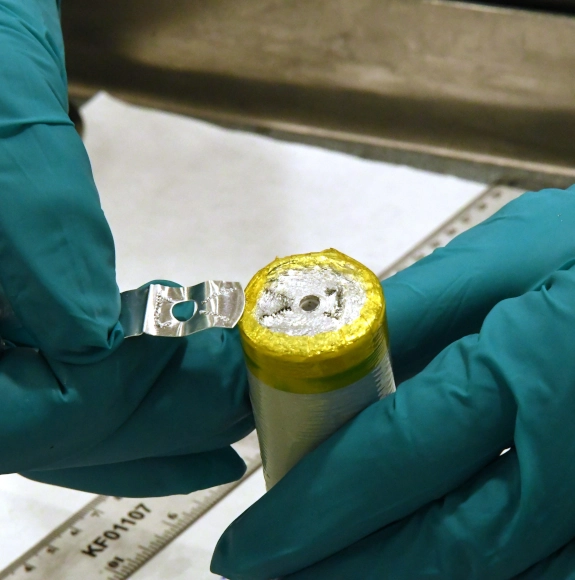
“We valued the work that WMG undertook for us as part of the SafeBatt project. WMG’s approach was extremely flexible and collaborative. Their testing and analysis allowed us to delve deeper into what has been supplied. Cells were disassembled and investigated; temperature ranges could be verified; and cells aged. With this information, AceOn was able to understand whether the battery products supplied were compatible with the supplied documentation, composition and safety. This was vital for us to continue our growth in the battery manufacturing industry, and particularly in relation to sodium ion where AceOn have been one of the leading UK companies around this emerging technology.” James Willetts, AceOn Technical Director.
WMG provided full forensic work, not just discrete tests but a full suite of testing and tear down of cells, providing a uniquely rich data set for AceOn. WMG is the leading academic institution in the UK that can conduct full spectrum battery testing at scale such a full spectrum of battery testing at cell and small module level, making the work of our experts invaluable. Our industry-leading expertise in gas analysis has enabled us to define what "safe" looks like. This is how the Battery Safety Centre offers scientific rigour with industrial applications.
Our collaborative approach enables us to guide companies through all stages of testing, with the flexibility to respond to both expected and unexpected results by adapting our testing methods and offering tailored solutions. We already work with several OEMs and organisations that rely on our expertise to conduct thorough investigations and provide training on battery safety.
If you're interested in learning more about how our battery safety expertise can support your business, get in touch with our team today to discuss how we can help you grow: wmgbusiness@warwick.ac.uk