
Taking the lead in semiconductor innovation
Monday 3 August 2026
Taking the lead in semiconductor innovation
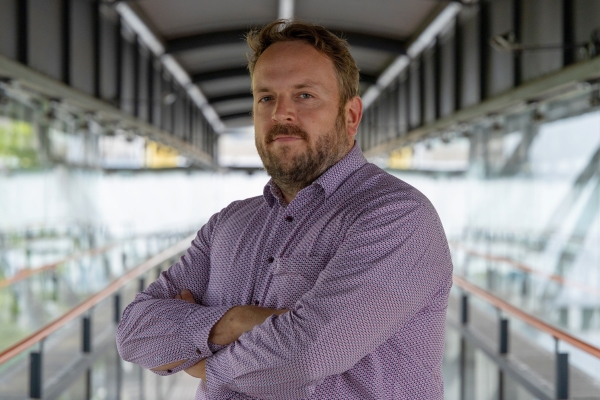
Warwick Manufacturing Group (WMG) at the University of Warwick has welcomed Professor Peter GammonLink opens in a new window and Dr Arne (Ben) RenzLink opens in a new window, establishing a new Compound Semiconductors research area.
Both researchers bring extensive expertise in compound semiconductors from Warwick’s School of EngineeringLink opens in a new window, significantly strengthening WMG’s capability in Power Electronics, Machines and Drives (PEMD)Link opens in a new window, and reinforcing Warwick's position in one of the fastest-growing areas of advanced electronics.
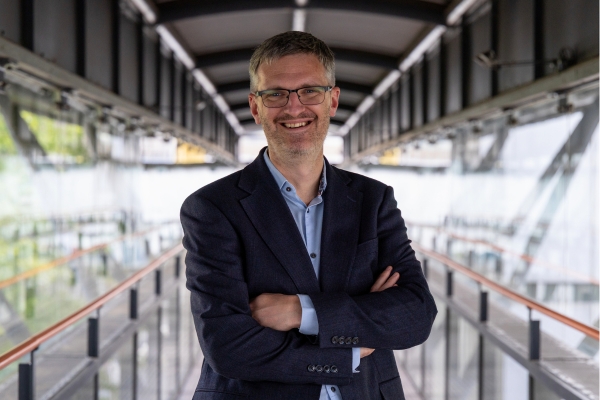
The move reflects the growing industrial importance of compound semiconductors, bringing together world-leading expertise with WMG's capabilities in industrial innovation and manufacturing scale-up: an importance that was highlighted earlier this year with the University’s memorandum of understanding with Tata PowerLink opens in a new window.
Power semiconductor devices underpin modern electric vehicles (EVs), renewable energy systems and the electricity grid, controlling how electrical energy is converted, managed and used efficiently.
Professor Gammon and Dr Renz will focus on developing next-generation semiconductor devices based on silicon carbide (SiC), a key material driving global electrification.
SiC chips are smaller, faster, and more efficient than conventional silicon components, enabling longer-range EVs, more efficient renewable energy systems and more sustainable AI data centres.
Their ability to operate at higher voltages and temperatures also unlocks new applications, from aerospace and space systems to next‑generation electricity networks.
As SiC technology matures and industry adoption accelerates, research is shifting from proving its potential to developing devices that can be manufactured reliably, qualified, and produced at scale. Progress increasingly depends on close collaboration between researchers, manufacturers and end users to accelerate the commercial adoption of SiC technologies.
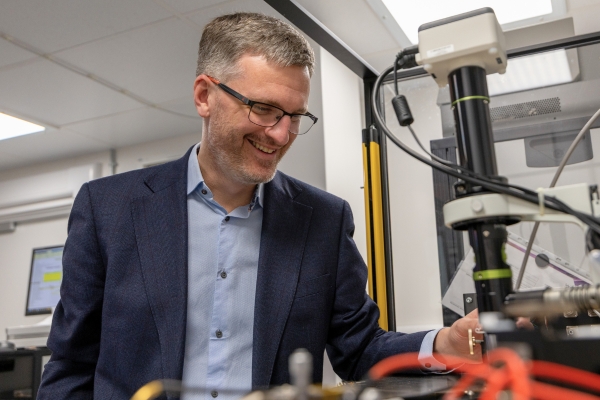
Through programmes including the UKRI REWIRE Innovation and Knowledge CentreLink opens in a new window, Professor Gammon and Dr Renz work closely with industrial partners to improve device performance, reliability and manufacturability, helping to accelerate the commercial adoption of new semiconductor technologies.
Their work is already supporting innovation across the automotive, aerospace and space sectors.
Supporting the UK's Industrial Strategy
The work of Professor Gammon and Dr Renz supports the UK's Industrial StrategyLink opens in a new window by advancing semiconductor technologies that strengthen the UK's position in chip design, scale-up, advanced manufacturing and resilient supply chains.
Professor Peter Gammon explained: “Power semiconductors are becoming as strategically important to electrification as batteries.
"As silicon carbide technology matures, the challenge is increasingly about manufacturing, reliability and industrial scale-up. WMG provides an ideal environment to translate our research into technologies that deliver real economic impact.”
Building on its success in creating nationally significant innovation ecosystems, such as those established through the Faraday Battery Challenge, WMG is helping to position Warwick at the forefront of semiconductor scale‑up.
He adds: “Together with our colleagues in the School of Engineering, we'll continue to build on Warwick's internationally recognised semiconductor research, while strengthening our partnerships with industry. By combining research excellence with manufacturing and industrial collaboration, we can help accelerate the commercial adoption of these technologies."
"We are delighted to welcome Peter and his team into WMG", commented Professor Paul JenningsLink opens in a new window, WMG’s Director of Research. "Their expertise and partnerships in this crucial area complement our existing research and align perfectly with our aim to enable industry to become more sustainable, resilient and competitive."
Find out more about WMG’s Power Electronics, Machines and Drives research.Link opens in a new window