
WMG News - Latest news from WMG
National Trustworthy Software Initiative to be based at WMG's Cyber Security Centre
 WMG's Cyber Security Centre at the University of Warwick is to host a million pound programme designed to enhance the cyber security of many of our everyday technologies and tools by ensuring that the software that underpins them is more trustworthy. A team in the UK government funded Trustworthy Software Initiative will work alongside WMG Cyber Security researchers at the University of Warwick over the next two years in a programme to “Make Software Better.”
Professor Tim Watson, the Director of WMG's Cyber Security Centre, welcomed the opportunity to work with and support this crucial programme. He said:
Virtually every aspect of our lives is touched by information technology running a diverse range of software; from the way we listen to music, the phones we carry with us at all times, the vehicles we drive, to the computers that support the information economy. The trend to embed software in everyday items is accelerating. However there are concerns about the quality of the software that underpins all of this, and we have not seen significant improvements.”
A*STAR and WMG create first Engineering Doctorate scholarship in Singapore
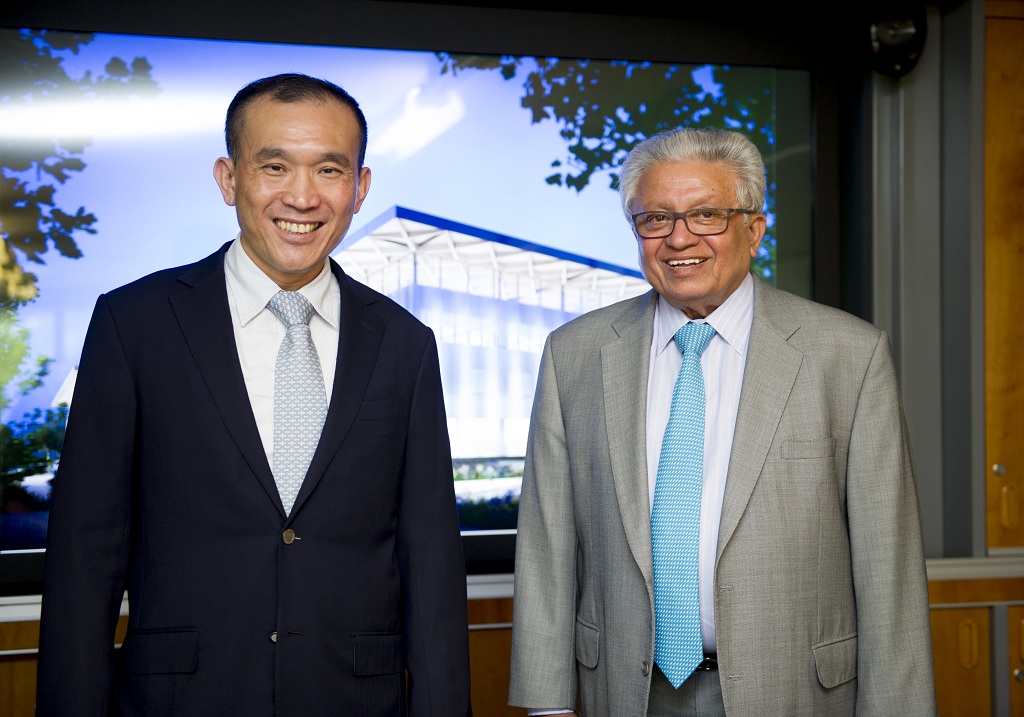 WMG at the University of Warwick have partnered with A*STAR (Singapore’s Agency for Science, Technology and Research to create first Engineering Doctorate (EngD) scholarship in Singapore The new scholarship programme is designed to encourage highly-skilled engineering professionals to help accelerate economic growth in the manufacturing industry.
Under this programme, A*STAR’s SIMTech will collaborate with WMG to develop a pipeline of innovative R&D talents in the area of manufacturing processes, automation, and systems. Through a curriculum of engineering business management and specialised technology courses, and applied research, successful candidates will gain an industrial edge to their research to tackle real-world engineering problems, adding value to the manufacturing industry.
Royal Institution Engineering Summer School a hit with 13 - 15 year olds
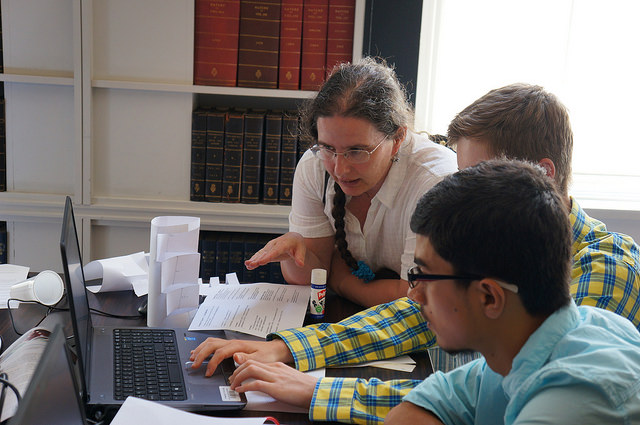 On Wednesday 13 August, Margaret Low (Principal Teaching Fellow at WMG) and Dr Simon Leigh from the University of Warwick, ran a summer school at the Royal Institution in London called Illuminating Engineering. The event showed how modern-day manufacturing links together art, science, engineering and technology in order to create new, exciting and bespoke products.
The one-day workshop demonstrated how these links can be brought together through design, software and hardware engineering skills and how engineers need to have an appreciation of the other areas to get any project off the ground. Students designed and manufactured a bespoke, interactive lamp controlled by a micro-processor, writing the software for the interactive lamp and exploring the design and production of a personalised lamp shade using digital manufacturing tools.
Second WMG Academy for Young Engineers to open in Solihull
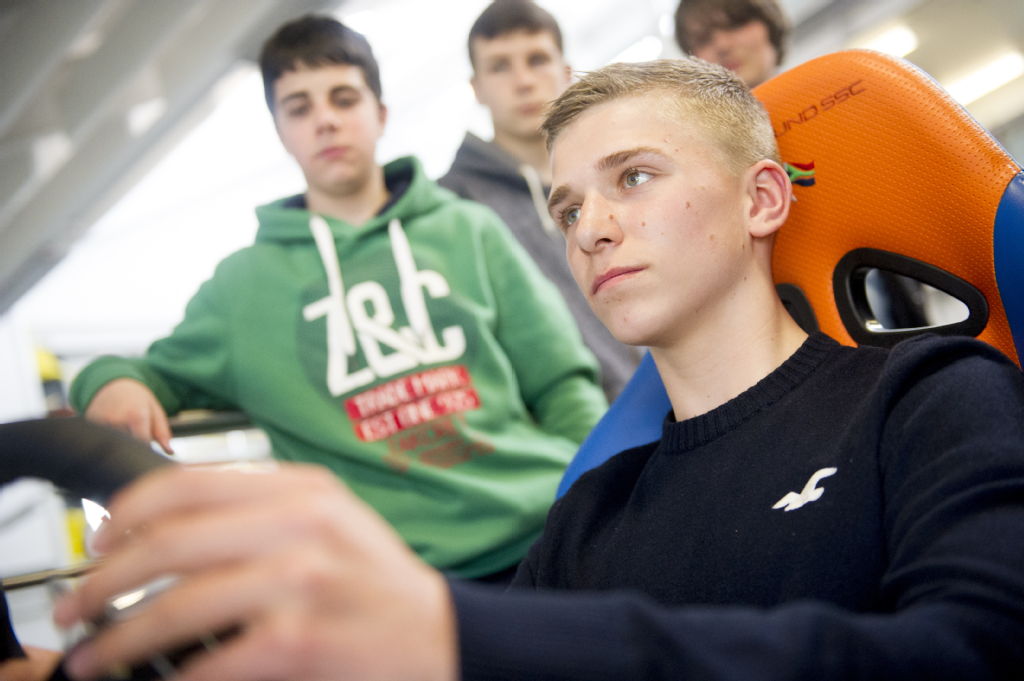 Today’s announcement by Chancellor George Osborne sees the second WMG Academy for Young Engineers (Solihull) named as one of the latest University Technical Colleges to be approved under the government’s academies programme.
Sponsored by the University of Warwick and leading employers, and backed by Solihull Council and a range of local partners, the new school will provide young people aged 14-19 from Birmingham and Solihull the opportunity to study engineering and science in a business-like and business led environment alongside the national curriculum.
Key employer partners for the new WMG Academy include Jaguar Land Rover, Controls and Data Services (formerly known as Aero Engine Controls) and Arup, whose input and expertise will shape the curriculum and the project-based learning approach of the new Academy. Pupils will take a problem-solving, practical approach to learning by working on real-world problems, set by the employer partners.
Professor Lord Bhattacharyya, Chairman and Founder of WMG said:
Reaching a younger generation, engaging them in innovative new learning environments and preparing and inspiring them to create the high-value products of tomorrow is the only way that we can ensure the UK’s ability to compete in the global market place for the future.
We are delighted to be starting work on opening the second WMG Academy for Young Engineers in Solihull. Across the region we have some of the best companies and supply chains for manufacturing, many of whom are eager to become part of this exciting new approach to education.
We have worked with our partners to create a truly unique curriculum and learning style that will ensure students across Solihull and Birmingham have access to a bespoke learning experience that not only gives them high-value technical skills but also vital employability and business skills; preparing them for further or higher education, apprenticeships or to move directly into careers and keeping manufacturing knowledge and excellence within the region.”
WMG and MAN Group collaborate to create over £1 million in sales and new jobs
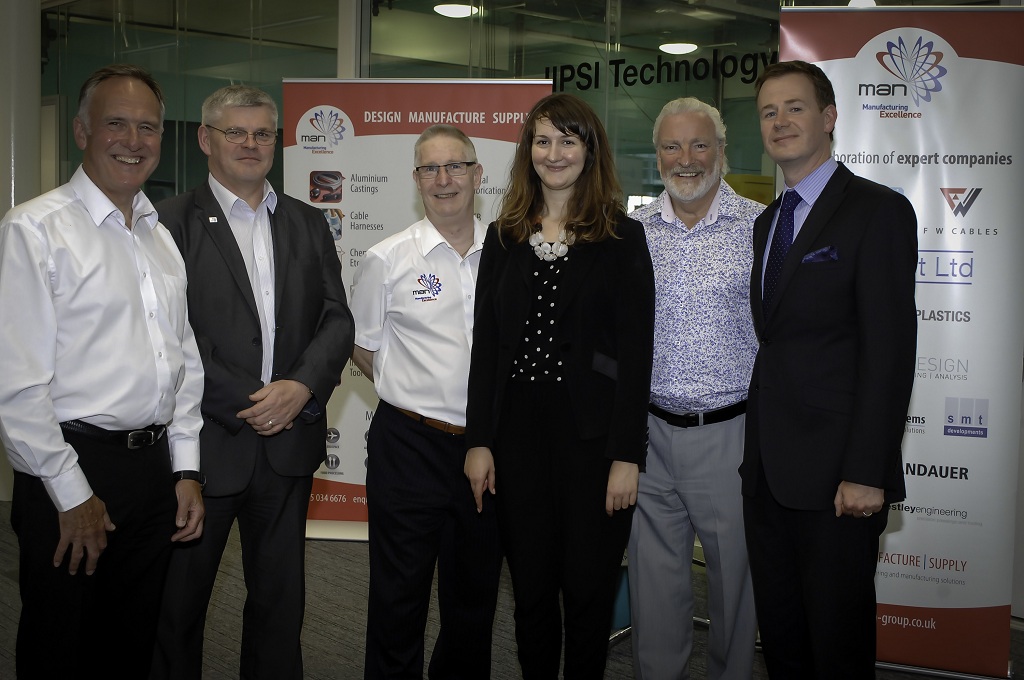 WMG at the University of Warwick and the Midlands Assembly Network (MAN) have announced that by working together they have boosted sales by over £1m and are set to create more than ten new jobs.
The dedicated SME team at WMG and MAN, a consortium of ten world class manufacturers based in the West Midlands, have been working together on a number of research led innovation projects, including the development of novel prototypes, materials analysis and the capture of funding for capital equipment.
They have now agreed to collaborate on a long-term innovation strategy that will also encompass leadership support to equip the management teams with the skills and know-how to implement their growth plans.
Professor Lord Bhattacharyya signs The Royal Society Charter
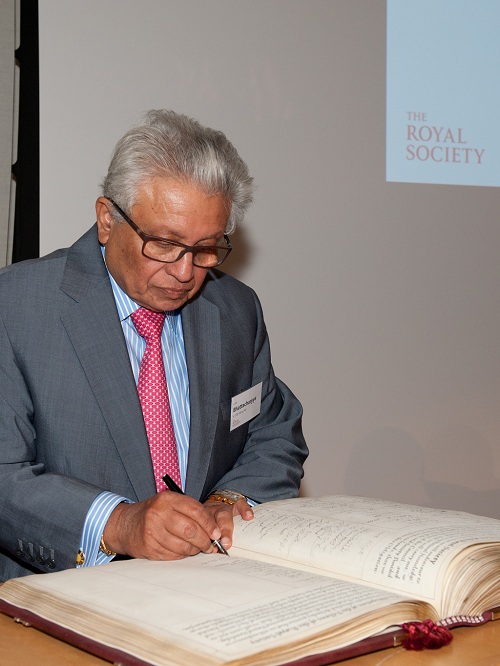 On Friday 11th July Professor Lord Bhattacharyya, Chairman of WMG, attended the Admission Ceremony for New Fellows of the Royal Society to sign the Charter Book. The Royal Society and the Fellowship, gained by Lord Bhattacharyya, is the highest accolade possible in British science.
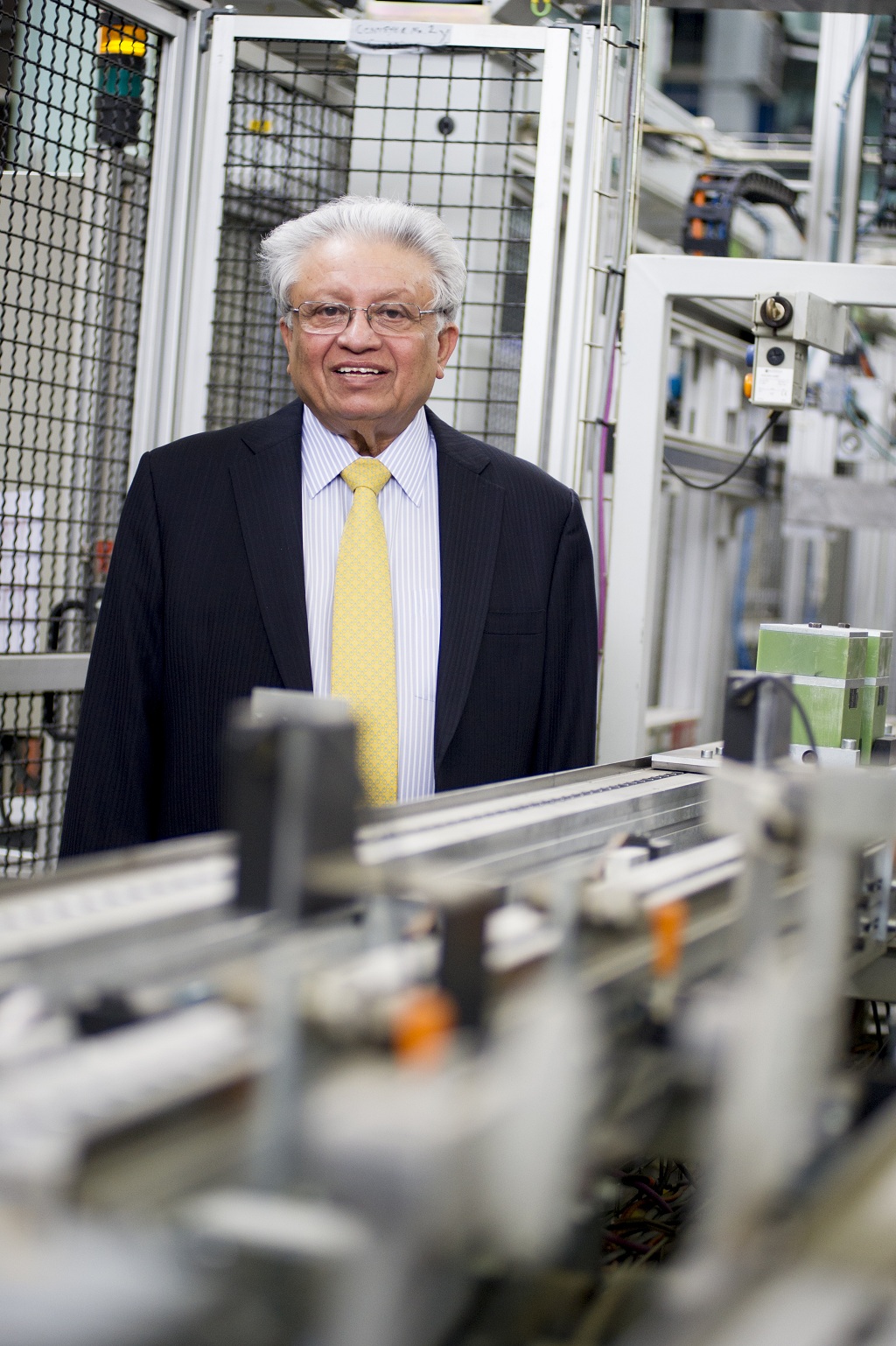
The Royal Society was formed in 1660 at the time of the Restoration of the Monarchy, and was given a Royal Charter by King Charles II in 1662. He provided the Society with a magnificent gold Mace, to signify the "presence" of the Monarch at all formal meetings of the Society - and the Ceremony commenced with the pomp of a procession of the Officers and Senior Official of the Society behind the Mace.
Each of the 59 new Fellows, after their citation were read to the audience of 300, were invited by the President to sign the Charter Book (which contains the signatures of all Fellows since 1662). After the signing The President, Sir Paul Nurse, of The Royal Society, formally admitted each new Fellow - "I do by the authority and in the name of the Royal Society of London for improving natural knowledge admit you a Fellow thereof".
Lord Bhattacharyya's formal admission to Fellowship was an honourable recognition for WMG’s Chairman, although he acknowledges that WMG is what it is today not only because of his vision but because of the commitment and hard work of each member of staff.
Previous: Professor Lord Bhattacharyya elected as a Fellow of The Royal Society
£1 billion Advanced Propulsion Centre announces Hub location at Warwick
 The following press release was issued by The Advanced Propulsion Centre UK Ltd
- University of Warwick to host central Hub with regional Spokes to be announced.
- The APC is committing up to £200 million in UK propulsion technology projects this year.
25 July 2014: The Advanced Propulsion Centre (APC) has selected the University of Warwick as the site for its Hub location, supporting the ten year, £1 billion industry and government commitment to the development of low carbon propulsion systems.
The central Hub together with a national Spoke structure will provide the UK automotive industry with resources and facilities to develop advanced propulsion systems and supply chains. In doing so the aim of the APC, in partnership with industry, is to secure and grow over 30,000 UK jobs currently engaged in the research, development and production of vehicle powertrains as the industry transitions to a low carbon future for all modes of transportation.
An open and rigorous process was used to select the Hub location overseen by an independent, industry-led assessment panel. The final decision was based on the requirement to have a suitable facility for rapid start-up with:
- Ease of access with good communication networks.
- Access to capable skills.
- Independence and flexibility.
- Scope for physical expansion as the APC gains momentum.
- Provision for world class showcasing of UK capability in advanced technologies.
The APC helps forge partnerships between those who have good ideas and those who can bring them to market. The services provided by the APC will enable projects which provide profitable growth and sustainable opportunities for the partners involved and contribute to the UK’s economic prosperity.
Warwick team gives exceptional performance at European International Submarine Race
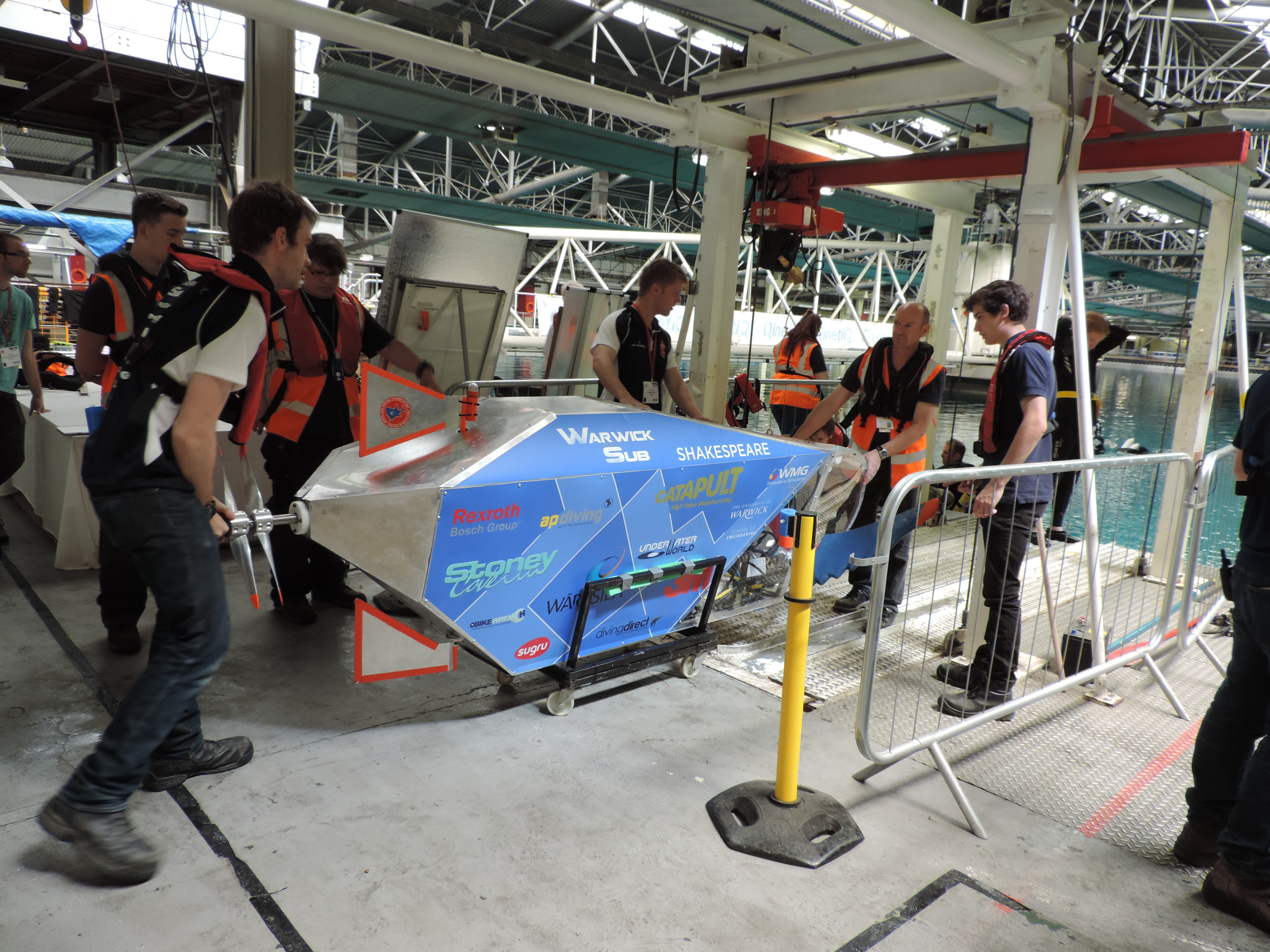 After two years’ development and two weeks of racing, engineering students from the University of Warwick were awarded 2nd in UK and 4th place overall at the European International Submarine Race (eISR) event in Gosport, Hampshire.
The team of Warwick engineering students raced a human-powered submarine around an underwater course measuring 175m. This one-man craft was piloted by a student in scuba gear lying down and peddling to drive rear propellers while steering via a joystick at the front. Speed and agility were crucial as any interactions with course markers incurred penalties; the sub with the fewest penalties and fastest time won.
The competition itself is recognised globally as an opportunity for some of the best students, from a host of universities, to demonstrate their knowledge and passion for engineering,
University of Warwick and Carnegie Mellon University take first step to $10 million partnership
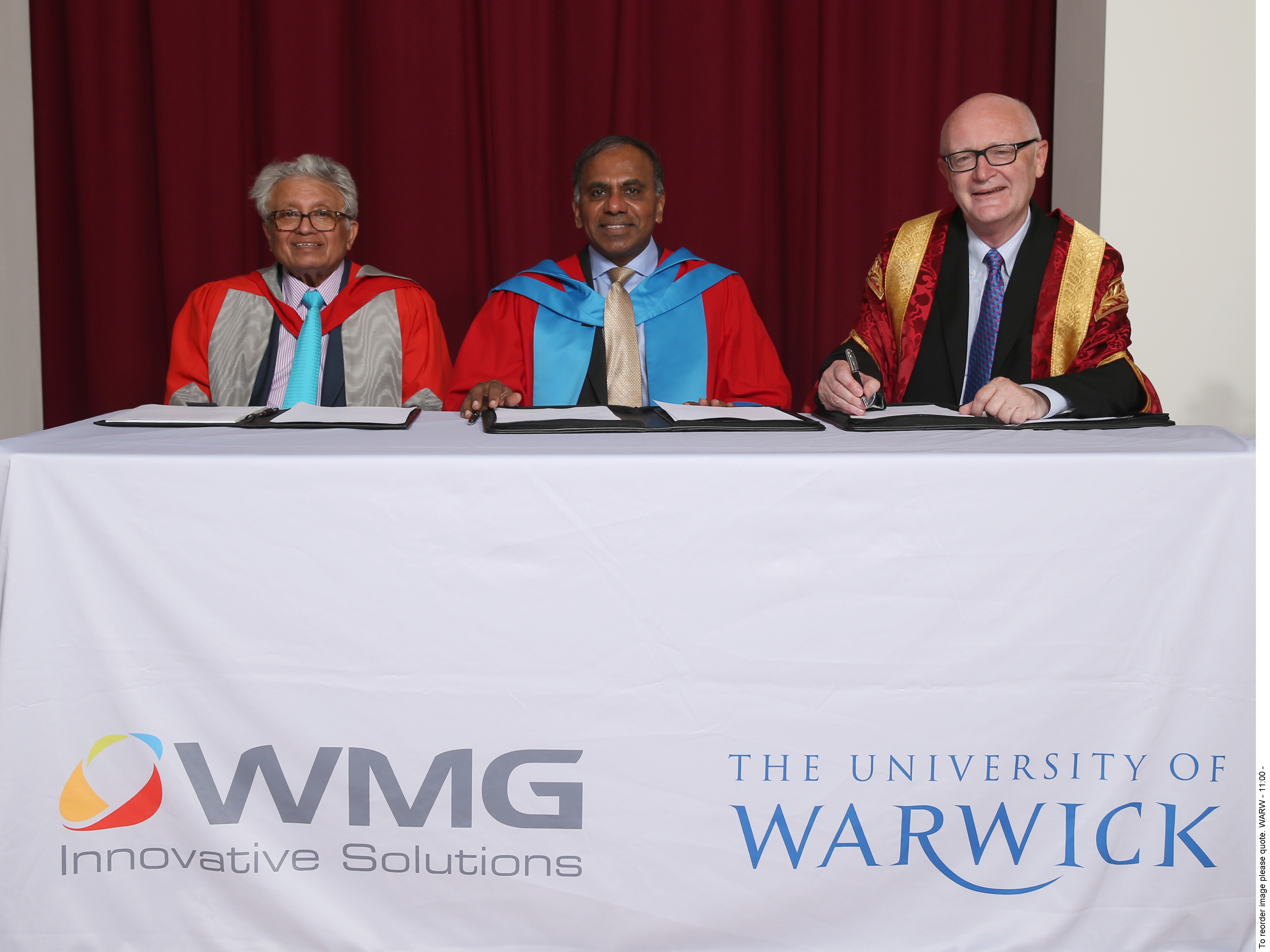 The University of Warwick and Carnegie Mellon University have signed a Memorandum of Understanding to create a $10 million research and education collaboration.
The two universities intend to work together on research and teaching in data acquisition, analysis and processing for next generation applications. This will bring together Warwick’s expertise in manufacturing and digitally enabled healthcare – including: cybersecurity, energy storage, materials and surfaces and robotics with CMU’s expertise in: autonomous systems, cybersecurity, digital healthcare, machine learning and sensing and data processing. Activities will underpin strategic initiatives at the two universities, including Warwick’s Global Research Priorities and CMU’s Brain initiative, City 21 and Traffic 21 initiatives.
They will also look at collaboration in the fields of: energy, innovative manufacturing, materials, science, and technology for health and sustainable cities.
Each institution plans to support and fund the work of staff and students on joint projects and exchanges between those staff and students. The funding will also be used to create facilities for cyber-learning and virtual class rooms.
Santander & WMG announce a score of places for SME senior managers in business leadership programme
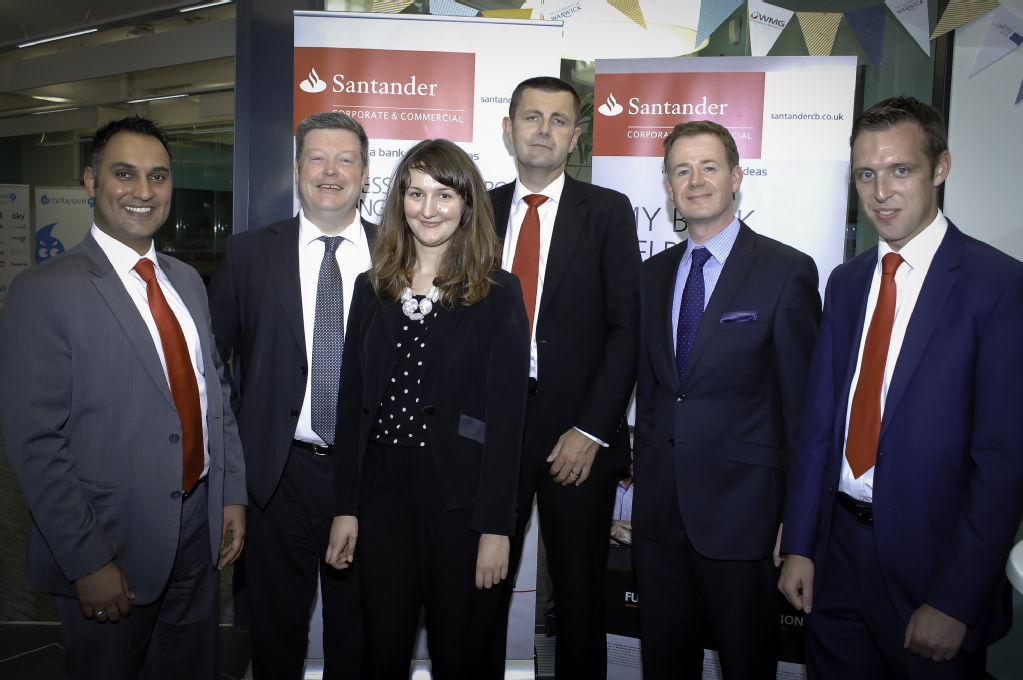 A new initiative to provide business leadership training for 20 senior managers from fast growing SMEs (Small and Medium Sized Enterprises) has just been launched by WMG, at the University of Warwick, in partnership with Santander.
The postgraduate award programme has received £40,000 of support from Santander, which will significantly reduce the cost of the programme that will give senior SME managers the opportunity to boost their ability to lead and embed innovation in their organisations. The scheme was launched, at WMG, at an event attended by a number of leading SMEs in the region as well senior figures from Coventry and Warwickshire Chamber of Commerce, the EEF and Tata Motors.
Dr Mark Swift Head of SME Programmes at WMG said:
The new programme blends WMG’s longstanding experience of delivering executive education and cutting edge research with a suite of additional support from Santander’s SME Breakthrough Scheme, networking opportunities and innovative product and service technology.”
The emphasis of the programme is to equip the leaders of today and tomorrow with the very best tools to encourage and embed a culture of innovation. We will teach participants about the latest modes of management as well as offering hands on experience of using new technology to grow and develop a business.”