
WMG News - Latest news from WMG
Research finds care home design isn’t depressing – providing you can actually get outside
With around 40% of residents in UK care homes having significant depressive symptoms, researchers have questioned whether the design of the physical environment of homes could be contributing to the problem, and how this could be addressed. New research led by the University of Warwick has found that although the physical environment alone is unlikely to negatively affect the mood of residents, poor access to gardens and outdoor spaces could. Procedural, staffing and physical barriers can prevent older people using outdoor spaces and the researchers at Warwick Medical School and WMG at the University of Warwick have found that access to the outdoors is significantly associated with depressive symptoms.
There has been a growing interest in the role of the physical environment on health. An early study found that hospital patients residing in rooms with windows looking at a natural scene had shorter hospital stays. Another study found that brighter lighting reduced depressive symptoms in residents in assisted living facilities in the Netherlands. However whether the physical environment of care homes directly affects depression in residents was not as well understood until now.
Researchers at WMG and Warwick Medical School at the University of Warwick examined the relationship between the design of care homes and depressive symptoms of older people living in care homes, and have now published their results in the journal The Gerontologist in a paper entitled “The Impact of the Physical Environment on Depressive Symptoms of Older Residents Living in Care Homes: A Mixed Methods Study” https://doi.org/10.1093/geront/gnx041
World's 'first named dinosaur' reveals new teeth with scanning tech
 Pioneering technology has shed fresh light on the world’s first scientifically-described dinosaur fossil – over 200 years after it was first discovered - thanks to research by WMG at the University of Warwick and the University of Oxford’s Museum of Natural History.
Professor Mark Williams at WMG has revealed five previously unseen teeth in the jawbone of the Megalosaurus – and that historical repairs on the fossil may have been less extensive than previously thought.
WMG PhD candidate elected to IMechE Council of Members
 One of our PhD candidate’s, Siddartha Khastgir has been elected to the respected IMechE Council of Members. The Council guides and advises the Trustee Board on strategy, membership and other key issues for IMechE.
Siddartha says: “I am pleased and honoured to be elected to the IMechE Council. I would like to thank the Institution and all its members worldwide for the faith and responsibility they have bestowed upon me.
“I am looking forward to working with the rest of the Council members and the Trustee board, and contributing towards the future of our Institution and engineering as a profession.”
Newly elected Siddartha will sit on the Council for a three year period. He holds a number of other key positions at IMechE too, as Chair of the IMechE International Young Member Committee, and as a member of the International Strategy Board of IMechE.
WMG Professor named as part of award-winning research team
 Our Professor Theo Arvanitis, Chair in e-Health Innovation and Head of Research at our Institute of Digital Healthcare (IDH), and his colleagues Omar Khan and Sarah Lim-Choi Keung, were part of the winning Warwick Research Team at the annual University of Warwick awards on Friday (12th May) night.
The winning team was made up of colleagues from WMG’s IDH, Warwick Medical School and Warwick Computer Science who are working alongside doctors at University Hospital Coventry and Warwickshire and Tommy’s baby charity on the development of the Tommy’s National Miscarriage Research Centre.
“The work of the Warwick team is internationally recognised as pioneering and has already delivered new treatment options that are currently being tested in clinical trials. The new Tommy’s centre now enables 24,000 women per year to access treatment and support and participate in Tommy’s research studies. Tommy’s #misCOURAGE campaign continues to grow and resonate with women, attracting a UK and global audience. To date the campaign has reached over 16 million women on Facebook with 7 million of them watching the campaign film; 7,000 taking part in a miscarriage survey and over 1,000 women bravely sharing their personal #misCOURAGE story.”Prof Theo Arvanitis Retweeted Warwick InsiteWell done all for excellent work on Tommy's Research in Miscarriage @IDHwarwick we are proud to be part of the team & unit @TheoArvanitis
WMG interns supporting Productivity Drive in Manufacturing SMEs
 This summer, WMG has 20 places available for Midlands manufacturers to host a talented student or graduate to work on a strategic project in their business.
Part funded by the High Value Manufacturing Catapult, WMG’s SME group at the University of Warwick has been delivering this internship scheme since 2010, with over 120 businesses so far benefiting from a range of impactful outcomes.
The scheme encourages students studying STEM (Science, Technology, Engineering and Mathematics) subjects to consider careers in the manufacturing supply chain. Coupled with this, it supports SME manufacturers to increase productivity by embedding new technologies and processes into their businesses for minimal cost (£2000 per 8-week project).
WMG announce partnership with clean energy solution company Intelligent Energy
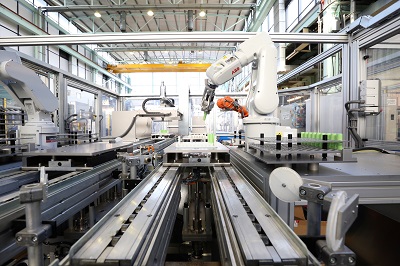 WMG at the University of Warwick are partnering with clean energy solution company Intelligent Energy to help develop manufacturing technologies via an advanced proof of process assembly line to significantly reduce the time to manufacture Intelligent Energy’s latest advanced air cooled fuel cell design, leading to a blueprint for a future fully integrated assembly and test line.
The 3 year, €3.5 million EU funded DIGIMAN programme brings together WMG at the University of Warwick, Intelligent Energy, Freudenberg, Pretexo, CEA Tech, and Toyota Motor Europe in a project pulling together the latest techniques in digital manufacture and automation in stack production processes to create a state of the art fuel cell manufacturing process for zero emission vehicles. The fuel cell’s use of air cooling gives the fuel cell significant efficiencies – particularly by reducing the weight of the device.
Revolutionary method reveals impact of short circuits on battery safety
 How lithium-ionLink opens in a new window (Li-ion) batteries behave under short-circuit conditions can now be examined, using a new approach to help improve reliability and safety - developed by an international research team, including WMG at the University of Warwick.
The use of high energy density Li-ion batteries is ubiquitous – from powering portable electronics to providing grid-scale storage – but defects can lead to overheating and explosions.
Although catastrophic failure is extremely rare, recent high-profile cases including the recall of Samsung’s Galaxy Note 7 smartphone line and the grounding of an aircraft fleet highlight why it’s important to understand battery failure.
Romeo Malik, a researcherLink opens in a new window at WMG, explained the experiment:
“As the safety and reliability of batteries is paramount, it is important to know and understand the extreme scenarios of battery failure.
“In this work, we were able to see the initiation of thermal runway and how quickly it escalated to the neighbouring cells in seconds. Being able to observe and capture these rapid failures with high-speed X-ray imaging technique is amazing.”
Sebastian Conran to give Design@WMG seminar on ‘Form Follows Fabrication’
 World-renowned designer Sebastian Conran will be the guest speaker at a seminar on designing and manufacturing the future, part of the series of Design@WMG events hosted by WMG’s Experiential Engineering Group and WMG centre HVM Catapult.
Taking place on Wednesday 10th May in the International Manufacturing Centre, the talk entitled 'Form Follows Fabrication' will give attendees an insight into creating aspirational, innovative and successful user experiences, as Sebastian shares his experiences from 40 years in the design industry.
WMG Academy celebrates 'Good' Ofsted rating

Students and staff at a Coventry academy are celebrating after receiving a ‘good’ rating in their first ever Ofsted report.
WMG Academy for Young Engineers was praised for its business ethos, teaching standards and student behaviour, as well as its safeguarding and leadership.
The report, released this week, revealed: “Pupils are well prepared for their next stages in education and for life in modern Britain.
“Pupils are confident and articulate; they work well independently and in groups. Many are excited by their studies because they understand the relationship between their lessons and their future careers.”
Institute of Corrosion award presented to WMG’s Dr Michael Auinger
 Dr Auinger’s paper entitled ‘Grain boundary oxidation in iron-based alloys investigated by O enriched water vapour – The effect of mixed oxides in binary and ternary systems,’ has been awarded the TP Hoar Award 2016, by the Institute of Corrosion.
The award takes its name from Dr Hoar who was the first recipient of the UR Evans Award – the premier scientific award of the Institute of Corrosion. The TP Hoar Award essentially recognises the Best Paper in Corrosion Science amongst engineers and scientists in steels processing.
This award marks a very successful period for Dr Auinger. In September he also received recognition from the European Optical Society (EOS), scooping the prestigious Best Paper Prize 2014-2015.