
"Inspire, equip, and empower”: Design education at WMG
Wednesday 20 May 2026
"Inspire, equip, and empower": Design education at WMG
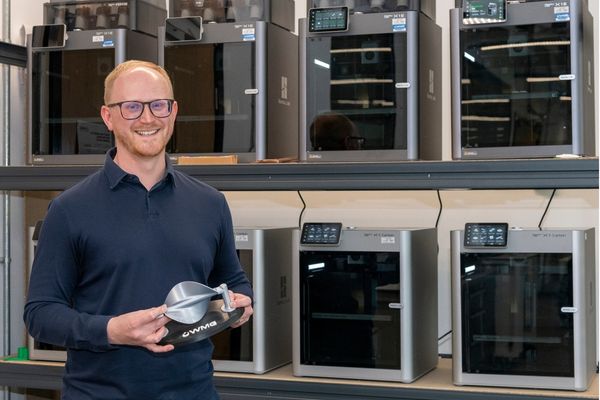
Meet Nick GolsbyLink opens in a new window, Associate Professor in Design Engineering at Warwick Manufacturing Group (WMG), University of Warwick, who is helping to shape the future of design education.
Working at the intersection of design and engineering, Nick’s career spans both academia and industrial consultancy, where he supports businesses to up-scale whilst keeping sustainability at the heart of operations. His expertise in engineering design and manufacturing materials have seen him develop products and systems for a range of sectors — including wearable resistance technology for the health and fitness industry — and creatively reimagine design engineering workflows.
Drawing on this experience and his industry connections, Nick leads the development of WMG’s design programmes, focusing on sustainability and the intersection between design and engineering. Below, he shares how these courses can inspire, equip and empower the designers of tomorrow, alongside insights into the evolving design landscape and why it’s important.
WMG is known for its manufacturing and STEM expertise. How does design fit with its existing priorities?
Design is all around us — from the cars we drive to the phones we use. It shapes how every product, system and service we interact with works, feels, and looks; however, there is often a disconnect between engineering and design that can stifle innovation and creativity. Design education at WMG bridges that gap.
Design is a natural extension of WMG’s strengths. Solving modern engineering challenges — from sustainability transitions to digital manufacturing — not only demands technical expertise but also systemic thinking and transformative leadership that connects disciplines and creative problem‑solving.
As the world faces ever more complex challenges, the demand for solutions that span technology, business, society, and the environment has never been greater. Our design programmes were developed to nurture graduates who can meet these challenges. Design ripples across so many things; you need someone who understands the ripple.
What do you think distinguishes WMG’s approach to design?
Many designers feel boxed into executional roles, where they complete the same tasks on different projects, rather than strategic ones. Our approach at WMG recognises design as a differentiator in business and innovation.
We equip students with skills in cross-domain communication, systems thinking, sustainability analytics, design management, and organisation leadership, allowing them to contribute confidently at a strategic level. We’re preparing graduates not only to participate in decision-making, but to shape it.
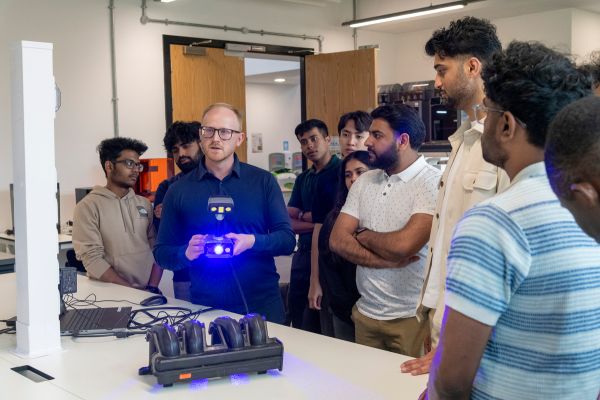
Industry is embedded in all our programmes. We want our graduates to become future leaders and influencers, which is why industrial practice directly informs our curriculum. We host guest speakers from across different sectors, simulate industrial exercises, and offer students opportunities to work on company-based projects where available. This allows our learners to gain authentic, applied-practice experience and skills transferable to a range of graduate roles.
What challenges does the design industry face – and how can WMG help solve them?
The design sector is facing several pressures, including rapid technological change, a growing need for interdisciplinary collaboration, and increasing expectations to demonstrate measurable impact. There is also a growing urgency for circularity.
WMG helps address these challenges by training designers who are both creatively ambitious and analytically rigorous; who are comfortable with engineering data, manufacturing realities, and organisational complexities. By embedding design within industry contexts, students learn to navigate constraints, lead cross‑functional teams, and deliver meaningful, sustainable change.
How do you see the world of design evolving over the next five years?
The focus of design will likely shift from "product-only" to incorporate systems, services, and strategies. This will lead to designers increasingly working in distributed, multidisciplinary teams where communication, collaboration and influencing skills are essential.
Sustainability will also become a core requirement rather than an added benefit, and design practice will become less intuition-led and more data-driven. Greater emphasis will be placed on user analytics, supply chain modelling, lifecycle data, and a simulation-first approach, where products are virtually brought to life before production.
Artificial Intelligence (AI) will also play a growing role in the design process. However, like any tool, it must be used responsibly. It’s crucial to see AI as the co-pilot, not the pilot; we will always need human input to ensure design truly works for people.
What do you think will be the next big thing in design engineering?
AI-augmented design workflows, where generative tools support early‑stage exploration and engineering analysis. I also hope to see circular materials and regenerative design approaches becoming more mainstream; this would be transformative for the environment and so many different societies around the world.
You’ve had an excitingly varied career. What’s been your greatest achievement so far?
My greatest achievement is seeing the students I’ve taught go on to work in incredible roles and organisations around the world; to see them sit in the cars they have helped engineer or use products they have helped create and get to market.
If you could offer prospective students one piece of advice, what would it be?
Stay curious and adaptable. Tools and technologies are changing quicker than ever, but having the ability to interrogate problems, collaborate effectively, and think critically will always be essential.
WMG currently offers two Master’s programmes in design: MASc Design for SustainabilityLink opens in a new window and MSc Engineering Design ManagementLink opens in a new window.
Find out more: Master's Degrees | WMG, University of Warwick Link opens in a new window