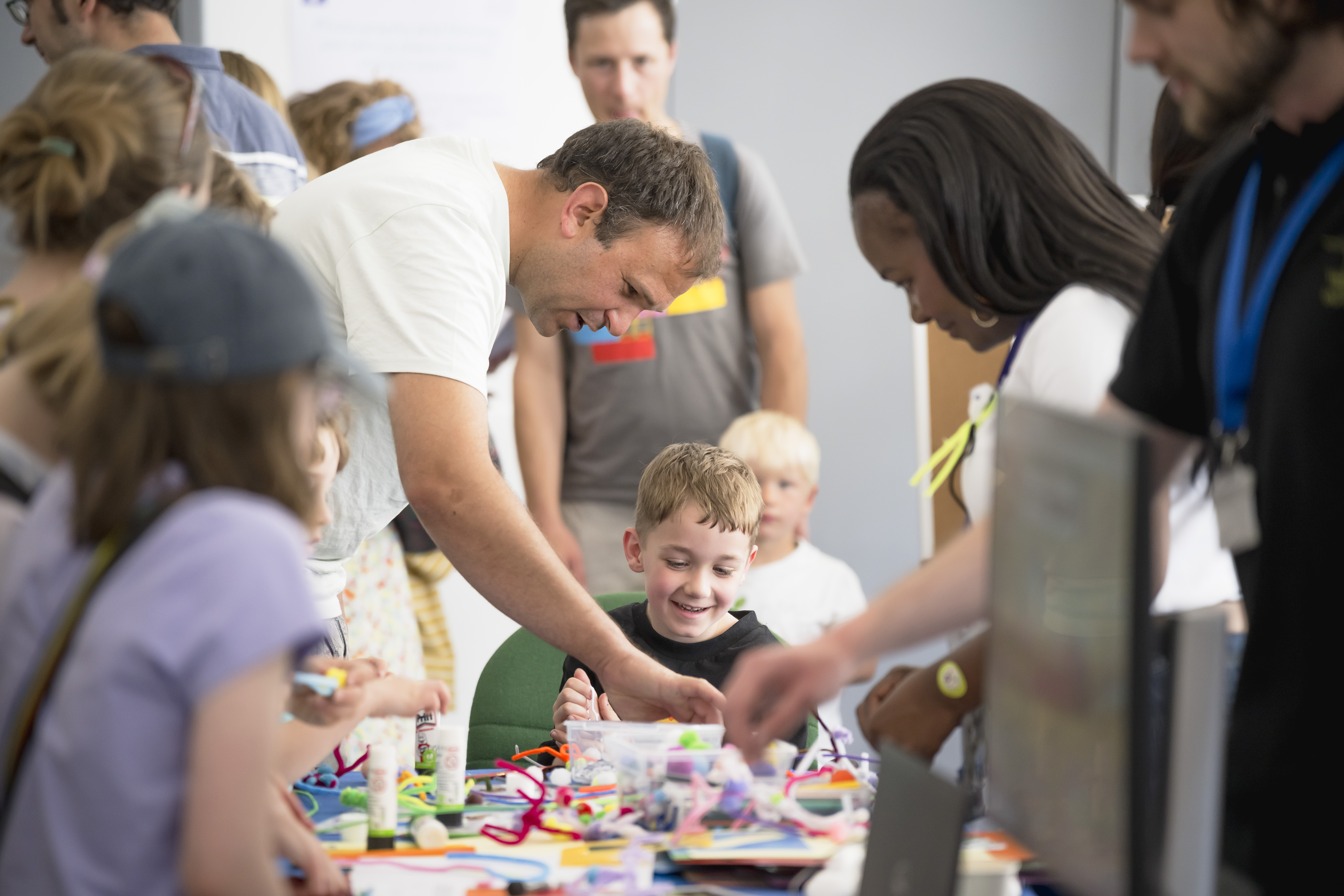
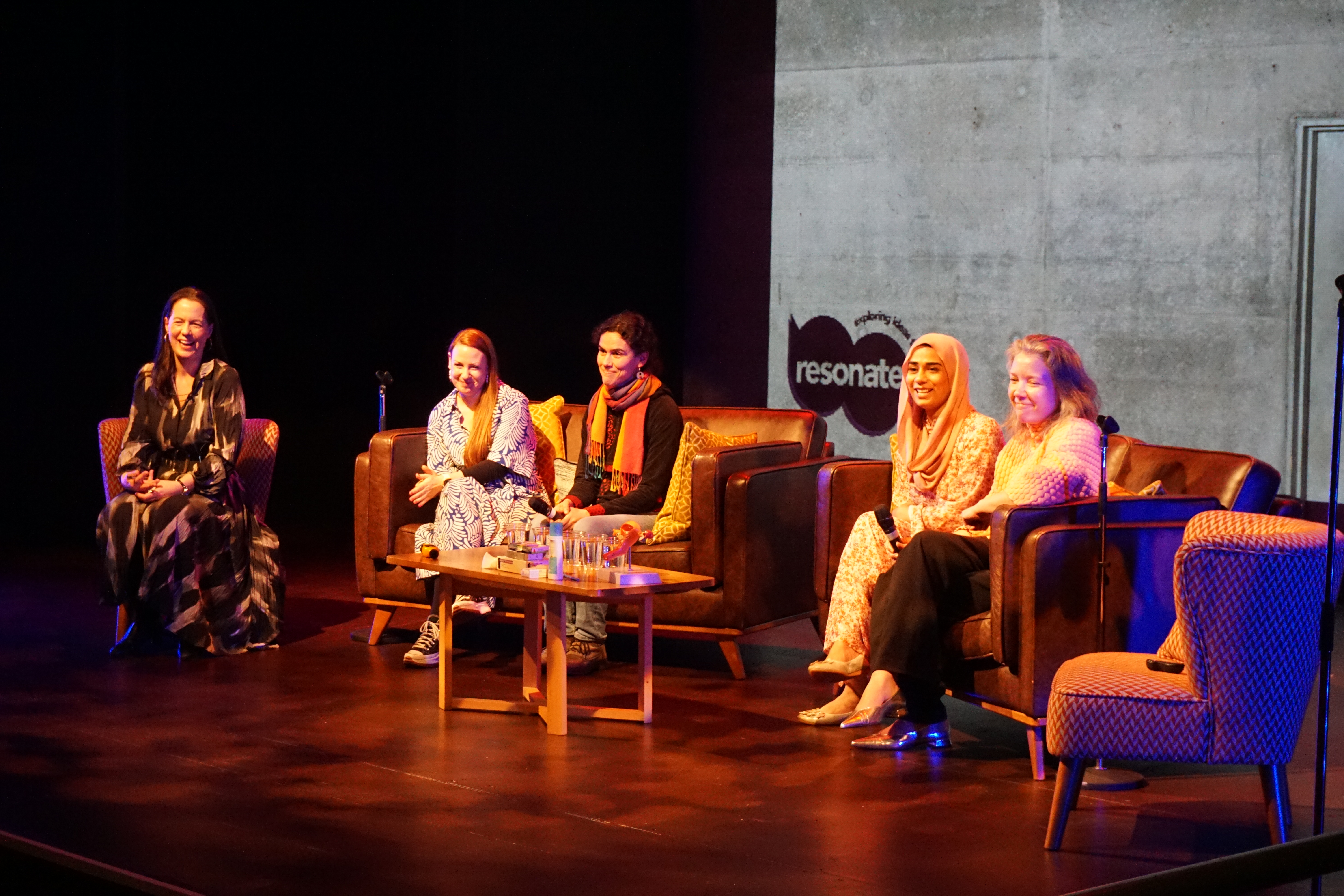
Welcome to the Inclusive Engagement Events Toolkit, developed by Warwick Institute of Engagement's (WIE) Inclusive Engagement Learning Circle. This toolkit is designed to be used by anyone planning and/or delivering any kind of engagement event, from a talk to a workshop to a webinar, but we hope it can also be used to promote inclusive practice and thinking in any interactions and activities which you either run or are a part of.
When we talk about inclusion, we are moving beyond ideas of access, of who can physically join a space (though of course those details cannot be overlooked) and focusing on a more holistic idea of belonging, supporting, and caring. There are often barriers to inclusion that we would never think of upon first planning a project as they are not issues that we encounter in our own lives due to our own positionality. For instance, if we don't have kids we might not think that a workshop running 4pm-6pm would cause any issues but for some people that will inhibit them from attending as they can't miss the school run.
Inclusion is an ever-evolving goal that we are working towards. The aim is not perfection and in fact sometimes different people's needs will directly conflict with one another and you may be left with tricky choices. The hope is to make your event as inclusive as possible given the constraints you have and to reflect and understand how to do even better next time.
This toolkit is designed to be a starting point to broaden your awareness of how each choice you make when planning an event can have far-reaching implications for inclusion or exclusion and how to make those decisions in an informed and considered way.
How to Use
This webpage comprises two main sections: the toolkit and further resources. Before you begin to apply them to your event, take some time to think about who your target audience is, what tone and experience you are hoping to cultivate, and what key messages you are hoping people leave the event with. This will help guide your answers to the toolkit questions.
Using The Toolkit
The Toolkit is ordered alphabetically and structured around the different elements of event planning that you will automatically encounter, allowing you to consider inclusivity at every step. It is worth noting that these categories are not mutually exclusive, for instance Religious and Cultural Observances will likely overlap with Catering and Date/Time as you should consider what dietary requirements you are able to cater to and if your event will clash with any religious celebrations or prayer times.
Some elements of the toolkit will not be applicable to your event based on the type of event you are planning, the audience you are inviting, or the space you are using.
The Toolkit is further broken down into the questions and guidance, which are explained below:
Questions
These are questions you can ask yourself and/or your team to ensure you have fully thought out the various possibilities and implications they may lead to.
We encourage you not to view the questions as a checklist but rather a starting point for reflection and investigation. A checklist would imply that the work of inclusion is discrete and finite and can be completed and then ignored for the rest of the event planning process. In actual fact, inclusion is an evolving and living part of the planning and delivery of any event and should be a consideration at every point, and questions provoke more discussion and the ability to return to your answers with updates and improvements.
As part of the process of answering the questions we recommend physically moving through your space, from the carpark/bus stop to the room(s) that facilitators and audiences will be using, and asking yourself the questions along the way. Taking an active approach to inclusion in this way allows you to notice things you may otherwise have overlooked and builds empathy with your audience.
Guidance
The guidance offers some suggestions for additional things to consider regarding each topic, and ways that you might approach tackling certain problems that may arise.
What are the Further Resources?
The further resources are a collection of documents and webpages written by other people who are also invested in developing inclusive events. These have been grouped by certain characteristics as this is often how organisations which focus on inclusion are structured but once again we encourage you to check out a variety of the resources as making events more inclusive for one group of people will likely make it a better event overall. There is also Warwick guidance about running Sustainable EventsLink opens in a new window that might be useful.
The Toolkit
Questions
Do you have the ability to provide space and staff for childcare so that people with children can attend/participate?
Can you provide people with name tags with space for them to share their pronouns?
If your event requires a paid ticket, is it possible to offer subsidised rates for those who otherwise would not be able to afford to attend?
Could you consider asking people to be masked or whether they should not attend if they are experiencing symptoms of a cold or flu?
Can you invite people to turn up to explore the space and/or materials early if that would be useful to them so that they know what to expect?
Would your audience benefit from a social story so they know what to expect from the event?
Guidance
Provide space for people to share any accessibility requirements they may have when signing up to the event.
Before an event it can be nice to send an "All About Me" form around about the staff leading the event, especially smaller events.
Be clear about who is welcome at the event (will a certain experience or level of knowledge be expected or required?).
For how long do people have to focus at once? Are there regular breaks?
Have you considered how you might step in to moderate questions or discussions should it be necessary?
Are you able to provide transcripts/recordings of events?
Do all videos have accurate closed captions? Can you use live captioning?
Are you able to provide people with slides/written material before the event so that there is less uncertainty on the day?
Are you able to offer an interpreter for BSL or other languages?
Can written documents be provided in additional languages?
Guidance
Utilise content notices/warnings consistently and ensure you leave enough time between providing the warning and starting the talk so that people actually feel they are able to leave the space if they would like to.
Does your event clash with school drop off and/or pick up?
Does your event run through any prayer times?
Can you offer quiet hours for the event? I.e. an hour or two when lights/noises may be reduced to lower sensory stimulation.
Is there a chance that weather could disrupt travel plans to your event?
Guidance
Let people know the timetable for the full event ahead of time.
If your event is online/welcoming international audiences, be clear about the time zone for any listed timings.
Questions
What key insights are you hoping to learn about how people experienced the event?
If your event is catered towards children and/or young people, how can you ensure that they can contribute meaningful feedback?
Do you have a plan in place for reviewing and implementing feedback for future events?
If a certain demographic of people you were hoping to reach did not engage with the event, do you have a way to reach them and ask why and how to improve for next time?
How are you evaluating the experience of the staff and/or facilitators?
Guidance
If you can, find a way to get insight into why people did not attend (including both those who never signed up and those who did but cancelled or didn't show) using some kind of quick questionnaire or provide a way of contacting you.
Spend some time after the event reflecting on how the process was for you and where you feel you had success and room for improvement in your inclusive practices.
Are you able to offer your materials in multiple languages, including sign language?
Can you offer a way for people to ask questions non-verbally - e.g. using Padlet or Vevox?
Guidance
Use gender neutral language, including in the way you talk about toilets, sanitary products, and caring for children.
The term "marginalised genders" is more inclusive than the term "women and nonbinary people" when those are the demographics you are aiming to reach. This will help to ensure that anyone who may experience misogyny or marginalisation on the basis of their gender identity knows they are welcome (including cis and trans women, nonbinary people, and trans men).
Allow people to put down their preferred name and/or make it clear people don't have to put their legal name if signing up to something. Make title an optional choice and have the gender neutral title 'Mx' as an option.
Use closed captions for any videos you show.
Encourage sharing pronouns but it does not need to be mandatory.
Always ask for preferred names, don't presume people's names from emails or ID.
Questions
What platforms are you using to market your event? Who might you not be reaching?
Is the sign-up process clear and simple? Does it require people to make an account or log in to anything?
Are you using inclusive images which represent the breadth of the audience you are engaging with?
How are you ensuring that you are reaching a broad range of audiences with your advertising?
Are the colours on your slides and marketing colour-blind friendly (do they have enough contrast and is the lettering large enough)?
Guidance
Be as clear as possible about the key details for the event and send a confirmation email with location, time, date, and access details plainly listed.
Send out a reminder email a day or so before the event to ensure it rises back to the top of peoples' inbox and memories and include reminders of timings and travel information.
Inform people before the event whether there will be photography and allow people to opt out of being in photos. You can use stickers or lanyards to enable photographers to easily distinguish who would prefer not to be in photos.
Do you have control over sounds, lighting, smells, etc?
What is the sensory experience like in the space? Is there a path through the space that doesn't overwhelm people with too many sounds, smells, and/or lighting changes?
Is there enough space for people with mobility aids to move around (particularly if chairs and tables are set up)?
Do you have a prayer room or, if not, an allocated quiet place where people could do their prayers undisturbed?
Do you have a designated space for a buggy park?
Are people expected to be standing up for long periods of time? Can you offer chairs as an option?
Are there CO2 meters in the rooms that you are using to monitor air quality?
Does the space have air conditioning/fans/heaters to keep the temperature comfortable for the time of year?
Will there be other people using the space/venue whilst your event is on? Will that impact the experience of either group?
Guidance
Provide a video walkthrough of the space if possible so people know what to expect and can get in touch if they have any queries. If it is not possible to provide a video for some reason then photos of the entrance, space(s), and accessible toilet facilities will be very useful.
Ensure that the space is wheelchair accessible and that the wheelchair entrance is not different to the entrance for other attendees.
Check that lifts are working and provide directions to and from the lifts to the spaces you are using.
Ensure quiet spaces are clearly labelled and advertised as being open and welcome to all. If you can offer sensory toys or calming activities like colouring in that can also make a nice addition to these spaces.
Some people prefer to feed babies or express milk in a private space. There are some existing infant feeding rooms on campus which may require pre-booking and/or card access.
Consider if people will be able to access the spaces you are using without a keycard or login details and ensure you provide those if necessary.
If the space gets especially cold or hot, inform people ahead of time so that they can dress appropriately and manage their expectations.
Questions
Do you need to provide training for additional staff that will be working with you for the event? Can this be delivered asynchronously?
Will staff members have a distinguishing feature on the day (for instance a t-shirt in a certain colour or a specific lanyard) so that attendees can identify them?
How are you compensating staff for their time (especially students)?
Do you have a diverse range of perspectives involved in the design and delivery of your event?
Are you choosing to pay real artists, creatives, and freelancers rather than relying on AI-generated content?
Guidance
It's essential to remember that inclusivity goes beyond the audience of your event and incorporates the colleagues you are working alongside to run the event, as well as any partners who are facilitating activities for/with you.
Ensure all staff are on the same page about inclusion and know how to point people in the direction of toilets, quiet spaces, prayer rooms, etc.
Questions
Are you able to reuse resources from other events, either that your team has worked on or from wider in the university?
Can you use reusable crockery and cutlery rather than non-recyclable plastic?
Does the space have recycling bins or can you offer some on the day?
Guidance
Sustainability may initially seem like a separate issue to accessibility and inclusion but globally, those who are most impacted by climate change and global warming are the most marginalised.
Are you able to subsidise the cost of travel for anyone?
Will the day of the week/time of year impact travel for people? (e.g. Will buses be running at normal times or reduced timetables due to holidays etc?)
Consider if holidays/large sports events may make travel busier and inform attendees accordingly.
Provide maps with drawn directions and/or videos tracing the nearest carpark/bus stop/train station to the venue entrance.
If the venue is large or it's likely to be people's first time visiting, have staff stationed at carparks/bus stops on the day of the event to shepherd people to the entrance.
Further Resources
Please find an array of resources linked below which have been developed by charities, organisations, and individuals that reflect how to best accommodate specific needs or how to be welcoming to groups of people who are often overlooked in events organising.
It's understandable that you may not have the budget or capacity to accommodate for every one of these considerations for every single event that you run, however, you should let people know ahead of time what you are able to account for, and ideally provide a brief explanation for what you can't accommodate at this time, acknowledging that this may impact or limit some people's participation.
For instance, "Unfortunately, this building currently does not have any gender neutral toilets. The nearest ones are in X building, a 5 minute walk away."
Share Your Feedback!
Now that we have developed this toolkit, we are keen for you to try out using it as you prepare your own events and to let us know how how you find it.
We are interested both in the content and the functionality of the toolkit, i.e. did you find the information useful and was it presented in a helpful and accessible way?
If you utilise the toolkit and would like to give specific feedback and possibly contribute a case study to this webpage to demonstrate how you incorporated the toolkit into your planning, please get in touch with the learning circle by emailing Dave at and Ruohan at .
Additionally, if you know of other resources or ideas for information that we could add to this page please do send them to and we would be delighted to add them to this toolkit.