
SCAPVC News, Events and Activities
Upcoming SCAPVC events
Whose Stories Are Told by Ethnographic Museums with African Collections from Colonial Contexts?
Njabulo Chipangura [Maynooth University]
Wednesday, May 6th 2026, 16.00-17.30. Room: OC 1.04
The Manchester Museum which is a part of the University of Manchester holds approximately 35,000 ethnographic collections mostly dispossessed from local communities and ordered and categorized according to geographical regions of Africa, the Americas, Oceania, and Asia. The African collection is the largest with over 15 000 provenanced objects and an estimate of 1500 unprovenanced objects. In this paper – I will look at what it means to relationally care for African collections from colonial context in view of collaborating with and giving access to diaspora African communities as part of decolonisation. An empirical practice of decolonisation informed by notions of relational care and the disobedient museum will be presented drawn from my own practice and positionality having been the curator of this collection between 2022 – 2025. I argue that curating with care is not only a way of work but is a theoretical perspective that challenges structural discrimination, sexism, racism, systematic injustices and colonial legacies in museums. Care is also extended in this discussion to look at what it means to care for each other’s pluriversality of epistemologies and ontologies by subverting epistemicides that are still embedded in museums. I will use examples drawn from an object handling workshop that I hosted at Manchester Museum as part of Africa Day Celebrations in May 2024. The aim of this workshop was to collaborate with communities in Greater Manchester of African heritage to gather new information about objects of African origin in the collection of Manchester Museum. Thereafter, new stories and new meanings were reimagined transcending usual anthropological discourses that traditionally treat African objects as timeless representations of cultures of the “other”. Using this workshop as a contact zone of engagement - I present curating as a space of social care that facilitated dialogue and building of active relationships with diaspora communities.
Respondent: Chao Maina [University of Warwick]
In Memorium - Professor Baz Kershaw
We are deeply saddened to announce that Baz Kershaw died on 31st March.
Prior to his retirement, Baz Kershaw was Professor in Theatre and Performance Studies at the University of Warwick. Baz was a pioneer whose research was unfailingly innovative and forward-thinking. He led the way through his research into community theatre, the politics of performance, performance ecologies and his commitment to practice-based methodologies. He was author of The Politics of Performance (Routledge 1992), The Radical in Performance (Routledge 1999) and Theatre Ecology (Cambridge University Press 2007), editor of The Cambridge History of British Theatre, Vol 3 – Since 1895 and co-editor of Engineers of the Imagination (Methuen 1983, 2nd ed. 1990), Practice-as-Research in Performance and Screen (Palgrave 2009) and Research Methods in Theatre and Performance (Edinburgh University Press 2011). His writing was translated into Spanish, German, Chinese, Indonesian, Arabic and Turkish. He co-founded the Practice-as-Research Working Group of the International Federation of Theatre Research and was co-initiator and founder member of the Theatre and Performance Research Association (TaPRA). In 2011 he was awarded Lifetime Membership of TaPRA in recognition of outstanding contributions to theatre and performance research internationally. He received similar honours from the Irish Society of Research and the Egyptian Ministry of Culture/Cairo International Festival of Experimental Theatre.
Our thoughts go out to his family, friends, former colleagues, collaborators, and students.
ECOLOGISATION IS NOT A METAPHOR: CULTURE IN THE WEB OF LIFE
CMPS is delighted to invite you to our annual lecture from Dr. Colin Sterling (University of Amsterdam) on Weds 19th June at 5pm in the FAB cinema, followed by a wine reception.
Entitled Ecologisation is not a metaphor: Culture in the Web of Life, the lecture draws from Dr. Sterling's research, critically examining heritage and museums through the lens of art and ecology. Abstract and bio below. Please register here https://warwick.ac.uk/fac/arts/scapvc/ccmps/research/beinghuman2024/annuallectureregistration
The lecture forms part of our PGR conference Being Human in the Media and Creative Industries, that will run throughout the day on 19th June. Details and registration page here.
We hope to see you there!
ECOLOGISATION IS NOT A METAPHOR: CULTURE IN THE WEB OF LIFE
Ecological thinking has long been entangled with different ideas about how to organise political, economic and social life. In the face of climate change and the environmental crisis, the urgency of thinking and acting ecologically has only intensified. Cultural actors and institutions have mobilised to address these concerns with new environmental programming, innovative sustainability strategies, and declarations of a climate and ecological emergency. This talk will argue that such shifts don’t just point towards alternative ways of living on and with the planet, they also instigate a fundamental reorientation of culture in the web of life. Drawing on the work of Jason Moore, this conceptualisation recognises that – like all forms of human organisation – cultural policies and practices are always co-constituted through nature. By focusing on the evolving place of museums in this web, the talk will explore how museums have contributed to the planetary crisis through specific symbolic and material practices, but also how emerging approaches in the field might, in some small way, help to ecologise society more broadly.
Colin Sterling is Assistant Professor / Senior Lecturer in Heritage, Museums and the Environment at the University of Amsterdam, where he teaches across heritage and memory, museum studies and artistic research. Colin's research critically examines heritage and museums through the lens of art and ecology. He is the author of Heritage, Photography, and the Affective Past (Routledge, 2020) and co-editor of Deterritorializing the Future: Heritage in, of and after the Anthropocene (Open Humanities Press, 2020). He is co-editor of the journal Museums & Social Issues.
CCMPS News
We're delighted to welcome our SCAPVC Creative Bridges researchers.
Centre PhD graduate Juanze Wang and her former supervisor Lee Martin have been awarded Best Developmental Paper in the Culture and Creative Industries track at the prestigious British Academy of Management Conference this year.
A new open access article examines the impact of role models on early career entrepreneurs in the creative industries.
CMPS is delighted to welcome Professor Tom Crick, Chief Scientific Advisor to DCMS to give this year's Annual Lecture - Why Culture Needs Science: Evidence, Expertise and the Public Value of DCMS. The event will also mark the launch of the University's inter-disciplinary Cultural Policy Network, hosted in SCAPVC.
The lecture will be on 10th June from 4pm-6pm in FAB0.03.
In the April 2026 issue of Arts Professional, Chris Bilton discusses how we can best prepare students for creative careers - in a world where human creativity is still worth more than AI
What is it like to work in the cultural and creative sectors in Europe today? And what does it take to make such careers more sustainable? These are the questions explored in the book Creative and Cultural Work in Europe, edited by Bård Kleppe (Telemark Research Institute, Norway) Jaka Primorac (Institute for Development and International Relations, Croatia), Miikka Pyykkönen (University of Jyväskylä, Finland), and the Centre's David Wright - and with chapters from Heidi Ashton and Chris Bilton.
The Centre is proud to be hosting a Collaborative Doctoral Award, in partnership with Heritage and Culture Warwickshire, as part of the CreaTech Frontiers consortium research the barriers to digital equity in regional museums.
A national study led by Dr Vishalakshi Roy from the Centre for Cultural and Media Policy, in partnership with the National Rural Touring Forum (NRTF), is examining the wellbeing and economic contribution of volunteers involved in rural touring, an area with limited existing research and infrastructure support.
Our PhD researcher and Senior Graduate Teaching Assistant Pengyun Lu has published a new open access article in the European Journal of Cultural Studies drawing from his research into digital labour on Chinese platforms.

WWP News
Lucy Brydon, Associate Professor in the Warwick Writing Programme, has been commissioned to write 'To Nicola, Love Peter' a 90-minute film that plots the tragicomic downfall of Nicola Sturgeon - the story of the career woman who had it all, but was betrayed by her husband Peter's penchant for luxury household goods. The film will be produced by Wonderhood Studios for Channel 5.
This event will take place online, chaired by Lucy Brydon, Friday 6th, 11.30am
A graduate of UCLA, Kings College, RADA and a member of the Bar of England and Wales, Kate Wilson has worked in the film industry in various capacities for 25 years. She trained as a producer in Los Angeles with Jodie Foster's Egg Pictures and Paul Thomas Anderson's Ghoulardi Film Company, and was the founder of Fury Films, an award-winning London-based production company. She is a co-Founder of the Call It! Workplace Culture App, a data collection and signposting tool that reduces instances of bullying and harassment and creates safer and more equitable places of work. As a writer, Kate is currently developing a feature film and a limited series. Her first novel, Prospects, is inspired by experiences working in Hollywood in the late 1990s and was published by Cinnamon Press in July 2024.
The talk will be held online. Please join the meeting here.
Yilin Wang 王艺霖 (she/they) is a writer, a poet, and Chinese-English translator. Her writing has appeared in Clarkesworld, Fantasy Magazine, The Malahat Review, Grain, CV2, The Ex-Puritan, The Toronto Star, The Tyee, Words Without Borders, and elsewhere. She is the editor and translator of The Lantern and Night Moths (Invisible Publishing, 2024). Her translations have also appeared in POETRY, Guernica, Room, Asymptote, Samovar, The Common, LA Review of Books' "China Channel," and the anthology The Way Spring Arrives and Other Stories (TorDotCom 2022). She has won the Foster Poetry Prize, received an Honorable Mention in the poetry category of Canada's National Magazine Award, been longlisted for the CBC Poetry Prize, and been a finalist for an Aurora Award. Yilin has an MFA in Creative Writing from UBC and is a graduate of the 2021 Clarion West Writers Workshop. Find out more at www.yilinwang.com.
(Photo credit: Divya Kaur)
Autumn School for Postgraduate Students and Early Career Researchers
Venice, 30 September – 4 October 2024
The event will take place in person, on the 22nd of February at 6.30pm, in FAB0.19.
Tom Crewe was born in Middlesbrough in 1989. He has a PhD in nineteenth century British history from the University of Cambridge. Since 2015, he has been an editor at the London Review of Books, to which he contributes essays on politics, art, history and fiction. In 2023 he was named one of Granta's Best of Young British Novelists.
The New Life, his first novel, is out now from Chatto & Windus and Scribner. It is the winner of both the 2023 Orwell Prize for Political Fiction and the 2023 Southbank Sky Arts Award for Literature. The novel has been or is being translated into French, German, Spanish, Dutch and Italian.
About The New Life
After a lifetime spent navigating his desires, John Addington, married to Catherine, has met Frank, a working-class printer.
Meanwhile Henry Ellis's wife Edith has fallen in love with Angelica - and Angelica wants Edith all to herself.
When in 1894 John and Henry decide to write a revolutionary book together, intended to challenge convention and the law, they are both caught in relationships stalked by guilt and shame. Yet they share a vision of a better world, one that will expand possibilities for men and women everywhere.
Their daring book threatens to throw John and Henry, and all those around them, into danger. How far should they go to win personal freedoms? And how high a price are they willing to pay for a new way of living?
'Filled with nuance and tenderness... charting the lives of men and women who inspired not only political progress but an entire new way of living and loving' Colm Tóibín
Sponsored by the Writing Programme and the Department of English and Comparative Literary Studies Department
Imogen Hermes Gowar is an author with a particular interest in history. Her first novel, the Sunday Times bestseller The Mermaid and Mrs Hancock, was a finalist for the MsLexia First Novel Award and the Deborah Rogers Prize; shortlisted for the Women's Prize For Fiction and the Sunday Times PFD Young Writer of the Year Award; and longlisted for the Desmond Elliot Prize. It won a Betty Trask Award. Her short fiction has been included in the Virago collection HAG: Forgotten Folk Tales Retold, and the bestselling The Haunting Season. She is also the author of Eleanor, an augmented reality walking tour of medieval Norwich.
Annie Garthwaite turned to fiction after a 30-year international business career, fulfilling her lifelong ambition to write an account of Cecily Neville, matriarch of the House of York during the Wars of the Roses and mother of Edward IV and Richard III. Her obsession with Cecily and her family began in school and never left her. Setting off in the world of work, she promised herself that, at age 55, she would give up the day job and write. She did just that, completing her novel while studying for a creative writing MA at the University of Warwick. CECILY is her debut novel and, even before its publication, was named a 'top pick' by The Times and Sunday Times.
David Herd is the author of numerous books of poetry and prose. His 2012 collection, All Just, was described by the Los Angeles Review ofBooks as 'one of the few truly necessary works of poetry written on either side of the Atlantic in the past decade'.
Through, published in 2016, was a Book of the Year in The Heraldnewspaper.
He has given readings and lectures in Europe, North America, India and Australia and has held visiting fellowships at George Mason University, Simon Fraser University and the Writing Center Gloucester, MA. He is Professor of Modern Literature at the University of Kent and a co-organiser of the project Refugee Tales.
Written between 2015 and 2020, David Herd's new collection, Walk Song, weaves in and out of the Refugee Tales project. Addressing the environments contemporary politics has made, including the border and its hostilities, the poems set out the need for a language of welcome. Through its exploration of landscape and politics, friendship and movement, the book builds, across a series of poetic sequences, towards action and hope.
Eley Williams' collection of fiction Attrib. and Other Stories (2017) was awarded the Republic of Consciousness Prize and the James Tait Black Memorial Prize. Her novel The Liar's Dictionary won a 2021 Betty Trask Award, was shortlisted for the Desmond Elliott Prize and listed as a Guardian Book of the Year. Her writing is published in journals and anthologies including Modern Queer Poets, The Penguin Book of the Contemporary British Short Story edited by Philip Hensher, and Liberating the Canon edited by Isabel Waidner, with stories and serialised fiction also commissioned by Radio 4. She is a Fellow of the Royal Society of Literature.
link here: https://teams.microsoft.com/l/meetup-join/19%3aJCLEwZrRntYbDixUS4rRzOxK5-_LUD0NVn5RoIEls3Q1%40thread.tacv2/1669733277733?context=%7b%22Tid%22%3a%2209bacfbd-47ef-4465-9265-3546f2eaf6bc%22%2c%22Oid%22%3a%225ab84316-b0b9-4165-aa9a-d83c4d9b93e1%22%7d
FTV News
This Summer Term, students in Film & TV Studies have been busy with extra activities alongside their studies.
Recent and forthcoming publications from Warwick FTV's staff and alumni
Professor Stephen Gundle's collaborative research project at the Regent Street Cinema, July 3rd-17th.
Student film wins at the National Academy of Television Arts and Sciences Student Production Awards
Hande Çayır has received the 2026 IAANI Outstanding Audio and/or Visual Project (Honorable Mention) Award for her project, 'Filming Madness: Institutions, Individuals, and Ethical Considerations'
On Friday 6 March, Julie Lobalzo Wright (Director of Student Experience and Progression) hosted four alumni for an illuminating online event for current Film and Television Studies students.
Read the advertisement for the project beginning in October 2026-Interrogating British South Asian Culture in Non-Fiction Films and Television, 1960s-1980s- here.
Stephen Gundle and Janna Wong announce 'DINO'S TOP TEN', a ten-episode podcast series about legendary film producer Dino De Laurentiis.
Ritika Kaushik and Sean Batton have co-curated an upcoming film program for the Academy Museum in Los Angeles. Titled, 'Nation and Its Fragments: Experimental Films from India', this series explores the history of India and its fragmentations through a series of experimental shorts from the nation. The event will be held on October 23rd at 7:30 PT.
TPS News
 On Thursday 18th June 2026, Dr Ian Farnell hosted a sell-out screening of The People's Emergency Briefing at the Warwick Arts Centre.
The UK faces a growing climate and nature emergency, yet most people have never been fully briefed on what it means for our lives, our economy and our future. The People's Emergency Briefing sets out the risks facing the nation - and the credible, positive responses available - in a clear and accessible account designed for screenings in communities across the UK.
As well as organising and introducing the screening, Dr Farnell collaborated with members of the Warwickshire Wildlife Trust to lead a post-show discussion with attendees.
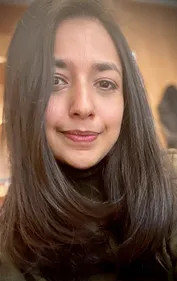
Dr. Rashna Nicholson, Associate Professor of Theatre and Performance Studies at Warwick, has been selected as a recipient of a 2025-26 British Academy Mid-Career Fellowship for her project, "How a Discipline is Born: Performance Studies, the Asian Performing Arts and the Cold War (1955-1995)".
The award, valued at £135,442.69, will fund the first extensive reassessment of the emergence of Performance Studies. It will delineate how the Ford Foundation and Rockefeller Foundation-affiliated Asia Society, Japan Society, and JDR 3rd Fund smoothed the way for many moves beyond Western concepts of literature, drama, and the arts, comprising Performance Studies' 'broad-spectrum approach'.
Through exemplary case studies of institutional grants and fellowship programs, it will uncover the multi-layered history of how policy makers, experts, academics, and artists benchmarked a transregional consensus on theatre's role in civil society, thereby assisting the US' rise to global leadership in the arts.
The British Academy's Mid-Career Fellowships are "designed both to support outstanding individual researchers with excellent research proposals, and to promote public understanding and engagement with humanities and social sciences," according to the Academy's website
Dr Rashna Nicholson, along with Dr Tancredi Gusman and Dr Dorota Sosnowska have published their special issue entitled 'Historiography as Metonymy' in Theatre Research International. The issue can be accessed here: https://www.cambridge.org/core/journals/theatre-research-international
Dr Bryony White, Assistant Professor of Theatre and Performance at the University of Warwick, is set to participate in a conversation on her new book, "Dirty Queers" at the Barbican Centre with journalist Amelia Abraham on November 30.
The evening event, scheduled for 4:30 pm, will seek to explore the differing uses and evolution of the term "queer," as well as its relationship to dirt and dirtiness.
More details on this event, alongside the ability to purchase tickets, can be found here
Our 50th anniversary celebrations have featured in a BBC news article and audio clip. See: https://www.bbc.co.uk/news/articles/cx2xd2zjgv2o
We are delighted to announce the publication of Bryony White's article 'Slow, Spectacular Labours: Liveness in Contemporary Dance' in Contemporary Theatre Review.
Wild Warwick - Ian Farnell's exhibition in collaboration with the university's Sustainability team has been covered online by BBC Coventry & Warwickshire.
Nadine Holdsworth has been awarded the High Sheriff Award in recognition of her exceptional contributions to the community in the West Midlands (Via her Homelessness project).