
Global Sustainable Development News
Funding success for Dr Jess Savage

Image credit: Dr Marco J Haenssgen
Dr Jess Savage, Senior Teaching Fellow in Global Sustainable Development has been awarded £44,676 from the University Global Challenges Research Fund: Accelerator Programme to undertake a research project titled "Protected Areas and People: Exploring perceived wisdoms surrounding natural resource management and sustainability". The aim of the research is to help find sustainable, long term solutions by developing strategic tools for the effective design and implementation of management systems. This will allow the expansion of current knowledge networks throughout Cambodia, and into nearby Myanmar.
Year 12* competition: Entry now open
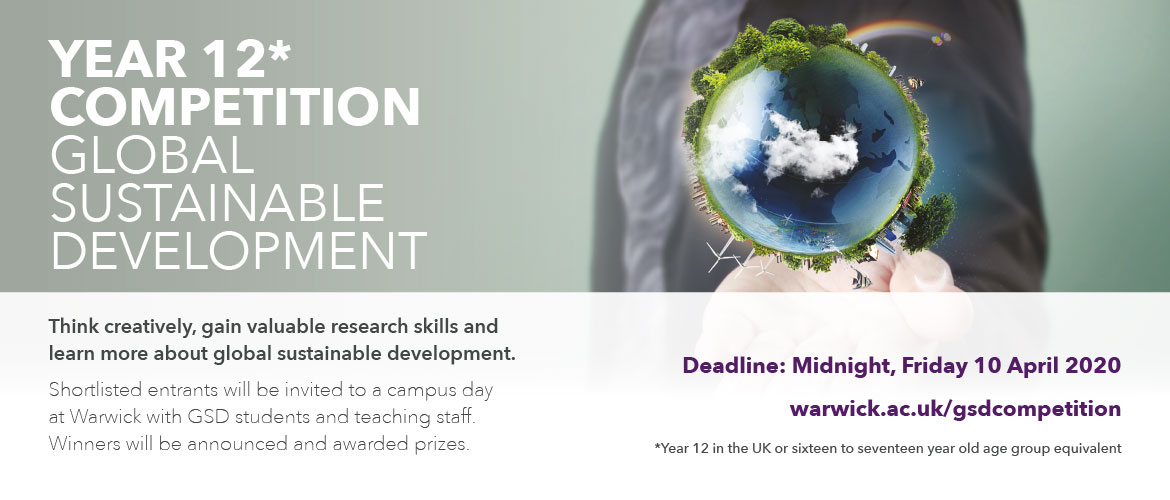 Each year, the Global Sustainable Development (GSD) Department at the University of Warwick runs a competition for year 12* students. The competition was established to engage with talented school students and give insight into the type of thought-provoking issues involved in studying GSD at Warwick.
This is an exciting opportunity for students to think creatively and gain valuable research skills as they learn more about global sustainable development. Since it was established, we have expanded the types of entries that can be submitted to include videos, podcasts and poetry, as well as more traditional essay responses. This is in line with our overall aim to engage with students from a variety of different backgrounds and interests, giving them the chance to present their unique perspectives on issues of global sustainable development.
Entry for the 2020 year 12* competition is now open. Entries must be received by midnight (UK time) on Friday 10 April 2020.
Shortlisted entrants will be invited to a Campus Day at Warwick on Saturday 27 June 2020 with GSD students and teaching staff. Winners will be announced and awarded prizes.
To find out more about the competition, how to enter and look at past entries, please see here.
*Year 12 in the UK or sixteen to seventeen-year-old age group equivalent
Blog post: A Sustainable Serenissima

Senior Teaching Fellow in the Liberal Arts Department Dr Bryan Brazeau looks back on the largely successful Venice and Sustainability project, hosted in Liberal Arts. Find out what staff and students discovered in this innovative problem-based module during their time in Coventry and Venice, and watch a media project looking at cultural sustainability in the city produced by Global Sustainable Development students.
The Black Women's Project takes home two awards at the Bright Network’s Society of the Year Awards 2019
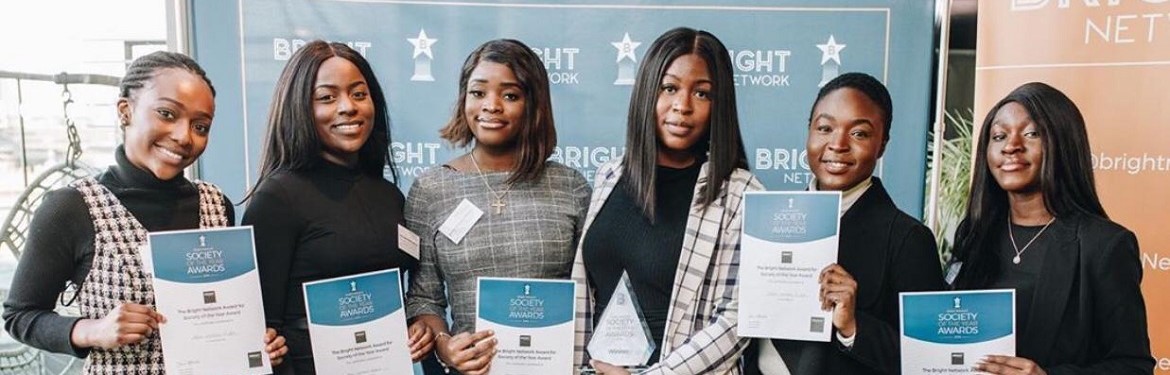
On Wednesday 4 December 2019 in London, The Black Women's Project won the Women's Society of the Year and the Society of the Year at the Bright Network's Society of the Year Awards 2019. The Bright Network's Society of the Year Awards is an annual day of celebration and recognition for university societies around the country that have made a real difference on campus.
The current executive team has had a flying start in their new roles, winning multiple awards at the event in December last year. Lois Disanka, one of our second-year Single Honours Global Sustainable Development students, is the Co-President of The Black Women's Project. We spoke to Lois about the organisation's recent achievements.
Funding success for GSD researcher Dr Marco J Haenssgen
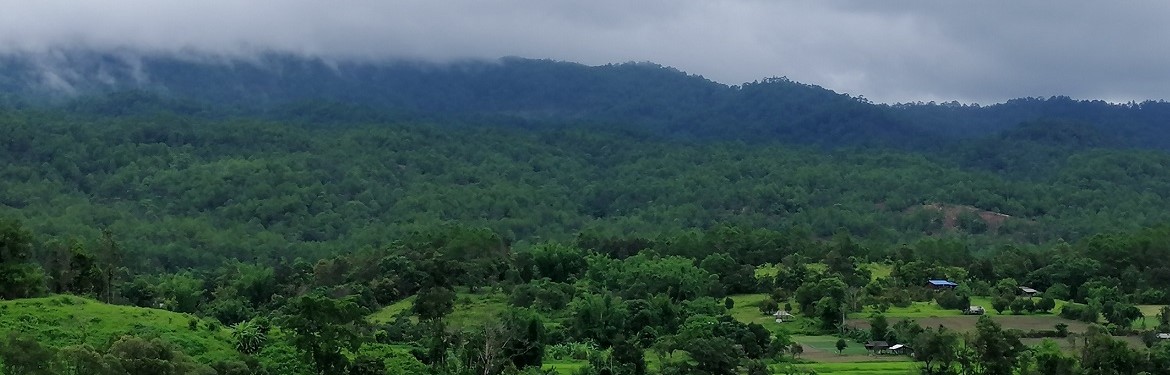
GSD Assistant Professor Dr Marco J Haenssgen has won a £19,793 GCRF Catalyst award to support the research project “Dynamism of land use and livelihood strategies among highland ethnic minorities in Northern Thailand: Co-producing narratives of change.”
Together with the Thai anthropologists Dr Mukdawan Sakboon and Dr Prasit Leepreecha from Chiang Mai University, the research team will use the innovative qualitative research method of story completion to document and illustrate livelihood changes in the highlands of Chiang Mai Province, Thailand. Over the past 30 years, livelihoods among highland ethnic groups have changed dramatically, with government-orchestrated shifts away from opium production and self-sufficient agriculture towards cash and mono crop cultivation, capitalist systems of production, and tourism business. Not only has this created new definitions of “rich” and “poor” villagers, but it also changed people’s relationship to the natural environment. In the fluid political environment of Thailand, villagers’ livelihoods and their uses of the land they live on have again come under scrutiny, raising fears of expropriation and displacement. This project aims to use the story completion technique together with visual media to produce narratives that give villagers a new channel to engage policy and the broader public with their personal experiences and livelihood changes.
Paper accepted for publication: Laughter in oral histories of displacement
Recently, the Head of School for Cross-faculty Studies Dr Stéphanie Panichelli-Batalla’s paper on laughter in oral histories of displacement was accepted for publication by The Oral History Review. The Oral History Review aims to explore the nature and significance of oral history and advance understanding of the field among scholars, educators, practitioners, and the general public.
Title: Laughter in oral histories of displacement: 'one goes on a mission to solve their problems'
Abstract
Although the use of humor and laughter in oral history has started to appear in oral history literature, it is still very much under-researched. Most of the studies analyze humor and laughter together, while Kate Moore focuses on laughter on its own. Humor and laughter, although linked, are two different concepts. While humor is a mental ability to perceive and/or express something funny, laughter on the other hand is a sound or a sequence of expirations, produced as the expression of an emotion, which can be set off by a humorous trigger, but not necessarily. It is therefore important to distinguish both. This paper will build on Moore’s study by exploring the use of unilateral laughter in eleven oral histories of exiled Cuban internationalist healthcare professionals. However, unlike Moore’s study, this research will not be limited to difficult memories. Our analysis will deepen our knowledge on the history of the Cuban global universal healthcare system by giving a voice to its participants, analyzing therefore, not solely the facts and statistics of the program but, as Portelli states, the meaning that its participants give to it when reflecting on their experience from the present. By exploring the occurrence of laughter, this paper intends to shed light on the relevance of focusing on unconscious reactions in oral history narratives, in order to better understand emotions linked to the narrated memories. The analysis will show that unilateral laughter is recurrent in the interviews when participants reflect on a change in their identity, the implications of working for a state program, and their need for respect of human dignity. It will highlight the impact the mission had on their personal and professional lives during and after their humanitarian experience. These stories of displacement will also show what Norrick has called the dual humorous perspective of the participants, but rather than solely referring to the time of the interview and age of the participants, we will also assert that another key factor to be taken into consideration is the situation of displacement as well as the degree of acculturation of the participants.
Education Studies and GSD degree launches for 2020 entry

Global Sustainable Development (GSD) is pleased to announce a new undergraduate joint honours degree in partnership with Warwick’s Centre for Education Studies. Education Studies and GSD, a Bachelor of Arts and Sciences (BASc) degree, will launch in Autumn 2020.
About the course
Education is essential in enabling a more sustainable future. It is a fundamental tool in the promotion and achievement of all the United Nations Sustainable Development Goals, and Goal 4 specifically sets targets for Quality Education. This unique degree programme, therefore, represents a flagship contribution to UNESCO’s International Education for Sustainable Development (ESD) agenda, and its graduates will be well-positioned to make a difference to their world now and in the future.
The teaching for this course will be split equally between the GSD Department and the Centre for Education Studies. The combination of subjects will allow students to explore the relationship between education and Sustainable Development and the challenges facing the education sector at home and abroad. This transdisciplinary programme will also encourage students to discover new ways to promote learning about sustainability challenges.
“This degree offers students an in-depth understanding of the contemporary social and environmental challenges that face our world, but also how education might be conceived and practiced, in a manner that finally realises its long touted potential to respond. Education must be a core component of the Sustainable Development agenda, and this degree will well equip students to make sure of this!”
Dr Alastair Smith, Senior Teaching Fellow, GSD
Applications
Education Studies and GSD (BASc) is now available on UCAS for applications for 2020 entry. If you’re interested in applying, please find out more about this unique degree on our Department page and our Study Page. If you have any questions about the course or admissions, please get in touch with our Department or our Undergraduate Admissions Team.
Key information
- Bachelor of Arts & Sciences (BASc)
- Three years full-time programme
- Joint Honours degree with Education Studies and GSD
- Study abroad or work placement opportunities
- Entry requirements
- UCAS
Dr Jess Savage comments on the long-term impacts of plastic waste
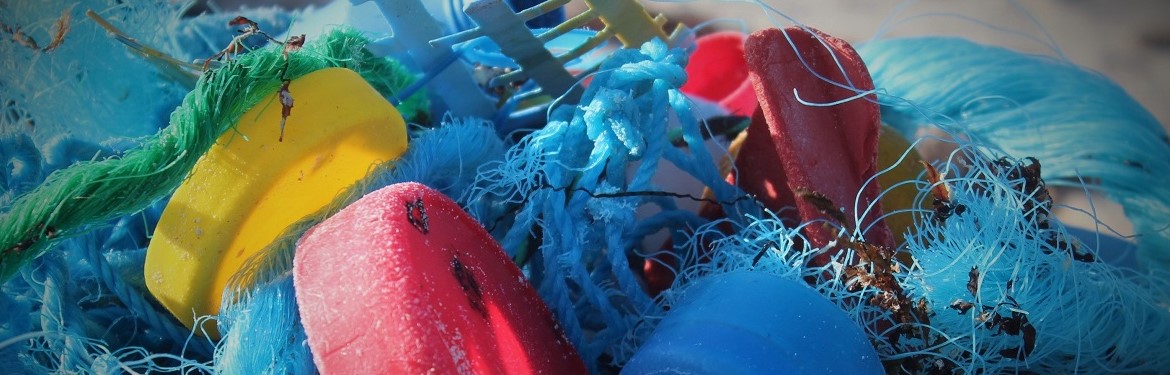
A sperm whale that died after stranding on the Isle of Harris in Scotland had 100kg of litter in its stomach, including fishing nets, rope, packing straps, bags and plastic cups. Dr Jess Savage, a Senior Teaching Fellow in Global Sustainable Development, warns that "the long-term impacts of plastic waste are only just beginning to become apparent". She suggests that tackling ocean pollution will take more than banning single-use plastics.
GSD students showcase cutting-edge research
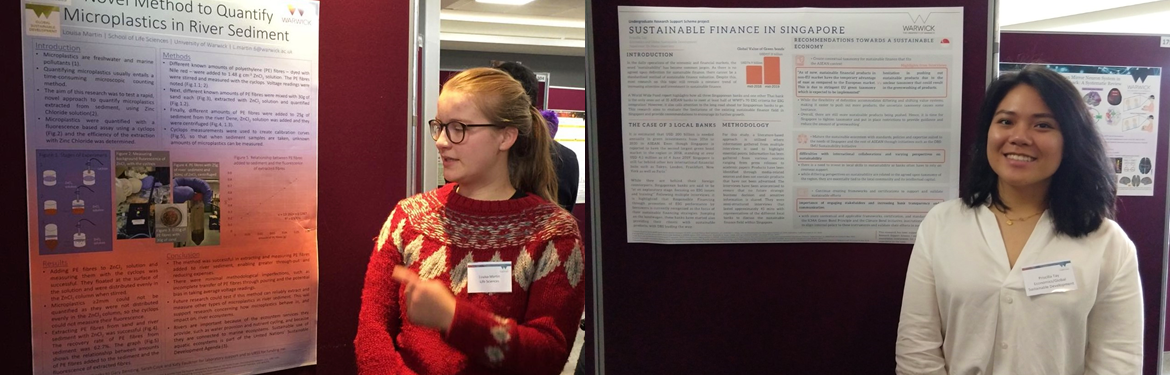
Warwick's Undergraduate Research Support Scheme (URSS) is an exciting opportunity for students from different disciplines to undertake cutting-edge research over the summer. Each year, the URSS hosts a showcase to celebrate each participant's achievements. This year, the showcase took place on Wednesday 13 November 2019 in the Rootes Building on campus. The event was a great opportunity for participants to display their own work and also engage with other students' research.
Four GSD students were involved in the scheme this year (see below). They presented their research on a range of topics including microplastics in river sediment, sustainable finance in Singapore, climate change in Italy and an economic framework for carbon neutrality. Congratulations to Louisa, Priscilla, Nicola and Joaquin for their impressive and inspiring work.
What does good research in global development look like?
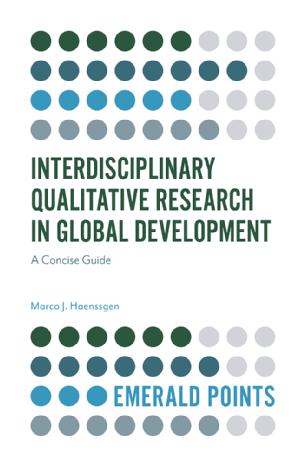
Drawing on his ten years’ experience of interdisciplinary research work in Asia and Europe, Assistant Professor in Global Sustainable Development Dr Marco J Haenssgen’s new book is a practical introduction to qualitative research methods. Dr Haenssgen has designed this as a resource for students, researchers and research partners working on global development projects.
Published today, Interdisciplinary Qualitative Research in Global Development – a Concise Guide, contains a wealth of practical examples and resources to help students and practitioners think through what good research looks like. The guide highlights some of the practical and ethical challenges which can face teams drawn from different academic disciplines working on interdisciplinary issues.