
News
Global Sustainable Development Read more from Global Sustainable Development News
10 Books About Gender Inclusion
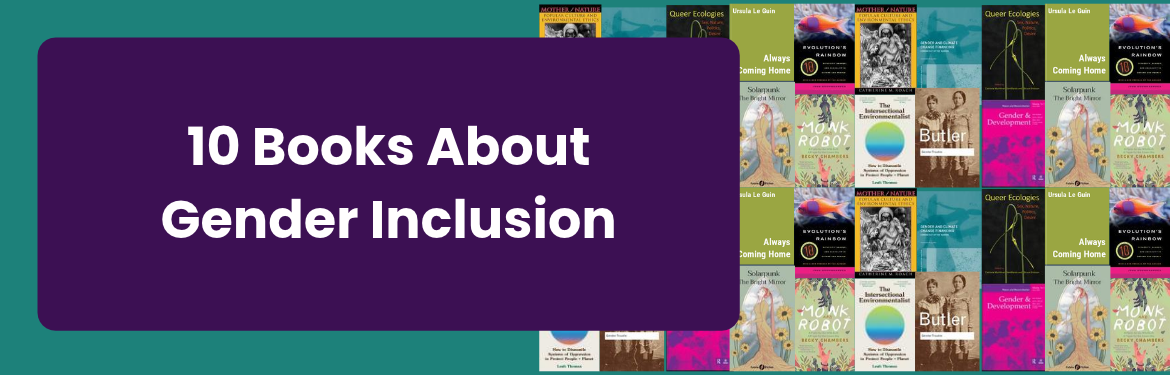
Gender equality and inclusion are key themes in Global Sustainable Development. This reading list highlights ten books that explore gender, identity and social justice, helping students connect these issues to sustainability challenges and the GSD curriculum.
Student Voices: Exploring Gender and Inclusion in the School for Cross-Faculty Studies
As the School for Cross-Faculty Studies (SCFS) works to advance its Athena SWAN journey, we are actively evaluating how gender equity and inclusion shape our environment. Because inclusion requires a continuous assessment of how our policies, culture, and teaching practices impact everyday student life, student voices are essential.
Dr Romain Chenet presents talk on "De-schooling uncreativity" in Higher Education
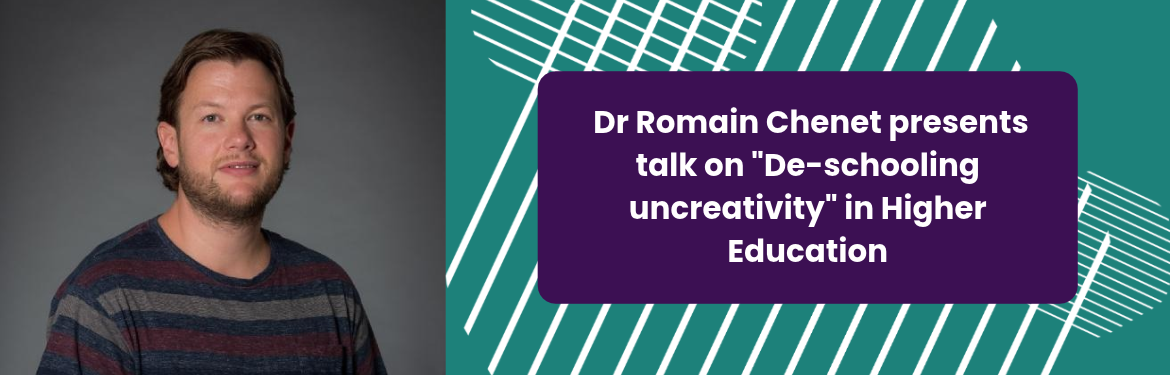
Our Associate Professor Dr Romain Chenet recently co-created creative approaches to teaching within Higher Education at ‘The Tangled Roots of Creative Research and Social Justice’ conference in Bristol.
Institute for Global Sustainable Development Read more from IGSD News
A Precarity-Resilience Special Forum is coming out soon, with our Introduction is out already!
Happy to share our newly published article - now live in Contemporary Security Policy Journal: it opens a very timely and important discussion on #precarity and #disempowerment, with implications for our political agency and action. The full Special Forum (which will come out in autumn) will look at various European and international institutions (#EU & #NATO), and countries in the wider, including #Belarus, #Uzbekistan and #Georgia. More soon! Enjoy this innovative lens into the nexus of precarity and #resilience!
Thank you to my co-editor and co-author, Professor Albena Azmanova (City London), the journal editors and all contributors:
Prof. Nathalie Tocci
Prof. Dr. Chiara von Hollen-Pierobon
Dr Katsiaryna Lozka, PhD
Prof. Michelle Pace & Dr Christian Achrainer
Dr Bidzina Lebanidze & Dr Veronika Pfeilschifter
Prof. Timur DADABAEV & Dr Akram Umarov
https://www.tandfonline.com/doi/full/10.1080/13523260.2026.2726503
New partnership HoPE with ADA University
We have been awarded a British Council #TNE #Exploratory grant 'HoPE - a HUB of Planetary Ecologies - for sustainability through research, education and societal impact', to build a new partnership with @ADA University in Azerbaijan. Looking forward to renewing our successful relations with Nargiz Ismayilova, Dr. Fariz Ismailzade and their colleagues! And to growing our CPD offerings on Sustainability, further research funding opportunities, and developing a platform for a dual PGR degree.
CENSE-Warwick Sustainability Training School, 26-31 July 2026
We have now completed our first international CENSE NOVA (Portugal)-Warwick (UK) Sustainability Training Academy (STA), which brought together 25 participants from 16 countries. The STA was held in ARRABIDA National Park of Portugal and the focus was on human-nature connectedness.
My own takeaway was the community that has emerged as a result of our many learnings, outings and discussions: we all tuned in to each other and the Park around us.
In all this endeavour I'm exceptionally grateful to our hosts at CENSE & NOVA University - Fransisco, Nuno, Yorgos and Sofia- and to the Warwick team - Dr Harriet Richmond , Dr Jane Webb, Dr Adela Glyn-Davies, Dr Lory Barile, Dr Mélina Delmas and EUTOPIA Connected Communities for contributions and financial support! We are also indebted to Prof. Harini Nagendra, and Prof. Chris Ives from Nottingham University for your keynotes which enticed our participants for more in-depth thinking, and, of course, to all the participants who made the community so easy-going and possible!
Have a great summer, and connect with Nature!!
Liberal Arts Read more from Liberal Arts News
Student Voices: Exploring Gender and Inclusion in the School for Cross-Faculty Studies
As the School for Cross-Faculty Studies (SCFS) works to advance its Athena SWAN journey, we are actively evaluating how gender equity and inclusion shape our environment. Because inclusion requires a continuous assessment of how our policies, culture, and teaching practices impact everyday student life, student voices are essential.
Liberal Arts academics receive prestigious academic promotions
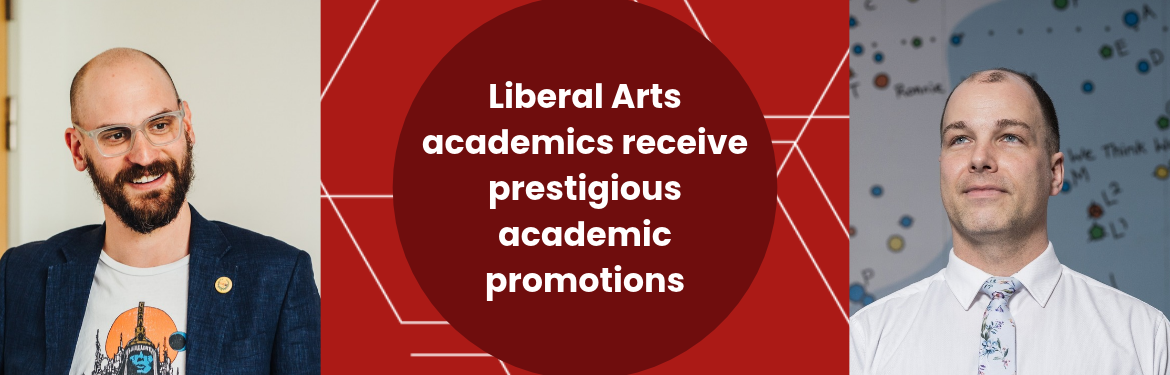
Two members of our Liberal Arts teaching team have received significant professorship promotions, making them the first academics to hold a professor status within our department’s history.
Why I chose Liberal Arts: Abi's Story
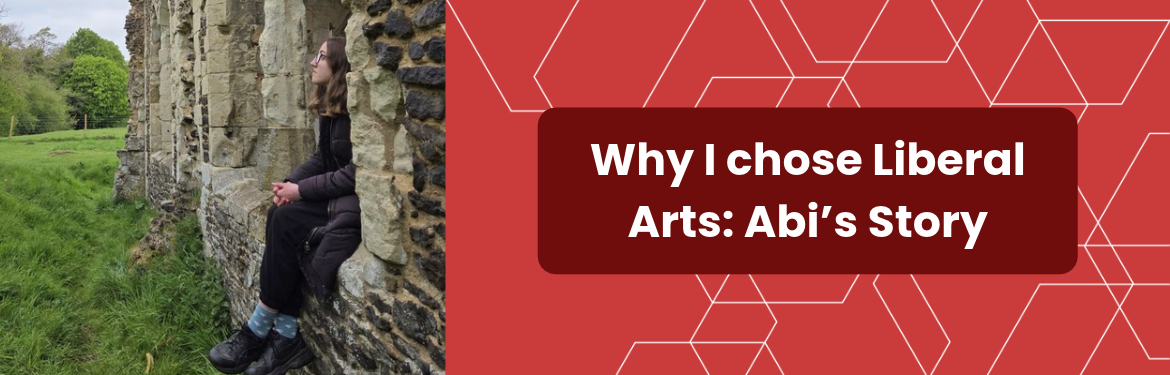
Not all students begin university at 18; in fact, choosing to pursue a degree later in adulthood can bring clarity, purpose, and a powerful sense of direction shaped by real-life experience. This was the case for one of our mature students Abi, who decided to study Liberal Arts at Warwick after realising her passion for the humanities in her mid-twenties. We spoke to Abi to find out more about her journey into Higher Education, and why she strongly believes that it is now more important than ever to study a subject you enjoy over one that pushes you towards a specific career trajectory.