
Supervisor Profiles
The CDT in Net2Zero has a team of Academics who are experts in their fields. The supervisors span across different departments at Warwick, from the School of Engineering to Chemistry, Physics, Life Sciences, WMG and Computer Science. Please see more details about their research below.
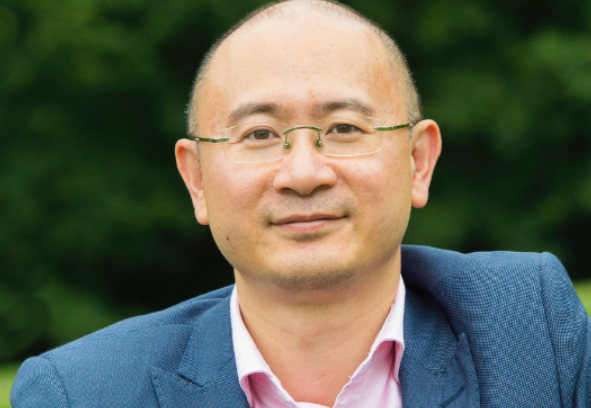
Professor Sai Gu, School of Engineering
CDT Co-Director
Professor Sai Gu is Deputy Pro-Vice-Chancellor (East and South East Asia) working closely with Professor Michael Scott, Pro-Vice-Chancellor (International), to maintain, extend and deepen our relationships with university partners in this region, and to pursue opportunities for funding, student mobility, and research and education collaboration.
Professor Gu has an international reputation for clean energy and material research. He has a long track-record of coordinating large collaborative projects with international partners and has successfully won tens of million pounds in grants from EPSRC, EU, Innovate UK and industry.
Professor Gu is an advocate of digital technologies for chemical engineering, pioneering the development of Industry 6th Sense technologies. He has established the Centre for Connected Plants of the Future to bring together multi-disciplinary expertise cross the University of Surrey, exploring the development of technology-driven innovation for chemical industry. He has led the EPSRC project “Stepping towards the industrial 6th sense
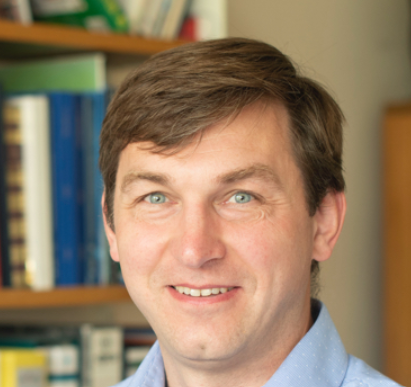
Professor Evgeny Rebrov, School of Engineering
CDT Co-Director
Evgeny's research focuses on intensified reactor concepts and sustainable process engineering, with a particular emphasis on compact, energy-efficient technologies for chemical conversion, resource recovery and waste valorisation. A central theme of his work is the use of non-conventional energy sources, including non-thermal plasma, radiofrequency fields and resistive heating methods, to enhance heat and mass transfer in multiphase reactor systems.
Recent research has explored the development and application of non-thermal plasma technologies for material processing and catalytic reaction engineering. Plasma enables localised, rapid and selective energy delivery, creating opportunities to tailor surface chemistry, increase the concentration of specific functional groups, and modify material porosity. These effects are especially relevant for the design of advanced catalytic materials, including biochar-derived catalysts for acid catalyzed reactions.
Evgeny's group also works on integrated CO₂ capture and conversion, with an increasing focus on coupling several reaction steps in compact flow reactors. This includes processes for carbon dioxide utilisation and resource recovery from complex waste streams, such as lithium recovery from battery black mass. Across these activities, the overarching aim is to develop scalable, sustainable and industrially relevant reactor technologies that support the transition towards circular and low-carbon chemical manufacturing.
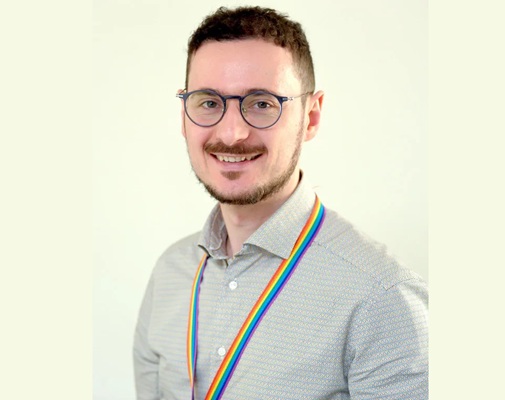
Dr Fabrizio Alberti, Life Sciences
Fabrizio is a UKRI Future Leaders Fellow and Associate Professor of microbiology at the University of Warwick. His research focuses on the discovery of natural products from fungi, the study of their biosynthesis, and the development of genetic tools to engineer fungi. He is also interested in developing sustainable biological control of plant disease using microorganisms and their valuable products.
Dr Matt Jenner, Chemistry
Our research focuses on the enzymes involved in the biosynthesis of valuable natural products, with particular emphasis on their structure, mechanism, and protein-protein interactions. We leverage this knowledge to engineer biosynthetic pathways that generate new chemical scaffolds in a sustainable manner

Professor Peng Wang, Physics
Peng Wang is an associate professor (Reader) in the Department of Physics and the director of electron microsopy research technical platform (EM-RTP) at the University of Warwick in the UK.
Since 2012, He has held the position of professor leading a Sub-atomic Resolution Electron Microscopy Laboratory at Nanjing University, China. His research interests and strength have been in the applications of aberration-corrected STEM imaging and EELS to characterize advanced functional materials ranging from ceramics and semiconductors to biological materials and nano-materials, at the nano and atomic scales from two to three dimensions. He has also made pioneering contributions to the field of a technique of 3D imaging materials at the nano-scale using scanning confocal EM performed on a double AC-S/TEM. In addition, one of his current works is focused on the advanced coherent diffractive phase imaging technique, so-called Ptychography. His current research has been focused primarily on two areas: developing novel computational diffractive imaging techniques (ptychography, 4D STEM) for cryogenic electron microscopy (Cryo-EM), light atomic detecting (O, Li elements), low dose imaging (beam sensitive materials), 3D reconstruction and EM field mapping, which can then tackle characterization challenges across the physical and life sciences, ranging from battery materials to biological macromolecules. To date, he has published over 150 refereed journal articles. He also holds 17 patent applications. His research has been recognized through various prizes and awards, including being recognized as a Highly Cited Researcher in Clarivate's 2023 list. Google Scholar (H-index 79).

Professor Chaoying Wan, WMG
Prof. Chaoying Wan specialises in polymer synthesis and characterisation of multiphase/multicomponent nanocomposites, exploitation of multifunctionality for high performance and sustainability applications. She has expertise in developing reactive processing of thermoplastic-, thermoset- and elastomer-based blends/alloys and nanocomposites through in situ polymerisation and reactive extrusion.

Professor Tim Bugg, Chemistry
Professor Tim Bugg's research group is currently studying bacterial enzymes for degradation of the lignin biopolymer found in plant cell walls, including DyP-type peroxidase enzymes, multi-copper oxidase enzymes, and
Sphingobacterium sp manganese superoxide dismutase, for the conversion of lignin into renewable aromatic chemicals. We are also using metabolic engineering to convert lignin into high-value aromatic chemicals. Tim's group also studies enzymes involved in bacterial cell wall peptidoglycan biosynthesis, as targets for the development of novel antibacterial agents

John Low, Associate Professor, WMG
John Low's research group in WMG looks at Battery cell manufacture, testing and recycling. The BMAC group in WMG is a unique, all-in-one battery research group, offering a complete development pipeline from materials research and cell prototyping to scale-up and advanced metrology through WMG's state-of-art facilities within Energy Innovation Centre (EIC) and Wellesbourne campus. The comprehensive approach accelerates innovation from lower to higher technology readiness levels (TRLs), all under one roof. The group's expertise spans the entire battery lifecycle, from materials research and prototyping to scaled-up production and in-depth analysis.

Dr Volkan Degirmenci, School of Engineering
Dr Volkan Degirmenci leads a research group focused on porous functional materials, including zeolites, metal-organic frameworks (MOFs), and MOF-derived carbons, for applications in energy storage and sustainable chemical conversion. Their research combines advanced in-situ and operando characterisation techniques, such as synchrotron XAFS and tomography, to study how catalysts and battery materials behave under real operating conditions. Current projects include MOF-derived carbon electrocatalysts and single-atom catalysts for zinc-air batteries, sustainable PVDF-free binders for lithium-ion batteries, operando imaging of battery degradation, and the development of innovative inkjet-printed MOF thin-film coatings for electrodes. Building on more than 20 years of experience in catalysis and biomass valorisation, the group also pursues bioinspired engineering research, drawing inspiration from natural surface structures to develop advanced tyre and tread designs for planetary rovers and sustainable agricultural vehicles. The group welcomes collaborations and enquiries from prospective PhD students interested in porous materials, battery technologies, and advanced characterisation methods.

Dr Han Zhang, WMG

Professor Ligang He, Computer Science
Ligang He is a Full Professor of Computer Science specialising in parallel and distributed computing. His research focuses on the scalability, performance and resource efficiency of parallel and distributed systems, particularly their two-way integration with artificial intelligence: using parallel and distributed computing to enable scalable AI, and using AI to advance high-performance scientific computing.
Professor Ligang's work has evolved from performance modelling, scheduling and resource management in cluster, grid and cloud environments to distributed machine learning, acceleration of AI training and inference, and AI-enabled high-performance scientific computing. His current main research interests include:
- Distributed machine learning, including federated learning and learning across different types of distributed environments;
- Parallel and distributed techniques for accelerating the training and inference of machine-learning models, including LLMs and graph neural networks;
- AI for Science and scientific machine learning, including optimisation of physics-informed neural networks and neural operators;
He has published more than 200 papers in leading journals and conferences, including IEEE TC, IEEE TPDS, IEEE TKDE, IEEE TCSVT, NeurIPS, SC, EuroSys, IPDPS, ICPP, HPCA, VLDB, MICRO and DAC.