
News: ABSPIE recent initiatives
Falls are more likely when you’ve had a bad night’s sleep
- Just one night of disrupted sleep means you are less capable to control posture and balance the day after
- A single bad night's sleep decreases your chance of controlling posture according to researchers at the University of Warwick, who have used state of the art sensors to monitor sleep and balance
- Implications could be that elderly people who have had a bad night's sleep are the most at risk of a fall
- Innovative solutions of how to prevent imminent falls can now by researched
Disturbances during sleep decreases capability to control posture and balance according to researchers from the School of Engineering and Warwick Medical School at the University of Warwick who have an article published today in Scientific Reports (www.nature.com/articles/s41598-018-36053-4)
This is the first study demonstrating the relationship between day-to-day variations in sleep quality and the reduced capability to control posture and balance, and it could pave the way to new interventions to prevent falls in later life, should the results be confirmed by other studies on older adults.
The research shows that fragmented and disrupted sleep leads to acute balance deficit.
The study was conducted by the School of Engineering in collaboration Warwick Medical School at the University of Warwick.
A sample of healthy adults underwent sleep and balance assessment over two consecutive days, in order to determine the links between day-to-day variations in sleep quality and balance.
State-of-the-art wearable sensors available at the School were used for in-home sleep monitoring and lab-based balance testing. These findings are relevant to pave the way to the design of fall prevention programs in populations and settings where normal sleep is frequently disrupted, such as older people and hospital wards.
Dr Leandro Pecchia, team leader of the research from the School of Engineering at the University of Warwick says:
“We all have direct experience of this. When we do not sleep well, we may feel a little dizzy and our capability to control our posture and balance is somehow diminished. When we are fit and in good health, our body is able to adapt and we develop a strategy to keep our balance safe, avoiding falls and incidents. This ability is reduced with ageing or when there are other concomitant conditions that may compromise our ability to adapt.”
Prof Francesco Cappuccio, Head of the Sleep, Health & Society programme at the University of Warwick’s medical school, explains:
“The results obtained in healthy normal volunteers are surprising, given the ability at younger ages to compensate for such acute and short-lived sleep disruptions. We would expect more dramatic effects when these experiments be replicated in older people, whose vulnerability to sleep disruption, postural hypotension and risk of falls is much greater”.
Dr Leandro Pecchia continues:
“These results could contribute to the understanding of in-hospital falls. Hospitalised older patients find themselves in a frail condition, sleeping in an unfamiliar environment, with unusual nocturnal light and noises from other patients and nurses, and perhaps being administered more than one drug. Waking-up to go to the toilet can be more challenging than we can imagine. Having a nurse for each bed is not practical in the modern NHS and not well accepted by many older people. We need to learn how to use available technology to detect early the changes in sleep so that we can design personalised interventions that may avoid falls in the next day. One of the problems in fall prevention is that we know a frail subject will fall, but it is very difficult to predict when. Our study is first step towards finding a solution.”
The paper, Day-to-day variations in sleep quality effect standing balance in healthy adults, is published by Scientific Reports.
UK and international news outlets (e.g. the Daily Mail) have received fairly well our paper, which today is in the top 5% of all articles of a similar age based on the online attention it has received.
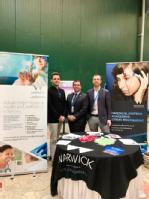
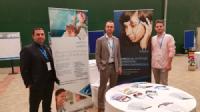
ABSPIeH members representing the University of Warwick at the 4th WHO Global Forum on Medical Devices (GFMD)
It is now a tradition that our lab members contribute significantly to the success of the WHO Global Forum on Medical Devices. Last edition saw Dr Pecchia acting as Chair for the Health Technology Assessment (HTA) track. This edition will see our lab contributing in different manners.
Davide Piaggio, PhD student in our lab, will present his contribution titled “Design, assessment and maintenance of medical devices resilience to Sub Saharan Africa (SSA) working conditions: the Warwick experience”, presenting all the ongoing projects in SSA and prepared in collaboration with several co-authors Dr Ashenafi Hussein (Ethiopia), Prof Daton Medenou and Dr Roland Houessouvo (Benin) and Alessia Maccaro (Italy).
Carlo Federici, PhD student in our lab, has been invited to participate to a panel titled “The use of real-world data and evidence for medical devices assessment”.
Dr Pecchia has been invited to contribute to the WHO GFMD organising workshops and round tables, including the following:
- “Harmonising medical device and medical location policies among Africa and Europe”, which will be opened by the European Parliament Member Nicola Caputo (Chair of the EPIG BME) and will see contributions by Dr Ashenafi Hussein (Ethiopia), Dr Sudesh Sivarasu (South Africa), Prof Nicolas Pallikarakis (Greece) and Dr Leandro Pecchia. This workshop, following the recent EPIG BME meeting organised in Brussels in October 2018, will report on the ambitious project, coordinated by Dr Pecchia and financed by an EPSRC IAA and GRCF, and promoting the idea that Europe should make an effort to facilitate the harmonization of regulations among Europe and SSA countries in the best interest of African economy and quality of life.
- “3D printing, artificial intelligence and design of medical devices for low resource settings”, which will be Chaired by Dr Pecchia and will see contributions form Dr Carmelo De Maria (Italy), Ashenafi Hussein (Ethiopia), Dr Sudesh Sivarasu (South Africa) and Almir Badnjevic (Bosnia Herzegovina). This workshop will illustrate the common vision and experiences of the panellists on who to use emerging paradigms for the local manufacturing of appropriate medical devices in lower-income countries, and in particular in Sub-Saharan Africa.
- “The role of biomedical engineers on HTA of medical devices”, during which Dr Ernesto Iadanza (Chair IFMBE HTAD 2018-21), Dr Leandro Pecchia (Chair IFMBE HTAD 2013-15), Prof Nicolas Pallikarakis (Chair IFMBE HTAD 2013-15), MSc Murilo Conto (WHO PAHO) and Julie Polisena (CADHTA) will illustrate the growing contribution that BME is giving to HTA, especially for medical devices.
- “HTAi, ISPOR, INAHTA, IFMBE, IUPESM and WHO joint panel on HTA of Medical Devices”, organised by Dr Pecchia (which will bring to the table the prospective of IUPESM), this panel will see representatives of the main scientific societies working on HTA of medical devices, discussing common future initiatives: Dr Ernesto Iadanza (IFMBE), Amy Pavlock (ISPOR), Julie Polisena (HTAi), Leandro Pecchia (IUPESM), Dinsie Williams (INAHTA), Adriana Velazquez Berumen (WHO)
The final program is avaliable here: https://www.4gfmd2018.org/

11th of October 2018, European Parliament Interest Group on Biomedical Engineering (EPIG BME) Meeting in the European Parliament
Since 2015, Dr Pecchia has coordinated the collaboration among the European Alliance of Medical and Biological Engineering and Science (EAMBES) and the European Parliament through the establishment of the first European Parliament Interest Group on Biomedical Engineering (EPIG BME).
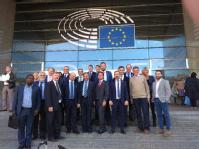
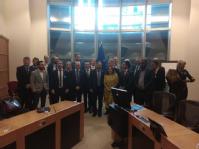
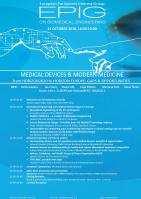
In the framework of this collaboration, the second EPIG BME meeting was organised in the European Parliament the 11th of October 2018. The final agenda is below and the relevant twits are available at https://goo.gl/VMVbMG
This meeting brought together WHO representatives, ‘African, Caribbean and Pacific and European Union (ACP-EU) representatives and the most influential BME representatives form 4 continents (i.e., Europe, USA, Africa and Asia) via their scientific associations: the International Federation of Medical and Biomedical Engineering (IFMBE), International Organization for Medical Physics (IOMP) and their umbrella organization the International Union for Physical and Engineering Sciences in Medicine (IUPESM).
The topics discussed during the meeting where three:
· recognise BME as independent profession, by including BME as independent discipline in the ESCO database;
· to provide an independent space for research in biomedical engineering field creating a BME panel in the 3 European schemes for excellent science (e.g., ERC, FET and MSCA)
· establish stable collaboration with Africa Union in order to help them harmonizing their regulations on medical devices and medical locations among different African Courtiers and with the European one
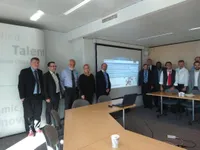
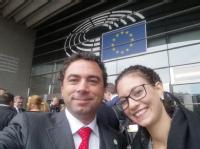
The meeting was very well attended, with eminent and competent representatives from the European Parliament, European Commission, WHO and four Scientific Societies (EAMBES, IFMBE, IUPESM, IOMP).
· EPIG BME Parliamentary Members: Nicola Caputo (Italy, chair), Lara Comi (Italy, video), Neena Gill (UK, present), Lojze Peterle (Slovenia, not present, Peterle’s assistants), Marijana Petir (Croatia, present at the opening, Petir’ assistants stayed for all the meeting), Davor Škrlec (Croatia, present) and Cécile Kyenge (Italy, participated for 30min due to other commitments).
· European Commission Member: Bernd Rainer, DG Research (present).
· Speakers: Prof Panayiotis Kyriacou (UK, EAMBES President); Dr Umberto Bracale (Italy, Assistant Prof of Surgery at the University Federico II of Naples); Miss Tanja Valentin (Belgium, Director External Affairs, MedTech Europe); Prof Jari Hyttinen (Finland, EAMBES Fellow Chair); Dr Ashenafi Hussein (Ethiopia, IFMBE African Working Group on Biomedical Engineering); Miss Adriana Velazquez (Switzerland, Focal Point of Medical Devices at World Health Organization, WHO); Dr Leandro Pecchia (UK, University of Warwick and IUPESM Secretary General).
· Open discussion: moderators: Prof Shankar Krishnan (USA, IFMBE President); Prof Timo Jämsä (Finland, EAMBES Elected President), Prof Ratko Magjarevic (Croatia, IFMBE Elected President), Prof Marc Nyssen (Belgium, IFMBE Treasurer), Prof Slavik Tabakov (UK, IUPESM Past President), Prof Nicolas Pallikarakis (Greece, EAMBES), Dr Ernesto Iadanza (Italy, Chair IFMBE HTA Division), Prof Steven Keevil (UK, IUPESM), Mr Mariano Votta (Italy, Cittadinanzattiva), Dr Stefano Bergamasco (Italy, AIIC), Dr Antonella Belotti (Italy, Medical Doctor), Dr Carmelo De Maria (Italy, University of Pisa), Dr Peter Grainger (Irland, Naas General Hospital), Dr Magdalena Stoeva (Bulgaria, Medical University of Plovdiv), Dr Almir Badnjevic (Bosnia and Herzegovina, International BURCH University) and Dr Giuseppe Braghieri (Italy, Medical Doctor).
The ABSPIEH was represented by Dr Leandro Pecchia and Dr Rossana Castaldo.
European Parliament Interest Group on Biomedical Engineering (EPIG BME)
Since 2015, the European Alliance of Medical and Biological Engineering and Science (EAMBES) started a stable collaboration with the European Institutions and in particular with the European Parliament through the establishment of the first European Parliament Interest Group on Biomedical Engineering (EPIG BME).
EAMBES is advocating for an increased involvement of biomedical engineers (BMEs) in defining European regulations and forthcoming research frameworks.
The EAMBES, together with WHO and EPIG BME, have organized a new meeting in the European Parliament to discuss those topics (European Parliament, 11th of October 2018). The draft agenda is below and the latest will be available at https://goo.gl/VMVbMG
This event will bring the BME community inputs, thought the most influential BME representatives form 4 continents (i.e., Europe, USA, Africa and Asia) via their scientific associations: the International Federation of Medical and Biomedical Engineering (IFMBE), International Organization for Medical Physics (IOMP) and their umbrella organization the International Union for Physical and Engineering Sciences in Medicine (IUPESM).
The topics of the meeting will be two:
· How to maximally profit form the BME community inputs while design the forthcoming European framework for research (i.e., Horizon Europe)
· How to harmonise international regulation on medical devices and medical setting across these continents.
Five European Parliament Members will participate to the meeting, including Madame Neena Gill (S&D, West Midland representative at the Euro parliament for the Labour Party, UK), Lara Comi (EPP Vice-president from Italy) and Nicola Caputo (S&D, Italy), EPIG BME President.
From the European Commission, Mr Bernd Rainer (DG Research) will attend the meeting.
Ignatius Gomes, Secretary General of the “African, Caribbean, and Pacific Group of States Organization” will also participate to the meeting to discuss Africa-related BME topics.
The Warwick Biomedical Engineering (WEB) group, in the School of Engineering, is a proactive member of the EAMBES and had a key role in the organization of this event. Dr Leandro Pecchia, WEB member drafted the agenda as Chair of the EAMBES public affairs working group and General Secretary of the IUPESM.
Now Biomedical Engineering (BME) is in the ESCO! Another step towards BME recognition!
From 2015, Dr Pecchia along with the European Alliance for Medical and Biological Engineering & Science (EAMBES), the International Federation for Medical and Biological Engineering (IFMBE), Heatlh Technology Division and WHO, supported two MEPs: Nicala Caputo and Lara Comi in tabling a parlamentary question to the European Commision to recognise Biomedical Engineering profession.
Today, a step more towards the BME recognition... BME has been included in the ESCO database.