
Events and Open Days
Open Days
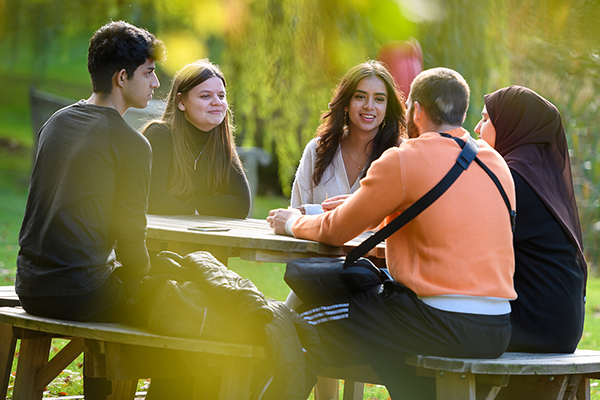
We run open days for our undergraduate courses and our graduate-entry Medicine (MB ChB) programme several times per year.
The 2026 open days will be taking place on:
- Saturday 10 October (Undergraduate only)
- Saturday 24 October (Undergraduate only)
Leading Lights Lectures
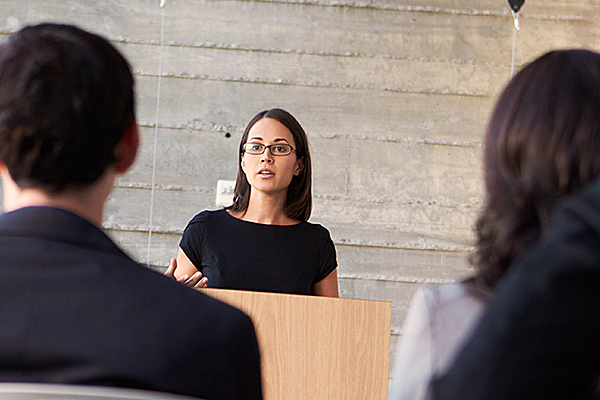
Our Leading Lights lectures give our new professors the opportunity to share their career journey and current work with their colleagues, friends, and family, as well as members of the public with an interest in their area of research. These events are open to all. See our upcoming lectures here and watch the recordings of our previous lectures here.
Christmas crafts
Last year a number of colleagues got together over a couple of lunch hours to needle felt some Christmas decorations. It was a lovely opportunity to get to know others you may not otherwise meet and chat about their roles over a crafty break.
This year we are offering two different crafts and colleagues are welcome to sign up for these – both crafts are available on both days.
- Wednesday 4 November, 12.00pm-1.00pm
- Tuesday 17 November, 12.00pm-1.00pm
You can attend one or both sessions (attending both allows you to make more!)
Both crafts are designed to be ideas you may take home and carry on with family members… Even the younger ones.
All materials are provided (apart from the loo roll and photos!)
Craft 1: Bring an empty toilet roll and leave with a Santa for your tree (or several Santas you can thread together to form a garland.)
Craft 2:: Bring two photos (4inch by 4 inch or ones that can be cut to this size) and leave with two drinks coasters to gift that impossible-to-buy-for person in your life.
Sign up for sessions is required here to ensure that we have sufficient equipment and materials for all.
BMS Seminar: Senescence: Elimination or Escape as a Step to Cancer, Dr Kirsten Sadler Edepli, New York University Abu Dhabi
Abstract: Cellular senescence is a complex state that can either suppress or promote cancer. Because senescence is frequently accompanied by epigenetic changes, we used a zebrafish model of early-stage liver cancer driven by overexpression of the epigenetic regulator UHRF1 to investigate how epigenome reprogramming generates distinct senescent cell states and influences cancer development. Functional studies revealed that cells with different senescence signatures and levels of UHRF1 have distinct cancer-related properties and vulnerabilities. Cells expressing lower levels of UHRF1 can re-enter the cell cycle following loss of tp53 whereas cells with high UHRF1 levels remain arrested and are selectively targeted by the senolytic drug Navitoclax. These findings demonstrate how epigenetic differences can determine the fate of senescent cells and may provide a mechanistic basis for patient stratification and the development of more targeted cancer therapies.
Biography: Dr. Kirsten Sadler (Edepli) is a geneticist and cell biologist whose research explores how epigenetic mechanisms regulate development, regeneration, and disease. She earned a Master’s in Medicine from Harvard Medical School, a Ph.D. from Harvard University, and completed postdoctoral training at MIT, where she used zebrafish to identify genes essential for liver development and disease. Her current work focuses on epigenetics in liver development, regeneration, cancer, and transposon regulation in zebrafish, mice, and octopus, defining how the epigenetic changes caused by oncogenic stimuli and aging deregulate cell proliferation, impair liver function, and block regeneration. A pioneer in using zebrafish to model liver disease and toxicant-induced injury, Dr. Sadler has published over 75 scientific papers and secured significant research funding from US and international funding. In addition to her research accomplishments, she is a committed mentor and advocate for equity in science and has held senior leadership roles at NYU Abu Dhabi focused on faculty development, inclusion, and advancement. Dr. Sadler is a tenured Professor of Biology at NYU Abu Dhabi and a Global Network Professor at NYU. She and her husband have 4 children and live in Abu Dhabi.
Christmas Crafts
Last year a number of colleagues got together over a couple of lunch hours to needle felt some Christmas decorations. It was a lovely opportunity to get to know others you may not otherwise meet and chat about their roles over a crafty break.
This year we are offering two different crafts and colleagues are welcome to sign up for these – both crafts are available on both days.
- Wednesday 4 November, 12.00pm-1.00pm
- Tuesday 17 November, 12.00pm-1.00pm
You can attend one or both sessions (attending both allows you to make more!)
Both crafts are designed to be ideas you may take home and carry on with family members… Even the younger ones.
All materials are provided (apart from the loo roll and photos!)
Craft 1: Bring an empty toilet roll and leave with a Santa for your tree (or several Santas you can thread together to form a garland.)
Craft 2:: Bring two photos (4inch by 4 inch or ones that can be cut to this size) and leave with two drinks coasters to gift that impossible-to-buy-for person in your life.
Sign up for sessions is required here to ensure that we have sufficient equipment and materials for all.