
Research Degree Vacancies
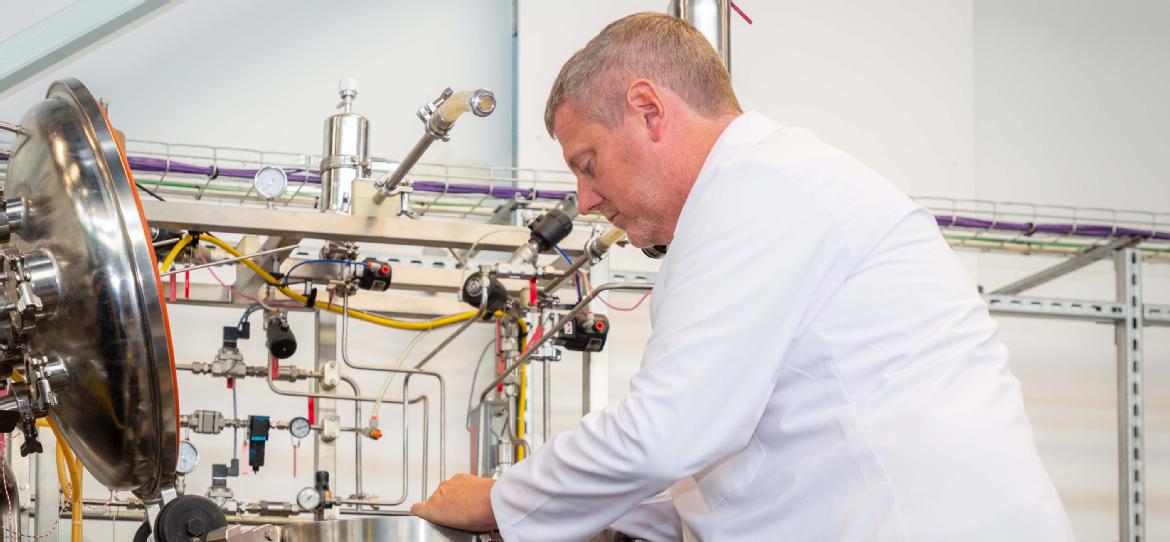
Research degree vacancies
Current vacancies
Here are our latest vacancies, offering unique opportunities to join cutting-edge research projects that address today’s most pressing challenges.
We are recruiting ambitious, curious and passionate students into our exciting PhD, EngD, CDT and MSc by research vacancies. We are looking for problem solvers and convergent thinkers to find solutions to issues that will change the future of industry.
You can register your interest here.
Funding source: Ada Lovelace Centre and the University of Warwick
Stipend: £21,780, including a £1k top-up (three-year funding period)
Supervisor(s): Dr Jay WarnettLink opens in a new window (WMG), Professor Kurt DebattistaLink opens in a new window (WMG), Professor Genovea Burcae (Diamond Light Source), and Dr Edo Pasca (SFTC Computing)
Eligibility: UK home students
Start date: 2 October 2026
Project overview
X-ray Computed Tomography (XCT) is a critical non-destructive imaging tool used in fields ranging from materials science and biology to cultural heritage and forensics. Standard high-quality imaging requires a full 180 or 360-degree rotation of an object to acquire a massive number of radiographs. However, real-world experiments often face "limited data" conditions caused by strict time constraints, radiation dose concerns, or experimental rigs that physically block certain imaging angles.
This PhD project aims to create advanced XCT workflows by developing Artificial Intelligence (AI) and Machine Learning (ML) tools to support imaging before the reconstruction phase. The research will focus on:
- Data upscaling: Using ML U-Net and latent diffusion models to generate synthetic projections that interleave with real data to improve image quality.
- Artifact reduction: Developing paired and unpaired (e.g. Cycle GAN) models to remove noise and reconstruct artifact-free images from incomplete datasets.
- Software integration: Incorporating these advances into the Collaborative Image Library (CIL) software using PyTorch, making the tools immediately accessible to the wider scientific community.
Additional information
You will work across WMG at the University of Warwick and the Harwell Science and Innovation Campus, utilising high-performance computing (HPC) servers and data from large-scale facilities, such as Diamond Light Source and ISIS Neutron and Muon Source.
For informal enquiries, please contact Dr Jay Warnett at j.m.warnett@warwick.ac.uk.
Essential and desirable criteria
Essential criteria:
- Applicants should hold or expect to gain a minimum of a 2:1 bachelor’s degree or equivalent in Computer Science, Engineering, Physics or Mathematical Sciences
- Knowledge and experience with AI/Machine Learning in Python, preferably with images
- Flexibility to split time between the University of Warwick and Harwell Science and Innovation Campus, Oxfordshire.
Desirable:
- Knowledge and experience with imaging systems (X-ray CT, MRI or similar)
- An MSc (merit or distinction) in a relevant subject would be advantageous
Funding source: EPSRC-DLA
Sponsor/Supporting company: This project will run alongside the major UK EPSRC-funded research programme Frontiers in Electromagnetic Non-Destructive Evaluation Research (FENDER), involving multiple universities and over 20 industrial partners.
Stipend: Standard UKRI stipendLink opens in a new window (£20,780), plus funded tuition fees
Supervisor(s): Dr Frank ZhouLink opens in a new window and Professor Claire Davis FREngLink opens in a new window
Eligibility: UK home students (international applicants may be considered, subject to funding availability or self-funding)
Start date: October 2026
Project overview
This PhD redefines electromagnetic sensing by moving beyond magnetic permeability-dominated approaches to establish a conductivity-driven eddy-current framework for tracking microstructural evolution at high temperature.
The transition towards smarter, lower-carbon manufacturing demands new ways to understand and monitor how materials evolve during processing. This PhD project addresses a fundamental and timely challenge in electromagnetic (EM) sensing: how to quantitatively link electrical conductivity-dominated eddy current responses to microstructural evolution during high-temperature processing.
Conventional EM approaches for microstructure monitoring are often dominated by magnetic permeability effects and are therefore restricted to ferromagnetic materials below the Curie temperature. As a result, large regions of materials processing — including high-temperature steel processing, non-ferromagnetic alloys, and multi-material systems — remain poorly accessible to existing EM techniques. This project intentionally moves beyond that paradigm.
The research will focus on kHz–MHz eddy current sensing frameworks in which electrical conductivity is the primary sensing mechanism. This enables monitoring not only in steels above the Curie point, but also in non-ferromagnetic and weakly magnetic alloy systems, where phase transformations, grain evolution, precipitation, solute redistribution, or defect evolution modify electrical transport properties. While magnetic permeability effects will not be excluded where relevant, the central aim is to establish a robust, physically grounded conductivity-dominated sensing framework applicable across alloy systems and processing routes.
The project is fundamentally interdisciplinary, combining electromagnetism, materials physics, and metallurgy. The successful candidate will investigate how microstructural features — such as phase fraction, grain size, defect density, and thermal history — govern conductivity at elevated temperatures, and how these changes manifest in eddy current sensor responses. This will involve both experimental work and analytical interpretation, linking EM signals directly to underlying physical mechanisms.
Key research themes include:
•Design and optimisation of kHz–MHz eddy current sensors suitable for high-temperature environments
•Experimental studies linking microstructural evolution to electrical conductivity during thermal processing
•Signal analysis and feature extraction from complex, temperature-dependent EM data
•Integration of sensing data with metallurgical characterisation and physical interpretation
•Development of transferable EM sensing principles beyond steels, towards broader alloy classes
Additional information
The project will be based within the Advanced Steel Research CentreLink opens in a new window at Warwick Manufacturing Group (WMG), an internationally recognised environment for steel metallurgy, electromagnetic sensing, and high-temperature experimentation. It will run alongside the major UK research programme Frontiers in Electromagnetic Non-Destructive Evaluation Research (FENDER), involving multiple universities and over 20 industrial partners.
Relevant industrial partners include British Steel, Tata Steel Europe, Primetals Technologies, ETher NDE, Advanced Engineering Solutions, Rolls-Royce, EDF Energy, and the National Nuclear Laboratory. FENDER aims to bring game-changing ideas to EM NDE by harnessing advances in electronics, signal processing, modelling, and data science, positioning EM sensing at the heart of future Industry 4.0 manufacturing, advanced materials processing, and circular-economy technologies.
Essential and desirable criteria
This PhD is ideal for candidates with a strong background in Physics, Materials Science, Electrical Engineering, or related disciplines, who are motivated by fundamental questions and experimental research. It will particularly appeal to students interested in electromagnetism, transport properties, phase transformations, and sensing science, and who wish to develop expertise that is both intellectually deep and highly transferable across materials, industries, and future research careers.
Essential criteria:
- 2:1 or higher degree in Physics, Materials Science, Electrical Engineering, Mechanical Engineering, or related discipline
- Motivation for modelling, experimental and fundamental research
Desirable:
- Experience with electrical or magnetic measurements
- Familiarity with signal processing, data analysis, or numerical methods
- Interest in metallurgy and microstructure
Funding source: Warwick Manufacturing Group (WMG), University of Warwick
Sponsor/Supporting company: WMG – affiliated with The Faraday InstitutionLink opens in a new window
Stipend: Standard UKRI stipendLink opens in a new window (£20,780)
Supervisor(s): Professor Louis PiperLink opens in a new window
Eligibility: WMG home students only
Start date: October 2026
Project overview
This PhD project will focus on the development and characterisation of next-generation Li-ion battery prototypes using WMG pilot line facilities for industry-like pouch cells (including the new AMBIC – Advanced Materials Battery Industrialisation CentreLink opens in a new window).
Chemistries of interest include Ni-rich and LMFP (including blends) and anodeless formats. Research areas will include, but are not limited to:
- Determining ideal electrode processing and formulations
- Identifying protocols to enhance performance and longevity
- Interplay between degradation modes
Characterisation methods will include bespoke microscopy facilities, in-house and Synchrotron and neutron operando studies; and advanced electrochemistry.
This project is affiliated with the new Faraday Institution consortium: Lithium ion: Enhancing and Accelerating Performance – LEAP (formerly Degradation). Successful candidates will be affiliated with the LEAP project and The Faraday Institution.
Essential and desirable criteria
Essential:
- Strong background in STEM disciplines
- 2:1 or higher in a STEM undergraduate degree
- Interest in Li-ion battery technology, scale up and advanced characterisation (microscopy, X-ray and Neutron)
Desirable:
- Materials or electrochemistry laboratory experience
- STEM-focused Master's Degree
Funding source: EPSRC IDLA 26012
Sponsor/Supporting company: BP
Stipend: Standard UKRI Stipend (£20,780 from 1 October 2025)
Supervisor(s): Professor James MarcoLink opens in a new window and Dr Tim VincentLink opens in a new window
Eligibility: UK students only
Start date: 1 October 2026
Project overview
There exists an inherent variability in how lithium-ion batteries fail – an event commonly referred to as “thermal runway”. This uncertainty drives additional cost and complexity into the design and validation methods employed for battery systems created for electric vehicles, aerospace or stationary storage.
This PhD will aim to deliver a new validated methodology for scientifically assessing lithium-ion cell failure and its implications for system-level battery design.
By creating a new scientifically robust framework to assess and mitigate thermal runaway, this PhD project will develop a unique understanding of system-level battery integration challenges, including, but not constrained to:
- The need to initiate thermal runaway using repeatable techniques that do not influence or bias the resulting failure mode.
- The need to scale up the experimental assessment of a single device to a complete system that accounts for the influence of cell-to-cell propagation, cell topology and the use of active and passive methods of mitigation and containment.
- The need for multi-modal measurement systems to characterise thermal runaway, allowing a deeper understanding of the properties of thermal runaway and supporting the transition towards new methods of modelling and simulating battery failure (e.g., gas venting, fire and explosion).
The PhD is sponsored by BP and will take place within the Battery Systems team at Warwick Manufacturing Group (WMG), University of Warwick. The WMG Battery Systems Group combines academics and engineers with industrial experience to address significant challenges of cell manufacture and integration into battery systems across a wide range of applications, including e-mobility, automotive, aerospace, rail, marine and stationary storage.
For further details, please contact Professor James Marco (james.marco@warwick.ac.uk)
Find out more about WMG's:
Essential and desirable criteria
Essential:
- Background in electrical, mechanical, or electrochemical engineering
- 2:1 or higher in a relevant undergraduate degree
- Good understanding of sensor selection and instrumentation
Desirable:
- Proactive, with good organisational skills
- Experience in experimental activities, engineering design, and numerical analysis
- Ability to work well with technicians and laboratory support staff
Funding source: DLA award
Stipend: The studentship will cover tuition fees and provide a tax-free stipend at the prevailing UKRI rateLink opens in a new window for four years of full-time study.
Sponsor/Supporting company: Dutch Polymer Institute (DPI)
Supervisor(s): Professor Ton PeijsLink opens in a new window and Dr Leonid PastukhovLink opens in a new window
Eligibility: Available to home fee status and UK domicile EU students
Start date: On or before 7 September 2026
Project overview
We are seeking an enthusiastic PhD candidate to join the Centre for Polymers and Composites (CPC) at Warwick Manufacturing Group (WMG), University of Warwick, to work on:
Environmental effects on the long-term mechanical performance of short-fibre-reinforced thermoplastics (ENFORM)
Short-fibre reinforced thermoplastics (SFRPs) are widely used in industries such as automotive and electrical engineering. During service, these materials are frequently exposed to harsh environments involving elevated temperatures, oxygen, and moisture. Prolonged exposure to such conditions can lead to a significant deterioration of their mechanical performance.
Material degradation arises from slow and irreversible changes in the polymer matrix, including molecular weight reduction, cross-linking, and morphological alterations. Additionally, degradation of the fibre–matrix interface can occur, further compromising the mechanical integrity of these composites. Together, these mechanisms strongly influence the long-term behaviour and durability of these engineering plastics.
This PhD project aims to investigate the mechanisms governing the long-term evolution of material properties in short-fibre reinforced thermoplastics with different polymer matrices, such as polyamides, polyphenylene sulphide, and isotactic polypropylene. The study will focus on ageing induced by temperature, moisture, and oxygen, with particular emphasis on hydrolytic and thermo-oxidative ageing processes. Both short-term mechanical properties (e.g., tensile strength and impact resistance) and long-term properties (including creep and fatigue behaviour) will be analysed.
Furthermore, the project will develop physics-assisted artificial intelligence (AI) models that integrate experimental data with fundamental physical principles. These models will be used to predict the evolution of mechanical properties during ageing, with the goal of reducing experimental testing requirements while improving the accuracy and reliability of lifetime predictions for demanding applications.
The project is sponsored by the Dutch Polymer Institute (DPI), a leading international research platform that brings industry and academia together to drive pre-competitive, fundamental research in polymers.
We welcome applicants with interests in polymer physics, materials processing and characterisation, machine learning and performance optimisation of polymer composites. A background in materials science and engineering, polymer chemistry, or a related field is preferred. Prior experience with polymers or composites would be beneficial, though not essential. Most importantly, we are looking for motivated individuals who are enthusiastic about their research and able to work effectively within an interdisciplinary team.
The studentship includes a full stipend and covers UK tuition fees. The start date will be on or before September 2026, making this opportunity ideal for those completing, or who have recently completed, a UK-based undergraduate degree.
The research will be carried out by using the world-leading research facilities at the Centre for Polymers and Composites of WMG, University of Warwick. The PhD studentship offers a unique opportunity to work on this exciting topic with a group of leading international industrial scientists.
Essential and desirable criteria
Essential:
- 2:1 or higher in a relevant undergraduate degree
- Experience of computer-based simulation
Desirable:
- Knowledge of vehicle structures and electric vehicle design
- A proven ability to instigate computer simulations to understand crash structures during high velocity impacts
- Proven knowledge of current assembly and disassembly methods within the automotive field
- A history of experimental work within a laboratory setting, including manufacture, testing and analysis
Funding Source: EPSRC - IDLA
Stipend: £20,780: UKRI standard rateLink opens in a new window for a full-time PhD over 3.5 years
Supporting Company: Jaguar Land Rover
Supervisor(s): Professor Darren Hughes, Dr Craig Carnegie, Dr Richard Beaumont
Eligibility: Home students
Start date: As soon as possible
Project Overview
In order to meet the UK Net Zero Strategy, automotive manufacturers are adopting electrification in their fleet and the adoption of end-of-life principles.
Battery pack construction uses adhesives to fix multiple cells in place, creating a block of battery modules. The adhesive has several benefits, including thermal conductivity, electrical insulating, and creating the necessary structural integrity needed around the battery.
However, this process can be slow, induces an element of stacking error and removes the options for easy disassembly for repair, replace or recycle.
In this project, modification of the cell end cap design is to be investigated through FE analysis, prototype build and physical testing with the objective of providing a cell which is self-locating adds structural stiffness to the module and allows easy disassembly for repair or recycling.
This project will investigate new joining approaches for the battery back structure, look to incorporate structural rigidity into the module assembly and achieve a method for disassembly between cell and module.
Essential and desirable criteria:
Essential:
- 2:1 or higher in a relevant undergraduate degree.
- Experience of computer-based simulation.
Desirable:
- Knowledge of vehicle structures and electric vehicle design
- A proven ability to instigate computer simulations in order to understand crash structures during high velocity impacts
- Proven knowledge of current assembly and disassembly methods within the automotive field
- A history of experimental work within a laboratory setting, including manufacture, testing and analysis
Funding Source: EPSRC DLA Interdisciplinary Scholarships
Stipend:
- UKRI rate stipendLink opens in a new window for 3.5 years full-time (70 months part-time).
- Full Payment of academic fees (home only)
- A Researcher Training Support Grant of up to £5,000
- Access to Disabled Student Allowance, paid sick leave and paid parental leave
Supervisor: University of Warwick: Dr Arnab Palit, Prof Andy Metcalfe
Eligibility: Satisfy UKRI's eligibility criteria; this funding is restricted to Home fees candidates due to Council requirements
Start date: As soon as possible
Project overview
Total Hip Replacement (THR) is a common surgical procedure, with nearly 100,000 performed annually in the UK. However, about 20% require revision within 15 years due to complications like implant loosening, dislocation, and fractures caused by suboptimal implant positioning. With primary THR demand in younger patients expected to increase fivefold by 2030, revision surgeries will also rise. To improve implant positioning, image-guided navigation is increasingly used in complex THR procedures. These systems combine preoperative planning and intraoperative measurements into a visual interface, improving surgical precision and outcomes. However, current navigation methods have significant limitations. They rely on artificial markers attached to bones, requiring additional incisions that increase the risk of injury and infection. The manual registration process adds 15-20 minutes to surgery, introduces human error, and creates line-of-sight occlusions, disrupting surgical workflow.
This interdisciplinary project aims to overcome these challenges by developing a vision-based marker-less navigation system using deep learning (DL). The project’s objectives include generating training data from synthetic datasets and real-world images (cadaver and actual intraoperative THR images), developing a marker-less segmentation and registration workflow, integrating with in-house THR pre-planning to create a complete navigation system, and validating it through cadaver experiments.
The proposed work will improve surgical workflow, shortens surgery time, enables unrestricted movement tracking, and reduces infection risks. Eliminating markers enables robot-assisted or fully automated femoral implantation, which is not possible with current systems. It aligns with key STEM themes and EPSRC’s strategic focus on ‘Engineering’, ‘Health and Medical Technologies’, and ‘AI, Digital, and Smart Applications’.
Warwick University is renowned for its high-quality research and a thriving PhD program. This strong research culture enhances both the PhD student’s experience and the demand for our graduates. This PhD project has been developed through interdisciplinary collaboration between Warwick Manufacturing Group (WMG), Warwick Medical School (WMS), and University Hospital Coventry and Warwickshire (UHCW) NHS Trust. It offers an opportunity to apply engineering expertise to real-world challenges, making a meaningful impact. The successful applicant will work collaboratively across WMG and WMS. While the primary focus will be on biomechanics, image processing, machine learning (ML), artificial intelligence (AI), and metrology, the student will also contribute to the co-design of cadaver experiments and data collection activities. Supervision will be provided by academics from various disciplines specializing in biomechanics, image processing, and computer vision, alongside orthopaedic surgeons and academics
Essential criteria:
- A 1st or 2.1 undergraduate (BEng, BSc, MEng) and/or postgraduate masters’ qualification (MSc) in a relevant field, such as biomedical engineering, computer science, mechanical engineering, medical imaging, AI/ML, or a related discipline.
- Knowledge of machine learning (ML) and deep learning (DL), with hands-on experience in developing and implementing algorithms using programming languages such as Python, MATLAB, or C++ for image processing or related applications.
- A passion and enthusiasm to challenge the state-of-the-art, and ability to work independently and collaboratively in an interdisciplinary environment, engaging with engineers, surgeons, and researchers.
- Excellent written and verbal communication skills, with the ability to present research findings effectively.
Desirable criteria:
- Experience with medical image processing (e.g., segmentation, registration) and working with synthetic or real-world datasets (CT, X-ray, intraoperative images).
- Familiarity with marker-less tracking, computer vision-based navigation, or image-guided surgery.
- Prior research experience (e.g., a published paper, research internship, or project in a relevant area).
Funding and eligibility:
- UKRI rate stipendLink opens in a new window for 3.5 years full-time (70 months part-time).
- Full payment of academic fees (home only)
- A Researcher Training Support Grant of up to £5,000
- Access to Disabled Student Allowance, paid sick leave and paid parental leave.
Funding Source: Industry
Eligibility: Available to home fee status and UK domicile EU students
Stipend: Standard UKRI. The funding period is 3.5 years.
Sponsor Company: HMGCC
Supervisors: Louis Piper, Melanie Loveridge, Gerard Bree
Start date: As soon as possible
Project overview
The objective of this research is to develop high-energy storage technology for e-textiles and wearable sensors. Currently, e-textiles is a growing area of interest, enabling smart sensors for medical, sports science, assistance through to VR technology. Integration of advanced electronics into woven fabric structures will greatly improve bio-mechanical compatibility and remove unnecessary restrictions, weight, or inflexible mass to product designs.
Current approaches to this problem include classical rigid lL-ion cells undergoing a single controlled bend and then encapsulated to fix the rigid structure, as seen in recent ‘smart ring’ products. Other more creative examples utilise stretchable polymer substrates, origami pre-folded structures or cable-like braiding designs (https://doi.org/10.1038/s41586-021-03772-0). A broad number of approaches have been considered to produce fibre analogues (https://doi.org/10.1016/j.cossms.2022.101042), and this project would aim to improve the e-textile design and energy density.
We are interested in evaluating what is possible with current Li-ion technology, going beyond current cable/braiding designs to explore approaches to solid state electrolytes (polymer or ceramic), which opens the possibility of lithium metal anodes. Other options could then consider alloyed current collectors and other design approaches that could improve the performance of e-textile battery designs. This technology has the potential to revolutionise wearable and personal electronics (sensors, communication, etc.) into the future
Essential and desirable criteria
A 1st or 2.1 undergraduate degree, or a postgraduate Masters’ qualification in Chemistry, Physics or Materials science/engineering would be essential. Some experience of energy storage materials and characterisation techniques would be desirable.
Funding source: University of Warwick
Eligibility: All fee status - five PhD students in total
Stipend: Four-year enhanced stipend: rate level increases in line with inflation and always remains marginally above UKRI's current forecasts.
Supervisors: Professor Louis PiperLink opens in a new window and Dr Mel LoveridgeLink opens in a new window
Start date: September/October 2026
Project overview
We are recruiting five PhD students (UK and International) to start in September/October 2026, under the supervision of Professor Louis Piper and Dr Mel Loveridge. Each four-year studentship is generously funded with an enhanced stipend, all tuition fees covered, and research support funding, including for participation in conferences.
Students will benefit from bespoke training courses and opportunities for national and international collaboration across the Hartnoll Centre for Experimental Fuel Technologies, of which Warwick Manufacturing Group (WMG) is a part.
Professor Piper and Dr Loveridge have vast experience in functional materials for energy storage/harvesting applications (e.g., Li-ion batteries and photocatalysts for hydrogen generation), along with the development of various advanced characterisation methods.
WMG has a suite of laboratories for synthesis, electrochemistry and battery scale-up, which boast cutting-edge facilities for accelerating material developments at laboratory scale into pilot line validation.
Key areas for PhD research include:
- Tuning electrode-electrolyte interfaces in batteries for improved performance and lifetime. This area includes the synthetic cathode-engineering of morphology and composition; precise (and scaleable) atomic decoration of electrode interfaces for improving transport and suppressing degradation; and studying reactions at buried interfaces (e.g. operando gas evolution).
- Electrolyte additive discovery to generate more stable and effective SEI layers to extend operational lifetimes.
- Scale-up of industry-grade electrodes for real cell studies. This includes formulation and electrode fabrication technologies (both slurry and dry processing), 3D spectro-microscopy imaging for electrode optimisation, and full cell assembly with operando X-ray/Neutron studies for interpreting electrochemistry.
- Advancing the next generation of electrode technologies that will take anode science beyond graphite with smart design and generation of stabilised interfaces to allow metal anode / anode-free development. All projects will involve the use of advanced characterisation approaches to probing interfaces using state-of-the-art measurement techniques.
- Collaborating with Chemistry to design and incorporate metal-organic frameworks into electrodes and solid electrolytes. This will advance microstructures and enhance Li storage and transport properties.
- A holistic view of electrochemical optimisation: from single-particle electrochemistry to operando full pouch cell battery studies (in collaboration with Profs. Unwin & Macpherson).
- Holy grail Li-metal batteries: how to suppress dendritic formation with lithium metal anodes with interface engineering.
- Pioneering an in-operando technique using emerging table-top terahertz spectroscopy to detect and monitor the onset of lithium plating during fast charging in a customised coin cell. This will be combined with electrochemical and other characterisation studies on fast-charge technologies with WMG and is a collaboration between WMG and the School of Engineering.
Hartnoll Centre for Experimental Fuel Technologies
Students will join the Hartnoll Centre for Experimental Fuel Technologies (HCEFT), which aims to develop innovative fuel cell and battery technologies, underpinned by fundamental understanding. The Centre is an exciting venture, bringing together leading research groups within WMG, the Department of Chemistry, and the School of Engineering at the University of Warwick.
With world-leading expertise and facilities in electrochemistry, materials chemistry, spectroscopy, microscopy, modelling and battery and fuel cell construction and testing, we aim to develop next generation electrochemical energy technologies through holistic views of fuel cells (especially ammonia fuel cells) and different kinds of batteries, including metal and metal ion (Li, Na, Ca etc.), rechargeable aqueous batteries, and redox flow batteries.
Our Centre is able to study processes from the nanoscale to device level, and we complement cutting-edge measurement science and materials synthesis with advanced modelling.
Candidates with first degrees (Bachelors and/or Master's) in all branches of Chemistry, Physics, Mathematical Sciences, Materials Science and Engineering, and Chemical Engineering are welcome to apply.
Please submit your application through the above link only. Applications received through other channels will be redirected, and you will be required to resubmit.
Funding Source: EPSRC DTP
Eligibility: UK citizens only
Stipend: £20,780 standard UKRI rateLink opens in a new window for 3.5 years
Supervisors: Professor Tony McNally
Supporting Company: Roxel Ltd
Start date: As soon as possible
Project Overview:
This PhD aims to investigate RAM formulation chemistry of polyol binders (HTPB) and isocyanates for optimisation of formulation (pot life) and product mechanical properties for application in solid rocket propellants.
Due to the confidential and commercially sensitive nature of this project, please contact Prof. Tony McNally (T.McNally@warwick.ac.uk) directly for further information.
Essential and Desirable Criteria: 1 or 2.1 degree in Materials Science & Engineering, Chemical Engineering, Mechanical Engineering or related subjects. Must be a UK citizen.
Funding Source: Monash Warwick Alliance
Eligibility: Satisfy UKRI's eligibility criteria; this funding is restricted to Home fees candidates
Stipend: £21,300 to increase with inflation. Funding period for 3.5 years
Supervisors: Andrew McGordon and Truong Dinh (Warwick), Wynita Griggs (Monash), Matteo Dutta (Florence)
Start date: As soon as possible
Project Overview: We are recruiting several PhD students with a start date of January 2026
Successful students will join our Monash (Melbourne, Australia) - Warwick (UK) Alliance on the intersection of sustainable autonomous mobility.
This first PhD studentship will investigate methodologies for future energy strategies for airports in different geographical areas, working with experts from the following airports: London, Melbourne, Kuala Lumpur and Florence.
We are interested in the challenges that electrification (electrical and fuel cell propulsion) brings to energy provision at an airport ecosystem, and novel solutions that can be investigated to provide an accelerated path to a more sustainable future. Additional considerations will include potential changes in user transportation habits and the increasing role of autonomy both airside and landside.
Essential and Desirable Criteria: A 1st of 2:1 undergraduate degree, or a postgraduate Masters’ qualification in Physics, Engineering or Sustainability is essential.
Browse current vacancies
Start shaping the future via our exciting PhD, EngD, CDT and MSc by Research opportunities.
Research at WMG
Explore our breadth of innovative research areas with world class academics and outstanding engineering dedicated to delivering transformational results in manufacturing and technology.
How to apply
Take the next step on your research journey. We welcome informal enquiries, giving you the opportunity to discuss projects with supervisors as you decide on your next move.
Send us an enquiry
Register your interest via our enquiry form. Alternatively, get in touch with a member of our friendly team by email.