
Aerospace

Aerospace
Accelerating innovation and industrial scale-up for Aerospace
Defining the future for Aerospace
The UK aerospace sector is the second-largest in the world, generating >£34 billion in annual turnover. Aerospace is strategically important to the UK, employing over 100,000 people and accounting for ~7% of total UK R&D spend.
Critical challenges for the sector are:
- Deliver the rate ramp-up in aircraft production
- Drive sustainability initiatives to leverage future growth
- Create an attractive and resilient enabling environment
* ADS Aerospace Sector outlook 2025
How can WMG help Aerospace
We work with our partners to provide real world solutions: translating R&D into measurable industrial and systemic impact for Aerospace.

Accelerate Net Zero Aviation
Next gen propulsion systems, electrification, manufacturing, sustainable materials and circularity to accelerate net zero.

Manufacturing Transformation
Develop the latest digital, industrialisation processes to transform productivity, competitiveness and rate ramp-up.

Resilient Supply Chains
Build resilience across global Aerospace supply chains, bringing cross-sector technology synergies and valued Catapult networks.

Prepare for the future of flight
Developing the safety, technologies and skills for the challenges of tomorrow with the people, places and governments of today.
Why organisations work with WMG
£125m+
Annual activity
900+
Staff
20+
Research groups
£20m+
Aerospace portfolio
Real impact with real partners
AeroMC - Safran electrical and power
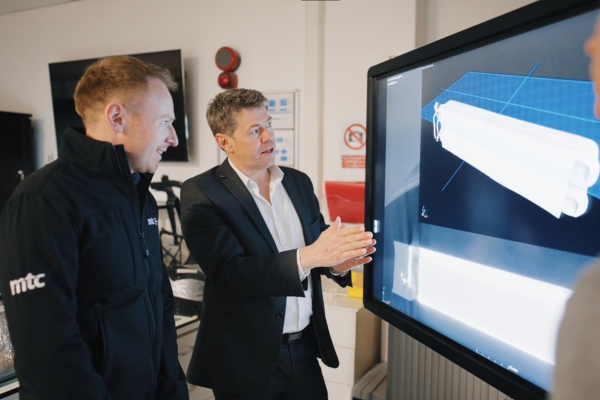
Aerospace Manufacturing Capability for electrical machines (AeroMC): 5 yr (2021-2026) ATI funded £14.9m; Partners: Safran Electrical and Power (lead), MTC, WMG (University of Warwick).
What was the challenge?
AeroMC was created to design a specialised ‘Factory Of The Future’ and implement the first building block: a semi-automated Pilot Line at Safran Electrical and Power Pitstone to test and prove out high volume production for the latest advances in aerospace electric / hybrid machines.
Where was the innovation / technology impact?
WMG and MTC worked with Safran Electrical and Power to help transition manufacturing processes to advanced digitalisation production processes for the latest electric/hybrid machines. Within this, the teams supported design for manufacture, manufacturing process trials, system integration requirements and capacity planning. AeroMC has exemplified the way in which HVM centres can work together to deliver effectively for industry.
Project recognition and future opportunity
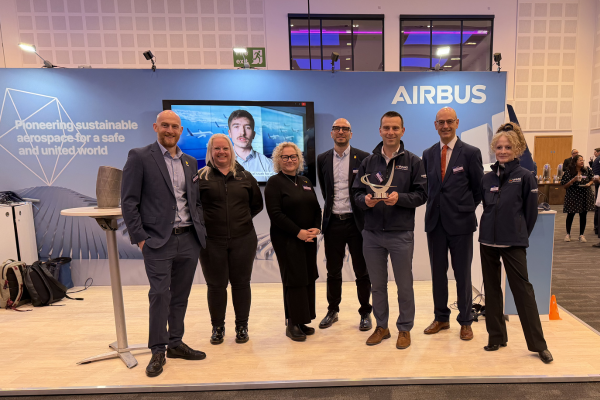
AeroMC won the prestigious ATI 2025 Team Award, with ways of working having been so successful that the partners are now collaborating on a new ATI funded project, HERMEP (Hybrid Electric Research in Machines for Efficient Propulsion) as well as looking to implement wider benefits across Safran UK. AeroMC also won the Highly Commended for the ATI 2025 Shaping the Future award which considers exceptional technological development.
Lead Partner Safran comment
James Owen, Head of R&T for Safran Electrical and Power at Pitstone, praised the power of collaboration: "We've built a good strategic future together, where we intend to keep working together, to keep exploiting the relationships and knowledge we all bring to the table. This is how everyone in the industry should work — together, for the common good.”
Real impact with real partners
ZEST1 - Airbus
Zero Emissions for Sustainable Transport (ZEST1): 4.5 yrs (2021-2026), ATI funded £27.7m project; Airbus (lead) + multiple partners including 9 UK partners and WMG (University of Warwick).
What was the challenge?
ZEST was launched to deliver the technologies that will help make sustainable aviation a reality. The project team successfully developed fuel cell-compatible hydrogen storage and distribution solutions, laying the foundations for zero-emission H2 flight technology and the underpinning infrastructure needed to support future technology work.
Where was the innovation / technology impact?
As part of ZEST, WMG developed new experimental methods and simulation tools of battery and ultracapacitor failure and innovative techniques for detection, mitigation and containment, optimising the integration of energy storage technologies as critical components of the zero-emission aircraft.
Project recognition and future opportunity
ZEST won the prestigious ATI 2025 Shaping the Future Award: for advancing zero-carbon emission flight. Following on from this exceptional project, Airbus continues to invest in the UK’s industrial resilience and talent, working with the ATI on multiple projects, which also includes WMG as partner.
Lead Partner Airbus comment on the award
Alessio Tarantino, ZEST1 Technical Program Lead: “We have had a huge success and fantastic effort by everyone- very proud. We want to continue our collaboration with the ATI for the next phase of the Zero e-challenge and Hydrogen e-commercial aviation”.
Real impact with real partners
ONEHeart
ONEHeart (Out of Cycle Next Generation Highly Efficient Air Transport) 3 yr (2022-2026) ATI funded £25.7m project, Airbus (lead), Alten Ltd, CFMS Ltd and the Universities of Bristol, Cranfield, Greenwich, Surrey, Southampton, Sheffield and Warwick (WMG).
What was the challenge?
The 'Out of cycle NExt generation highly efficient air transport (ONEheart)' project will develop & test methods and capabilities to enable the accelerated development of optimised novel low-environmental impact commercial aircraft.
Where was the innovation / technology impact?
- Develop methods, processes & solutions related to Overall Air Transport System architecture, design & evaluation
- Investigate top-level industrial challenges for sustainable aircraft production
- Develop new capabilities for Overall Aircraft Design, Architecture & Integration
- Develop & enhance capabilities to deliver design for operations
- Explore novel A/C concepts and use cases, supported by testing
WMG worked on selection, modelling & simulation for production processes, new factory systems, and scalability, as well as multifaceted model-based systems engineering initiative. In particular, WMG worked with HVMC partner ARMC to bring together 2 simulation methodologies of discreet event and more high fidelity simulation processes to help streamline / optimise multi-operational performance, providing another excellence demonstration of how HVMC delivers for industry.
Project recognition and future opportunity
WMG looks forward to increasing work with Airbus looking at the latest advances in industrialisation and production processes and is already working on LANDOne ((Landing Advances for a New Decade One) 3 yr (2022 – 2027), ATI funded £23m project with Airbus (lead) + multiple partners: looking at the novel approaches in landing gear maintenance automation to reduce life-cycle costs.
Real impact with real partners
IMPETuS - Collins Aerospace
IMPETuS (Innovative Medium Power Electric Thrust utilisation System): ATI funded £10m 3yr project (2024-2027), Collins Aerospace (lead) with WMG (University of Warwick) and University of Nottingham
What was the challenge?
Developing and testing technologies to scale aircraft electrification and medium-power electric propulsion systems.
Where was the innovation / technology impact?
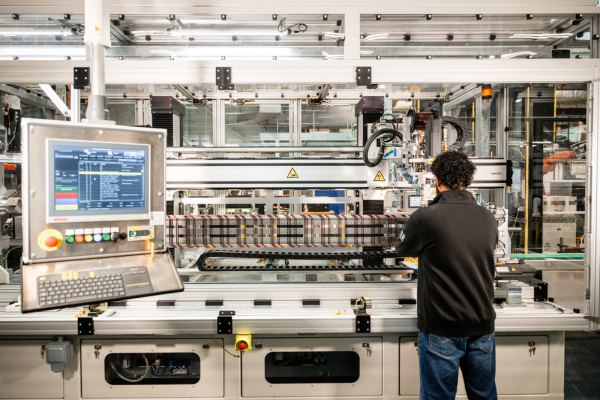
Project IMPETuS is a collaborative research programme leading to TRL 6 demonstration of a scalable, modular, power-dense electric propulsion motor and drive system (MDS) aimed at hybrid/electric aircraft propulsion applications. The powertrain will be designed using innovative technologies for optimised thermal and electrical performance, advanced materials and manufacturing methods. The project will consider safety and certification standards for electric propulsion and develop functional requirements for an electric/hybrid powertrain derived from end customers’ specification for safety of flight. The project aims to position the UK supply chain for future platforms with electric powertrains aimed at small and large hybrid platforms like helicopters/similar through to large commercial aircraft including Next Generation Single Aisle (NGSA)
Project recognition and future opportunity
The project has led to successful engagement across the partners and has already been followed up by active projects in power-dense propulsion motor R&D, continuing to deliver advanced engineering solutions for the latest future platforms in sustainable, hybrid/electric flight.
Real impact with real partners
AMEC 11 Partner consortium - led by Atkins.
AMEC (Advanced Mobility Ecosystem Consortium): 2 yr UKRI Future Flight funded £9.5m program, completion 2026.
Partners: Atkins, Vertical Aerospace, Skyports, NATS, Connected Places Catapult, Cranfield University, Heathrow, Bristol Airport, London City Airport, WMG University of Warwick.
What was the challenge?
This was a first-of-a-kind ecosystem consortium created to accelerate the introduction of Advanced Air Mobility (AAM) in the UK, by creating and testing technological developments in aircraft electrification, airspace management, operational procedures, and the systems and supporting business cases needed to introduce a new model of arial passenger transport in the UK.
Where was the innovation / technology impact?
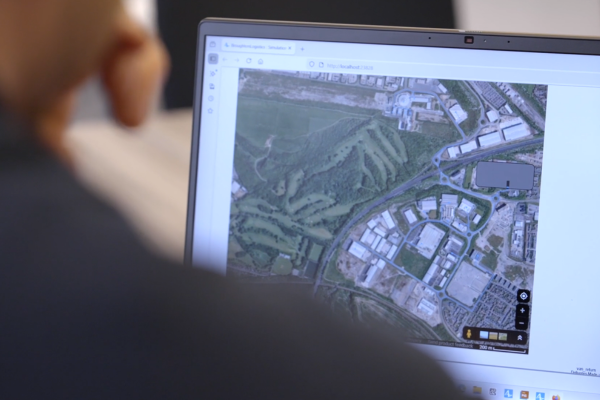
The project demonstrates the feasibility of a UK AAM ecosystem using Vertical Aerospace’s emission-free VX4 eVTOL aircraft with physical flights as well as a simulation flight to demonstrate urban connectivity, with the development of the UK’s first vertiport testbed at Bicester Motion, dedicated to pioneering mobility technology and critical to enabling the next generation of electric flight in the UK
WMGs work included the development of open hardware/software standards for rapid eVTOL charging and battery diagnostic algorithms working with Vertical Aerospace, as well as battery safety management methods in a vertiport working with Skyports.
These demonstrations explore key aspects of the passenger journey, vehicle operation, airspace navigation, ground charging, security provision and local stakeholder engagement. Heathrow Airport, Bristol Airport, Skyports and NATS, the UK’s national air navigation service provider, have collaborated to deliver the physical and digital infrastructure to facilitate these missions through a complex airspace environment.
The two-year project was overseen by aerospace engineering experts AtkinsRéalis as consortium lead. AAM offers a new form of travel, enabling cost-effective connectivity into congested urban areas and across regions under-served by existing infrastructure. Other nations are racing to establish their own AAM ecosystems by 2025 – this project ensures the UK will be amongst the leaders in this new decarbonised form of transport. NATS also launched its whitepaper which outlines key learning and recommendations to enable the growth of the Advanced Air Mobility industry following the success of Project AMEC.
Project recognition and future opportunity
With the completion of the Skyports Vertiport, demonstrating the feasibility of an AAM ecosystem in the UK, this will be a critical facility for testing electric vertical take-off and landing (eVTOL) ground infrastructure and flight operations, and will serve as a key network node and living lab for the Consortium’s wider testing programme and public and stakeholder engagement.One of the largest funded projects in Future Flight 3, this project has served as a major ecosystem demonstrator critical to accelerate the introduction of AAM in the UK, with considerable opportunities to help progress the UK into commercial AAM operations.
Lead partners comment
With the completion of the Skyports Vertiport, demonstrating the feasibility of an AAM ecosystem in the UK, this will be a critical facility for testing electric vertical take-off and landing (eVTOL) ground infrastructure and flight operations, and will serve as a key network node and living lab for the Consortium’s wider testing programme and public and stakeholder engagement.One of the largest funded projects in Future Flight 3, this project has served as a major ecosystem demonstrator critical to accelerate the introduction of AAM in the UK, with considerable opportunities to help progress the UK into commercial AAM operations.

Real impact with real partners
LEIA - Large scale integration demo of hybrid electrical architecture - Airbus
LEIA - Major Clean Aviation (EU Horizon) funded 2 yr project €35m: Dec 25-Dec 27, 25 partners including AVL, Collins Aerospace, EASN, Fraunhofer, Liebherr, Lynxeo, NLR, Safran, Saft, Wroclaw University, WMG.
What was the challenge?
LEIA (Large scale Integration demonstrator of hybrid electrical Architecture) is a Clean Aviation research initiative focused on maturing technologies for future short-medium-range (SMR) more hybrid/electric aircraft.
The objective is to develop a more/hybrid electric non-propulsive energy (NPE) architecture for the future short-medium-range (SMR) aircraft, ultimately aiming at reducing greenhouse gas emissions in aviation.
Specific technical hurdles include:
- Increasing Power Demand: Managing a disruptive transformation in energy management to support electrical power demands.
- System Integration: Transitioning high-power systems from pneumatic and hydraulic sources to electrical ones while minimizing overall system weight and sizing.
- High Voltage Challenges: Addressing new challenges associated with the introduction of high-voltage networks, such as network stability, power quality, and protection against partial discharge or arcing.
- Thermal Management: Demonstration of efficient absorption and management of transient thermal loads generated by high-power electrical functions without affecting passenger comfort or the overall aircraft thermal balance.
Where was the innovation / technology impact?
The LEIA (Large scale Integration demonstrator of hybrid electrical Architecture) project provides a systems engineering approach to validate and integrate novel technologies.
Key components of the solution include:
- Disruptive Architecture: Selecting and validating a more electric/hybrid electric NPE architecture that allows for optimized aircraft platform-level electrical power propulsion.
- Technological "Bricks": Developing and maturing critical hardware and software components, including:
- Energy Sources: batteries and high-power generators.
- Distribution: High-voltage primary and secondary power distribution units (PDUs) and advanced wiring systems (EWIS).
- Management: A software-based Energy Supervisor function to coordinate and optimize energy usage across all systems.
- Ground Test Demonstrator (GTD1): Creating a physical modular platform to perform end-to-end integration of NPE technologies from provisioners to consumers, aiming for TRL5 (Technology Readiness Level 5) by 2027.
- Virtual & Remote Testing: Utilizing multi-physics simulation platforms and "connected system testing" to link remote components from different facilities, reducing costs and risks during physical integration.
WMG will be working primarily within the HV electrical network generation work activity, looking at advanced manufacturing and materials developments in e-machines, working in particular with Collins Aerospace.
Project recognition and future opportunity
The implementation of the LEIA project's technologies is expected to yield several significant environmental and industrial benefits:
- Emissions Reduction: The non-propulsive energy system is a core enabler to contribute to a 30% CO2 emissions reduction at the SMR aircraft level compared to the 2020 state-of-the-art reference aircraft.
- Certification Readiness: Advancing critical technologies to CRL4 (Certification Readiness Level 4) and providing a roadmap to CRL6, facilitating faster market entry and regulatory approval.
- European Autonomy: Strengthening the EU supply chain and maintaining a leading global position in sustainable aviation technologies.
- Knowledge Transfer: Creating new high-value engineering skills and capacities within the European workforce for designing and maintaining next-generation aircraft.
Real impact with real partners
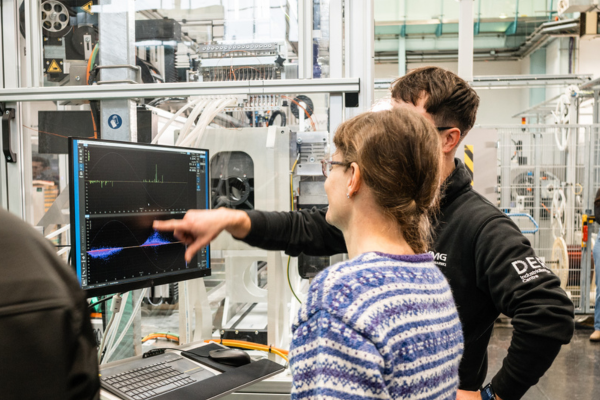
Battery thermal runaway in e VTOL aircraft: risks, mitigations, and firefighting strategies - CAA
Battery thermal runaway in e VTOL aircraft: risks, mitigations, and firefighting strategies report commissioned and published by the CAA (2026) and in the public domain.
What was the challenge?
This report presents the Thermal Runaway (TR) risks associated with lithium-ion battery systems in electric Vertical Take-Off and Landing (eVTOL) aircraft, a critical concern for the UK and global aviation sector’s transition towards net-zero emissions. The report aims to provide a foundation starting point to inform stakeholders, including eVTOL OEMs, regulators, Rescue and Fire Fighting Service (RFFS) providers at airports, local fire and rescue services, researchers and the public about the causes, consequences, and mitigation strategies for battery TR-related hazards in the emerging Urban Air Mobility (UAM) sector.
Specific technical hurdles include:
The report offers a foundational framework for understanding and managing battery TR in eVTOL aircraft. It combines fundamental theory, lessons learned from real-world EV incidents, and stakeholder insights to propose actionable strategies for RFFS preparedness for eVTOL aircraft operation. While not a regulatory guideline, it is expected to serve as a critical resource for shaping future standards and operational protocols in the UAM sector.
Where was the innovation / technology impact?
This project continues WMG’s trusted engagement with the CAA over many years, and has already progressed to additional work in this important field of considerations for eVTOL risks and mitigation management.
Project recognition and future opportunity
The UK is leading the way on standards for urban air mobility. We are moving beyond the futuristic vision to the operational reality.
We're building the practical, evidence-based foundation that eVTOL aircraft manufactures need to begin commercial operation in the UK and beyond.
Anup Barai - Principal Investigator
Real impact with real partners
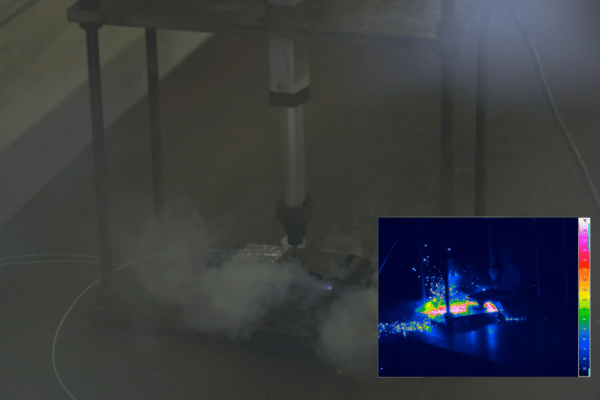
STPA-based safety analysis of eVTOL operations
STPA-based Safety Analysis of eVTOL Operations, commissioned by the CAA.
What was the challenge?
eVTOL aircraft have the potential to transform regional and urban travel by providing faster, quieter, and more sustainable transport options. However, introducing a new type of aircraft into an already complex aviation system presents challenges across airspace management, infrastructure, operations, automation, and regulation.
The challenge was to identify potential safety risks and operational considerations before commercial services begin, ensuring that future aircraft, operators, vertiports, air traffic services, and regulators can work together safely and efficiently.
Where was the innovation / technology impact?
The project brought together experts from academia, the regulator, and industry to take a whole-system view of future eVTOL operations. Through workshops, stakeholder engagement, operational studies, and advanced safety analysis techniques, the team assessed how different parts of the future air mobility ecosystem interact.
The work identified key opportunities for enhancing future regulations, operational procedures, and infrastructure requirements, particularly in areas such as:
- Airspace integration.
- Vertiport operations.
- Automation and digital systems.
- Energy management and charging infrastructure.
- Pilot and operator training.
- Safety oversight and assurance.
The project also developed a practical framework for prioritising safety recommendations, helping decision-makers focus on the issues most critical to the successful deployment of future air mobility services.
Project recognition and future opportunity
The project's findings were published by the UK Civil Aviation Authority in CAP3141: STPA-based Safety Analysis of eVTOL Operations, providing one of the UK's most comprehensive studies into the safe integration of eVTOL aircraft. The report is intended to support regulators, operators, infrastructure providers and the wider Advanced Air Mobility community as the sector develops.
The collaboration has:
- Supported the CAA's Future of Flight programme and ongoing regulatory development.
- Contributed to discussions around the UK's future airspace modernisation activities.
- Strengthened collaboration between academia, government and industry.
- Positioned WMG as a leading contributor to the safety and deployment of future aviation technologies.
The outcomes provide a foundation for future research, regulation and commercial deployment of Advanced Air Mobility services in the UK and internationally. These findings are now being considered by the UK Civil Aviation Authority as part of its ongoing regulatory development work. Findings will also feed into the Airspace Modernisation Strategy, to allow for new airspace users as new technology takes flight.
Lead Partner comment
Rick Newson, Co-Chair of the eVTOL Safety Leadership Group, at the UK Civil Aviation Authority, said:
“With eVTOL aircraft expected to enter UK airspace within the next few years, proactive planning and coordination is essential to ensure their safe, responsible and seamless integration.
“This research provides valuable insights into the complex challenges and potential risks ahead.
“The results will feed into our ongoing regulatory development to enable innovation while maintaining the highest safety standards.”
Professor Siddartha Khastgir, Head of Safe Autonomy at WMG, University of Warwick, said:
“For any technology, ensuring its safety is an absolute requirement for it to succeed commercially. And for emerging technologies like eVTOLs, a systems thinking approach to safety is necessary to understand the multiple interactions between the stakeholders.
“Underpinned by an open and transparent discussion, we commend and are grateful for this sector’s willingness to participate in this study, enabling them to identify and prepare for safety challenges for future eVTOL operations.”
Simon Meakins, Co-Chair of the eVTOL Safety Leadership Group and Director of Advanced Air Mobility at Bristow Group, said:
“This is an extremely valuable piece of work which proactively identifies potential risks and enables them to be mitigated effectively. With the emergence of new technologies it is essential to pragmatically manage safety from the start, and this project is an important part of that process.
“I thank the entire team who has been engaged in the project for their dedication.”
Real impact with real partners
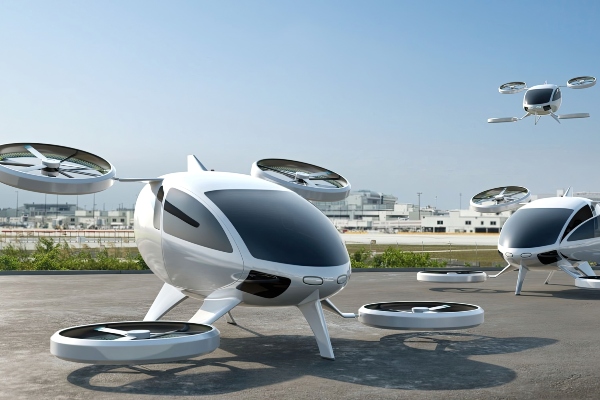
Enabling safe hydrogen aviation through systems-based safety analysis
Enabling safe hydrogen aviation through systems-based safety analysis, commissioned by the CAA.
What was the challenge?
Hydrogen is emerging as one of the most promising technologies for helping aviation achieve net-zero emissions. However, introducing hydrogen as an aviation fuel presents new challenges that extend beyond aircraft design, including airport infrastructure, ground operations, refuelling processes, emergency response, certification and regulation.
Recognising these challenges, the CAA established the Hydrogen Challenge and Regulatory Sandbox programme to work collaboratively with industry and academia to better understand hydrogen-related risks, identify gaps in existing regulations and develop evidence-based recommendations for future policy.
The WMG project focused on two critical areas:
- Hydrogen refuelling operations at airports.
- Hydrogen fuel-cell propulsion systems for future aircraft.
The objective was to identify potential safety challenges early in the development process and support a safe, practical and scalable pathway for the introduction of hydrogen aviation technologies.
Where was the innovation / technology impact?
The project applied System-Theoretic Process Analysis (STPA) to assess hydrogen aviation from a whole ecosystem perspective, examining how aircraft, infrastructure, procedures, personnel and regulatory frameworks interact. This approach helps identify risks that may not be visible through traditional engineering safety assessments alone.
For hydrogen refuelling operations, the study explored future airport scenarios involving hydrogen storage, handling and aircraft refuelling, highlighting considerations around training, safety procedures, hazard management and emergency response.
For hydrogen propulsion systems, the work examined challenges associated with fuel-cell technologies, power system integration, thermal management, monitoring systems and safe operation of hydrogen-powered aircraft.
The project demonstrated how systems-based safety approaches can be used to inform future regulatory frameworks and provide a structured way of evaluating emerging aviation technologies before they enter commercial service.
Project recognition and future opportunity
The project directly supported the objectives of the CAA Hydrogen Challenge, which aims to improve regulatory readiness for hydrogen aviation and help the UK become a global leader in the development and deployment of hydrogen-powered flight.
The work has contributed to:
- Improving understanding of hydrogen-related operational and safety risks.
- Supporting future hydrogen certification and regulatory development activities.
- Informing the development of airport hydrogen storage and refuelling concepts.
- Strengthening collaboration between regulators, academia and industry.
- Supporting the UK's wider Jet Zero ambitions and future sustainable aviation initiatives.
As hydrogen technologies continue to mature, the project's outputs provide a valuable evidence base for future sandbox trials, demonstration programmes, certification activities and commercial deployment of hydrogen-powered aircraft and airport infrastructure.
How we work in Aerospace

Understand the challenge
We work closely with industry to understand complex challenges and opportunities.
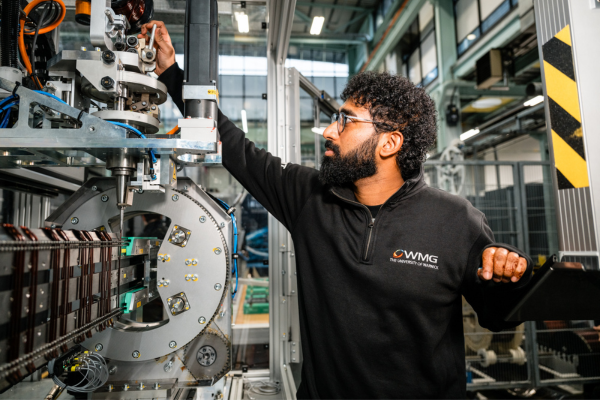
Research and develop
Applying world-class research and facilities to create innovative solutions.
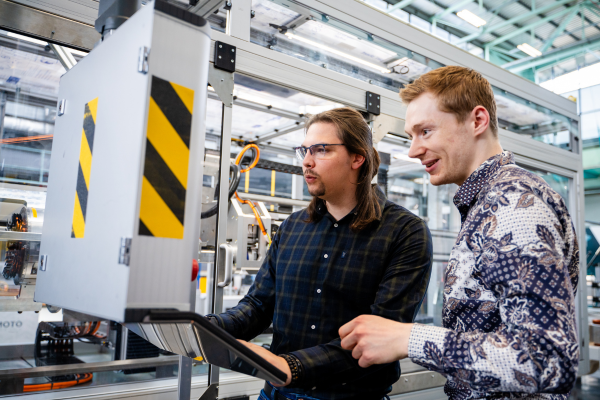
Demonstrate and validate
Testing and validating in real-world environments with measurable outcomes.
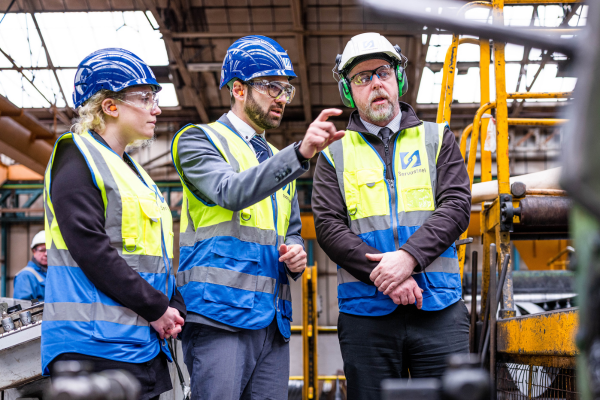
Industrialise and scale
Supporting adoption, scaling and supply chain integration.
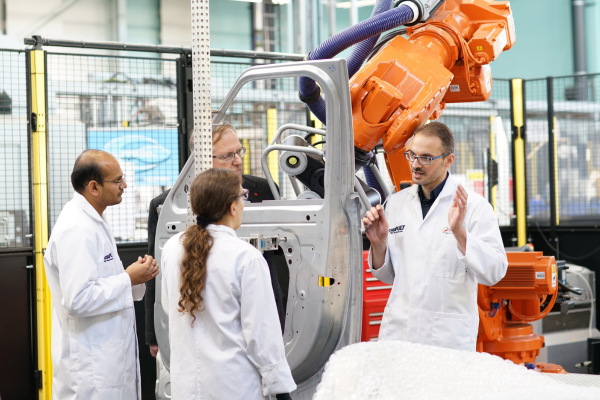
Deliver impact
Creating lasting economic, societal and environmental value.