
WMG News - Latest news from WMG
WMG announces new partnership with global engineering company
WMG, at the University of Warwick, has announced a new two year research partnership focusing on sustainable high-performance sealing materials.
Researchers at WMG’s Link opens in a new windowInternational Institute for Nanocomposites Manufacturing (IINM), led by Dr Chaoying Wan, will be working with experts at James Walker to develop the next generation of sealing compounds which will be compliant with future per- and poly- fluoroAlkyl substances (PFAS) regulations.
In February 2023, the European Chemicals Agency announced a proposal for the European Economic Area that will effectively lead to a ban on all PFAS materials, due to their persistence in the environment.
This research project will use high quantity techniques to develop and identify novel elastomer compounds that comply with proposed PFAS regulations, for use in critical industrial applications drawing on WMG’s expertise in elastomer and polymer technology.
The new technologies developed will have a high impact on a wide range of industries from transportation, oil/gas, semiconductor to hydrogen storage and wind turbines.
Conventional high performance sealing compounds rely on PFAS, as these materials are resistant to extremes of temperature and aggressive chemicals. PFAS are essential to the semi-conductor, aerospace, petrochemical, defence and nuclear industries for example, and there are currently no suitable replacement materials available. Alternative sealing materials are urgently needed to substitute PFAS.
Dr Mike Eason, Technical and Quality Director at James Walker commented: "Industrial dependence on PFAS elastomers is a global issue with supply chain impact already seen. I am delighted that we will work with Dr Wan and her team to identify and develop materials which will help industry be compliant with the proposed regulations. This partnership will accelerate James Walker’s development of seal materials for critical industry. WMG has small scale, advanced, mixing capability, with knowhow regarding nanofillers and polymer science that will allow James Walker to rapidly design, manufacture and screen bench-scale test formulations.
“I believe the combination of James Walker’s history and expertise in critical industrial sealing together with WMG’s state of the art capabilities will enable rapid development and commercialisation of materials. James Walker is committed to developing solutions to the PFAS regulations faced by global industry."
Dr Chaoying WanLink opens in a new window, Reader of Functional Polymers and Nanocomposites at WMG, University of Warwick explains: "Collaborating with James Walker to develop alternatives for PFAS seals is an important and exciting opportunity. Our elastomer research facility is supported by High Value Manufacturing Catapult CentreLink opens in a new window (HVMC), equipped with the latest technology, including a rubber process analyser (RPA) with wide temperature range - it is the only one in the UK, and one of only a few in the world with the capability to simulate dynamic elastomer performance at very low temperature.
“This function is extremely useful to compare differences in formulation design for applications such as high pressure or low temperature sealing. I am very much looking forward to working with the James Walker team on the development of new material options for high performance sealing applications and advancing our knowledge of polymer formulation and performance."
Find out more about WMG’s Nanocomposites research here: Nanocomposites (warwick.ac.uk)
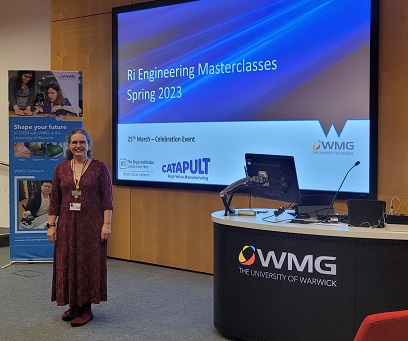
WMG celebrates a decade of Engineering Masterclasses
The Outreach Team, at WMG at the University of Warwick, is proud to have completed a decade of Royal Institution Engineering Masterclasses.
Over the past 10 years staff and students, from WMG, have supported 250 pupils from 45 schools across Warwickshire and the West Midlands. The Masterclasses have opened the eyes of young people to the excitement and value of engineering and, have in turn, inspired the next generation of scientists, mathematicians and engineers.
A special celebration event was held to mark the occasion with 2023 masterclass students and their families and teachers. At the event, University of Warwick alumna and award-winning engineer, Yewande Akinola delivered a key note before presenting certificates in a mini graduation ceremony.
 Professor Margaret Low, WMG’s Director of Outreach and Widening Participation said: “WMG has supported the Ri with the masterclasses, since 2013, with workshops and activities that put our cutting-edge engineering research into context for young people. We even found a way to deliver the activities online during the pandemic.
“These experiences allow students to see how their school learning applies to complicated and world-changing technologies. Through our outreach programmes we hope to inspire young people to pursue careers in STEM, widen participation in higher education and make the STEM workforce more diverse.”
Mujthaba Ahtamad (Mosh), Senior Teaching Fellow at WMG, who worked alongside Professor Margaret Low on some of the original masterclass sessions, said: “With Margaret’s enthusiasm and motivation, she really brought everything together, including inspiring the teaching team. It was really evident that the attendees were very excited to attend the Masterclasses, (perhaps more so than attending school!).”
Dr Phil Jemmett, Widening Participation Co-ordinator at WMG added: “The Royal Institution is a prestigious organisation with a long history of being at the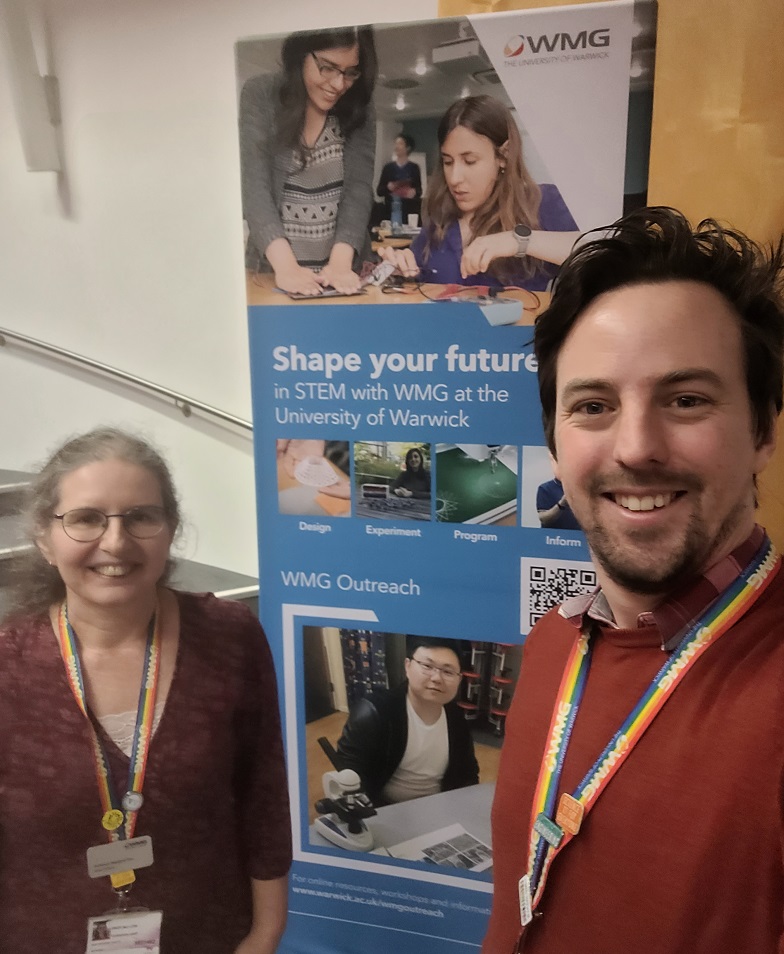 forefront of teaching science. Partnerships between universities in the local community, and the fact that these famous, royal-chartered groups are housed only a stone’s throw from Buckingham Palace, adds so much value to the student experience.
“This is not just an extra lesson that happens to be on a Saturday, this is an experience of just how far these students can go with their engineering talents. We hope that the students felt every bit of the prestige of both WMG and the Royal Institution.
“We would also like to thank the High Value Manufacturing Catapult who have supported these activities since 2019.”
Rachel Dorris, Clothworkers’ Fellow of Mathematics at the Royal Institution, said: “On behalf of the Royal Institution and the Masterclass team, I would like to congratulate you for successfully shepherding the Engineering Masterclasses at WMG to its 10th anniversary.
“We appreciate your hard work as an Ri collaborator - inspiring future generations within your community in the world of engineering.”
Find out more about WMG’s Outreach Programme here: Public engagement and Outreach (warwick.ac.uk)
How road rage really affects your driving – and the self-driving cars of the future
 New research by WMG at the University of Warwick has identified characteristics of aggressive driving – which impact both road users and the transition to self-driving cars of the future.
In the first study to systematically identify aggressive driving behaviours, scientists have measured the changes in driving that occur in an aggressive state. Aggressive drivers drive faster and with more mistakes than non-aggressive drivers – putting other road users at risk and posing a challenge to researchers working on self-driving car technology.
The research comes as a leading Detective Chief Superintendent, Andy Cox, warns of the perils of such driving – warning that the four-five deaths on UK roads daily are “predominantly caused by dangerous and reckless drivers”.
The study categorised aggressive driving behaviours and showed the key aspects of this dangerous driving style. Published in Accident Analysis and Prevention, it reported key findings:
- Aggressive drivers have a 5km/h mean faster speed than non-aggressive drivers;
- Aggressive drivers also exhibit more mistakes than control groups – such as not indicating when changing lanes;
- Aggressive driving is categorised as any driving behaviour that intentionally endangers others psychologically, physically, or both.
Lead author of the study Zhizhuo Su, PhD student, across both the Intelligent Vehicles Research Group and the Institute of Digital Healthcare at WMG, University of Warwick, said: “While it’s unethical to let aggressive drivers loose on the roads, participants were asked to recall angry memories, putting them in an aggressive state, while performing a driving simulation. These were compared to a control group, who weren’t feeling aggressive.
“This research is significant because, as the era of autonomous vehicles approaches, road traffic will be a mix of both autonomous and non-autonomous vehicles, driven by people that may engaged in aggressive driving. This is the first study to characterise aggressive driving behaviour quantitatively in a systematic way, which may help the autonomous vehicles identify potential aggressive driving in the surrounding environment."
Roger Woodman, Assistant Professor at WMG and co-author of the study, added: “Over the last few decades, road safety policies, infrastructure changes, and improved vehicle safety have significantly reduced road casualties. However, human error, which is often a result of aggressive driving, remains a leading cause of crashes. To make driving safer, our research focuses on methods for understanding the state of the driver, to identify risky driving behaviours, through the use of driver monitoring systems (DMS). This will enable the driver to be alerted when they are at an increased risk of an accident and allow the vehicle to deploy calming methods, such as altering the cabin noise level, playing relaxing music, or ultimately reducing the speed of the vehicle.”
Detective Chief Superintendent Andy Cox, NPCC lead for fatal crash investigation and OCU Commander at the Metropolitan Police, added: ‘In the UK, on average between four-five people die every single day in a road crash. This widespread devastation is predominantly caused by dangerous and reckless drivers. Having met many bereaved families who live with the lifelong heartache of prematurely losing a loved one in such a violent manner, I recognise the need to instigate substantial change across the road safety sphere; which includes driving culture, standards and legislative options.
“Those drivers who choose to commit road crimes such as aggressive driving, intimidating other sensible and safe road users – should recognise the risk they pose to themselves and others, and frankly the law should remember that a driving licence is assigned after a person demonstrates themselves to be safe and earns the right to drive. We should seek to maintain high standards and ensure the system sees the right to drive as a privilege rather than an entitlement. Currently I think the balance favours the individual rather than the law abiding collective.”
Read the full paper here.
Ends
University of Warwick press office contact:
Annie Slinn
Communications Officer | Press & Media Relations | Email: annie.slinn@warwick.ac.uk
Battery technology research collaboration initiated between OXECO and WMG, the University of Warwick
- OXECO and WMG at the University of Warwick will conduct a 15-month research programme into lithium-ion battery coatings
- Research is expected to advance next generation active materials and coating foils used to create electrodes
- The partnership aims to improve lithium-ion battery performance, longevity, and manufacturing
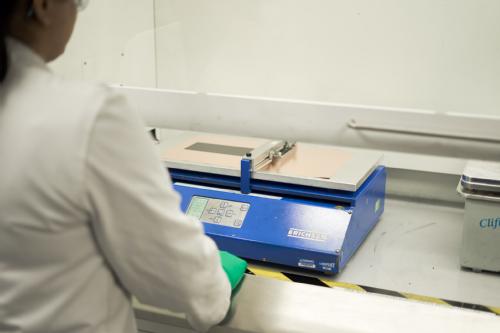 OXECO, a spin-out of the University of Oxford, has partnered with WMG at the University of Warwick, for a 15-month collaboration on lithium-ion battery technology. The partnership aims to advance the lithium-ion battery industry by leveraging WMG’s research on battery cell development and optimisation, alongside OXECO’s unique technology platform.
The research programme aims to enhance the performance, longevity, and ease of manufacturing of lithium-ion batteries by focusing on the preparation of active materials and coating foils used to create electrodes.
The programme is expected to yield transformative results in the improvement of current lithium-ion batteries and be a significant step towards the development of more efficient, reliable, and sustainable energy storage solutions.
This partnership will further OXECO’s aim to leverage innovative surface chemistry to accelerate our net-zero future. Jon-Paul Griffiths, founder and Chief Technology Officer at OXECO, commented that: “This is a remarkable opportunity to help steer the progress of battery technology - a crucial industry for the realisation of a sustainable energy economy. WMG has exceptional proficiency and credibility in battery research, coupled with the ability to manufacture from bench to pilot scale.
"This marks the initial phase of our efforts towards the integration of ONTO™ chemistry into lithium-ion batteries, and we are also delving into other domains of our chemistry for diverse applications in batteries, such as separator membranes. Our team is dedicated to forging a path towards cutting-edge technological advancements that will shape the future of energy storage solutions.”
WMG has an international reputation for working successfully with industry, with a history of partnering with pioneering entities, including Lotus, Aston Martin, JLR, BAE Systems, IBM, and Plug and Play, as well as the latest technology innovators.
Dr Mark Copley, Chief Engineer in WMG's Electrochemical Materials and Manufacturing team, concluded: “We are excited to be partnering with OXECO. This collaboration will draw on the University’s extensive expertise in battery technologies and OXECO’s chemistry to improve battery performance and longevity and help the global transition to sustainable power solutions through innovative research and training.”
About OXECO
OXECO is a chemistry technology company that designs, develops, and manufactures thin coatings and materials for the transport and clean technology sectors. The company’s core innovative technology controls the way that surfaces behave using cutting-edge carbene chemistry. This technology was born in the University of Oxford’s Department of Chemistry and developed over more than two decades.
George Freeman MP, Minister for Science, Innovation and Technology visits WMG at the University of Warwick
George Freeman MP, Minister of State in the Department for Science, Innovation and Technology has visited the University of Warwick.
The Minister was given a tour of the Centre for Imaging, Metrology and Additive Technologies where he heard about WMG’s ground-breaking research in advanced measurement techniques (metrology), Micro-CT scanning and additive manufacturing (3D printing).
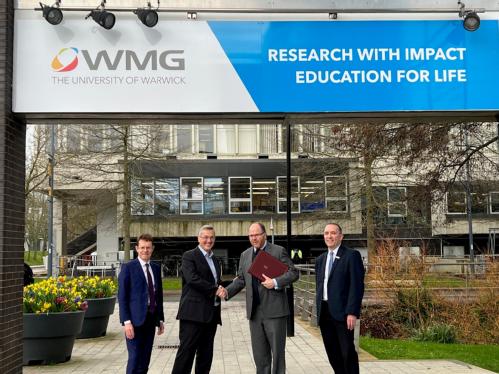
Professor Mark Williams explained how the University is working with a team in Kharkiv, Ukraine, to develop software that rapidly identifies life-threatening injuries so they can prioritise who needs emergency surgery soonest.
Minister of State at the Department of Science, Innovation and Technology, George Freeman, said: “This ground-breaking digital advanced imaging software is one of the outstanding technologies being developed by Warwick University researchers & companies in the Warwick manufacturing & engineering cluster, but also the range of applications of these digital technologies to deliver transformational improvements from cutting NHS waiting times, one of the PM’s Top 5 priorities, to advanced digital twin manufacturing, to forensic & materials science. This is world class digital innovation supporting transformational innovation here in the West Midlands cluster being developed by Mayor Andy Street with local Universities & businesses.”
Stuart Croft, Vice Chancellor of the University of Warwick said: “I’m delighted to welcome the Minister to our campus and to be able to showcase some of our ground-breaking research to him.
“We have a proven track record of working closely with a wide range of partners to find solutions to real world challenges which have a tangible impact on society.
“The research we have shown him today, to speed up the triaging process for injured people, is just one example of how our research can have positive impact. We’re helping to save lives in emergency situations through this new technology.”
Professor Mark Williams, WMG at the University of Warwick, said: “As well as being useful in other emergency situations such as earthquakes, the research is also applicable to doctors in trauma wards – already stretched by pressures experienced by the NHS – who need to triage patients quickly.
“At WMG, we will be using 3D imaging to create replicas of human anatomy and shrapnel wounds. These will act as ‘test objects’, which experts in computer science can then use to calibrate their technology and AI programme.”
Based in the International Manufacturing Centre at WMG, CIMAT hosts Metrology, X-ray Computed Tomography, and Additive Manufacturing capabilities. There is a wide range of scanning technologies for the 3D characterisation and validation of complex internal and external architectures, including high resolution laser scanning, microfocus CT and immersive visualisation. The additive technologies capabilities include the development and application of advanced functional metallic and multi-material solutions for exploitation in the high value manufacturing sector.
WMG is considered a leading international role model for successful collaboration between academia and the public and private sectors by successive UK Governments.
WMG awarded funding for key battery research
WMG, at the University of Warwick, has been awarded a share of £29 million funding, from the Faraday Institution, to develop new insights into electrochemical energy storage.
The three WMG research projects are entitled Extending Battery Life; Battery Modelling; and Battery Safety - crucial research areas as the UK powers ahead with transport electrification.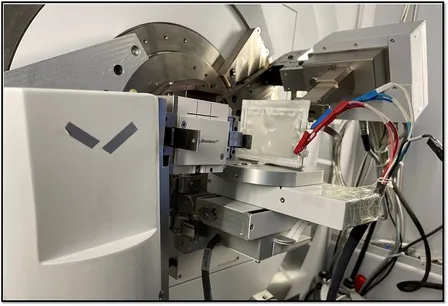
The Faraday Institution, a leader in energy storage research, has announced investment in a total of six key battery research projects aimed at delivering commercial impact. These existing projects on extending battery life, battery modelling, recycling and reuse, safety, solid-state batteries, and lithium-sulfur batteries, have been reshaped to focus on the areas with the greatest potential for success.
Professor Pam Thomas, CEO, Faraday Institution, commented: “The Faraday Institution is committed to identifying and investing in the most promising and impactful battery research initiatives. This project refocusing is an important part of that process, and allows us to direct even more effort towards those areas of research that offer the maximum potential of delivering societal, environmental, and commercial impact.”
Business and Trade Minister Nusrat Ghani said: “Growing the battery industry is vital to positioning the UK as the best location in the world to manufacture electric vehicles.
“This funding will help businesses become more innovative and productive, helping to create more skilled, high-wage jobs across the UK, future-proofing our economy and supporting our ambition towards a cleaner, greener future.”
The funding for these projects came from the Faraday Battery Challenge, delivered by Innovate UK for UK Research and Innovation.
WMG project details
Extending Battery Life
The Faraday Institution’s Degradation project, a centre of excellence in understanding degradation mechanisms in lithium nickel manganese cobalt oxide NMC811-graphite batteries, is expanding to investigate other systems of industrial interest. Researchers will apply their knowledge and new characterisation techniques to investigate the degradation of systems comprising silicon-rich composites and those using anode-free architectures. On the cathode side, the project will investigate the higher nickel content NMC, lithium manganese iron phosphate (LMFP), and tungsten-doped lithium nickel oxide (LNO). Tungsten-doped LNO is a promising material with high capacity that was developed by the Faraday Institution’s FutureCat project. Researchers will also investigate new electrolyte formulations compatible with the anode and cathodes under study and their impact on degradation.
The project will also include new pouch cell fabrication activity at WMG, which will allow researchers from across the project to access reproducible and reliable cells to perform degradation studies at more industrial-relevant scales. Pouch cells to be fabricated will include tungsten-doped LNO cathode developed at the University of Sheffield.
The project is led by Co-Principal Investigators Professor Dame Clare Grey, University of Cambridge, and Professor Louis Piper of WMG. The team also includes researchers from the universities of Birmingham, Newcastle, Oxford, Sheffield, Southampton, Imperial College London and UCL.
Battery Modelling
The Multi-scale Modelling project has been refocused to further develop parameterisation methods and techniques for next-generation models and modelling of batteries beyond lithium-ion. Researchers will focus on methods to determine accurate input parameters for models that define ageing and that accurately represent what happens at battery interfaces, which could support the growth of the Battery Parameterisation eXchange (BPX) standard being formed by the Faraday Institution.
Additionally, the project aims to grow the capabilities of PyBaMM, an open-source physics-based model, to enable better health and performance prediction at cell and pack level, linking to commercial software, and growing the PyBaMM community. The project will also develop ‘PRISM’, an industry-focused equivalent circuit model framework integrated with and complementary to PyBaMM, which will incorporate machine learning approaches.
The project is led by Prof Gregory Offer, Imperial College London, with additional researchers from the universities of Birmingham, Bristol, Oxford, Portsmouth, Southampton and Warwick.
Battery Safety (SafeBatt)
SafeBatt is investigating the science behind cell and battery failure using advanced instrumentation, imaging and high-speed techniques to characterise failure modes and investigate the interplay between cell ageing, degradation and safety. Cell-to-cell failure propagation is being studied and detection methods and mitigation strategies to prevent thermal runaway and propagation are being developed and demonstrated. A model that can predict thermal runaway and simulates the external flow of gas, heat and ejecta during failure will be developed, informing the design of safer battery systems.
The project will also conduct tests in larger format cells and at module level to help industry and other stakeholders understand how EV and micro-mobility battery packs and static energy storage systems fail in real-world scenarios. This builds on previous research that identified a potentially explosive vapour cloud, observed under certain conditions of lithium-ion cell failure. This research will continue to inform the project’s international dissemination activities (where SafeBatt researchers are playing a leadership role globally) and provide a central point of access for industry, government bodies and fire services seeking knowledge and engagement on lithium-ion battery safety related issues.
Led by Prof Paul Shearing of UCL, SafeBatt also includes researchers from the universities of Cambridge, King’s College London, Newcastle, Sheffield and Warwick.
Research in these areas will progress over the next two years to 31 March 2025.
AI triaging of shrapnel wounds developed through UK and Ukraine partnership
Researchers in the UK and Ukraine are teaming up to develop artificial intelligence (AI) that will help treat those wounded by shrapnel.
Scientists at WMG at the University of Warwick and the Kharkiv National University of Radio Electronics (NURE) in Ukraine are developing AI software that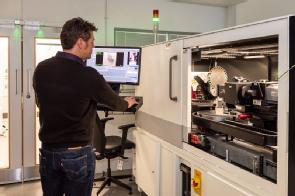 will help medics understand which patients require immediate treatment, due to life-threatening wounds that might not be obvious with the naked eye. The state-of-the-art technology enables users to feed data from a CT scan to a computer programme, which will help medics make quick decisions on which of the injured require most immediate treatment.
The project is one of 33 being discussed at the House of Lords this evening, to mark the one-year anniversary of the Twinning initiative – an institution-to-institution collaboration model which allows universities around the world to support their Ukrainian counterparts in real, concrete ways. It is funded by a £5m grant from Research England, administered by Universities UK International (UUKi).
Professor Mark Williams, WMG at the University of Warwick, said: “A huge problem for medics dealing with many severely injured people at the same time is the rapid identification of life-threatening injuries so they can prioritise who needs emergency surgery soonest. This is why we’re developing software with the team in Kharkiv to help address this issue. As well as being useful in other emergency situations such as earthquakes, the research is also applicable to doctors in trauma wards – already stretched by pressures experienced by the NHS – who need to triage patients quickly.
“For WMG’s part of the project, we will be creating phantom models using 3D imaging – replicas of human anatomy and shrapnel wounds. These will act as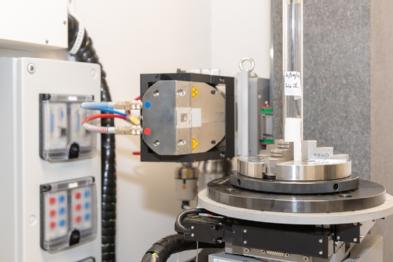 ‘test objects’, which experts in computer science can use to calibrate their technology and AI programme.
“It is very exciting to be able to bring our expertise in Additive Manufacture at WMG to deliver a rapid solution to such an important humane need, allowing us to truly exploit the incredible advantages in speed of response and material complexity offered by this technology.”
Anastasiya Chupryna, coordinator of Radio Electronics-Warwick Allied Research and Development (REWARD) project at NURE said: “We would like to thank our partner Warwick University for supporting us in joint research activities. Within this project NURE and Warwick University will be able to solve extremely important problems. We believe that practical results of these projects will demonstrate significant impact and innovation solutions for society.”
WMG is considered the leading international role model for successful collaboration between academia and the public and private sectors by successive UK Governments. The WMG specific research is funded by a £179k grant from UUKi.
More here https://www.ukri.org/news/research-england-invests-in-uk-ukraine-university-twinning-scheme/
Ends
University of Warwick press office contact:
Annie Slinn
Communications Officer | Press & Media Relations |
Email: annie.slinn@warwick.ac.uk
Pushing the limits of battery research with nickel-rich chemistries
New research has shown that understanding how oxygen participates in energy storage is critical for developing higher energy density batteries, in a new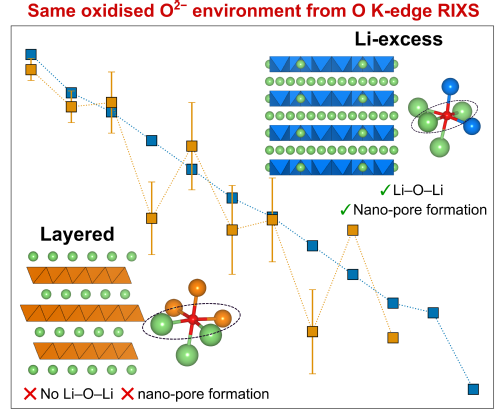 paper published by experts at WMG, at the University of Warwick.
Using advanced X-ray techniques, researchers at WMG, together with the Faraday Institution's FutureCat consortium, have obtained new insights into the oxygen redox activity in conventional ni-rich cathodes, which will help to deliver improved electric vehicle performance.
Range anxiety is a key concern of many potential EV buyers, but range is steadily improving as battery technology and research evolves. The Faraday Institution’s Next Generation Lithium-Ion Cathode Materials project, FutureCat, aims to develop understanding of existing and newly discovered cathode chemistries to deliver improved EV performance, whilst considering sustainability.
Professor Louis Piper, from WMG at the University of Warwick, who led the research explained: “Transitioning to electrification requires integrating advanced materials science into battery processing to develop cheaper, safer, faster and better batteries, which is the focus of our research.”
The battery field is moving to increasing nickel contents in cathodes to meet the Government’s stringent EV 2030+ targets. These roadmaps assume successful strategies in material development to allow cathodes like W-LNO to operate at high voltages without degrading. This work provides the platform towards realising that goal by better understand the redox mechanisms (i.e., the reactions that enable charging/discharging the battery) at high voltage operation.
The study employed advanced x-ray characterisation techniques at the Diamond Light Source in Oxford and at WMG. The team at WMG utilised novel in-house x-ray absorption spectroscopy which enabled researchers to look at the electrode redox process of the battery cathodes after careful disassembly. Researchers were surprised to find that the oxidised oxygen species had the same characteristics as another group of Li-ion battery cathodes, Li-excess transition metal oxides. Reconciling how the same oxidised oxygen environment exists in both conventional and Li-excess cathodes is critical for unlocking how to develop the next generation of cathodes.
Professor Piper adds: “This work highlights how large-scale collaborative fundamental studies are needed even for supposedly ‘known’ systems.”
WMG will be continuing with further studies in this field, supported by the Faraday Institution, for the benefit of cathode battery manufacturers.
A link to the published article can be found here:
https://journals.aps.org/prxenergy/pdf/10.1103/PRXEnergy.2.013005
New research led by the University of Warwick proposes a cross-domain safety assurance framework for automated transport
A new report led by academics at WMG at the University of Warwick, proposes a ground-breaking safety assurance framework that has the potential to be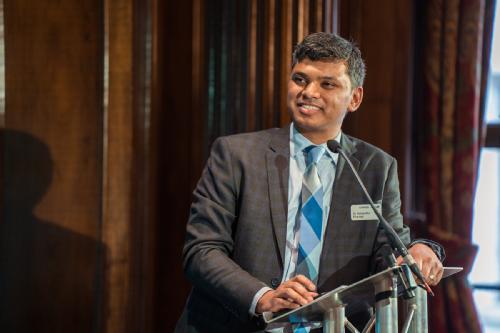 applied across automated transport modes.
The new report is the result of Warwick’s extensive safety research which has undergone 12 months of evolution, development and validation with key stakeholders across the transport domains of land, sea and air.
Over the past year, 35 organisations in industry, academia, government and regulation from the UK and internationally have contributed to the discussions which have been captured in the report. The report encourages Government policy to tackle similar challenges all three domains face to realise the safe introduction of automated transport systems, in a joined-up manner.
The Cross Domain Safety Report highlights the economic potential of the global automated transport ecosystem, which is projected to reach over £750 billion by 2035, with a UK market share of approximately 6% representing £42 billion and creating up to 38,000 new jobs.
When it comes to safety assurance of automated transport systems, the report suggests the need to not only establish the safety level of automated transport, but also to communicate the safety level to all stakeholders (society, regulators, policymakers, developers etc).
Communicating safety level is key as one of the main obstacles to the safe introduction and consumer acceptance of automated transport are safety and trust, according to this new research. The report contains a set of key recommendations which include standardised definitions, new processes for virtual test environments, a new scalable and manageable safety assurance framework, and the key role of independent organisations.
The report highlights that whilst there are differences between the safety assurance processes of autonomous ships, aircraft or vehicles there are also large elements of crossover. This can then be leveraged by governments, developers and manufacturers by aligning safety artifacts across the different types of transport, allowing for greater safety and consumer acceptance.
Ian Stewart MP, Chair of the Commons Transport Select Committee said: “It’s important that we look ahead and horizon scan at emerging technologies… We’ve got to look ahead to make sure the regulations are in place.
“It’s really interesting that this conference looked at these issues holistically because it’s very easy in the world of transport to look at each mode as if it existed in isolation, but there will be cross cutting issues”.
Professor Siddartha Khastgir, Head of Verification and Validation at WMG, University of Warwick, commented: “Safety of automated systems needs to be pre-competitive. At WMG, we are extremely grateful to all the contributors to the report who have come on this journey with us over the past 12 months.
"Capturing the collective intellectual output of the group, we have demonstrated in the report on cross domain safety assurance across land, air and marine, that there are a lot of synergies in the approaches across the transport domains. At the same time, there are certain aspects that will be very specific to the domains that should be tackled individually.”
The full report can be read here.
WMG and Conigital receive UK government funding for ambitious self-driving research project
WMG, at the University of Warwick, and Conigital, have been awarded a share of £81 million in joint UK government and industry support to develop self-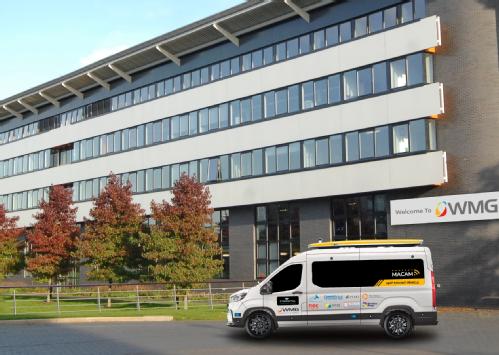 driving transport technology.
WMG is part of a consortium, led by Conigital, including the NEC Birmingham, Direct Line Group, Coventry City Council, Solihull Metropolitan Borough Council, Coventry University, dRisk, IPG Automotive and West Midlands Combined Authority.
The project entitled Multi-Area Connected Automated Mobility (MACAM) has been awarded a total of £16.6 million by the Centre for Connected and Autonomous Vehicles (CCAV), to establish a remote driving control hub, to oversee self-driving vehicles operating in Solihull and Coventry.
To make self-driving vehicle operations commercially viable, and offset current technology and driver costs, they must operate as efficiently as possible. This project therefore proposes a multi-area, multi-application self-driving operation, underpinned by Conigital’s 5G-based, central, Remote Monitoring Teleoperation (RMTO) system.
A mixed fleet of 13 self-driving vehicles will be moving passengers and light freight (such as mail and parcels for delivery) between Birmingham International Rail Station and Birmingham Business Park, and between Coventry railway station and Coventry University campus. These routes have a known, current, need for alternative transport and offer an ideal platform from which to develop commercial self-driving solutions.
New mobility technology and services will lead to safer, greener and more efficient transportation for both people and goods. MACAM will build on the foundations set by other projects including the WMG-led Midlands Future Mobility consortium.
Midlands Future Mobility is installing infrastructure on 200+ miles of West Midland’s roads to enable trials of Connected and Automated Mobility (CAM) solutions. This includes CCTV, weather stations, communications units, and highly accurate GPS coverage. The technology developed on the route will make UK roads safer and allow for more predictable goods delivery and journey times.
Transport Secretary Mark Harper said: “Self-driving vehicles including buses will positively transform people’s everyday lives – making it easier to get around, access vital services and improve regional connectivity.
“We’re supporting and investing in the safe rollout of this incredible technology to help maximise its full potential, while also creating skilled jobs and boosting growth in this important sector.”
WMG’s expertise on MACAM focuses specifically on the safety of the self-driving vehicles, as David Evans, Lead Engineer at WMG, University of Warwick explains: “Researchers and engineers at WMG will be providing trial support and undertaking related research in line with industry standards and best practice, required for the operator(s) to conduct the automated vehicle deployments safely and securely.”
Director of Intelligent Vehicles Research at WMG, University of Warwick, Professor Mehrdad Dianati, adds: “We have seen remarkable progress in Connected and Automated/Autonomous Mobility Technologies in recent years. It is paramount to pave the way for commercialising these technologies, particularly in the promising near future application areas such as the ones the MACAM consortium aims for. We are excited to be a part of this journey to transfer the knowledge we have developed through our fundamental research to help this unique consortium of UK companies, universities and local authorities to create new economic development opportunities for the region and the country.”
Don Dhaliwal, CEO of Conigital commented: “We are delighted to strengthen our links with WMG and other partners to accelerate a joint vision of Autonomous, Connected, Electric & Shared (ACES) fleets to address cities and businesses needs to Go Zero, Zero Accidents, Zero Emissions and Zero Congestion whilst creating new jobs via delivery of sustainable, accessible commercial CAM (Connected Autonomous Mobility) services.”
The methodologies and outcomes generated by the MACAM project will directly benefit teaching, research, and further collaboration with industry at WMG, developing future UK expertise and capability.
Read more about WMG’s Intelligent Vehicles research here and Conigital here
Read more about WMG’s MSc Smart, Connected and Autonomous Vehicles (SCAV) here.
Read more about the latest Centre for Connected and Autonomous Vehicles (CCAV) funded self-driving projects here.
ENDS
Notes to Editors
The government is awarding almost £42 million to seven projects through the Centre for Connected and Autonomous Vehicles (CCAV) Commercialising Connected and Automated Mobility (CAM) competition. Industry consortia will match the public grant to around £81 million and will be expected to demonstrate a sustainable commercial service by 2025.
The Multi-Area Connected Automated Mobility project is part of CCAV’s Commercialising CAM Deployments Competition (CCAMD).
The Commercialising CAM programme is funded by the Centre for Connected and Automated Vehicles, a joint unit between the Department for Transport and the Department for Business and Trade and delivered in partnership with Innovate UK and Zenzic.
The £40m CCAMD competition was launched in May 2022 to support the delivery of early commercialisable Connected and Automated Mobility Services and is part of the Government’s vision for self-driving vehicles. Connected and automated mobility 2025: realising the benefits of self-driving vehicles.
Multi-Area Connected Automated Mobility– Conigital
£8.3 million awarded by government, matched by industry to a total £15.2 million. This project looks to establish a self-driving vehicle operation around various parts of the West Midlands, underpinned by a centralised, Remote Monitoring Teleoperation (RMTO) centre. The RMTO centre will be where the project’s self-driving vehicles are monitored and (when required) controlled from, using 5G connectivity. The project aims to make self-driving vehicle operations commercially viable, and offset current technology and driver costs.