
WMG News - Latest news from WMG
Where does all the plastic go? - Ton Peijs
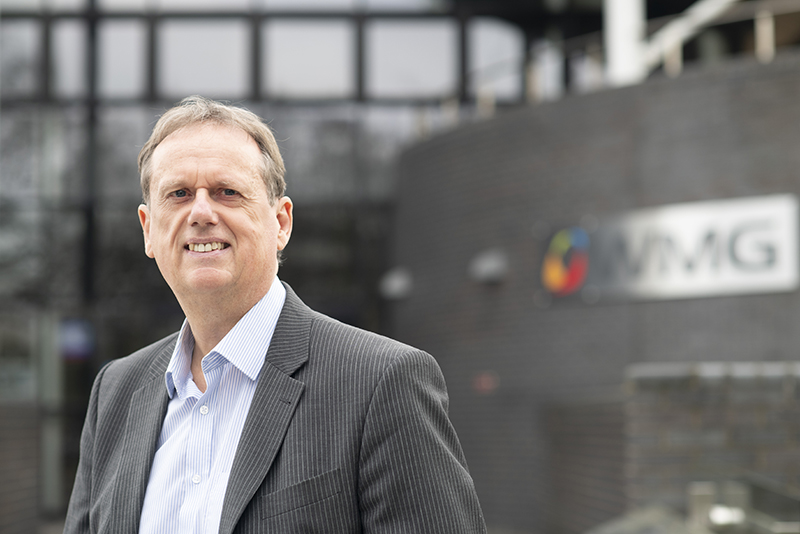 Although plastic is often thought of as a single use material, it actually lasts a very long time and can be used over and over again. In the UK around 45% of plastic is recycled and 30% is incinerated to generate electricity. The remaining 25% goes to landfill - wasting the value of the material, and causing the environmental impact we are all currently talking about. Although the UK has made enormous strides in reducing this amount over the past 20 years, we are a long way behind other countries that don’t send any waste to landfill, like Germany, Norway or the Netherlands.
Levels of recycling
A 45% recycling rate sounds good, but its effectiveness is all about how much of the value of the product is re-used.
The most effective recycling is where the product is used in the same form for the same use.
Next comes the plastic being re-used – effectively as virgin material – to produce products of the same value. The problem is that plastic materials are often down-cycled into less valuable products because waste streams often contain many different types of plastic and mixtures of plastics mostly have inferior properties to pure plastics. For recycling to become more efficient, waste collection and separation systems must be improved. Products could also be designed for their whole lifecycle - including recycling.
If the plastics cannot be re-used, the plastic can be broken down into its chemical building blocks and re-used at that level.
Why incineration isn’t so bad
There are positive aspects to recovering energy from plastics through incineration, especially in the case of mixed or contaminated plastics that are difficult to recycle. Plastics are made from petrochemicals which are produced by the oil refining process. Plastics contain the same amount of energy as the oil they are made from and after a useful life they can be safely incinerated and converted into energy or electricity.
We need a systems approach
There is a complex problem to solve with plastics and a simple blanket ban may not be the answer if we want to create a more sustainable society. The solution could lie in a steep increase in recycling rates and the creation of a ‘circular economy’ where plastic materials are more effectively recycled at higher value uses.
Waste prevention, for example through use of less materials, is the preferred waste management option. It is followed by waste reduction through, for example reuse followed by recycling, recovery including incineration with energy recovery or compositing and as a last option, safe disposal.
Enhancing the quality of future mobility services through leading 5G research
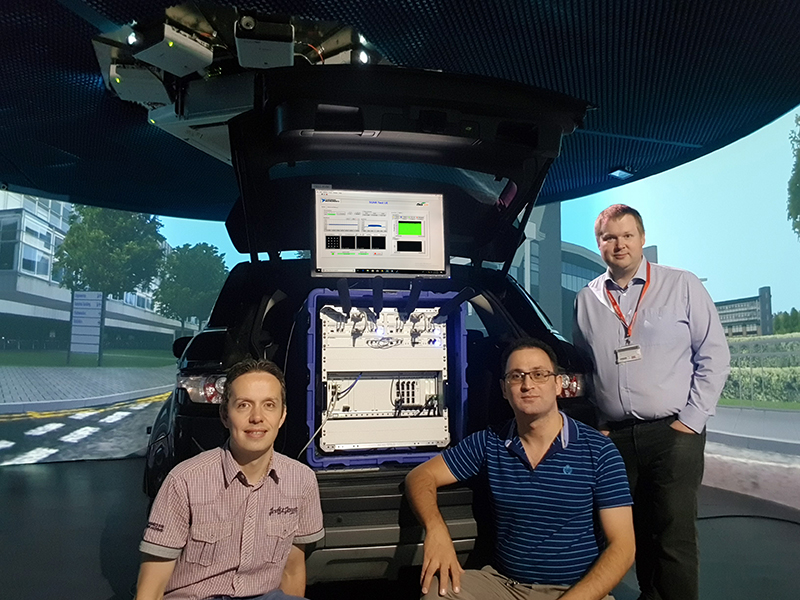
- Self-driving vehicles can use 5G for remote driving and enhanced vehicular perception through the sharing of sensor data with other vehicles and the roadside infrastructure
- As 5G becomes ever more popular, researchers at WMG, University of Warwick, install Europe’s first over-the-air 5G New Radio test user equipment.
- The equipment will be used in connected autonomous vehicles on the Midlands Future Mobility testbed.
A future of self-driving vehicles enabled by the latest high-speed 5G mobile technology is to be investigated by the University of Warwick thanks to the installation of state of the art test equipment.
The first over-the-air 5G New Radio standard-compliant test user equipment (UE) in Europe has been homed at WMG, University of Warwick. The equipment will be put in Connected Autonomous Vehicles (CAVs) being tested on the Midlands Future Mobility (MFM) testbed on the University campus, to share sensor data with other vehicles and the roadside infrastructure.
With the accelerating deployment of 5G functions on existing wireless telecommunication networks, the time is right to test the full potential of 5G independently. As the lead of the MFM testbed for CAVs, WMG, at the University of Warwick, has set enabling and performance testing of high throughput, low latency CAV use cases as one of their key research focusses.
Its use cases include remote driving and enhanced vehicular perception through the sharing of sensor data with other vehicles and the roadside infrastructure. Moreover, WMG also aims to enhance the quality of future mobility services by exploring how to seamlessly stream infotainment content for CAV passengers over a 5G link.
In this role, WMG have just installed Europe’s first 5G New Radio test UE that is fully compliant with Release 15 of the 5G technology standard developed by the 3GPP. It can emulate full UE operation and test real-time performance of 5G wireless connections to external base stations.
The mobile UE can be placed inside MFM vehicles on its 5G campus testbed, and payload data can be sent through 5G infrastructure into its further 5G network.
WMG and MFM are already engaged with a variety of industrial partners regarding connectivity, technology verification and validation, and the understanding and optimisation of user interaction with driverless technology. This new installation will further support their leading role in CAV development and testing, and help them accelerate the related product and service design and deployment.
Besides providing 5G automotive communication, this technology is, among others, also transferable to the manufacturing sector and supports Industry 4.0 use cases in which massive connectivity, high throughput and low latency mobile communication requirements exist as well.
A team of researchers led by Dr Matthew Higgins, Associate Professor at WMG, is now integrating this new technology component from NI into their current projects.
WMG’s Dr Matthew Higgins said:
“Crucial to our research strategy is the ability to understand and demonstrate the potential of 5G communications systems to our project partners early in their product development cycle. NI’s latest 5G test solution enables us to conduct standard-compliant, real-time 5G link performance tests inside both a controlled lab environment as well as outdoors in campus trials before commercial hardware is available.”
Dr Erik Kampert, HVM Catapult Senior Research Fellow added that:
“Being experienced users of state-of-the-art 5G communications equipment, this unique UE solution from NI facilitates us to expand our capabilities for CR&D work and collaborative project with CAV partners.”
James Kimery, Director of Wireless Research and SDR marketing at NI said:
“5G promises to not only revolutionize the wireless industry but also pervade and expand into other areas. For 5G application research, standard compliant technologies and solutions such as the NI Test UE are critically important to furthering this research and spurring innovation. NI is very excited to work with researchers at WMG and MFM and applaud their vision of evolving 5G into automotive, manufacturing, and beyond.”
‘Nextrode’ project to revolutionise the manufacturing of battery electrodes
· Nextrode project could revolutionise the way electrodes for Li-ion EV batteries are manufactured
· Smart high performance electrodes could enable EVs to travel further and be more durable
· WMG at the University of Warwick will research and model new and existing manufacturing processes to unlock full potential of electrochemical materials in cells
The Faraday Institution funded “Nextrode” project, involving WMG at the University of Warwick, will research ways to make electrodes for Li-ion batteries which unlock the electrochemical potential of their ingredients.
WMG, at the University of Warwick, is one of six university partners in the Nextrode project, which is led by the University of Oxford, alongside six industry partners – including the UK Battery Industrialisation Centre (UKBIC) who will be researching how to make electrodes for Li-ion Electric Vehicle batteries more efficiently.
Today’s Li-ion batteries are made using a 'slurry casting' process, whereby the active materials are mixed in a wet slurry and coated onto thin foils of aluminium or copper, then dried and compressed. This process is highly effective for mass production, but is developed empirically through trial and error, at great cost to the manufacturer.
In this project, WMG will gain greater depth of knowledge in that process with a view to being able to predictively model and optimise it, so that future electrodes can be cheaper, store more energy, and get to market faster. To do this, WMG will use their state-of-the-art “battery scale up” facility, as well as taking data from the UKBIC when it opens next year.
Furthermore, slurry cast electrodes limit the performance of the battery as the active electrochemical materials are uniformly distributed throughout the electrode structure. Research has shown that arranging the materials in a structured way can dramatically improve battery performance, but at present there is no mass-manufacturing route to do so. This project will investigate new manufacturing methods to create structured electrodes in a cost effective way at high manufacturing volumes.
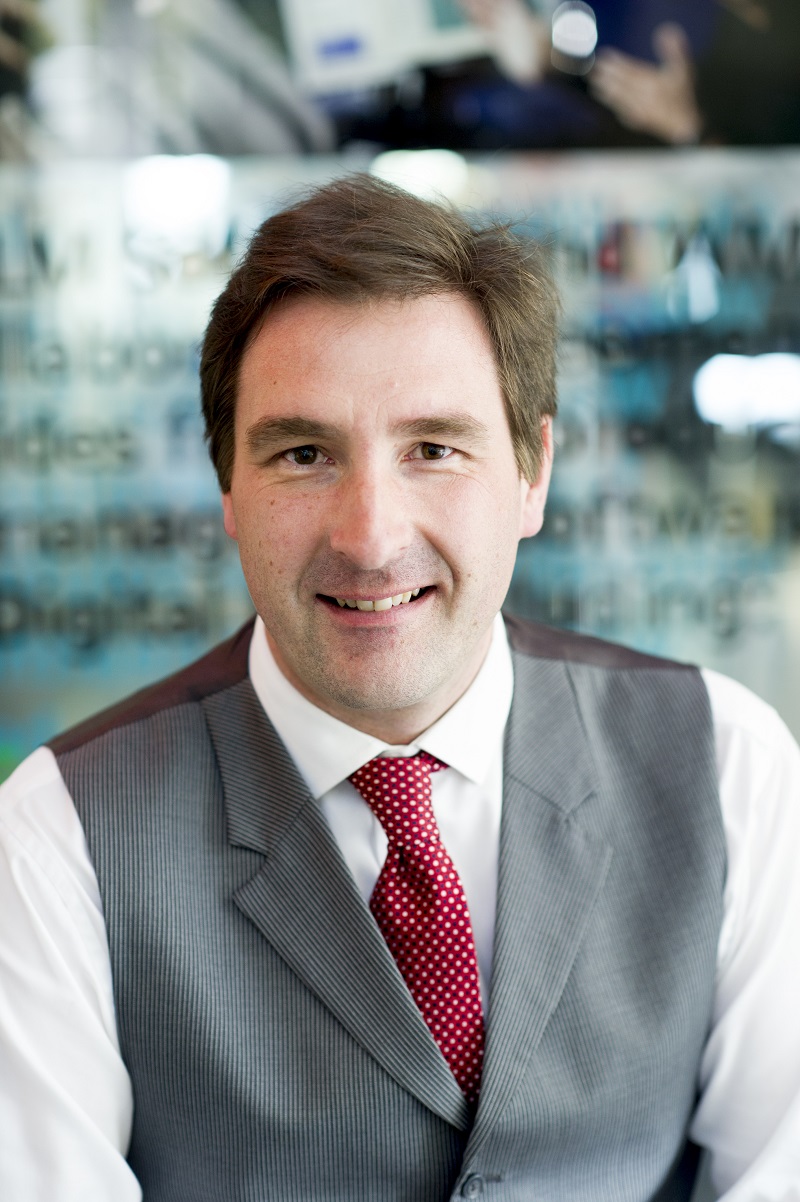 Professor David Greenwood from WMG, University of Warwick comments:
“Battery manufacturing is a critical industry for the UK to grow. It is highly competitive, and to win, we will need excellence in both science and manufacturing. The Nextrode project brings these two elements together to make future Li-ion batteries for Electric vehicles more energy efficient and affordable. Our unique research facilities are key to acquiring the knowledge required to deliver a step change in industrial capability."
Professor Patrick Grant from Oxford University who will lead project comments:
“Nextrode aims to strengthen the scientific understanding of existing electrode manufacturing so we can make it more flexible and extract further performance gains, but we will also develop a new generation of manufacturing approaches for ‘smart” electrodes where the different electrode materials are arranged with greater precision and provide even greater performance benefits. We anticipate these benefits could be realised for almost any type of battery chemistry”.
This project is just one of five that the Faraday Institution has announced today, 4th September. In total, it will award up to £55 million to five UK-based consortia to conduct application-inspired research over the next four years to make step changes in the understanding of battery chemistries, systems and manufacturing methods.
Business Minister, Nadhim Zahawi comments:
“Today’s funding backs scientists and innovators to collaborate on projects that will deliver a brighter, cleaner future on our roads. We are committed to ensuring that the UK is at the forefront of developing the battery technologies needed to achieve our aim for all cars and vans to be effectively zero emission by 2040.”
Neil Morris, CEO of the Faraday Institution comments:
“It is imperative that the UK takes a lead role in increasing the efficiency of energy storage as the world moves towards low carbon economies and seeks to switch to clean methods of energy production. Improvements in EV cost, range and longevity are desired by existing EV owners and those consumers looking to purchase an EV as their next or subsequent car. Our research to improve this web of battery performance indicators (which are different for different sectors) are being researched, with a sense of urgency, by the Faraday Institution and its academic and industrial partners. Our fundamental research programmes are putting the UK at the forefront of this disruptive societal, environmental and economic change.”
UK Research and Innovation Chief Executive, Professor Sir Mark Walport, comments:
“Bringing together experts across industry and academia, this exciting research will grow our understanding of battery chemistries and manufacturing methods, with the potential to significantly improve the UK’s ability to develop the high-performance electric vehicles of the future.
ENDS
4 SEPTEMBER 2019
Notes to Editors
Full list of Institutions include:
University of Birmingham
University College London
University of Oxford
University of Sheffield
University of Southampton
University of Warwick
For further information about the Faraday Institution visit: https://faraday.ac.uk/
For further information please contact:
Alice Scott
Media Relations Manager – Science
University of Warwick
Tel: +44 (0) 2476 574 255 or +44 (0) 7920 531 221
E-mail: alice.j.scott@warwick.ac.uk
New MRI computing technique can spot scar muscles of heart without damaging kidneys
 - Traditional MRI scans use the metal gadolinium, which resonates areas of the heart muscles that are not functioning efficiently, however gadolinium affect the Kidney function
- The new 3D MRI computing technique calculates strain in heart muscles showing which muscles are not functioning enough without damaging other organs - researchers at WMG, University of Warwick have found
- The new technique is less stressful for the patient
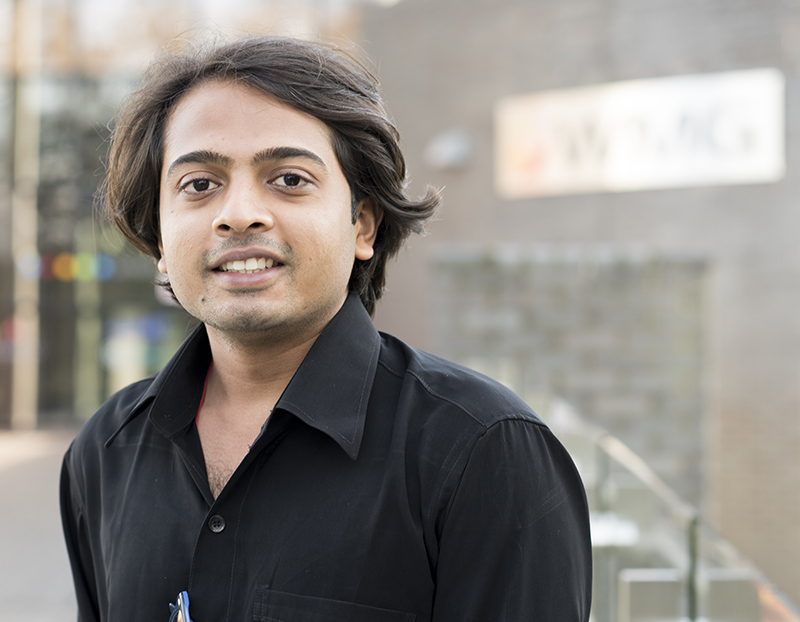
3D MRI computing can measure strain in the heart using image registration method. Traditional method involves giving the patient a dose of gadolinium which can affect the kidney, researchers at WMG, University of Warwick have found.
MRIs are used to diagnose cardiac disease such as cardiomyopathy, heart attacks, irregular heartbeats and other heart disease.
Traditionally when a patient goes for an MRI scan they are given a dose of gadolinium, which reacts the magnetic field of the scanner to produce an image of the protons in the metal realigning with the magnetic field. The faster the protons realign, the brighter the image features and can show where the dead muscles are in the heart and what the diagnosis is.
The dose of gadolinium can have detrimental effects to other parts of the body, particularly the risk of kidney failure.
A new 3D MRI computing technique developed by scientists in WMG at the University of Warwick, published today, 28th August, in the Journal Scientific Reports titled ‘Hierarchical Template Matching for 3D Myocardial Tracking and Cardiac Strain Estimation’ focuses on Hierarchical Template Matching (HTM) technique. Which involves:
- A numerically stable technique of LV myocardial tracking
- A 3D extension of local weighted mean function to transform MRI pixels
- A 3D extension of Hierarchical Template Matching model for myocardial tracking problems
Therefore meaning there is no need for gadolinium reducing the risk of damage to other organs.
Professor Mark Williams, from WMG at the University of Warwick comments:
“Using 3D MRI computing technique we can see in more depth what is happening to the heart, more precisely to each heart muscles, and diagnose any issues such as remodelling of heart that causes heart failure. The new method avoids the risk of damaging the kidney opposite to what traditional methods do by using gadolinium.”
Jayendra Bhalodiya, who conducted the research from WMG, University of Warwick adds:
“This new MRI technique also takes away stress from the patient, as during an MRI the patient must be very still in a very enclosed environment meaning some people suffer from claustrophobia and have to stop the scan, often when they do this they have to administer another dose of the damaging gadolinium and start again. This technique doesn’t require a dosage of anything, as it tracks the heart naturally.”
The British Science Festival is coming to Coventry and Warwickshire

One of Europe’s largest science festivals is coming to town between September 10th and 13th.
With a schedule comprising more than 100 free events, activities and performances, the British Science Festival will “transform the region into a celebration of science and culture”.
The festival will feature talks from a selection of WMG experts, including Erik Kampert - Senior Research Fellow, Dave Greenwood – Professor of Advanced Propulsion Systems, Mark Williams – Professor of Metrology and Alan Chalmers – Professor of Visualisation.
Held in partnership with the University of Warwick, the programme highlights local strength in digital technologies, smart cities and the future of energy and healthcare.
There’s a special emphasis on the fun, thought-provoking, and societal aspects of science to show how it’s not just confined to laboratories, but something that’s all around us.
Plus, there will be a special filming of The Sky at Night: Question Time with Dr Maggie Aderin-Pocock and Professor Chris Lintott.
Other highlights include interactive experiences like a live 3-D psychedelic show and festival carpool in a driverless pod, discussions on how ‘gaming becomes gambling’, how AI could revolutionise cancer treatment, and how to tackle food poverty with food writer Jack Monroe.
Not to mention, a mud kitchen and tea-blending for adults and a takeover of Coventry’s FarGo Village with comedy, artistic workshops and an escape room.
WMG helps Senior Teaching Fellow break cycling world record

In a bid to fulfil a two-year ambition, Senior Teaching Fellow Piotr Klin teamed up with WMG to prepare the race package for his UCI World Masters Hour record attempt on July 21st.
Scooping the cycling accolade at his native Polish velodrome of Arena Pruszkow, Piotr’s distance of 49.649km beat the previous record for the 30-34 age group of 48.234km set by Britain’s Ryan Davies.
The World Masters Hour concept requires racers to ride around a velodrome and cover the furthest distance within 60 minutes. Having narrowly missed out on breaking the Polish hour record in August last year, Piotr collaborated with WMG at the University of Warwick to make technical advancements to his bike, utilising the state-of-the-art facilities at WMG.
Piotr reviewed the 3D printed parts within his bike to minimise the drag on the track, and commenting on his successes, the Coventry resident originally from Lublin in Poland said:
“This is a great achievement for me, and it feels extra special to do this in my home country. The extra time that I have spent training in the velodrome has paid off. WMG manufactured parts were custom made to best fit my body, using 3D scanning and printing techniques to deliver a custom cockpit fit, providing comfort during the longest hour in cycling.
“By leveraging the world-leading expertise and facilities through my collaboration with WMG, I’ve been able to bring the best race package I’ve had to-date and deliver this world record performance.
“I’m excited for new challenges following this milestone and look forward to collaborating with WMG further to post even faster times.”
By breaking the world record, Piotr added a further feather to his cap, which already includes a well decorated repertoire of accolades, including merits for being a three-time Polish Masters National Time Trial champion and his crown of Amateur Sportsman of the Year from the 2018 Coventry and Warwickshire Sports Awards.
Building on his successes, Piotr now hopes to go one better than his second place in 2017 at the UCI Gran Fondo World Championships Time Trial in Poznan in August.
Researchers convert car batteries into units that could power farms in the developing world
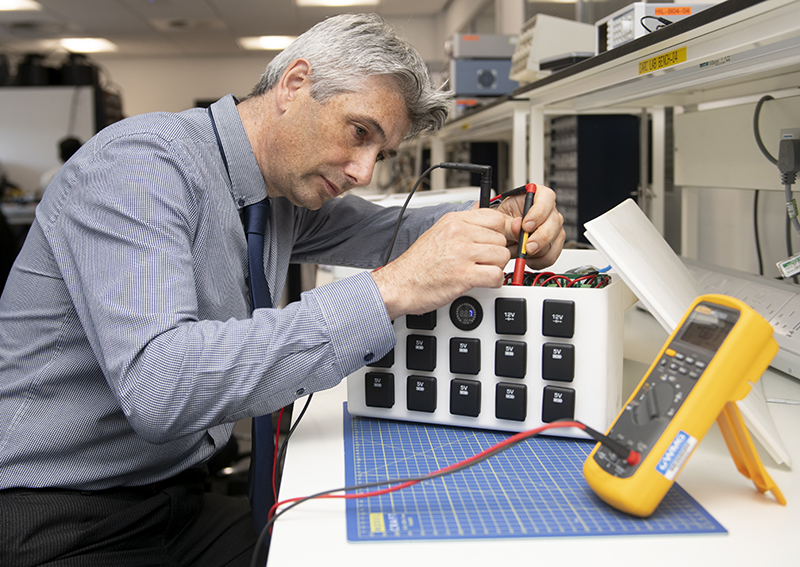
As part of a Circular Economy for electric vehicle battery systems, as the number of such vehicles increases rapidly, the need to find the best way to reuse and recycle vehicle batteries becomes just as intense.
In partnership with Jaguar Land Rover, Connected Energy and Videre Global, researchers at WMG, University of Warwick, have found a way not just to recycle those used batteries, but repurpose them as small energy storage systems (ESS) for off grid locations in developing countries or isolated communities.
The repurposed units, each containing approximately 2kWh of energy capacity, will be able to power a small shop, a farm holding, or multiple residential homes.
WMG’s Professor James Marco who was lead researcher on the project said:
“When an electric vehicle’s battery reaches the end of its useful life it is by no means massively depleted. It has simply reached the end of its useful life in a vehicle.
"It is generally accepted that an EV battery has reached end of life when its capacity drops to 80% of a fresh battery. While this is no longer enough to satisfy drivers, it remains immensely useful for anyone who seeks to use the battery in a static situation.”
While such partially depleted batteries remain potentially very useful to other users there are still challenges to overcome, particularly to ensure that they can be used reliably, sustainably, and cheaply in remote locations. These challenges include:
· How to protect the lithium-ion cells from over-charge and discharge
· Can the ESS be made compatible with a variety of other used battery cells and modules from other manufacturers
· How to keep it low cost and easy maintenance, while providing an interface that is easy to use and understand
The WMG team, at the University of Warwick, set about overcoming these challenges with the help of the WMG HVM Catapult and Jaguar Land Rover who supplied batteries and components from the Jaguar I-PACE, their first all-electric performance SUV. The team designed a new Battery Management System (BMS) and packaging that allowed them to create a working and easily portable prototype ESS which included:
• The use of standard low cost components for control, communication and safety functions. All parts were either sourced from the JLR service department or were low cost components purchased from any electrical retailer.
• The ability to use different modules that could be interchanged within the 2nd-life system without having to recalibrate the whole BMS
• Enough energy for a small shop, farm holding or multiple residential homes
• Multiple 12V DC sockets and 5V USB charge ports
• The ability to have the 2nd –life module charged via reclaimed laptop chargers
• Simplified control system for easy integration and deployment
Professor James Marco continues:
“This is a great result that not only provides a highly efficient repurposing solution for automotive batteries but which could also change lives in remote communities. We are now looking for support to allow these new units to be further developed and tested in remote or off grid locations.”
The research project was part of the Innovate UK funded Project: 2nd hEVen (2nd-Life Energy Storage Systems) and is supported by the WMG High Value Manufacturing (HVM) Catapult.
WMG Professor takes on new role as Chair of the Faculty of Science, Engineering and Medicine
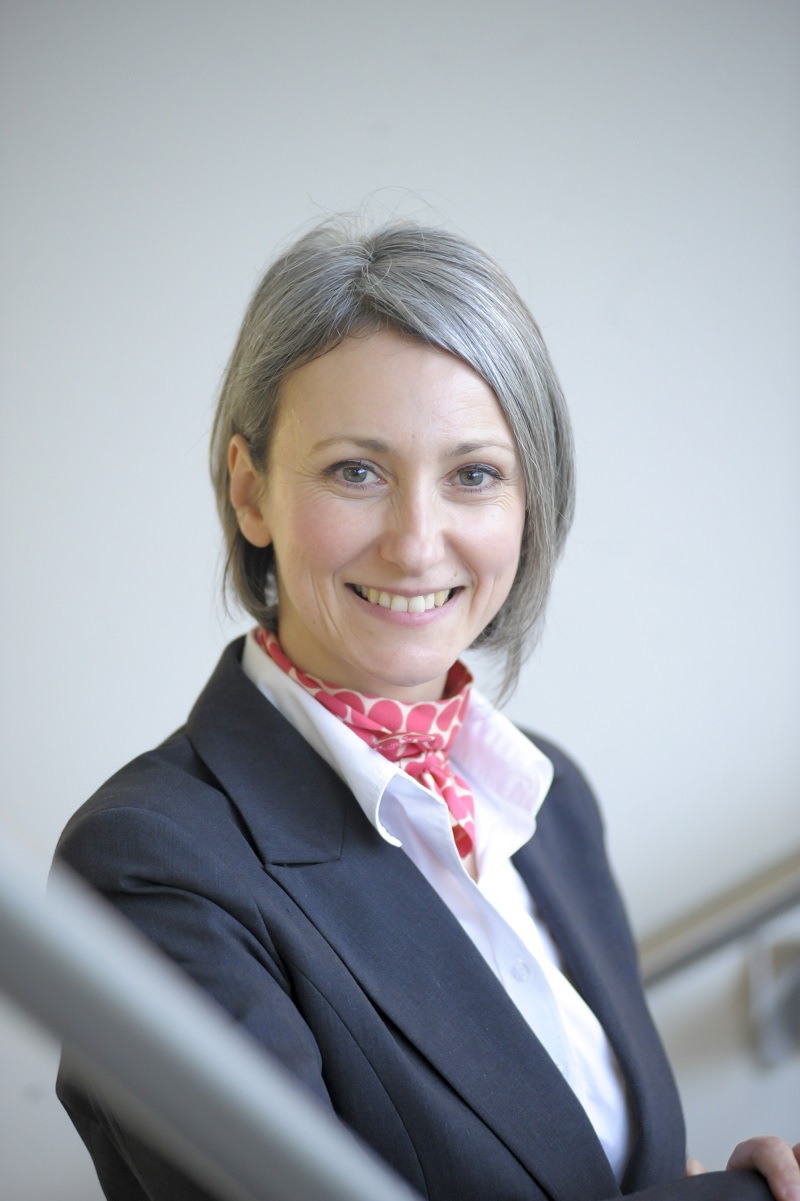 WMG Professor of Applied Psychology, Caroline Meyer, has been appointed as the new Chair of the Faculty of Science, Engineering and Medicine for the University of Warwick
Professor Meyer will take up her new role when the current Chair of Faculty, Professor Mike Shipman, steps down over the summer.
Professor Meyer joined WMG at the University of Warwick from Loughborough University. With over 20 years experience in mental health and wellbeing, Professor Meyer sits on the Coventry Health and Wellbeing Board and West Midlands Combined Authority Board. She has also worked extensively with industry, from SMEs to multi-nationals, and third sector organisations, including internationally.
At WMG, Professor Meyer launched a new team focusing on Applied Psychology. This involves the application of psychological theory and techniques (including decision-making and cognitive and behavioural change) to improve mental health, workforce productivity and product innovation. The group also delivers fusion science research-led education programmes.
Professor Meyer will manage this new role alongside her current research responsibilities within WMG.
The role of the Faculty Chair
In addition to chairing the Board of the Faculty, Chairs of Faculties serve on a range of committees at the University, and are responsible for promoting the policies, programmes and procedures within their respective Faculty. Faculty Chairs are also a source of support and act as ‘first port of call’ for Heads of Department and Research Centres in the relevant Faculty and inform and influence the Faculty on key decisions affecting it and the University.
Faculty Chairs are also engaged in the appointment processes for key academic posts within the Faculty. Chairs serve ex officio on the following formal bodies: Senate, Steering Committee, Research Committee, Honorary Degrees Committee, Academic Quality and Standards Committee, Capital, Space and Amenities Group, the Academic Resourcing Committee, and might also act as Chair of the Investigating Committee and Appeals Committee.
New robotic laser measurement system improves and accelerates automotive quality inspection
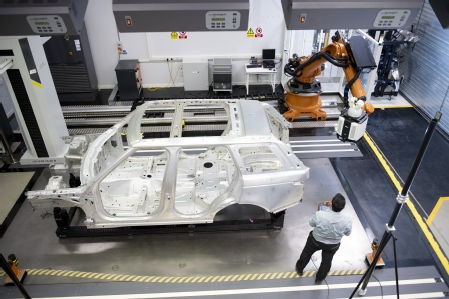
Engineers at WMG at the University of Warwick have developed and installed a new, robotic measuring system, capable of accurately and repeatedly measuring large objects on the production line, such as car body-shells, in a fraction of the time traditionally taken to measure them on co-ordinate measuring machines (CMMs).
The system, installed in WMG’s International Manufacturing Centre, comprises of a large long reach robotic arm - supplied by Kuka - mounted on a 5m track, and is designed to accept a range of different, non-contact measurement technologies.
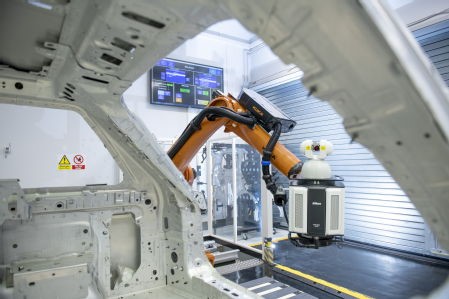
The Nikon Metrology’s Laser Radar, which is a long stand-off laser measurement system, is the first of such technologies to be trialled. It is capable of accuracies better than a hundredth of a millimetre, over distances of several meters.
The two technologies combined, offer a fast and accurate solution for automotive quality control, with particular relevance to car body-shell measurement, whether in a metrology lab or, as is becoming increasingly desirable, on the actual production line itself.
Professor Mark Williams, Head of the Product Evaluation Technologies Group at WMG commented: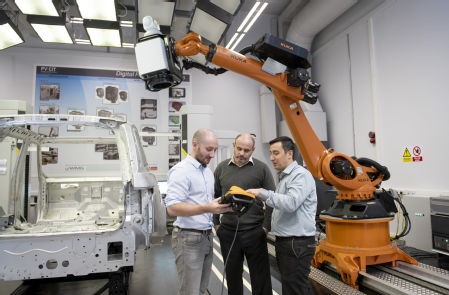
“The scale and flexibility of our new robotic measurement system, housed in the same metrology lab as our benchmark twin column CMM, gives us a unique capability within a UK university. Not only can we trial state of the art measurement technologies in a real-world application, but we can also verify system performance against what is currently the gold-standard (for automotive measurement), fully ISO calibrated CMM. This means that we can work with our industry research partners to both integrate technologies and trial solutions, in a controlled and independent environment, and ultimately, help them select and deploy the right measurement solutions for their businesses.”
Lead Engineer Ercihan Kiraci, responsible for the delivery of the project, explains:
 “With increasing levels of automation in high value manufacturing, vehicle producers are focusing significant effort on collection and use of data for process optimisation. WMG offers a range of relevant measurement technologies, 10+ years of experience in the field, and a strong focus on Industry 4.0 methodologies, making it an ideal testbed for new in-process inspection solutions. The set-up at WMG provides a unique opportunity for collaboration between OEMs, technology providers and researchers, to address manufacturing quality challenges.”
The speed, accuracy and flexibility of the new system, combined, have the potential to bring metrology lab measurement capabilities to the shop floor without slowing down or disrupting the production line, along with real-time quality data aiding rapid decision making and issue resolution. In the future, this could be taken a step further, with the measurement data being fed directly back into the manufacturing process, which would in turn, self-correct and optimise without the need for human intervention. But this will only be possible with the speed of measurement that the new system (and others like it) will deliver.
Whilst the self-optimising production line may still be a few years away, in the short term car manufacturers (and those in other industry sectors, such as aerospace) can expect to significantly reduce the number of out-of-spec vehicles needing re-work at the end of the production line, or making their way to the customer, only to be recalled at great expense.
ENDS
For further information please contact:
Alice Scott
Media Relations Manager – Science
University of Warwick
Tel: +44 (0) 2476 574 255 or +44 (0) 7920 531 221
E-mail: alice.j.scott@warwick.ac.uk
WMG Professor takes on new role as Deputy Pro-Vice-Chancellor (North America)
 WMG Professor of Cyber Security Engineering and Director of Research in Cyber Security Carsten Maple has been appointed as Deputy Pro-Vice-Chancellor (North America) for the University of Warwick.
In his new role, Carsten will work closely with Professor Mike Shipman, Pro-Vice-Chancellor (International), to extend and deepen the relationships with the University’s partners in North America, and to pursue opportunities for funding, student mobility, and research and teaching collaboration.
Professor Maple explained: “I am passionate about the international agenda having been a visiting professor at four institutions overseas, and participated in three government-sponsored missions to the United States. I am delighted to be undertaking this important role.”
Commenting on the new role, Professor Chris Ennew, University of Warwick Provost, said:
“Carsten’s profile, skills and experience make him the ideal person to undertake this crucial role to develop University-level strategic partnerships in North America. The appointment of Carsten to the role of Deputy Pro-Vice-Chancellor for North America is a key step towards delivery of the University’s Internationalisation Strategy.”
Professor Simon Swain, Pro-Vice-Chancellor (External Engagement) said: “Carsten’s appointment is an enormous boost to the International team and we are all looking forward to working with him on our hugely ambitious goals in North America.”
Professor Maple is a co-lead of the Cyber Security GRP and the Principal Investigator of the NCSC-EPSRC Academic Centre of Excellence in Cyber Security Research at the University and the Transport & Mobility lead of the PETRAS National Centre of Excellence for IoT Systems Cybersecurity. He has published over 200 peer-reviewed papers has provided evidence and advice to governments and organisations across the world, including being a high-level scientific advisor for cyber security to the European Commission. He is a member of various national and international boards and expert groups, is Immediate Past Chair of the Council of Professors and Heads of Computing in the UK and a fellow of the Alan Turing Institute.
Professor Maple will manage this new role alongside his current research responsibilities within WMG.