
WMG News - Latest news from WMG
Indian Government partners with WMG to run free event to help Midlands SMEs to do business in India
In the run up to Brexit there is even more focus on markets for the UK beyond those in continental Europe, so it is no surprise that the Government of India is partnering with WMG, at the University of Warwick,to help Midlands’ businesses who might be considering working with manufactures in India.
The event, which takes place in the International Digital Laboratory, University of Warwick on Tuesday, 7 November 2017 from 10:00 to 14:00 (GMT) will include an addresses by Consul General of India, The Deputy High Commissioner of India, London, the Access India Programme, and the Confederation of Indian Industry (CII), London and WMG Chairman Professor Lord Kumar Bhattacharyya.
There will be an informal networking reception where businesses can build connections that could help them do business in and with India.
The event is free and you can register at: https://www.eventbrite.co.uk/e/make-in-india-event-warwick-manufacturing-group-tickets-39115073237
WMG EngD student wins engineering photography competition
One of our EngD students, and a budding photographer, Vadim Melnicuk has scooped first place in the Institute of Engineering and Technology’s (IET) International Engineering Photography Competition.
The competition was open to any photograph of an engineering-related subject that captures the dynamic, creative and progressive face of engineering and engineers today.
IET President Nick Winser said: “Engineering is an exciting and fast-changing sector – shaping the world around us and improving the quality of our everyday lives. It is a diverse, creative and exciting profession, and yet the traditional image of engineering focuses on hard hats and dirty overalls – which the IET is committed to change.
WMG technology helps Midlands cycle company create next generation bicycles for Transport for London
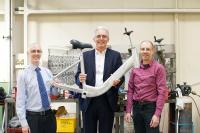 Engineers from WMG, at the University of Warwick, are providing advanced technology support for Stratford-Upon-Avon’s Pashley Cycles, England’s longest established bicycle manufacturer based in who, with Serco, who this week won the contract to supply the next generation of bicycles for the Transport for London (TfL) Cycle Hire Scheme.
Under the new contract Serco will introduce bicycles, made by Pashley, with the first ones available at the start of October 2017. The new bicycles, which will be produced in the company’s home town of Stratford-Upon-Avon, used WMG’s technical support and advice to help create cycles that are 10% lighter than the current model and that are designed to give a more manoeuvrable and comfortable riding experience.
Through the WMG centre High Value Manufacturing Catapult, based at the University of Warwick, and renowned for its expertise in light weighting, the WMG SME Group provided “additive layer manufacturing” and 3D printing assistance to enable Pashley to develop the new bicycle. This support played a significant part in creating the bike prototype, which in turn helped secure the TfL contract.
SafeJawz says ‘Fangs’ for the help at Halloween to WMG at the University of Warwick
 West Midlands sportswear company SafeJawz have said thanks, or rather Fangs, for the help that WMG researchers at the University of Warwick have given them in the development of their new range of self-fit mouth guards which are designed to make gum shields a desirable piece of sports equipment as opposed to a nuisance item that can hinder performance.
As it’s Halloween there was really only one obvious design to go with to mark this successful collaboration which is why Nile Dacres and Waitu Setu from Coventry RFC rugby team are sporting Fang-tastic new mouth guards.
Entrepreneurs George Dyer and Ewan Jones founded the sportswear brand, SafeJawz and their business, Protective Sportswear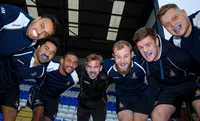 Ltd in Aldridge near Walsall specialises in custom and self-fit stylish mouth guards that athletes of all levels would want to wear, as opposed to having to wear. Hoping to revolutionise the sector through innovation and twinned with a background in sports dentistry, the company had a distinct advantage in being able to develop a brand new, custom range of striking mouthguards whilst still meeting all the mandatory requirements. However they needed to develop their manufacturing skills and technical knowledge to help take their product ideas from concept to manufacture.
The Future of Living Spaces – free invitation to sixth form students
We’ve joined forces with our friends at Warwick Engineering Society to offer free places to sixth form pupils at the ‘Colony: The Future of Living Spaces’ conference, on Wednesday 8th November.
The conference, run by students from Warwick’s School of Engineering, is specifically aimed at sixth form pupils who are interested in pursuing a career in engineering or science.
The event will share interesting ideas and projects that scientists are currently working on taking you on an exhilarating journey starting underground, towards the surface, and beyond the clouds!
Oldest known marine navigation tool revealed with scanning technology
Details of the oldest known marine navigation tool, discovered in a shipwreck, have been revealed thanks to state-of-the-art scanning technology at WMG, University of Warwick.
 Professor Mark Williams was tasked with scanning the artefact – an astrolabe from the late fifteenth century, used by mariners to measure the altitude of the sun during voyages – which was excavated in 2014 by Blue Water Recovery.
When the team found the object, no markings were visible – they believed it was an astrolabe, but they could not see any navigational 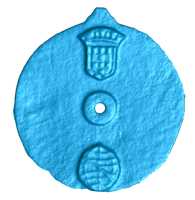 markings on it.
They then approached Professor Williams, who conducts pioneering scanning analyses in his laboratory at WMG, to reveal the artefact’s invisible details.
The scans showed etches around the edge of the object, each separated by five degrees – proving that it is an astrolabe.
These markings would have allowed mariners to measure the height of the sun above the horizon at noon to determine their location so they could find their way on the high seas.
WMG gives free access to tool for companies preparing for Industry 4 – enabling the next generation of manufacturing
 WMG researchers, at the University of Warwick, have worked in conjunction with Crimson & Co and Pinsent Masons, to produce a free to access “Industry 4” readiness assessment tool. It is designed to provide a simple and intuitive way for companies to start to assess their readiness and future ambition to harness the potential of the new cyber-physical age
The term Industry 4 originates from the high-tech strategy of the German government, which soughtto re-define the role of manufacturing post the global economic crisis. It suggests that we are on thecusp of the 4th Industrial Revolution, a cyber physical age, which will be realised over the next 20years.
WMG experts line-up for Emerging Technology Conference
Our team of experts will be out in force at the New Statesmen Emerging Technology Conference on 20th November at the Institute of Engineering and Technology (IET) in London.
The Conference programme is split into two streams, one tackling intelligence, software and machine learning, and the other infrastructure, advanced materials and robotics. The event brings together engineers, data analysts, IT and technology specialists, and senior management professionals, from across a variety of sectors, to discuss and debate technologies of the future.
Midlands roads to be UK autonomous vehicle testbed
 Roads in Coventry and Birmingham are set to become a world-class UK testbed for developing the next generation connected and autonomous (CAV) vehicles, thanks to a new £25m programme of investment being led by WMG at the University of Warwick.
The pioneering venture, undertaken by a consortium of research and industry partners, will make UK roads ready for CAVs by developing wireless networks, analysing how vehicles behave in real urban environments and involving the public in their evaluations.
The UK Central CAV Testbed will be based on 80 kilometres of urban roads in Coventry and Birmingham, creating a world-leading connected infrastructure and eco-system, and positioning the Midlands as a centre for cutting-edge automotive and communication technologies.
Thinking Higher
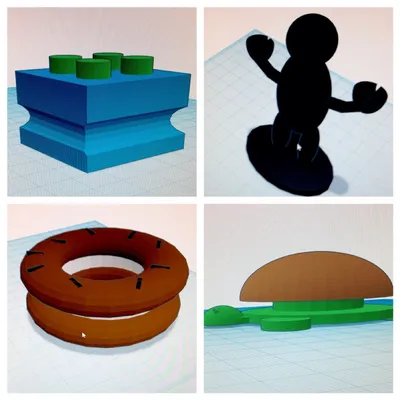 In July, we welcomed a group of 12 and 13 year old pupils from Hartshill School in Nuneaton, as part of the Think Higher (Coventry and Warwickshire) programme.
The children took part in a Computer Aided Design (CAD) and 3D Printing workshop, with the aim being to inspire pupils in engineering. They were shown how to use a simple CAD software package and complete a task to create their own design for an ‘ear buddy’ to store a set of headphones.
The CAD and 3D printing offered the pupils the opportunity to quickly and easily get involved in designing and making, thus building their interest and confidence. The task to design the ‘ear buddy’ was a creative task but also used planning and organisation skills to consider whether the design would actually work. The pupils sketched design ideas then took measurements of the headphones enabling them to add key dimensions to the design before using the CAD software.
Before returning to school the students were given a tour of our Engineering Hall, with Dave Cooper and Zach Parkinson from our technical team, giving them an insight into the wider world of engineering.
The event was organised in collaboration with the Think Higher organisation. The workshop was run by Diane Burton along with Maretva Baricot-Mendoza and Warwick Engineering undergraduate Becky Crabbe.