
Adzfar 'Ed' Aziz: Chief Operating Officer
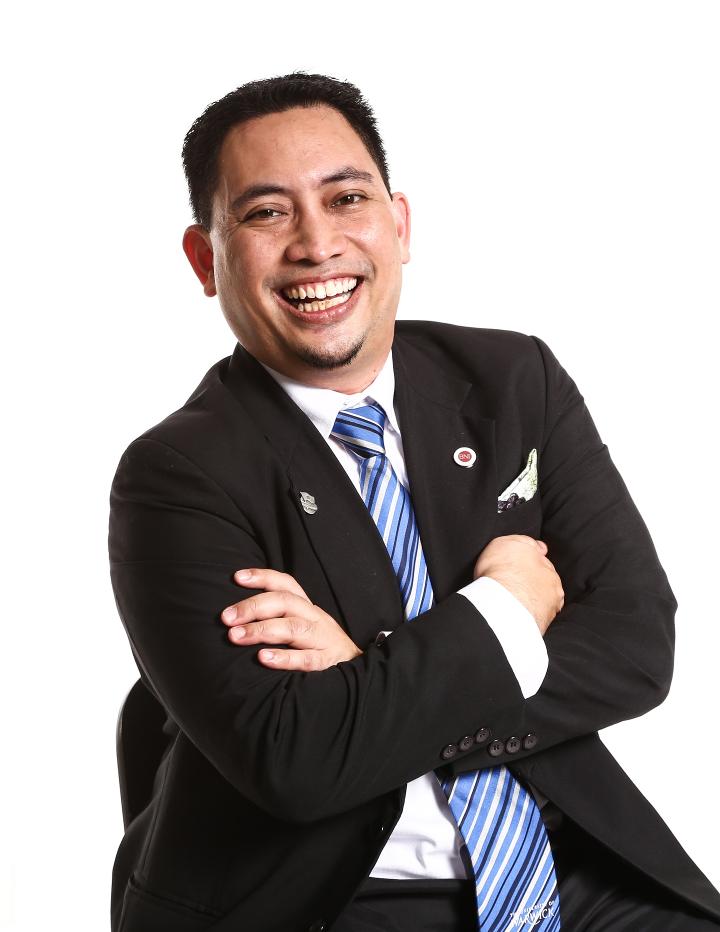
Adzfar 'Ed' Aziz
BSc Engineering and Business Studies, 2003
Based in:
Malaysia
Came to Warwick to study from:
Malaysia
First job:
Executive of Quality and Training, Astro All Asia Networks Plc in Kuala Lumpur, Malaysia.
Strangest interview question:
"If you were a brand of car, which one would you be and how would you market yourself to someone who hates driving?"
Advice for current students:
Build your personal brand and network before you think you need it. Don't just apply to job boards passively. Document your learning journey on LinkedIn, share thoughtful commentary on trends hitting your target industry, and reach out to alumni for informational interviews. When a hiring manager looks you up, they shouldn't just see a static CV — they should see an active, curious mind who is already contributing value to the industry's conversation.
Ambitions for the future:
My immediate focus is executing a world-class operational turnaround for Avis Budget Malaysia Group. Looking further ahead, my goal is to continue operating at the pinnacle of corporate leadership in the region, bridging general management with large-scale digital and industrial transformation.
In addition, I am expanding my footprint as an elite corporate speaker and advisor, sharing my blueprints on turnaround leadership, innovation, and ecosystem building on global stages.
Chief Operating Officer, Avis Budget Group, Malaysia
Describe your current role and what attracted you to it.
I am covering as the Chief Operating Officer for the Avis Budget Malaysia Group, where I report directly to the EON Group Executive Committee. I oversee a fleet of over 4,000 vehicles and lead a team of nearly 200. What attracted me to the role was the opportunity to move beyond a purely marketing and business development track and work on complex business transformation and operational challenges. Leading a premier global mobility brand within a massive automotive ecosystem allows me to bridge high-level strategy with hands-on operational execution — it's a huge challenge.
What’s your favourite part of your role?
The fast-paced nature of problem-solving and critical decision-making. Managing a moving fleet of thousands of assets means that no two days are identical. I love the challenge of looking at a traditional operation, breaking it down to its core components, and engineering a turnaround that directly moves the needle on asset utilisation, efficiency, and group profitability.
What are the key skills you learnt at Warwick that have helped you with your career to date?
My degree brought together WMG's manufacturing engineering and WBS's information management. This cross-disciplinary foundation was priceless — WMG taught me how to view operations through a lens of systems, structural optimisation, and process flow. WBS taught me how to wrap those engineering mechanics into a commercial business strategy. That unique hybrid skillset — the ability to understand both technical workflows and corporate finance — is why I can transition from marketing ecosystems to high-stakes operational turnarounds today.
Did you have a specific career path in mind when you chose to study at Warwick?
Not a rigid one, but I knew I wanted to sit at the intersection of technology, innovation, and management. Coming in as a Petronas Higher Education Scholar, I was surrounded by brilliant technical minds. But I quickly realised that engineering truly comes alive when it is paired with sharp business acumen. That is why the double degree was so appealing to me — it allowed me to keep my options open, giving me the ability to pivot seamlessly from broadcasting and telecoms to digital transformation and, eventually, core operations.
What top tips do you have for Warwick graduates who would like to work in your sector?
1) Ditch the silos mentality and don’t let your degree title cage you. If you are an engineer, learn how a profit and loss statement works. If you’re a business graduate, learn how data pipelines and digital architectures function. The industry desperately needs "T-shaped" professionals who have deep expertise but can also collaborate broadly. Stand out from the crowd and have a wide perspective on all aspects of a business.
2) Master ecosystem thinking. The future of the automotive and mobility sector isn't just about selling or renting physical assets — it's about connected tech, financial technology integrations, data-driven personalisation, and circular economies. Look at the big picture, not just the isolated transaction. Embrace disruption and AI.
What does a typical day look like for you?
As a COO running a large-scale mobility operation, my days are split between strict data review and human leadership.
A typical day starts with checking our real-time fleet utilisation metrics, service delivery KPIs, and logistics bottlenecks. The rest of the day is heavily anchored in stakeholder alignment — meeting with regional team leaders, syncing with the CEO and CFO on transformation targets, and unblocking cross-functional friction points across our team.
What has been your greatest career challenge to date and how did your experience and skills help overcome it?
Stepping into my current role to spearhead a rapid business transformation and turnaround for a massive fleet after spending years as a marketing and digital innovation leader. To overcome the initial scepticism, I relied heavily on my operational engineering roots from Warwick and experience managing large-scale cross-functional teams.
By leaning on data-driven decision-making and executing transparent, high-impact operational adjustments early on, I was able to quickly build trust with the top leadership and steady the ship.
What do you know now that you wish you had known when you were applying for jobs?
I wish I had known that adaptability is far more valuable than a flawless five-year plan. The corporate landscape shifts at a dizzying pace. Companies merge, industries get disrupted overnight by tech, and new roles are invented constantly.
Don’t stress if your first few jobs feel like a jagged line rather than a straight staircase. Every random skill you pick up — whether it's managing a public relations crisis or learning process improvement methods — will eventually converge to make you uniquely qualified for a leadership role down the line.
What’s the best piece of advice you’ve been given in relation to your career?
"Your title gives you authority, but your clarity and empathy give you influence."
Early in my career, I thought leadership was about having all the answers and driving targets ruthlessly. A mentor taught me that real leadership is about listening aggressively, removing obstacles for your team, and communicating a vision so clearly that people want to follow you, not just because they have to. Clarity leads to power.