
Arada Kantahong: Editor and Publication Officer
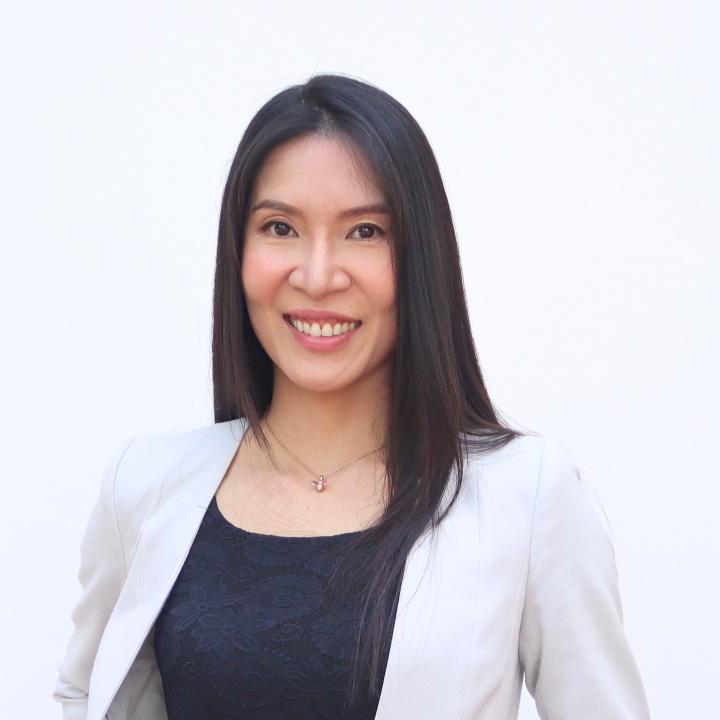
Arada Kantahong
Postgraduate Certificate in Translation Studies, 2006
Based in:
UK
Came to study at Warwick from:
Thailand
First job:
An English lecturer at Chiang Mai University, Thailand.
Strangest interview question:
This isn’t an interview question, but I get it often when I say I’m a linguist. People tend to ask, “How many languages can you speak?”
Advice for current students:
Thinking is good, but overthinking is not. It’s small steps, taken consistently, that make a big difference in life.
Best piece of advice received:
When you lead a project, you set the direction, keep things on track and up to standard, but don’t forget there’s still room to be flexible and creative.
Integra Editor and Publication Officer, Intertel – A Society of the Intellectually Gifted
Describe your current role and what attracted you to it.
I’ve always been into reading and writing, so working with language just comes naturally to me. As a Magazine Editor, my job involves overseeing the entire publication process, from ensuring the coherence and focus of each edition to reviewing and shaping content into clear, polished pieces that are easy to read and follow.
I also handle the design and layout to make sure everything is visually polished and presentable, and that it really brings out what the writer is trying to say.
What’s your favourite part of the role?
I’m involved in bringing all the different pieces together and making sure everything flows as a cohesive whole. It feels a bit like putting together a jigsaw puzzle, where each piece comes together to form a finished picture, which is especially satisfying.
An editor is like a bridge, helping ideas travel smoothly and clearly from writer to reader. When it works well for both sides, and you know the result brings a smile to someone’s face, that’s what makes the work feel so fulfilling.
What are the key skills you learnt at Warwick that have helped you with your career to date?
During my time at Warwick, I focused on cross-cultural translation and content for children. Many people think working with language is about converting words between languages, but it’s much more than that.
The skills have been put to good use in my roles as a translator and an editor. Translation isn’t just about linguistic accuracy, it’s also about making sure the content suits the audience. And in the role as an editor for high-IQ societies like Mensa and Intertel, our audience comes in all ages and is based around the world, so the content needs to be handled with extra care.
As an international student living in a student residence (it’s Tocil!), I also spent a decent time socialising with students from different backgrounds, both inside and outside the classroom. That experience really shaped how I think about language and communication. One lesson that I’ll never forget is: effective communication is translation in real time. Yet, every translation is an act of cultural diplomacy.
Did you have a specific career path in mind when you chose to study at Warwick?
I worked as an English lecturer at Chiang Mai University before attending the Translation Studies postgraduate programme at Warwick. While I didn’t plan to change my career path, it’s opened doors for me to dive deeper into different paths within the linguistic field.
What top tips do you have for Warwick graduates who would like to work in your sector?
I’d say start by figuring out what you enjoy or what you’re good at, then really build on it. Keep improving your skills, and don’t shy away from trying something new.
My career in linguistics has been a bit of a journey, from being a university lecturer in English in Thailand to working as a professional translator for publishers and international companies in Europe; becoming a published writer with translated editions sold overseas to now being an editor for high-IQ societies, editing newsletters for two SIG groups in British Mensa and a monthly magazine for Intertel.
Being a member of both Mensa and Intertel has already given me the chance to connect with fellow members from all over the world. But working as an editor for both organisations has taken that even further. It’s allowed me to build deeper connections with a wide range of fascinating people, both online and in person.
No matter what field you’re in or what you do in life, being able to communicate well makes a huge difference. When clear thinking is paired with clear communication, it helps ideas land and makes real impact.
And yes, when dedication meets timing, you can call it luck.
What has been your greatest career challenge to date and how did your experience and skills help overcome it?
Bridging gaps in knowledge, culture, and expectations. One example is being selected by MIS Publishing Co., Ltd. in Thailand to translate the Thai edition of the best-selling scientific and medical book by Dr Bruce Lipton, The Biology of Belief.
I embraced with delight the opportunities and the challenges that came with it, which helped me grow both personally and professionally. Translating complex scientific and medical concepts, along with elements of American culture, into content that is easy to digest while preserving the writer’s original voice and accuracy for lay readers in Thailand was no small task. It required not only strong language and subject knowledge, but also cultural awareness and a clear understanding of the target audience.
I spent a significant amount of time each day on the project and often worked late into the night to ensure the high quality of the work. That was when I truly realised that translation means reading twice (or more) and writing once, with utmost care. Translation is also where empathy meets precision.
The positive feedback from the publisher and readers, who appreciated both the great work of Dr Bruce Lipton and the accessibility of my translation, has truly made my work as a translator feel worthwhile.