
Yajur Mahendru: Vice President & Head of Product
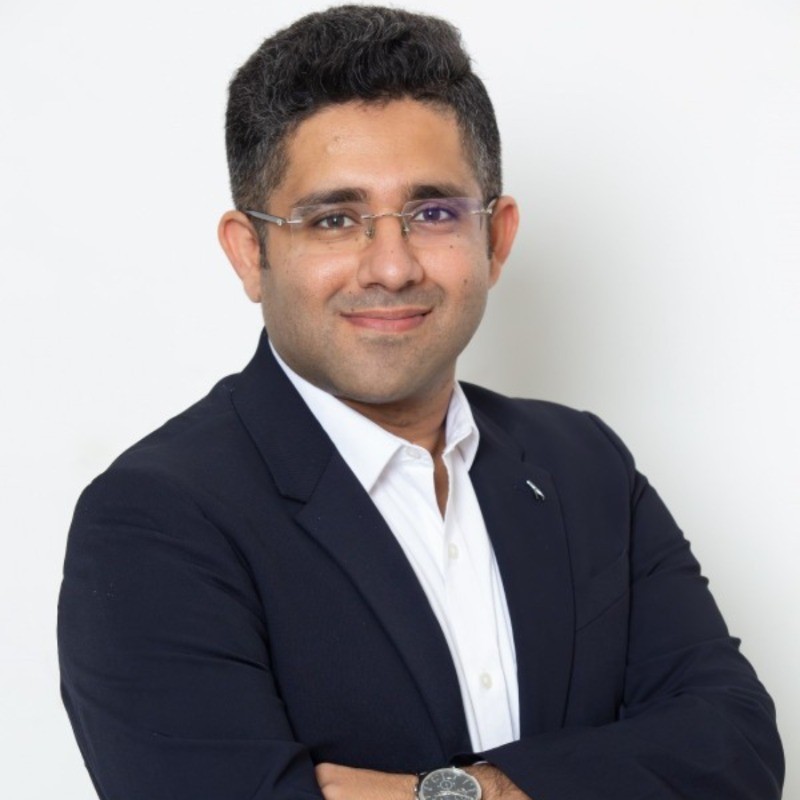
Yajur Mahendru
MBA, 2019
Based in:
Gurugram, India
Came to study at Warwick from:
India
First job:
Product Engineer at Gaadi.com, part of the ibibo Group, where I joined a fast-track product team straight out of engineering school.
Ambitions for the future:
In the near term, I want to keep building InsuranceDekho into the definitive insurance platform for India — one that meaningfully expands access to insurance for hundreds of millions of underserved customers and proves that responsible distribution and category-defining products can coexist.
Beyond that, I'm increasingly drawn to the intersection of AI and financial services more broadly, and I expect that to shape whatever I do next, whether that's continuing to operate at scale, founding something of my own, or moving into investing.
I'd also like to give back more deliberately — through mentoring, teaching, and supporting the next generation of product leaders in India, which is why I'm interested in the alumni mentoring programme.
Best piece of advice given:
To always optimise for learning rate over title or compensation, especially in the first decade of your career. I've watched too many talented people stay too long in roles where they had stopped growing because the comfort or the brand was hard to walk away from, and I've watched others take counter-intuitive moves — into smaller companies, harder problems, and unfamiliar geographies — that compounded enormously over time. Be honest with yourself about when a role has stopped teaching you something new, and to act on that honesty before the inertia sets in.
Vice President and Head of Product, InsuranceDekho (India)
Describe your current role and what attracted you to it.
I lead product strategy at InsuranceDekho, India's largest omnichannel insuretech platform, serving over 13 million customers through a network of more than 230,000 Point of Sale Agents and powering more than ₹4,200 Cr in annual premium.
My remit spans the full platform — agent network, renewals, SaaS, and bancassurance — and I sit on the senior leadership team, working alongside the founders and CXOs on company-wide priorities. Day to day, that means leading a more than 20-strong product and UX organisation, guiding delivery across more than 120 engineers, and shaping the long-term vision for how insurance gets distributed in India.
What drew me to InsuranceDekho was a combination of three things. First, the opportunity to work at a business I helped build from the ground up — coming back to lead it at scale felt like closing a meaningful loop. Second, I had genuine trust in the founders and team, having seen firsthand how they operate. And third, the scale of the insuretech opportunity in India is rare — insurance penetration is still low, distribution is fragmented, and the room to build category-defining products is enormous.
What’s your favourite part of your role?
The breadth. On any given week I'm partnering with founders on the long-term platform vision, working with engineering on the architecture of a new product, sitting with our agents to understand ground-level friction, and presenting to investors on growth metrics. Few roles offer that span.
I also love opportunities to incubate new businesses from within — over the past few years we've launched businesses including: a 'Software as a Service’ platform, a wealth and lending offering, and an employee benefits business — each of which started as an idea and is now its own growth engine. Being able to move between zero-to-one creation and at-scale operations in the same role keeps the work genuinely interesting.
What are the key skills you learnt at Warwick that have helped you with your career to date?
Warwick taught me how to operate as what I'd call a ‘360-degree leader’. Before the MBA, I was a strong product builder, but I was missing the wider commercial, financial, and people-leadership lenses that senior roles demand. The core curriculum at WBS provided fluency in finance, strategy, and organisational behaviour, and the case-based teaching style sharpened how I structure problems and communicate decisions to non-technical stakeholders.
Equally valuable was the international cohort itself — being in classrooms and study groups with people from over fifty nationalities taught me how to lead and negotiate across cultures. The exchange programmes in Shanghai and Milan added a layer of perspective on how digital economies and consumer businesses operate outside India.
Did you have a specific career path in mind when you chose to study at Warwick?
I joined with a clear intent. I spent five years in product roles in India and wanted to evolve from being a strong functional contributor into a more rounded business leader, with tech consulting as my immediate post-MBA target. That plan played out as I'd hoped. I joined Genpact's transformation consulting practice in Germany straight after graduation and spent the next eighteen months advising Fortune 500 C-suites on digital transformation across e-commerce, finance, and shared services.
What I didn't plan for was how strongly the entrepreneurial pull would return. Once I had seen large enterprises from the inside, I knew I wanted to go back to building, which is what led me to InsuranceDekho. The MBA didn't just give me a path; it gave me the optionality to choose between paths with conviction.
What top tips do you have for Warwick graduates who would like to work in your sector?
For anyone wanting to work in product, particularly in fintech or insuretech, I'd offer three things.
First, develop deep first-principles thinking about the user and the unit economics — sector knowledge can be learned in weeks, but the instinct to question assumptions and reason from scratch is what separates good Project Managers (PMs) from great ones.
Second, get comfortable with ambiguity and ownership. The most valuable PMs I've hired are those who treat a product like their own business — owning growth, margin, and operational outcomes, not just feature delivery.
Third, build technical literacy. You don't need to code, but you do need to understand systems, data flows, and AI capabilities well enough to make architectural trade-offs credibly. The PMs who thrive in the AI era will be those who can hold a serious conversation with both an engineer and a CFO.
What does a typical day look like for you?
There isn't really a typical day, which is part of the appeal.
A representative week, though, usually starts with a Monday leadership review where we look at growth, retention, and operational metrics across the platform. From there, my time splits roughly into thirds. One third on product reviews, another third on cross-functional work, and the final third is the work that's easy to deprioritise but matters most over time: hiring, coaching the senior PMs, refining how we operate as a team, and spending time with customers and agents to keep my own intuition sharp.
What has been your greatest career challenge to date and how did your experience and skills help overcome it?
Driving the AI-first transformation of our platform — without slowing down a business that's growing rapidly. When generative AI moved from novelty to genuine capability, it became clear that insurance distribution, with its dense underwriting logic, repetitive workflows, and high-volume agent interactions, was unusually well-suited to be rebuilt around it. But translating that conviction into shipped products meant rewiring how we work—re-skilling teams, redesigning workflows, deciding which parts of the stack to build versus buy, and managing the very real anxiety that comes when colleagues see automation arriving in their day-to-day.
What helped me through it was the combination of skills I'd accumulated over the years. My engineering background let me engage credibly with the technical depth of the problem. My consulting years at Genpact had given me a playbook for running transformation programmes inside large organisations — how to sequence change, build coalitions, and communicate trade-offs to senior stakeholders. And my product instincts kept the work anchored in user and business outcomes rather than technology for its own sake. The results have been some of the work I'm proudest of — fifty percent full time equivalent savings in underwriting through automation, a five percent uplift in motor renewals through voice AI, and a suite of agent intelligence tools that are now central to how our network operates.
What do you know now that you wish you had known when you were applying for jobs?
The first job rarely defines the career. I spent more energy than I needed optimising early-career decisions — agonising over which company, team, and role — when in reality the compounding effects of working hard, building a reputation, and being genuinely curious matter far more than any single role choice. The people I've watched build extraordinary careers all share a willingness to take on problems that are slightly bigger than they're ready for, and to trust that the skills will catch up.
I'd also tell my younger self to invest more deliberately in relationships. The professional network you build in your twenties — peers, managers, mentors — is the network that will open doors for the rest of your career. Treat it as infrastructure, not a transaction.