
Liquid Knowledge. The rise of uroscopy in medieval Byzantine and Arabic medicine.
Simon Swain, Caroline Petit, Uwe Vagelpohl
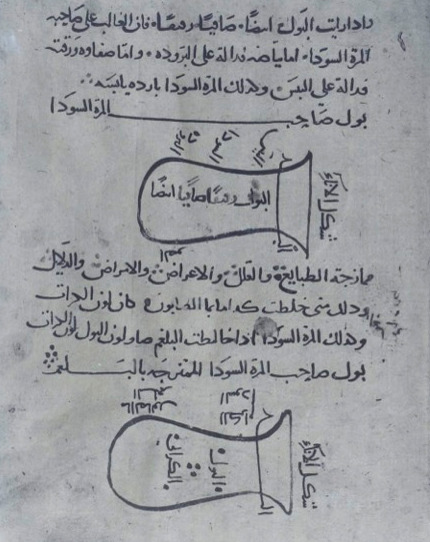
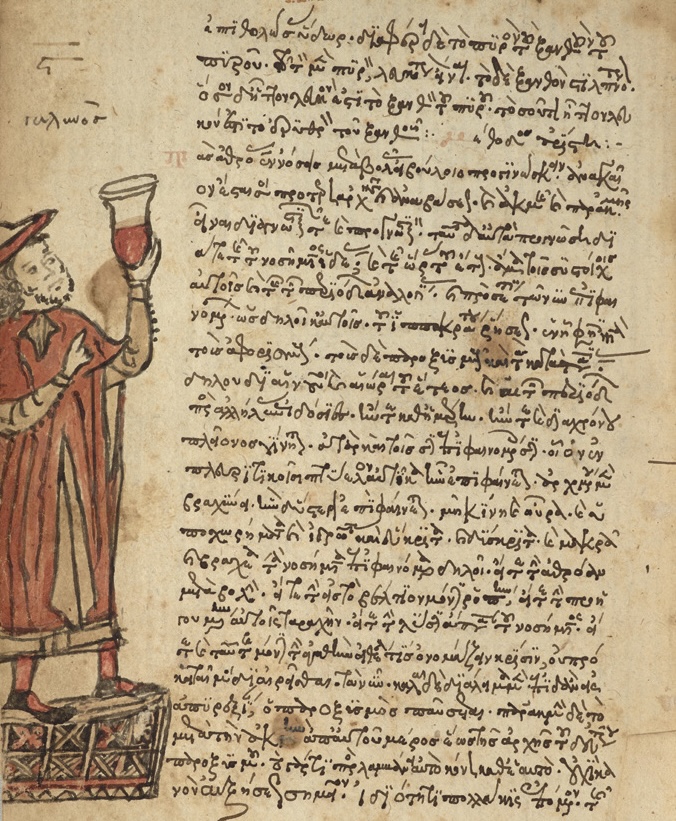
Uroscopy, the study of urine for signs of diseases and internal processes, was a diagnostic and prognostic tool in all medical traditions of the ancient Mediterranean, Middle East and India. It opened a window on processes hidden underneath the skin that remained mostly invisible until the advent of modern medical imaging techniques. In the centuries following the death of the great Roman physician Galen (d. 216), something remarkable happened: uroscopy gradually displaced other diagnostic markers to become the most important, sometimes the only diagnostic tool.
The project will uncover how this happened by tracing the development of uroscopy from scattered uroscopic information in ancient Greek medical literature to the systematic science of uroscopy in the two most important medieval medical traditions, Arabic and Byzantine Greek. Through later translations these traditions exerted a massive influence on medieval Latin and Hebrew medicine, and echoes of this uroscopic knowledge reached as far as medieval Tibet.
We will also attempt to answer why uroscopy gained such prominence, considering such reasons as the ready availability of urine, the likely savings in time and money over other diagnostic forms, examination in the absence of the patient, and the potential for domestic/amateur investigation.
To shed light on these issues, the project will survey and analyse relevant medical writings in Greek and Arabic from the sixth to the twelfth century, gather a representative corpus of digitised texts in both languages, and edit and translate a selection of key works.