
Global Health in Society
Global Health in Society explores how structural drivers shape health and highlights the vital role of communities. This theme examines decoloniality, racism, gender, criminalisation, inequalities, human rights, stigma and discrimination, as well as community‑led and participatory approaches to health.
We use a collaborative, interdisciplinary perspective, drawing on insights from anthropology, economics, epidemiology, law, public health and social science. At the intersection of all these areas are addressing inequalities, structural drivers of health and wellbeing and the importance of community leadership.

Community Leadership and Participatory Research
Community engagement and leadership is a common thread across much of the work in global health and society. It includes research on community led responses, including self-help groups, as well as participatory and community-led research methods.
Ongoing projects specifically evaluating community led programmes include PACE II, and projects where communities are primary research partners include ORI, Digital Health and Rights Project (DHRP) consortium, and After the End.
Migrant Health
This body of work spans projects researching the specific needs of migrants, based in many global countries, from migrants to the UK to internally migrant men in South Africa, and includes ongoing PhD supervision and post-doc mentorship.
Prof Lisa DikomitisLink opens in a new window Email: Lisa.Dikomitis@warwick.ac.uk
Dr Brianne WenningLink opens in a new window Email: Brianne.Wenning@warwick.ac.uk
Prof Fern Terris-PrestholtLink opens in a new window Email: Fern.Terris-Prestholt@warwick.ac.uk
Decoloniality and Anti-Racist Research and Practice
The aim of this body of work is to address the continuing impacts of colonial legacy within global health context.
We aim to:
- advance decoloniality research
- provide resources for our own research and teaching community to incorporate decoloniality, anti-racism and feminist principles into our own practice.
Colonialism in the new digital health agendaLink opens in a new window
Structural Drivers of Health
Broader societal inequalities, including racism, stigma and discrimination against specific populations, criminalisation and homelessness can exacerbate many health risks.Numerous projects led across the university address these factors within HIV, mental health, and digital rights.
Through an MOU with the World Health Organization (WHO) and UN Development Programme, we advance human rights and gender equality in digital health governance
After The End: Interdisciplinary Approaches to Lived Experiences in the Aftermaths of Diseases, Disasters and Drugs in Global Health
Drawing on an interdisciplinary approach there are two synergistic empirical and normative aims:
1. to explore lived experiences of time and temporality of endings of crises, to capture counter-narratives and their implications for future practices, responses and policies, and
2. to provide an account of the moral and ethical obligations and responsibilities of global health institutions in the aftermaths of crises to health.
From detailed comparative research in three countries, we will foreground the people, places, processes and policies to capture everyday experiences of endings and aftermaths in context.
2023-2031
Prof. Sharifah Sekalala Link opens in a new window
Email: sharifah.sekalala@warwick.ac.uk
https://www.ethox.ox.ac.uk/Our-research/major-programmes/after-the-end

Prevention Accelerator for Communities on the Edge of Sex Work
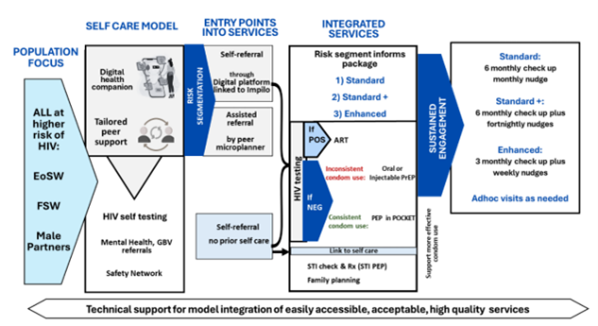
The PACE II project aims to develop, refine and evaluate an affordable and potentially sustainable package to promote self-management and prevention service engagement among female sex workers and women on the edge of sex work that is integrated within public sector services in Zimbabwe.
2025-2027
Prof Fern Terris-Prestholt Link opens in a new window
Email: Fern.Terris-Prestholt@warwick.ac.uk
Lead institution: CESHHAR, ZimbabweLink opens in a new window
Racism and Inequalities in Mental Health
The ORI project is a multidisciplinary, mixed-methods study that sits at the intersection of
- Systemic racism,
- Social disadvantage,
- Mental health, and
- Community engagement.
The aim of ORI is to establish an evidence base on racism and mental health in Brazil whilst co-designing effective, context-bespoke and culturally acceptable interventions to address mental health needs in underserved Black Brazilian communities across Bahia and São Paulo. ORI will continue to produce and disseminate new evidence on racial and social discrimination in mental health in Brazil and beyond.
2024-2028
Prof. Lisa Dikomitis Link opens in a new window
Email: Lisa.Dikomitis@warwick.ac.uk
Dr Brianne WenningLink opens in a new window
Email: Brianne.Wenning@warwick.ac.uk
https://www.linkedin.com/company/oricommunity/Link opens in a new window


Rights-Based Digital Governance
The Digital Health and Rights Project (DHRP) is a global consortium of civil society groups, community-led networks, human rights lawyers, and academic researchers who use a transnational participatory action research approach, centring the voices and leadership of diverse young adults to define the future of human rights in the digital age.The consortium investigates how digital technologies, health, and human rights intersect in a context of global and local inequalities, and advocates collectively for rights of young adults and civil society in low- and middle-income countries.
Dr Meg DavisLink opens in a new window
Email: Sara.Davis@warwick.ac.uk
Digital Health and Rights ProjectLink opens in a new window

Transform HIV
Transform HIV uses epidemiology, mathematical modelling and economic evaluation to estimate the long term societal impact and cost-effectiveness of addressing structural drivers of HIV, with the Warwick component aiming to:
- Identify and cost interventions to address: stigma and discrimination, decriminalisation, and homelessness among sex workers, people who use drugs, MSM, People living with HIV, and
- Use cost-benefit analysis or SRoI to estimate broader return on investment.
2023-2031
Prof Fern Terris-PrestholtLink opens in a new window
Email: Fern.Terris-Prestholt@warwick.ac.uk


Theme Leads
Prof. Sharifah SekalalaLink opens in a new window, PhD, School of Law Email: Sharifah.sekalala@warwick.ac.uk
Dr. Brianne WenningLink opens in a new window, PhD, Warwick Medical School Email: Brianne.Wenning@warwick.ac.uk