
Professor Tim Saunders
Shaping organs during development
This lecture took place on Tuesday 12 May 2026. Watch the recording below.
Every cell type in our body has a unique size and shape. These cells work together to shape our organs. The specific morphology of each organ is essential for its efficient function. For example, the lung forms a highly branched network necessary for effective gas exchange with the blood. Yet, we still know remarkably little about how our organs are shaped. This is in part due to the three-dimensional complexity of organs and difficulties in accessing them during development, especially those growing inside the embryo. This is a critical challenge to address; for example, nearly half of all adult heart disease can be traced to a problem that arose during development.
Recent years has seen an explosion in the tools and methods available to image organs as they form. New microscopy approaches mean we can record for longer at higher spatial and temporal resolution. Machine learning algorithms can interpret such imaging data and generate reliable three-dimensional cell and tissue segmentations. Single cell genomic methods provide access to cell states at unprecedented resolution. Alongside these experimental advances, active matter physics provides a framework for understanding how forces and interactions between cells can drive the emergence of complex form.
With these advances, we are now at an exciting time where we can decipher the mechanisms underlying the emergence of complex cell and tissue shape in biology. In this lecture, Professor Saunders will present work from his lab trying to address this challenge, with a focus on heart and skeletal muscle formation.
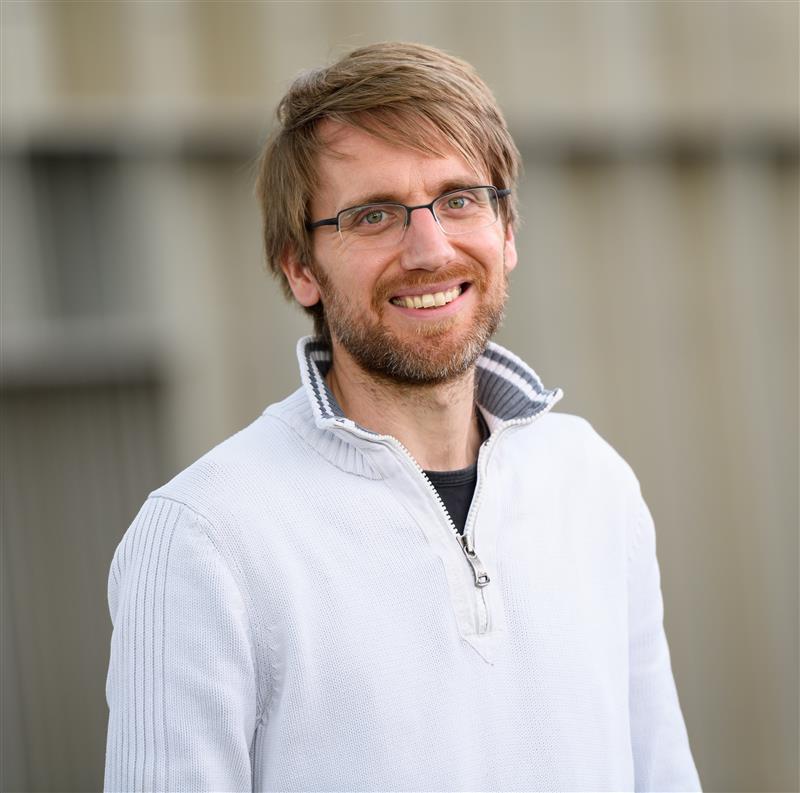
Tim Saunders is a Professor of Biomedical Sciences at the University of Warwick. He earned a D.Phil. from the University of Oxford in 2008, after completing an MPhys and BA at the University of Cambridge. He began his career with postdoctoral roles at the John Innes Centre and EMBL Heidelberg.
In 2013, he joined the National University of Singapore as an Assistant Professor and Group Leader at the Mechanobiology Institute. He later became a Joint Principal Investigator at IMCB A*STAR and was promoted to Associate Professor. Returning to Warwick in 2020 as an associate professor, he then became Professor in 2023, continuing his research and academic leadership.
Recording
Registration
This form is closed and is no longer accepting any submissions. Thank you for your time.